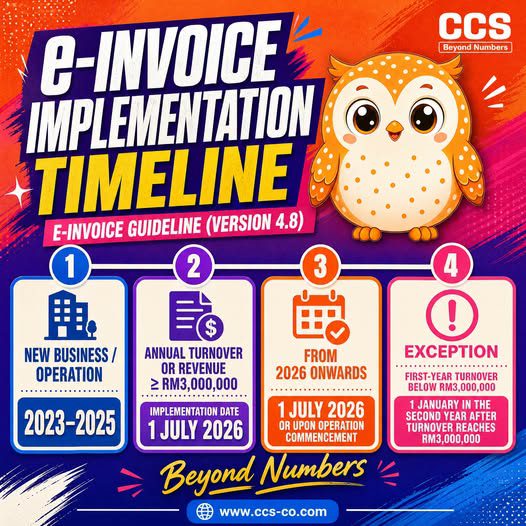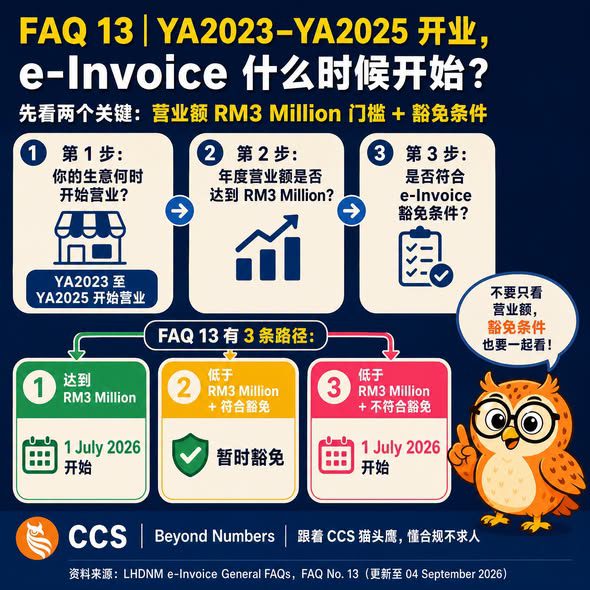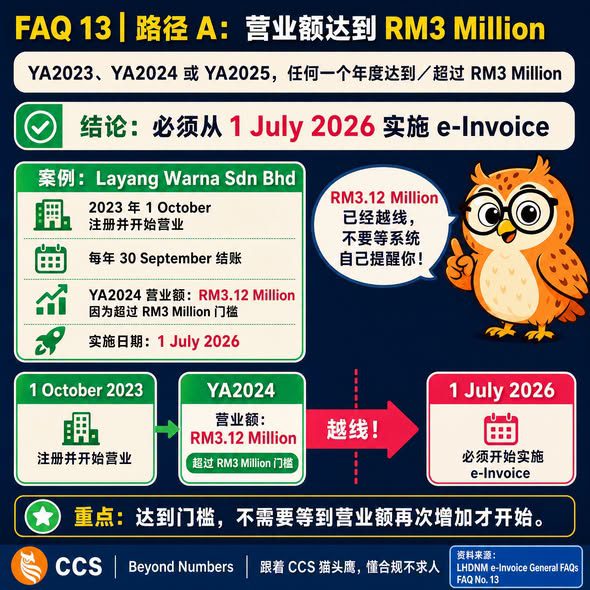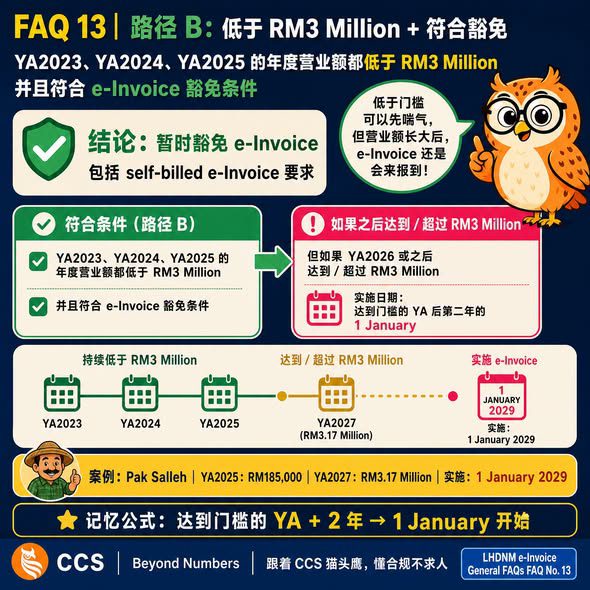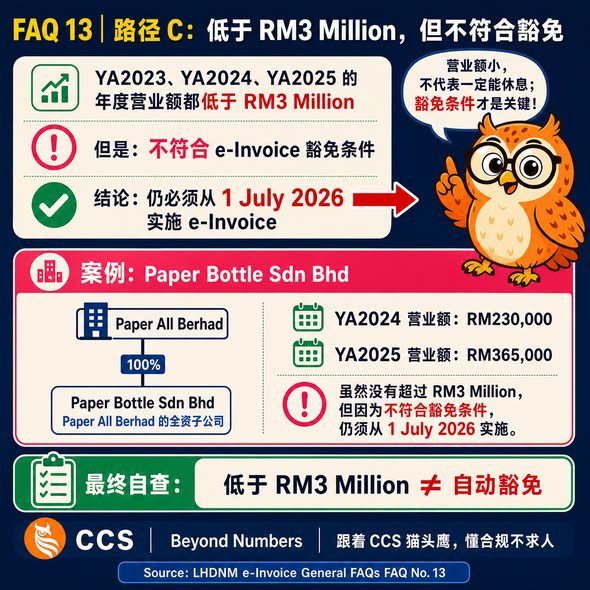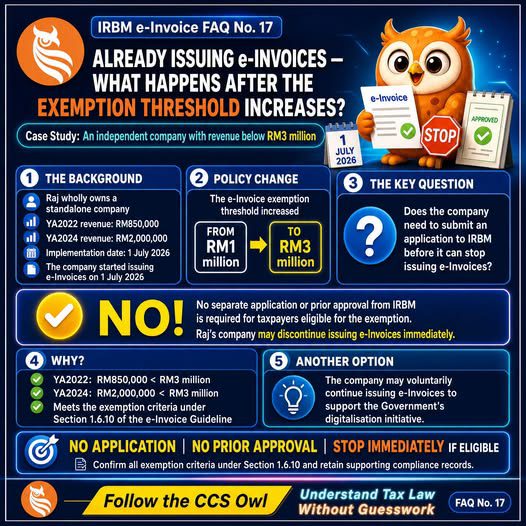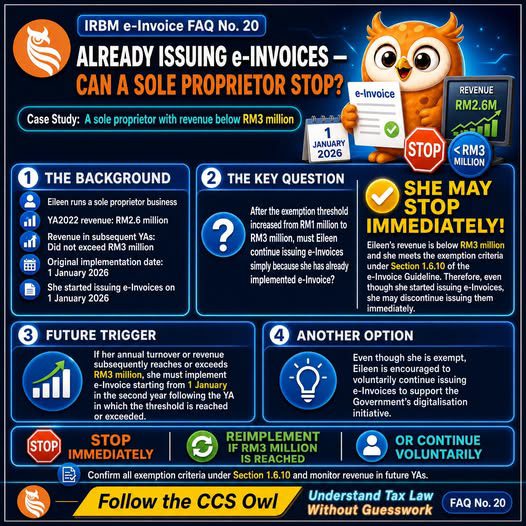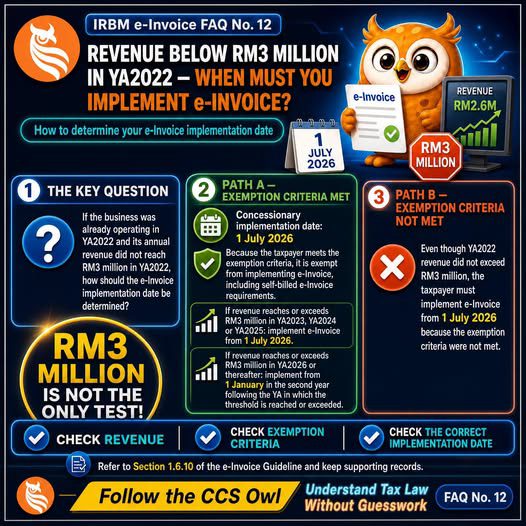
If your business has annual revenue below RM3 million but began implementing e-Invoice in July, do not stop issuing e-Invoices immediately. Continue with the applicable process for now while checking your eligibility and the latest official guidance.
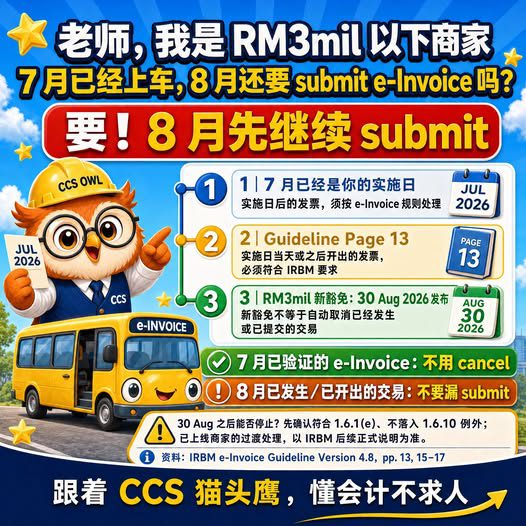
According to page 13 of the IRBM E-Invoice Guideline (Version 4.8), if your e-Invoice implementation date was in July, invoices issued on or after that date must be handled in accordance with the e-Invoice requirements.
This means:
- Do not cancel e-Invoices that were already validated in July.
- Do not stop submitting e-Invoices for transactions that took place or invoices that were issued in August simply because a new exemption threshold has been announced.
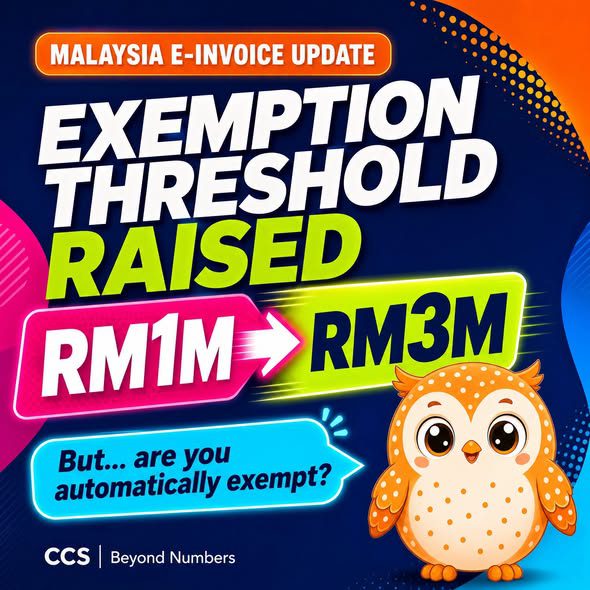
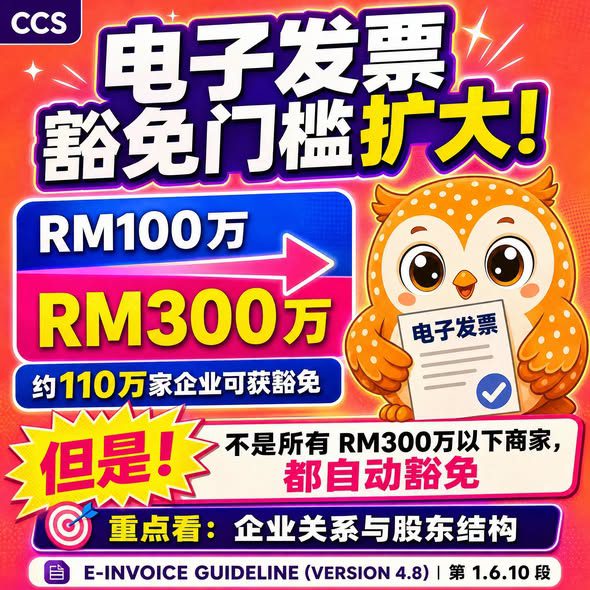
The updated guideline, which raises the exemption threshold to RM3 million, was issued on 30 August 2026. It does not automatically reverse transactions that had already taken place, invoices that had already been issued, or submissions that had already been made.
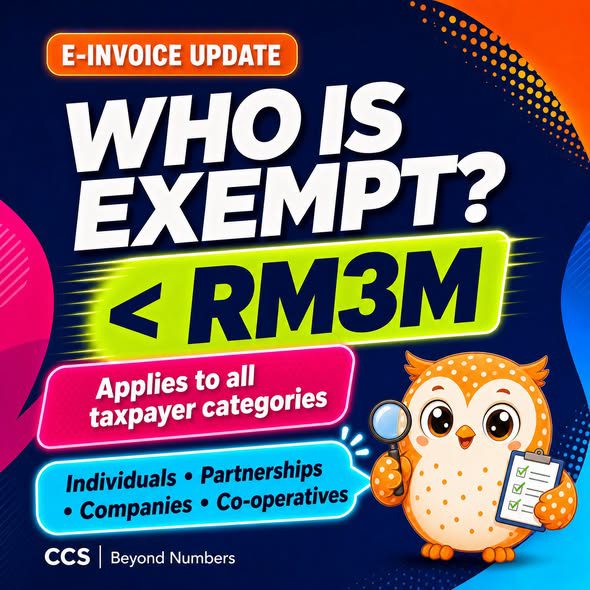
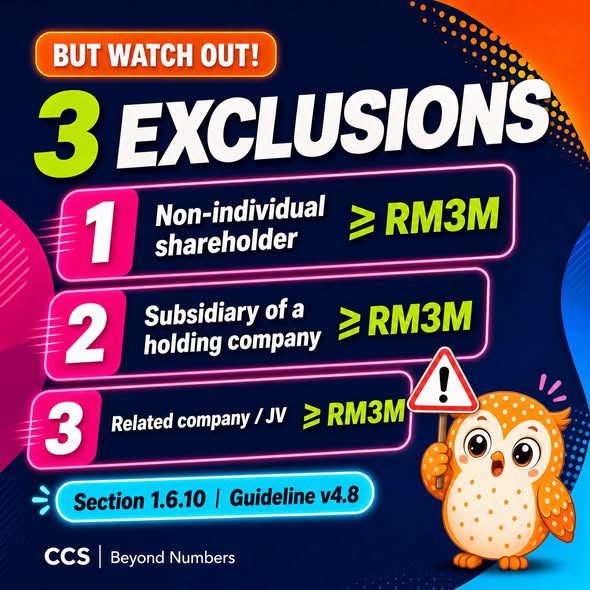
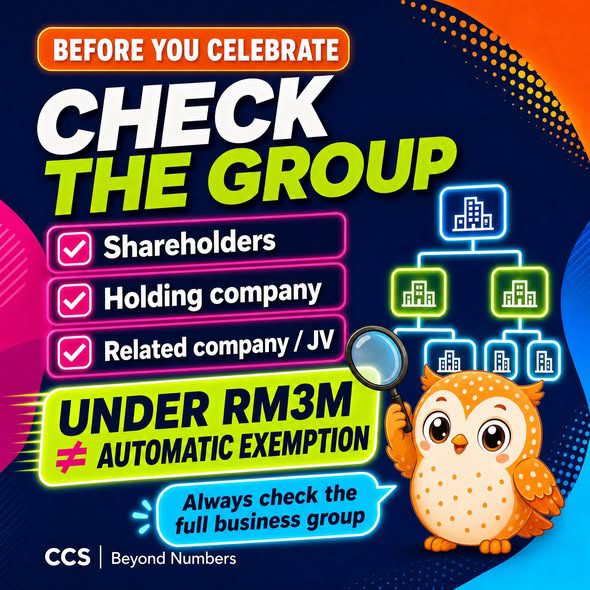
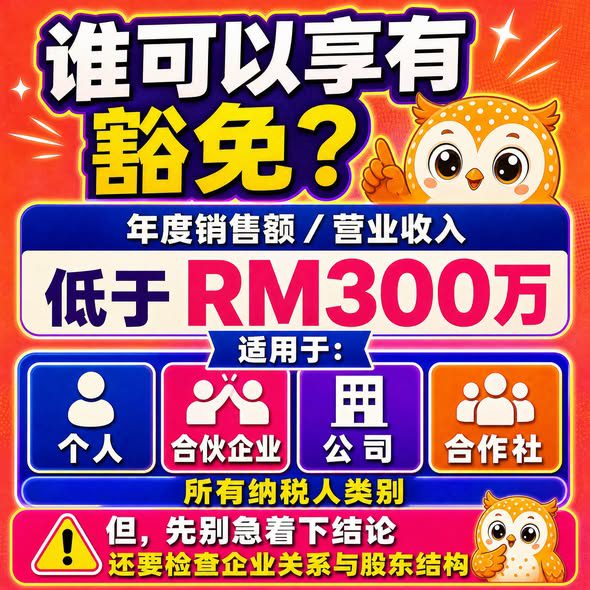
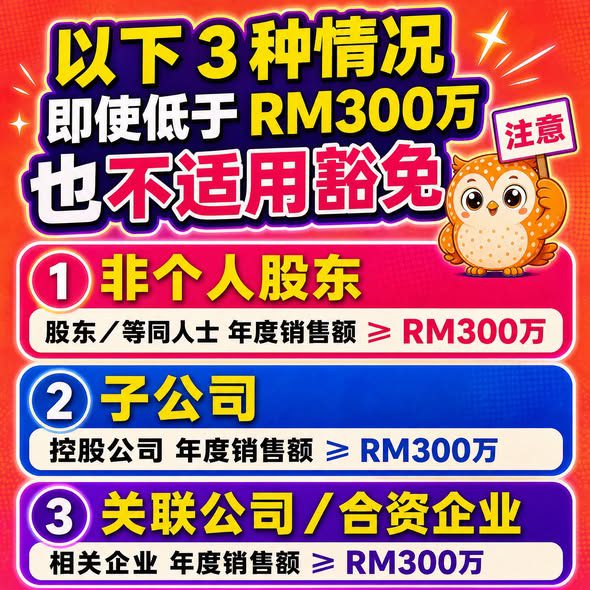
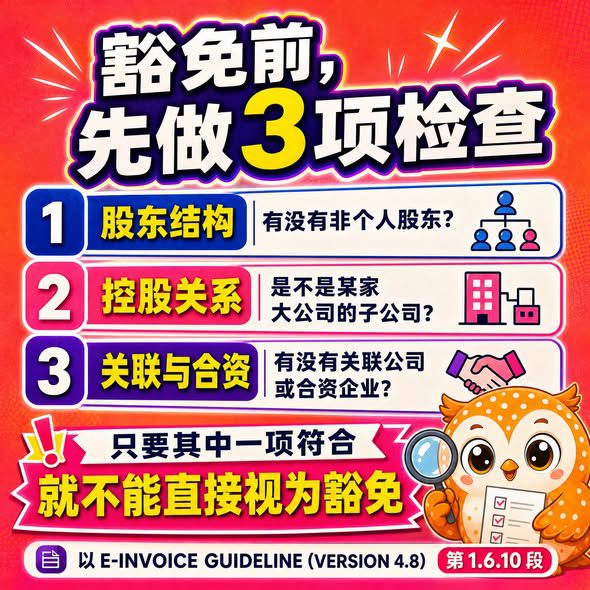
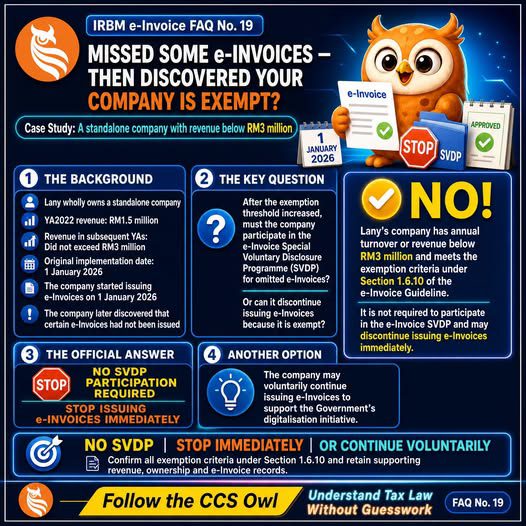
Before deciding whether you can stop after 30 August, confirm that your business meets the exemption criteria under Section 1.6.1(e) and does not fall within any of the exceptions in Section 1.6.10. These may include circumstances involving a non-individual shareholder, holding company, related company or joint venture with turnover or revenue of RM3 million or more.
In short: Do not cancel e-Invoices that have already been submitted, and do not omit submissions for transactions that have already taken place. Whether you can stop issuing e-Invoices going forward depends on your eligibility and IRBM’s official transition guidance.
Do not switch off your system solely because you have seen the RM3 million exemption threshold. Review the full requirements and confirm how they apply to your business.
This article is for general information only. For actual treatment, refer to your business structure, implementation date and the latest official guidance issued by IRBM.
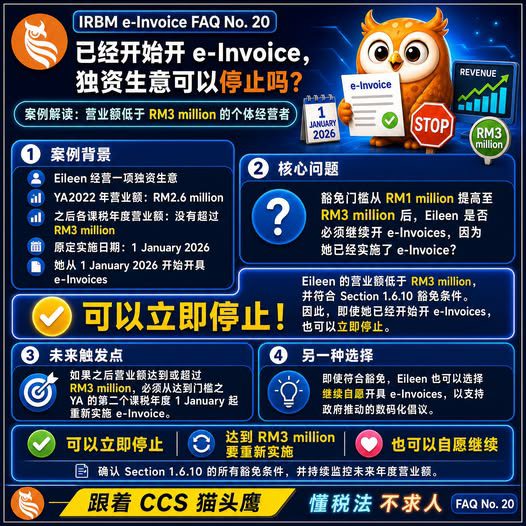
e-Invoice豁免门槛低于RM300万:7月已开始实施,之后还要继续开具吗?
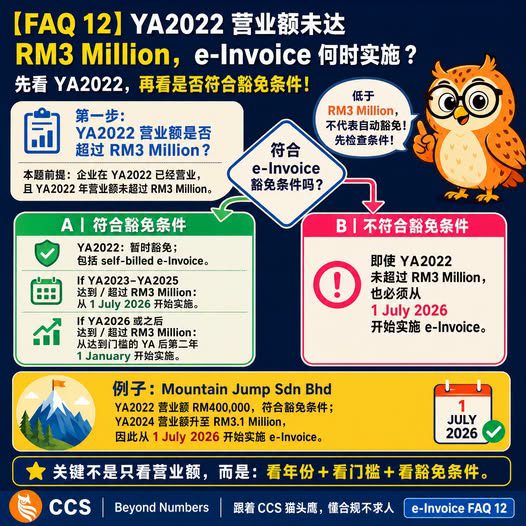
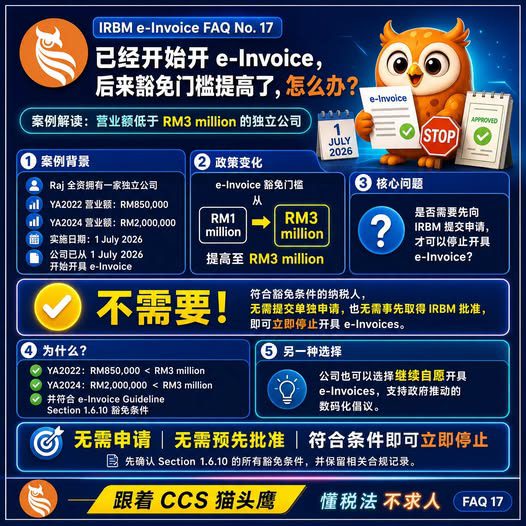
如果企业年收入低于RM300万,但已于7月开始实施 e-Invoice,请先不要立即停止开具。现阶段应继续按适用流程处理,同时核实企业是否符合豁免资格,并查阅最新官方指引。
根据IRBM《E-Invoice Guideline》第4.8版第13页,如果企业的 e-Invoice 实施日期为7月,则从实施日当天或之后开出的发票,必须按照 e-Invoice 要求处理。
因此:
- 7月已经验证的 e-Invoice,不应取消。
- 对于8月已经发生的交易或已经开出的发票,不要仅因看到新的豁免门槛,就直接停止提交。
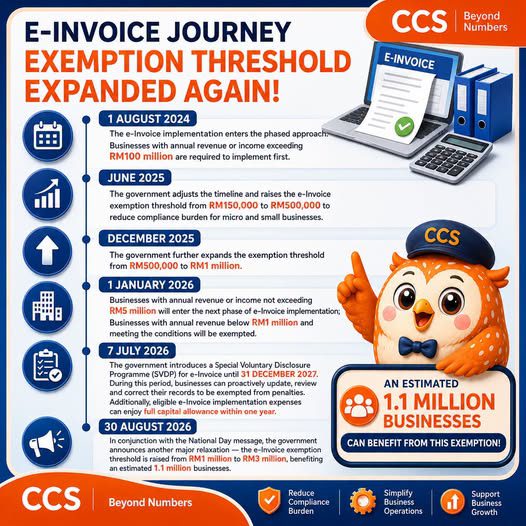
提高豁免门槛至RM300万的新版指南于2026年8月30日发布。该指南并不自动撤销此前已经发生的交易、已经开出的发票或已经提交的记录。
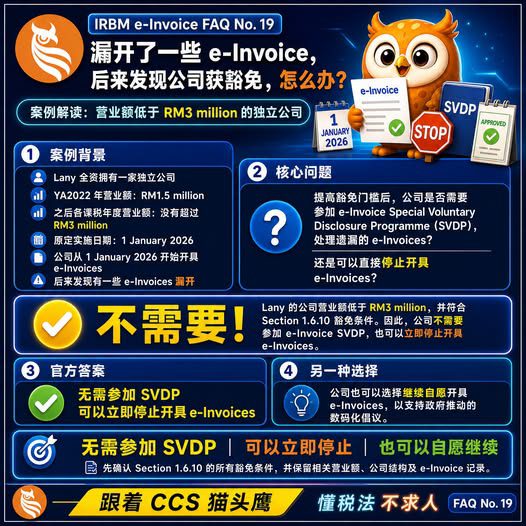
在决定能否于8月30日之后停止开具之前,应先确认企业是否符合第1.6.1(e)节所列的豁免条件,以及是否涉及第1.6.10节所列的例外情况。这些情况可能包括存在营业额或收入达到RM300万的非个人股东、控股公司、关联公司或合资企业。
简单来说:已经提交的 e-Invoice 不要取消;已经发生的交易不要漏掉应提交的记录。之后能否停止开具,取决于企业是否符合资格,以及IRBM发布的正式过渡指引。
不要仅仅因为看到RM300万豁免门槛,就马上关闭系统。应先完整核对相关要求,并确认其如何适用于企业自身情况。
本文仅供一般资讯参考。实际处理时,请根据企业架构、实施日期及IRBM发布的最新官方指引确认。