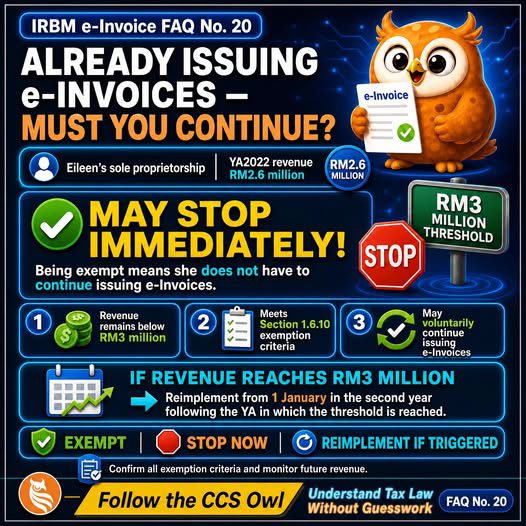
FAQ No. 20 concerns Eileen, who operates a sole proprietorship. Her revenue was RM2.6 million in YA 2022 and remained below RM3 million in subsequent Years of Assessment. She also meets the exemption criteria in Section 1.6.10.
As a result, Eileen does not have to continue issuing e-Invoices and may stop immediately, even if she has already started issuing them.
If her revenue later reaches RM3 million, she must resume e-Invoice implementation from 1 January of the second year following the Year of Assessment in which the threshold was reached. She may also choose to continue issuing e-Invoices voluntarily while exempt.
In short: The exemption applies if the business has not exceeded RM3 million in revenue and meets the Section 1.6.10 criteria. An exempt business may stop issuing e-Invoices immediately, but must monitor future revenue against the threshold.
e-Invoice常见问题第20条:符合豁免条件的企业可立即停止开具 e-Invoice
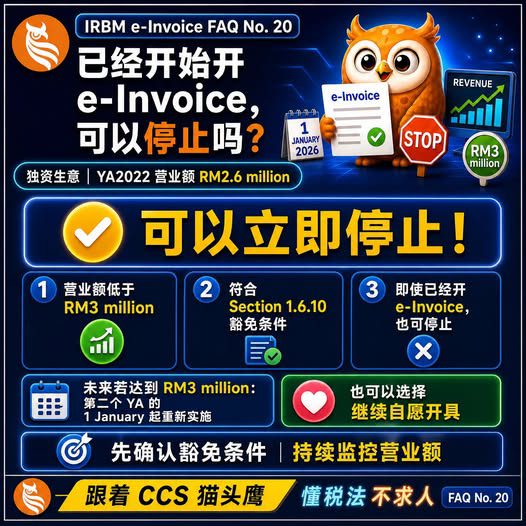
常见问题第20条以独资经营者Eileen为例。她在YA 2022的收入为RM260万,之后各课税年度的收入均低于RM300万,并且符合第1.6.10节所列的豁免条件。
因此,Eileen无需继续开具 e-Invoice;即使已经开始开具,也可以立即停止。
如果她未来达到RM300万收入门槛,就必须从达到门槛所在课税年度之后第二年的1月1日起重新实施 e-Invoice。即使符合豁免条件,Eileen也可以选择继续自愿开具 e-Invoice。
简单来说:企业收入未超过RM300万且符合第1.6.10节的豁免条件,即可豁免。符合条件的企业可以立即停止开具 e-Invoice,但仍须留意未来收入是否达到门槛。