When Trading Meets Investing: Tax Implications for Companies on Land Sale Profit
The tax treatment of gains from the disposal of land has been a grey area subject to dispute between taxpayers and tax authorities. A recent income tax case of KPSB V Ketua Pengarah Hasil Dalam Negeri revolved around this issue and provides important guidance for companies on maintaining proper documentation and compliance when dealing with […]
e-Invoice Guideline Year 2023 Inland Revenue Board of Malaysia: Interpretation of Abbreviations

API | Application Programming Interface Application Programming Interface (Application Programming Interface), or API for short, is a set of predefined functions that allow an application program to make calls and access data and interactions. Some key features of APIs:- In short, API is a crucial software interface that realises the integration and interaction between different […]
马来西亚内陆税收局 (IRBM) 2023 年电子发票指南快速略读
Other related articles that you may be interested in e-Invoicing Guidelines for the year 2023 are now accessible starting 21 July 2023 Benefits of e-invoice A comparison of the key aspects between the e-Invoice model via MyInvois and via API Portal Transitioning to e-Invoices: Assessing the Options for Your Business [What Businesses Need to Know] […]
Invitation for Public Consultation on Draft Public Ruling – Agricultural Sector Tax Incentive

The Inland Revenue Board of Malaysia (LHDN) has released a draft Public Ruling on income tax incentives for the agricultural sector, specifically a tax exemption for approved food production projects. This consultation invites feedback from stakeholders before the ruling is finalised. The primary purpose is to seek views on matters related to the conditions and […]
MyInvois Made Easy: Step-by-Step e-Invoicing on the Portal
The MyInvois Portal is a user-friendly web application developed by the Inland Revenue Board of Malaysia (IRBM) that serves as an e-invoicing platform for taxpayers. It provides a simplified way for businesses, especially micro, small and medium enterprises (MSMEs), to manage the e-invoicing process manually through an intuitive online interface. The Portal contains all the […]
Pre-Submission: e-Invoice Submission Requirements via MyInvois Portal & API
Adopting e-Invoicing in Malaysia requires taxpayers to fulfil specific pre-submission requirements and preparations based on the transmission model they opt for via MyInvois Portal or API integration. While both models necessitate Digital Certificates and TIN verification, the Portal allows manual creation suitable for low invoice volumes. In contrast, the API route demands greater technical readiness […]
Transitioning to e-Invoices: Assessing the Options for Your Business [What Businesses Need to Know?]
Taxpayers can select the most suitable mechanism to transmit e-Invoice to IRBM based on their specific needs and business requirements. Some examples of e-Invoice adoption: So, in conclusion, Malaysia’s e-Invoice framework allows businesses to determine the model suitable for their needs while ensuring the standardisation of invoicing practices. Reference: 184.2 IRB_e-Invoice Guideline – Yr 23 […]
HASiL: Forms CP 22A/ CP 22B/ CP 21 submission requirements & online submission of Notification Forms
The Inland Revenue Board of Malaysia (HASiL) has issued a letter dated 28 June 2023 to CTIM and other professional bodies regarding the submission requirements for Form CP22A/ CP22B/ CP21 and the online submission process for employee-related notification forms. The letter includes the following information:- 1. Notice of cessation of employment Section 83(3) of the […]
Additional tax relief is available for Voluntary Contributions made to the EPF
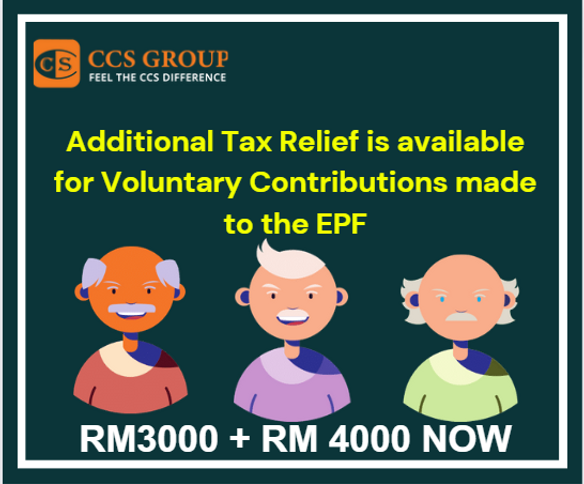
The EPF strives to grow their members’ retirement savings while continuously developing a wide range of products and services to support their journey towards a comfortable retirement. Individuals who are employed, self-employed or business owners can opt to contribute based on their own requirements. As a member, you are eligible not only to enjoy annual […]
Budget 2023: Redefinition of ‘Micro, Small and Medium Enterprise (“MSME”)’
Small and medium-sized enterprises (SMEs) are integral to the Malaysian economy as they contribute 38% or more than RM500bil to our gross domestic product (GDP). There were altogether 1,226,494 MSMEs in 2021 which accounts for 97.4% of overall establishments in Malaysia. Today we are pleased to inform you of an important update regarding the redefinition […]