Malaysia’s e-Invoice system was introduced through a phased rollout, giving businesses time to prepare for a significant change in how transactions are recorded and reported. Since the initial announcements, the implementation schedule and exemption threshold have been updated.
From announcement to implementation
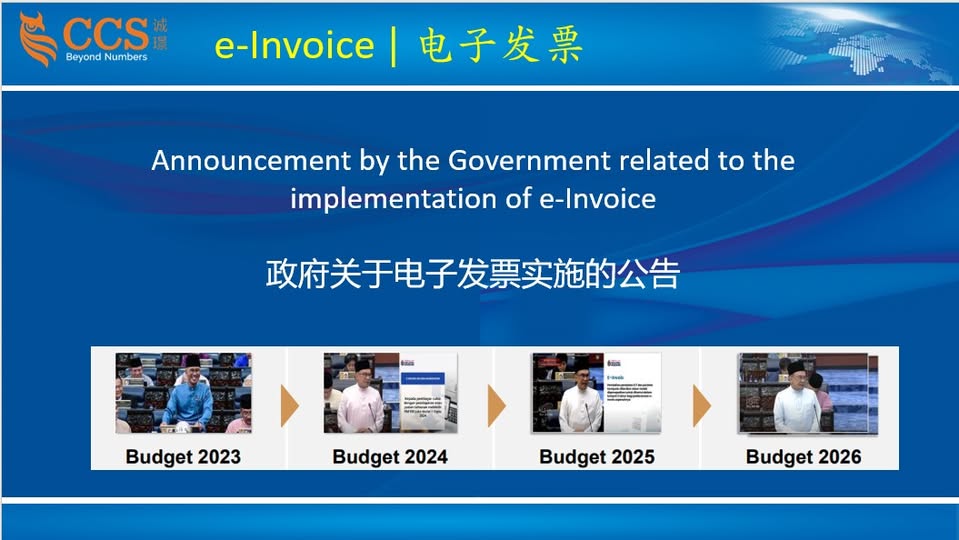
The Government announced the e-Invoice initiative in Budget 2023, presented in October 2022, with implementation planned in stages. In Budget 2024, the rollout was brought forward, with the first group of taxpayers scheduled to begin on 1 August 2024.
Section 82C of the Income Tax Act 1967 provides the statutory framework for e-Invoice requirements. The applicable implementation dates are determined by the prescribed rollout and relevant guidelines.
Four implementation dates
HASiL’s phased timeline sets out four implementation dates based on annual turnover or revenue:
- More than RM100 million: 1 August 2024.
- More than RM25 million and up to RM100 million: 1 January 2025.
- More than RM5 million and up to RM25 million: 1 July 2025.
- Up to RM5 million: 1 January 2026, subject to the applicable exemption.
These dates remain important for understanding the rollout. However, the exemption threshold was subsequently revised.
The RM3 million exemption threshold
On 30 August 2026, the Government announced that the e-Invoice exemption threshold would increase from RM1 million to RM3 million, effective 1 September 2026. Taxpayers with annual turnover or revenue of less than RM3 million are exempt from implementation, subject to the applicable exemption criteria.
This means that the January 2026 implementation date for taxpayers with turnover or revenue of up to RM5 million does not make e-Invoice compulsory for every business in that range. Businesses should check whether they qualify for the exemption, including any relevant conditions concerning related companies.
The Government has encouraged eligible businesses to participate voluntarily in e-Invoice as part of the wider digitalisation effort. HASiL’s current implementation timeline and announcement on the revised threshold provide the latest information.
Support for implementation
Budget 2025 included tax incentives, such as accelerated capital allowance for qualifying expenditure on ICT equipment and computer software related to e-Invoice implementation. Eligibility and the applicable tax treatment are subject to the relevant rules.
The rollout has therefore developed through successive announcements, implementation phases and policy updates. Businesses should distinguish between the original schedule and the current position, particularly the RM3 million exemption that took effect on 1 September 2026.
马来西亚电子发票推行历程:重要里程碑与现行要求
马来西亚电子发票采取分阶段推行,让企业有时间为交易记录与申报方式的重大变化做好准备。自最初公布以来,实施时间表与豁免门槛均经过调整。
从政策公布到正式实施
政府在2022年10月提呈的2023年财政预算案中宣布推行电子发票,并计划分阶段落实。2024年财政预算案随后提前了推行时间,首批纳税人须自2024年8月1日起开始实施。
《1967年所得税法令》第82C条构成电子发票要求的法定框架。具体实施日期则根据规定的推行时间表及相关指南确定。
四个实施日期
HASiL 的分阶段时间表根据年营业额或收入列出四个实施日期:
- 超过 RM100 million:2024年8月1日。
- 超过 RM25 million 且不超过 RM100 million:2025年1月1日。
- 超过 RM5 million 且不超过 RM25 million:2025年7月1日。
- 不超过 RM5 million:2026年1月1日,但须考虑适用的豁免规定。
这些日期有助于了解电子发票的推行历程,但豁免门槛之后另有修订。
RM3 million 豁免门槛
政府于2026年8月30日宣布,将电子发票豁免门槛从 RM1 million 提高至 RM3 million,并自2026年9月1日起生效。年营业额或收入低于 RM3 million 的纳税人可豁免实施电子发票,但须符合适用的豁免条件。
因此,年营业额或收入不超过 RM5 million 的纳税人虽然列于2026年1月1日的实施阶段,但并不代表该范围内的每一家企业都必须实施电子发票。企业应确认自身是否符合豁免条件,包括与关联公司有关的适用要求。
政府也鼓励符合豁免条件的企业自愿参与电子发票计划,以配合更广泛的数码化方向。企业可参阅 HASiL 最新的实施时间表及提高豁免门槛的公告,了解最新规定。
实施支持
2025年财政预算案纳入了多项税务优惠,包括针对电子发票实施相关合资格 ICT 设备及电脑软件支出的加速资本津贴。实际资格与适用税务处理须遵循相关条例。
电子发票的推行历经多次政策公告、实施阶段与调整。企业应区分最初的实施安排与现行要求,特别留意自2026年9月1日起生效的 RM3 million 豁免门槛。