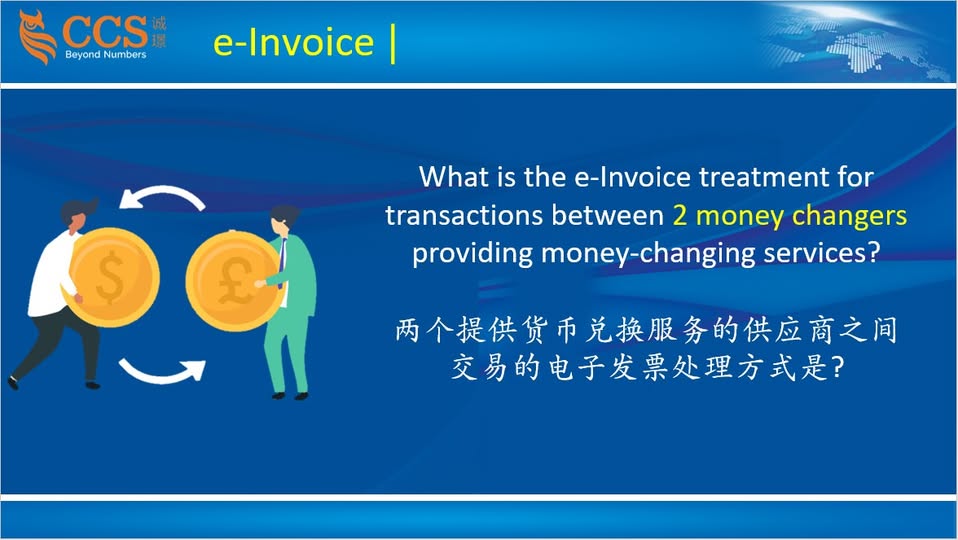
HASiL’s industry-specific FAQ states that where two suppliers providing money-changing services transact with each other, the supplier that sells the foreign currency must issue an e-Invoice to the buyer.
For example, ABC Money Changer Sdn Bhd purchases JPY 5,000,000 from XYZ Currency Exchange Sdn Bhd at an agreed rate of JPY 100 to RM2.95. The currency purchase is worth RM147,500. If XYZ also charges a transaction fee of RM500, it should show the fee as a separate line item in the same e-Invoice. The total amount is RM148,000.
If the parties also conduct a separate transaction in the opposite direction, the supplier selling foreign currency in that transaction is responsible for issuing an e-Invoice to the buyer. Any arrangement to settle the amounts on a net basis does not change which party must issue the e-Invoice for each sale.
This treatment differs from transactions between a money changer and an individual customer. Where an individual requests an e-Invoice for a simultaneous sale and purchase of foreign currency, the money changer may include both in the same e-Invoice.
货币兑换商之间交易的电子发票处理
HASiL 的行业专项常见问题解答规定,两家提供货币兑换服务的供应商进行交易时,出售外币的一方须向买方开具电子发票。
例如,ABC Money Changer Sdn Bhd 按照每100日元兑 RM2.95 的议定汇率,向 XYZ Currency Exchange Sdn Bhd 购买 JPY 5,000,000,货币交易金额为 RM147,500。若 XYZ 另收 RM500 交易费,应在同一张电子发票中将该费用单独列项。总金额为 RM148,000。
若双方另有一笔方向相反的交易,则该笔交易中出售外币的一方须向买方开具电子发票。双方即使安排净额结算,也不会改变各笔销售交易应由哪一方开具电子发票。
此处理方式与货币兑换商和个人客户之间的交易有所不同。若个人客户要求为同时进行的外币买卖交易开具电子发票,货币兑换商可将买入与卖出交易列在同一张电子发票中。