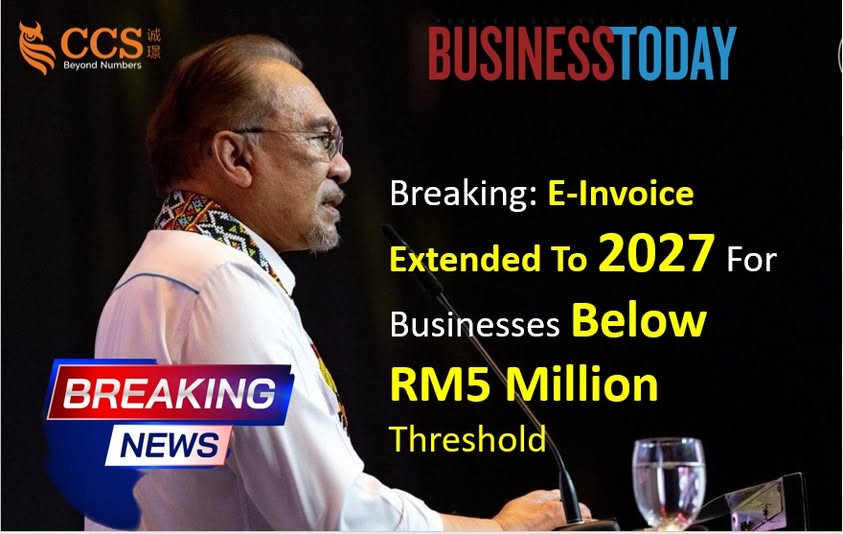
The Prime Minister’s announcement did not postpone the Phase 4 e-Invoice implementation date to 2027. Under the original schedule, the implementation date for affected Phase 4 taxpayers was 1 January 2026. The initial measure extended the transition period without prosecution from six months to 12 months, covering 1 January to 31 December 2026.
The transition period was subsequently extended. Under the latest e-Invoice Specific Guideline, Version 4.9, the interim relaxation for Phase 4 taxpayers with annual turnover or revenue of up to RM5 million runs until 31 December 2027. A separate exemption applies to taxpayers with annual turnover or revenue below RM3 million, subject to the applicable exemption criteria.
During the interim relaxation period, taxpayers who are required to implement e-Invoice may issue consolidated e-Invoices for all activities and transactions, as well as consolidated self-billed e-Invoices for the prescribed self-billing circumstances. If the applicable consolidation requirements are met, they may use consolidated documents even when a buyer or supplier requests an individual e-Invoice. IRBM will not undertake prosecution under Section 120 of the Income Tax Act 1967 during the relaxation period, provided taxpayers meet the relevant requirements.
Businesses should distinguish between the implementation date, the interim relaxation period and eligibility for exemption. Phase 4 was not postponed to 2027; rather, the relaxation period was extended. Businesses should check their own implementation obligations and ensure they comply with the conditions of any applicable relaxation.
第四阶段 e-Invoice:实施日期与延长的宽限期
首相的宣布并非将第四阶段 e-Invoice 的实施日期延后至2027年。根据原定时间表,受影响的第四阶段纳税人须从2026年1月1日起实施。最初公布的措施,是将不予检控的过渡期从六个月延长至12个月,即2026年1月1日至12月31日。
之后,过渡期再次延长。根据最新的《e-Invoice Specific Guideline》版本4.9,年度营业额或收入不超过 RM5 million 的第四阶段纳税人,临时宽限期截至2027年12月31日。年度营业额或收入低于 RM3 million 的纳税人则可能适用另一项豁免,但须符合相关豁免条件。
在临时宽限期内,须实施 e-Invoice 的纳税人可就所有活动及交易开具合并电子发票,并可就规定的自开电子发票情形开具合并自开电子发票。只要符合适用的合并开票要求,即使买方或供应商要求开具个别电子发票,也可使用合并文件。在宽限期内,只要纳税人符合相关要求,IRBM 将不会根据《1967年所得税法令》第120条提起检控。
企业应区分实施日期、临时宽限期与豁免资格。第四阶段并未延后至2027年;延长的是宽限期。企业应确认自身的实施义务,并确保符合任何适用宽限安排的条件。