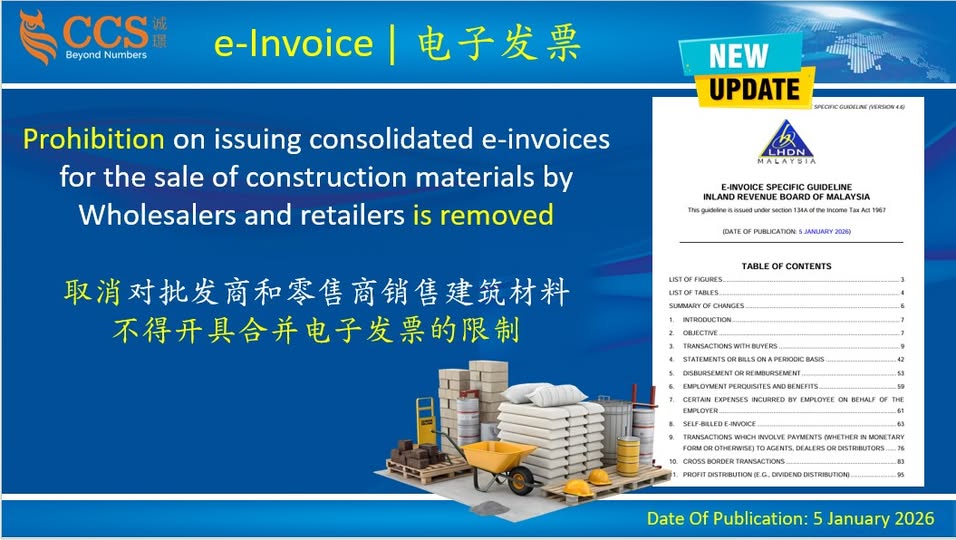
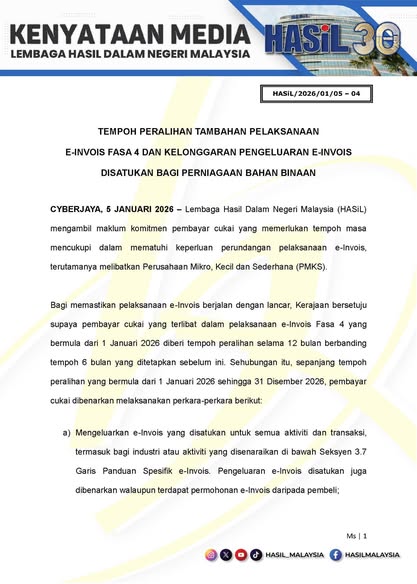
On 5 January 2026, HASiL issued Version 4.6 of the e-Invoice Specific Guideline, including changes affecting Phase 4 taxpayers and businesses dealing in construction materials.
Interim relaxation period extended
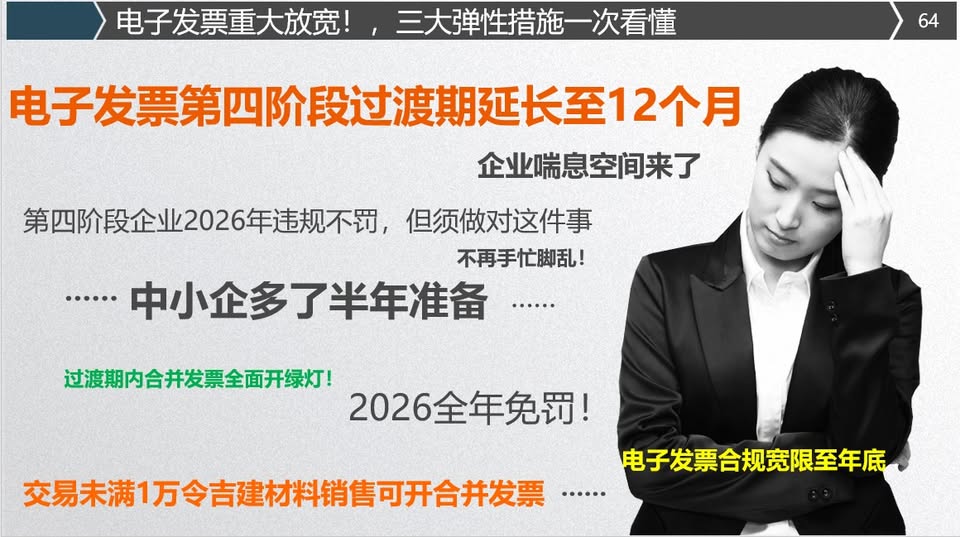
The initial announcement extended the Phase 4 interim relaxation period from six months to 12 months, covering 1 January to 31 December 2026. The period was subsequently extended. Under the latest Specific Guideline, Version 4.9, the interim relaxation for Phase 4 taxpayers runs until 31 December 2027.
During the interim relaxation period, taxpayers who are required to implement e-Invoice may issue consolidated e-Invoices for all activities and transactions, including those that would normally require individual e-Invoices. They may also issue consolidated self-billed e-Invoices for all prescribed self-billing circumstances. The relaxation allows consolidated documents to be used even when the buyer or supplier requests an individual e-Invoice, provided the applicable consolidation requirements are met.
IRBM will not undertake prosecution under Section 120 of the Income Tax Act 1967 for e-Invoice non-compliance during the relaxation period, provided taxpayers comply with the requirements for issuing consolidated e-Invoices or consolidated self-billed e-Invoices, as applicable.
Consolidated e-Invoices for construction materials
From 1 January 2026, wholesalers and retailers of construction materials covered by the relevant rules may issue consolidated e-Invoices. Under the standard requirements, an individual e-Invoice is required where a transaction exceeds RM10,000 or the buyer requests an e-Invoice.
Eligible Phase 4 taxpayers may also apply the interim relaxation described above during the applicable period. This allows consolidation in circumstances that would normally require an individual e-Invoice, subject to the relaxation requirements.
Businesses should confirm whether they are required to implement e-Invoice or qualify for an exemption, and check the latest HASiL guidance before applying the relevant rules. The transition period provides more time to prepare systems, train staff and organise records, but businesses should still ensure that their invoicing processes comply with the applicable requirements.
第四阶段 e-Invoice 更新:宽限期延长与合并开票安排
HASiL 于2026年1月5日发布《e-Invoice Specific Guideline》版本4.6,其中包括影响第四阶段纳税人及建筑材料行业的更新。
临时宽限期延长
最初公布的安排将第四阶段临时宽限期从六个月延长至12个月,即2026年1月1日至12月31日。此后,宽限期再度延长。根据最新的专项指南版本4.9,第四阶段纳税人的临时宽限期截至 2027年12月31日。
在临时宽限期内,须实施 e-Invoice 的纳税人可就所有活动及交易开具合并电子发票,包括通常须开具个别电子发票的交易。纳税人也可就所有规定的自开电子发票情形开具合并自开电子发票。只要符合适用的合并开票要求,即使买方或供应商要求开具个别电子发票,也可使用合并文件。
只要纳税人遵守合并电子发票或合并自开电子发票的适用要求,IRBM 在宽限期内不会根据《1967年所得税法令》第120条就电子发票不合规行为提起检控。
建筑材料销售的合并电子发票
自2026年1月1日起,符合相关规定的建筑材料批发商及零售商可开具合并电子发票。按照一般要求,单笔交易金额超过 RM10,000,或买方要求开具电子发票时,须开具个别电子发票。
符合条件的第四阶段纳税人,也可在适用期间采用上述临时宽限安排。只要符合宽限期的相关要求,即使一般情况下须开具个别电子发票,也可使用合并开票方式。
企业应确认自身是否须实施 e-Invoice,或是否符合豁免条件,并在适用相关规定前查阅 HASiL 最新指引。过渡期为企业提供更多时间准备系统、培训员工及整理记录,但企业仍须确保开票流程符合适用要求。