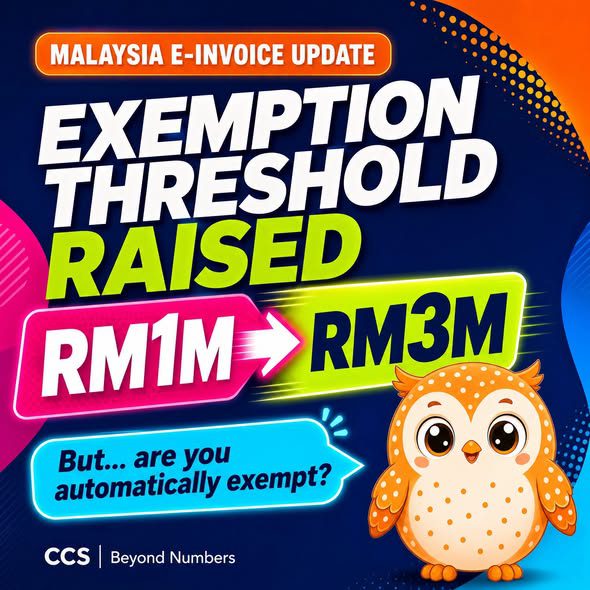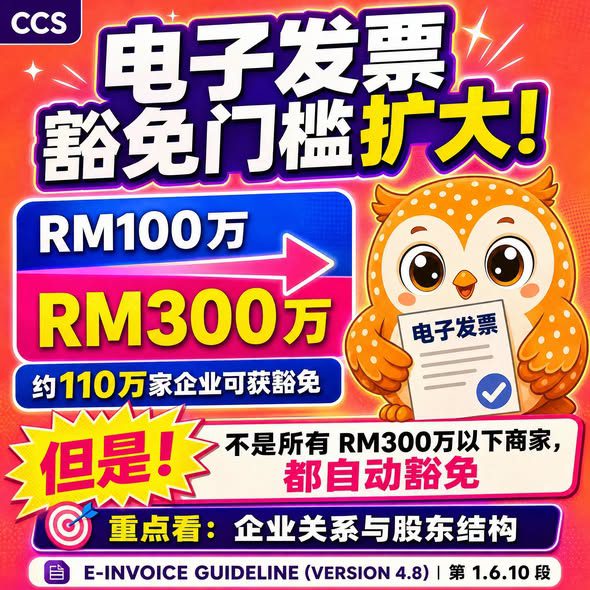
The e-Invoice exemption threshold for annual sales or operating revenue has been raised from RM1 million to RM3 million. An estimated 1.1 million businesses are expected to benefit.
However, annual revenue below RM3 million does not automatically mean a business is exempt. In addition to its own revenue, a business should review its shareholder and holding-company structure, as well as its relationships with related companies and joint ventures.
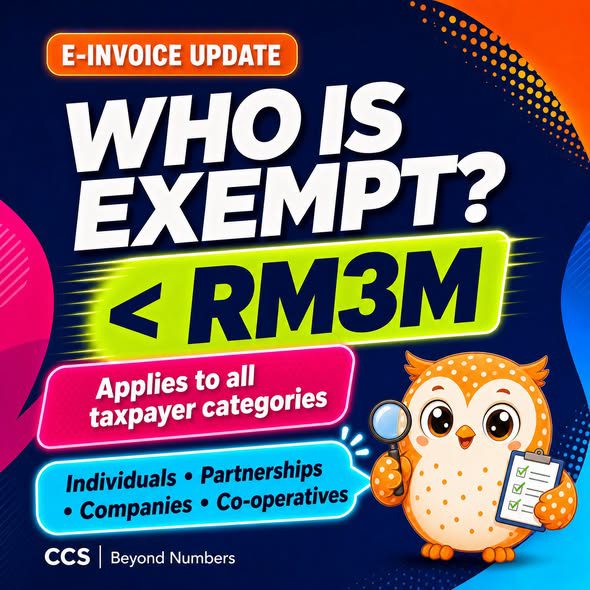
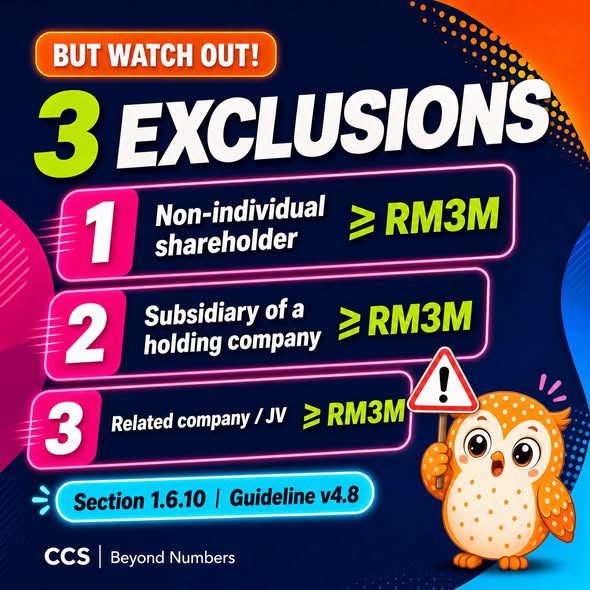
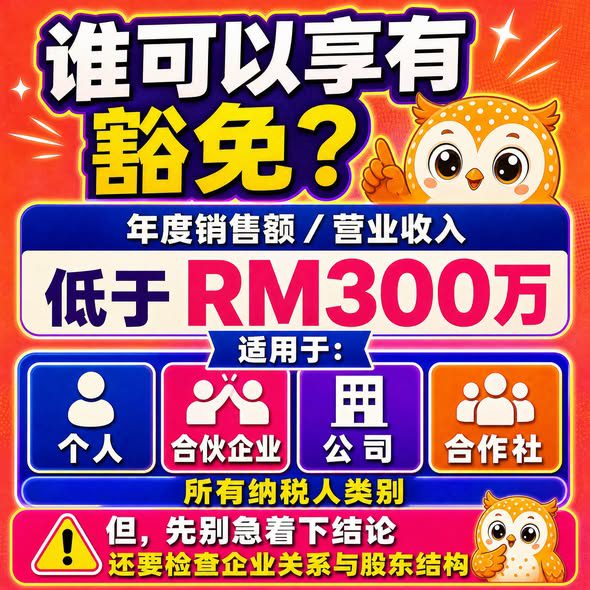
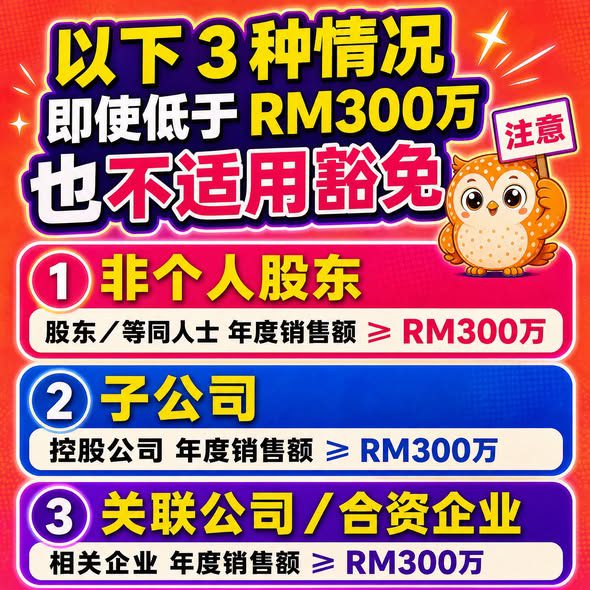
Under paragraph 1.6.10 of the E-Invoice Guideline (Version 4.8), the exemption for taxpayers with annual sales or operating revenue below RM3 million generally applies to individuals, partnerships, corporations, cooperatives and other categories of taxpayers. The exemption does not apply in the following three situations:
1. A Non-Individual Shareholder Meets the RM3 Million Threshold
If a business has a non-individual shareholder, or a shareholder of an equivalent nature, whose annual turnover or revenue is RM3 million or more, the business cannot assume that it qualifies for the exemption simply because its own revenue is below RM3 million.
The relevant shareholder’s scale of operations may also need to be considered.
2. The Business Is a Subsidiary of a Holding Company That Meets the Threshold
If the business is a subsidiary of a holding company with annual turnover or revenue of RM3 million or more, the exemption cannot be assessed solely by looking at the subsidiary’s own financial statements.
Businesses should therefore review whether they form part of a wider corporate group.
3. A Related Company or Joint Venture Meets the Threshold
If a business has a related company or joint venture with annual turnover or revenue of RM3 million or more, the exemption may not apply.
The term “related company” has the meaning assigned to it in Section 2 of the Promotion of Investments Act 1986. Its application should be assessed under the relevant legal definition, not inferred from common usage or a company’s name.
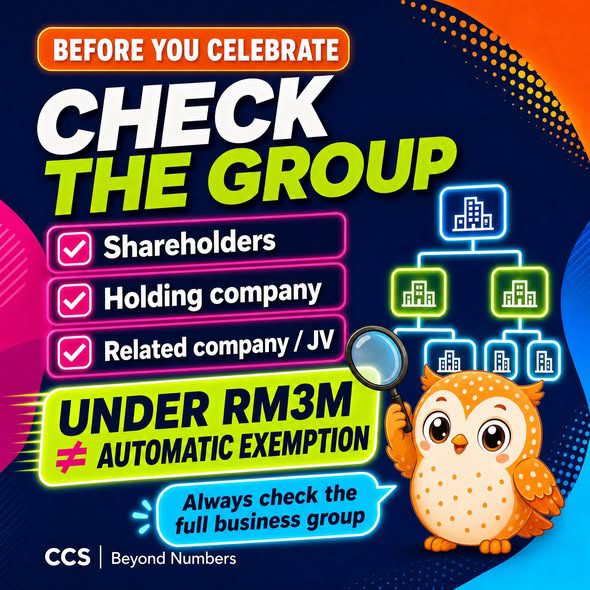
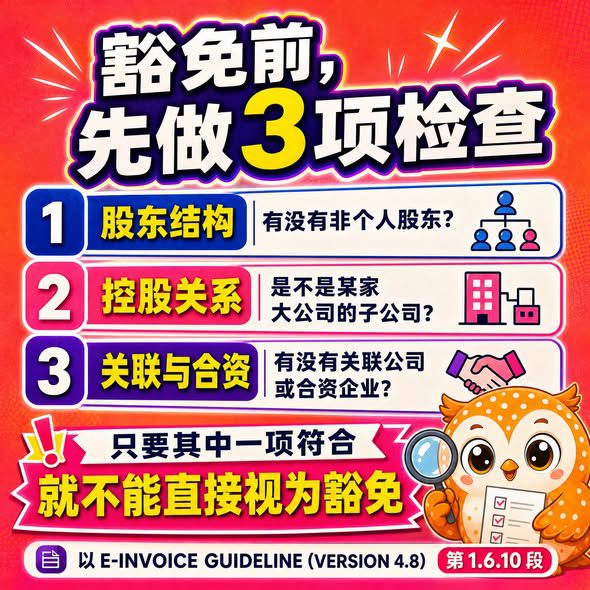
Three Checks for Businesses
Before concluding that the business qualifies for the e-Invoice exemption, review:
- Shareholders: Does the business have any non-individual shareholders, and does any relevant shareholder meet the RM3 million threshold?
- Holding structure: Is the business a subsidiary of a holding company, and does that holding company meet the threshold?
- Related companies and joint ventures: Does the business have any related companies or joint ventures whose revenue reaches or exceeds RM3 million?
If any of these situations applies, the business should not assume that it is exempt. Eligibility should be assessed against its actual structure, relationships and the latest official guidance.
In short: Revenue below RM3 million is not the only test. Review the business’s own revenue and the relevant relationships among its shareholders, holding company, related companies and joint ventures.
This article is based on paragraph 1.6.10 of the E-Invoice Guideline (Version 4.8) and is provided for general information. Applicability may depend on the business’s specific circumstances and relevant regulations. Businesses should refer to the latest official materials issued by the Inland Revenue Board of Malaysia or consult a professional tax adviser before determining their position.
e-Invoice豁免门槛低于RM300万:仍须检查的三种情况
年销售额或营业收入的 e-Invoice 豁免门槛已从RM100万提高至RM300万,预计约有110万家企业受惠。
不过,营业额低于RM300万,并不代表企业自动符合豁免条件。除了自身收入,企业还应检查股东及控股架构,以及与关联公司和合资企业之间的关系。
根据《E-Invoice Guideline》第4.8版第1.6.10段,年销售额或营业收入低于RM300万的纳税人一般包括个人、合伙企业、公司、合作社及其他纳税人类别。不过,以下三种情况不适用该豁免:
一、非个人股东达到RM300万门槛
如果企业有非个人股东,或具有类似性质的股东,其年营业额或收入达到或超过RM300万,企业不能仅因自身收入低于RM300万,就认定自己符合豁免条件。
相关股东的经营规模也可能需要纳入考量。
二、企业是达到门槛的控股公司的子公司
如果企业是控股公司的子公司,而控股公司的年营业额或收入达到或超过RM300万,就不能仅根据子公司自身的财务报表判断是否符合豁免条件。
因此,企业应检查自身是否属于更大的公司集团架构。
三、关联公司或合资企业达到门槛
如果企业拥有年营业额或收入达到或超过RM300万的关联公司,或参与此类合资企业,企业可能不符合豁免条件。
“关联公司”的定义依据《1986年投资促进法令》(Promotion of Investments Act 1986)第2条所赋予的含义。应按照相关法律定义判断,不能仅凭日常用语或公司名称推断。
企业应完成的三项检查
在认定企业是否符合 e-Invoice 豁免条件前,应检查:
- 股东:企业是否有非个人股东?相关股东是否达到RM300万门槛?
- 控股架构:企业是否为控股公司的子公司?该控股公司是否达到门槛?
- 关联公司及合资企业:企业是否有年收入达到或超过RM300万的关联公司或合资企业?
如果符合上述任何一种情况,企业都不应直接认定自己可以豁免。应结合企业的实际架构、相关关系及最新官方指引评估资格。
简单来说:营业额低于RM300万并非唯一判断标准。企业还应一并检查自身收入,以及股东、控股公司、关联公司和合资企业之间的相关关系。
本文依据《E-Invoice Guideline》第4.8版第1.6.10段整理,仅供一般参考。具体适用情况可能取决于企业的实际架构及相关法规。企业在判断自身情况前,应参阅马来西亚内陆税收局发布的最新官方资料,或咨询专业税务顾问。