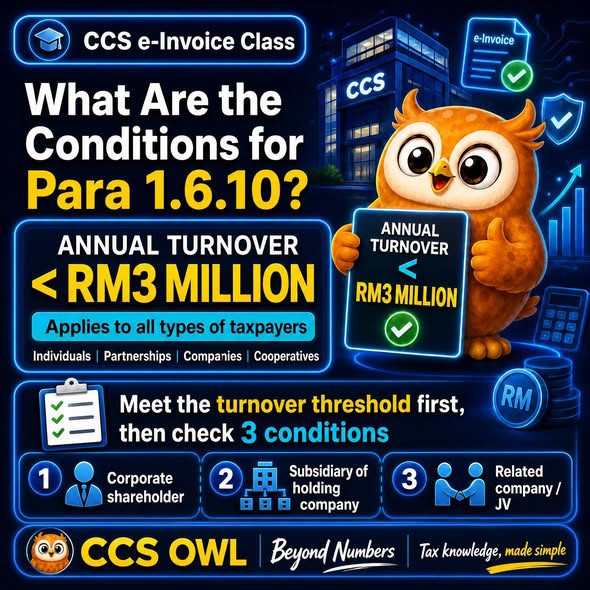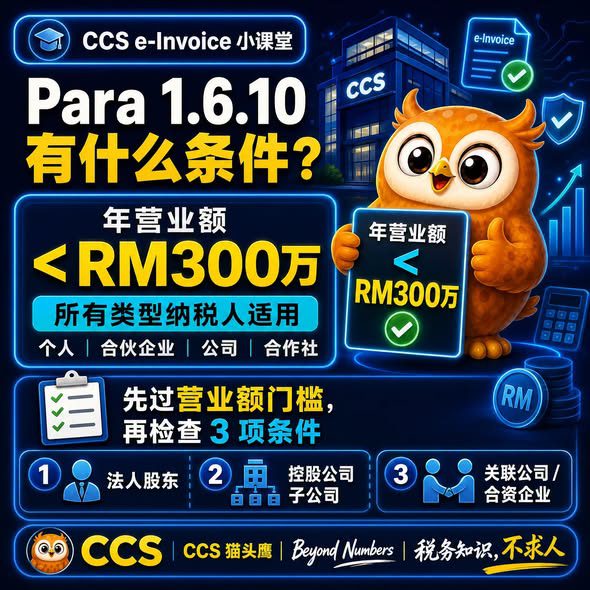
A business’s annual turnover below RM3 million is only the starting point for assessing eligibility for the e-Invoice exemption under paragraph 1.6.10 of the e-Invoice Specific Guideline v4.8. The business must also satisfy all three of the following conditions:
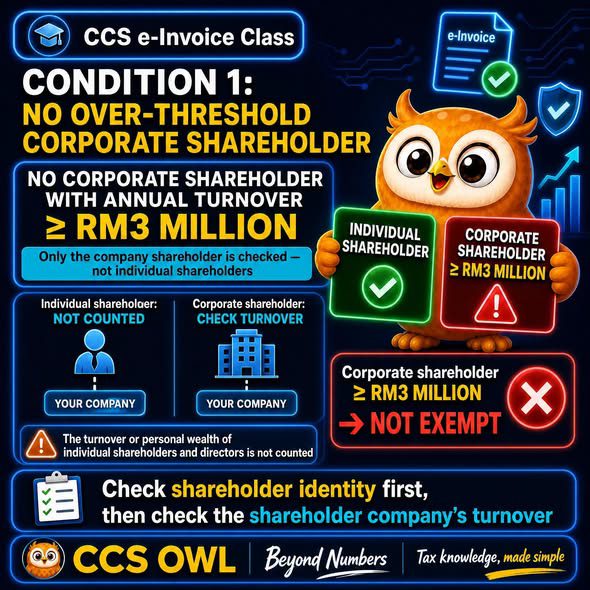
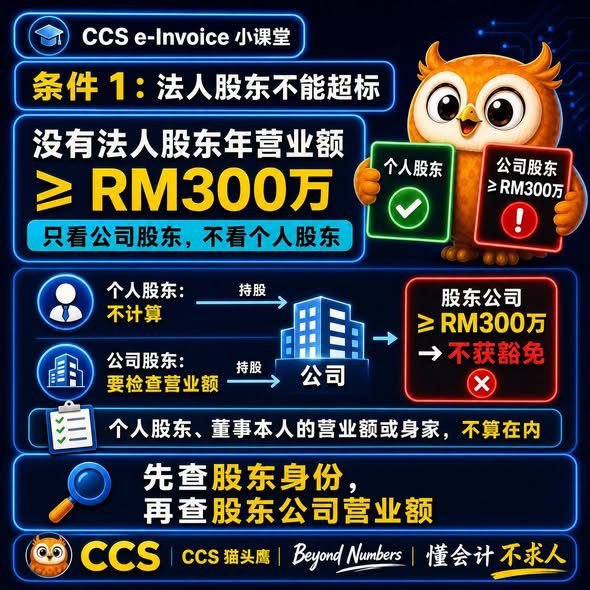
- It has no corporate shareholder with annual turnover of RM3 million or more.
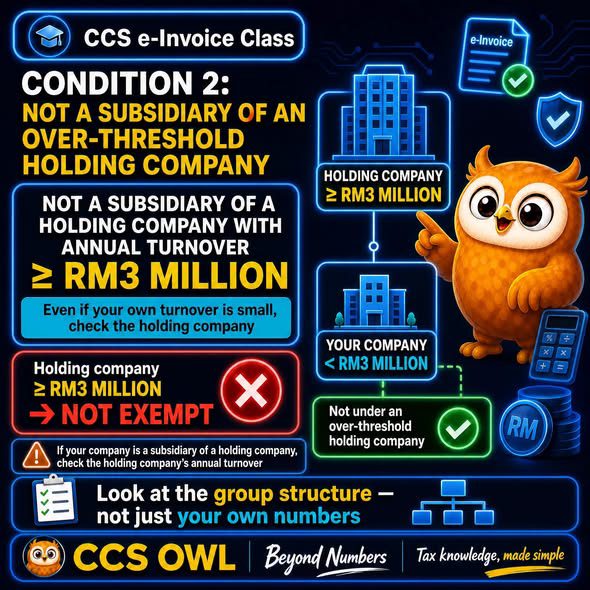
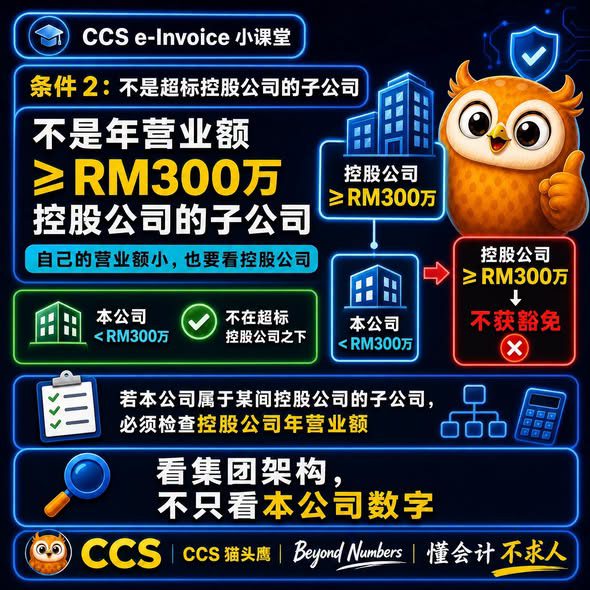
- It is not a subsidiary of a holding company with annual turnover of RM3 million or more.
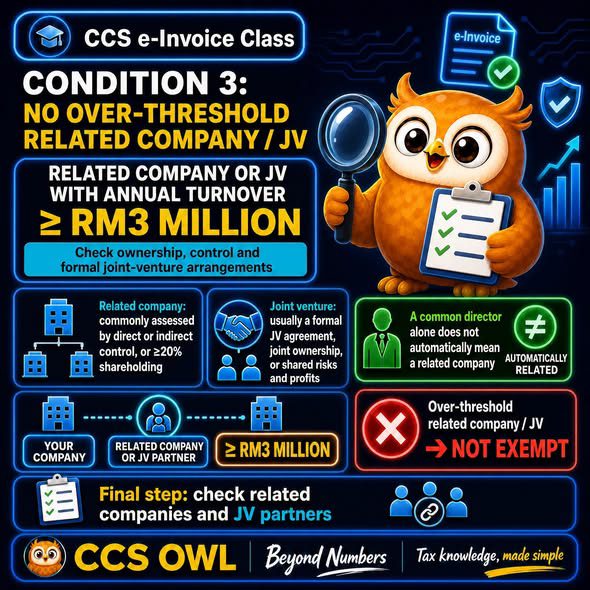
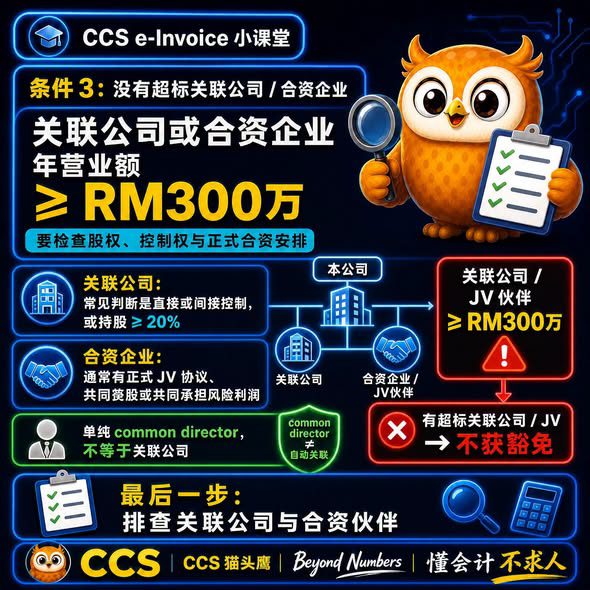
- It has no related company or joint venture with annual turnover of RM3 million or more.
This means that a business may have annual turnover below RM3 million and still not qualify for the exemption if it has a corporate shareholder, holding-company relationship, related company or joint-venture arrangement that meets the threshold.
A Practical Checklist
When assessing eligibility, businesses should look beyond their own turnover and review:
- whether their shareholders are individuals or companies;
- whether they form part of a group or holding-company structure;
- whether there are related companies involving shareholdings of 20% or more, or direct or indirect control; and
- whether there is a formal joint-venture agreement or arrangement.
In short: Check the turnover threshold first, then review the ownership and group relationships. All applicable conditions must be satisfied before the exemption can be confirmed.
CCS Cat Owl | Beyond Numbers | Accounting knowledge for everyone
《e-Invoice Specific Guideline》第4.8版:企业是否符合第1.6.10段的豁免条件?
根据《e-Invoice Specific Guideline》第4.8版第1.6.10段,企业年营业额低于RM300万只是评估 e-Invoice 豁免资格的第一步。企业还必须同时符合以下三项条件:
- 没有年营业额达到或超过RM300万的法人股东。
- 不是年营业额达到或超过RM300万的控股公司的子公司。
- 没有年营业额达到或超过RM300万的关联公司或合资企业。
因此,即使企业自身年营业额低于RM300万,如果其法人股东、控股公司、关联公司或合资安排达到相关门槛,企业仍可能不符合豁免条件。
实务检查清单
评估资格时,企业不应只检查自身营业额,还应检视:
- 股东是个人还是公司;
- 企业是否属于集团或控股架构;
- 是否存在持股20%或以上,或直接或间接控制的关联公司;以及
- 是否有正式的合资协议或安排。
简单来说:先看营业额,再检查股权及集团关系。必须同时符合所有适用条件,才能确认豁免资格。
CCS猫头鹰|Beyond Numbers|懂会计不求人