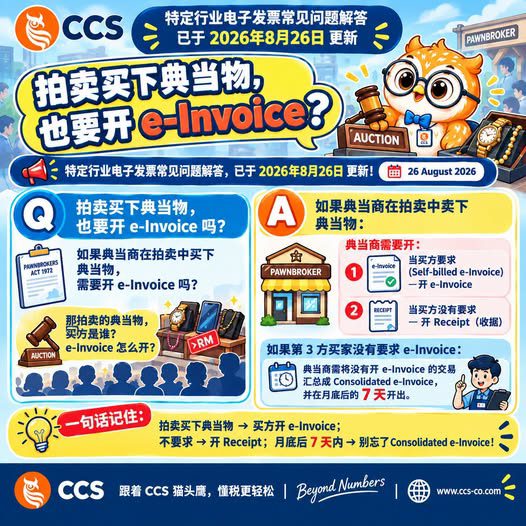
When a loan exceeds RM200 and the pledged goods are not redeemed, the goods enter the auction process. The e-Invoice treatment depends on who purchases them.
Scenario 1: The Pawnbroker Purchases the Goods
If the pawnbroker buys the pledged goods at auction:
- Self-billed e-Invoice: Issued for the purchase of the pledged goods.
- e-Invoice: Issued for interest and any other applicable charges.
Scenario 2: A Third-Party Bidder Purchases the Goods
If a third-party bidder buys the pledged goods at auction:
- Self-billed e-Invoice: The third-party bidder issues it for the purchase of the pledged goods.
- e-Invoice: The pawnbroker issues it for interest and any other applicable charges.
In short: The buyer of the pledged goods handles the self-billed e-Invoice for the purchase. The pawnbroker separately issues an e-Invoice for interest and applicable charges.
CCS Cat Owl | Beyond Numbers
典当物拍卖后由买方购得,需要开具 e-Invoice 吗?
当借款超过RM200,而典当物未获赎回时,典当物将进入拍卖程序。e-Invoice的处理方式取决于买方是谁。
情况一:典当商买下典当物
如果典当商在拍卖中买下典当物:
- 自开 e-Invoice(Self-Billed e-Invoice):用于购买典当物。
- e-Invoice:用于利息及其他适用费用。
情况二:第三方竞标者买下典当物
如果第三方竞标者在拍卖中买下典当物:
- 自开 e-Invoice(Self-Billed e-Invoice):由第三方竞标者就购买典当物开具。
- e-Invoice:由典当商就利息及其他适用费用开具。
简单来说:谁买下典当物,谁就负责购买该典当物的自开 e-Invoice;典当商则另行就利息及适用费用开具 e-Invoice。
CCS Cat Owl|Beyond Numbers