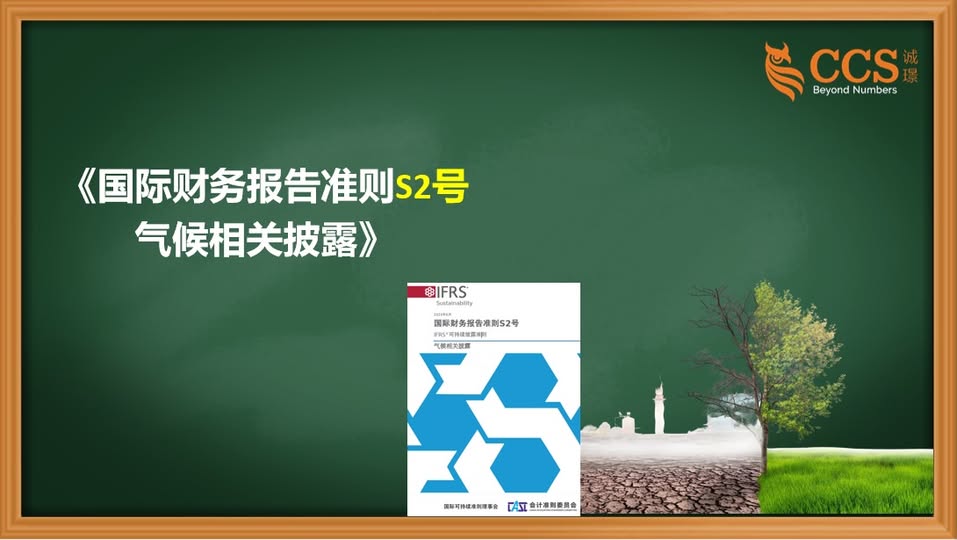
IFRS® S2 Climate-related Disclosures is an international standard issued by the International Sustainability Standards Board (ISSB).
It helps companies share important information about how climate change affects their business, including:
- Climate-related risks;
- Climate-related opportunities; and
- How the company plans to respond.
The standard is explained in plain language so that readers without an accounting or finance background can follow it.
What Does the Standard Explain?
IFRS S2 asks companies to disclose how climate change may affect their financial position, financial performance and cash flows. This covers:
- Physical risks, such as floods, heatwaves and extreme weather;
- Transition risks, such as carbon pricing and changes in policy or technology; and
- Opportunities, such as new low-carbon products and services.
Disclosures are organised around four areas: governance, strategy, risk management, and metrics and targets. These include greenhouse gas emissions and an assessment of how resilient the company’s strategy is under different climate scenarios.
Why Does It Matter?
Climate change can affect a company’s costs, assets, supply chains and long-term prospects.
Investors, employees, customers and the public want to know whether a company understands these risks and is preparing for a low-carbon future. Clear, consistent disclosure makes companies easier to compare and helps people make better-informed decisions.
Whether disclosure is mandatory depends on each jurisdiction. In places that have adopted IFRS S2, companies must follow its requirements.
In Simple Terms
IFRS S2 is:
- A framework that tells companies what climate information to disclose;
- A way to make climate-related reporting clearer and more consistent; and
- A resource that helps investors, employees and customers judge whether a company is taking climate change seriously.
The purpose is simple: to make climate-related financial information clear, comparable and understandable to everyone.
IFRS S2 气候相关披露:让气候信息更清晰
**IFRS® S2《气候相关披露》是由国际可持续性准则理事会(ISSB)**发布的国际准则。
它帮助企业披露气候变化如何影响其业务,包括:
- 气候相关风险;
- 气候相关机遇;以及
- 企业的应对计划。
该准则以易于理解的方式说明,即使没有会计或金融背景,也能够读懂。
该准则说明什么?
IFRS S2 要求企业披露气候变化可能如何影响其财务状况、经营业绩及现金流,内容涵盖:
- 实体风险,例如洪水、热浪及极端天气;
- 转型风险,例如碳定价,以及政策或技术的变化;以及
- 机遇,例如新的低碳产品与服务。
披露内容围绕四个方面:治理、战略、风险管理,以及指标和目标,其中包括温室气体排放,以及企业战略在不同气候情景下的韧性评估。
为什么重要?
气候变化可能影响企业的成本、资产、供应链及长远发展。
投资者、员工、客户及公众都希望了解企业是否明白这些风险,并为低碳未来做好准备。清晰一致的披露让企业之间更容易比较,也有助于使用者作出更有依据的决定。
是否强制披露取决于各国或地区的规定。在已采纳 IFRS S2 的地区,企业必须遵循相关要求。
简单来说
IFRS S2 是:
- 说明企业应披露哪些气候信息的框架;
- 让气候相关报告更清晰、更一致的方式;以及
- 帮助投资者、员工及客户判断企业是否认真对待气候变化的资料。
它的目的很简单:让气候相关财务信息对所有人来说都清晰、可比较且容易理解。
#看趋势看财税看CCS