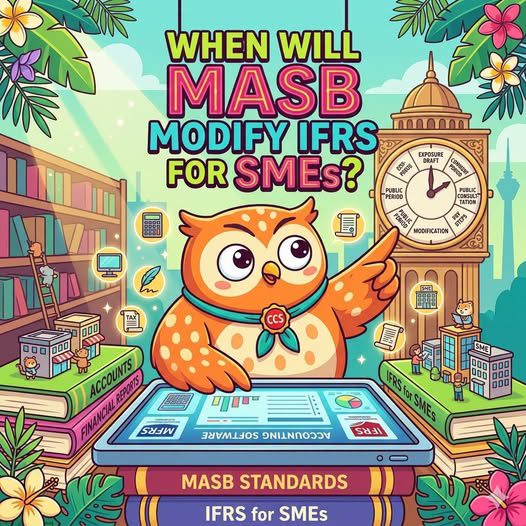
The Malaysian Accounting Standards Board (MASB) does not modify MPERS automatically whenever the full IFRS or MFRS requirements change. Changes are considered only when specific criteria are met.
Question 1: Will the Change Make Financial Statements More Useful?
MASB may consider a change if it improves the usefulness of financial information.
For example, if a new requirement helps banks assess a company’s credit risk more effectively, MASB may consider adopting or adapting it for MPERS.
Question 2: Will It Improve International Comparability?
MASB may also consider whether the change would improve comparability with companies in other countries.
Malaysia would generally avoid accounting requirements that make Malaysian companies’ financial statements significantly different from those prepared elsewhere without a clear reason.
Question 3: Will It Reduce Complexity?
If a requirement under full IFRS is excessively complex or difficult for small and medium-sized entities to apply, MASB may consider simplifying it.
The objective is to ensure that MPERS remains appropriate and practical for eligible private entities.
Question 4: Is the IASB Already Planning Major Changes?
MASB may also consider the International Accounting Standards Board’s (IASB) plans.
If the IASB is already preparing to revise a particular standard, MASB may wait for the international development instead of introducing a separate local amendment that could soon become outdated.
How MPERS Is Updated
MPERS is:
Updated periodically rather than continuously;
Developed with reference to the IFRS for SMEs review process;
Not automatically updated whenever MFRS requirements are amended; and
Designed specifically for eligible private entities.
Where MPERS does not provide specific guidance, an entity may refer to the relevant MFRS requirements only when doing so is consistent with MPERS principles and does not create a conflict with the standard.
MPERS is not simply a smaller version of MFRS. It is a separate framework that is updated through a specific review process and designed to balance usefulness, comparability and simplicity for private entities.