Accounting is not merely about recording numbers in a ledger. More importantly, it is about understanding the financial story behind a business.
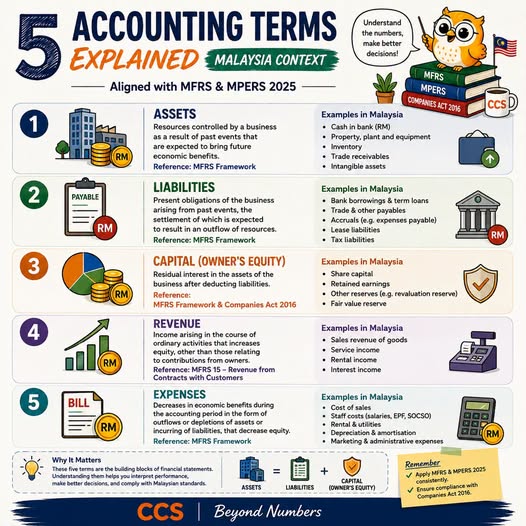
The five fundamental elements of financial statements are:
- Assets, which represent resources controlled by the business;
- Liabilities, which reflect the obligations the business must fulfil;
- Equity, which represents the residual interest after liabilities are deducted from assets;
- Revenue, which increases economic benefits through the business’s activities; and
- Expenses, which reflect the resources consumed in generating revenue.
These five concepts form the foundation for reading and understanding financial statements.
Whether an entity applies MFRS or MPERS 2025, understanding these elements is essential to identifying:
- What the business earns;
- What the business owns or controls;
- What the business owes;
- What resources it consumes; and
- How much value ultimately remains for the owners.
In simple terms, accounting is not only about putting figures into the books. It is about understanding what those figures say about the business.
CCS | Beyond Numbers
理解财务报表的五个基本要素
会计不只是把数字记录在账簿里,更重要的是看懂企业背后的财务故事。
财务报表的五个基本要素包括:
- 资产(Assets):代表企业所控制的资源;
- 负债(Liabilities):反映企业需要履行的义务;
- 权益(Equity):代表扣除负债后,属于企业所有者的剩余权益;
- 收入(Revenue):通过企业的经营活动增加经济利益;以及
- 费用(Expenses):反映企业在赚取收入的过程中所消耗的资源。
这五个概念,是阅读和理解财务报表的基础。
无论企业采用 MFRS 还是 MPERS 2025,掌握这些基本要素,才能真正看懂:
- 企业赚取了什么;
- 企业拥有或控制什么;
- 企业欠了什么;
- 企业消耗了哪些资源;以及
- 最终为企业所有者留下了多少价值。
简单来说,会计不只是把数字放进账簿,而是要理解这些数字如何讲述企业的经营情况。
CCS | Beyond Numbers