Is an asset simply something the company owns, and is a liability simply money the company owes?
Not necessarily.
MPERS 2025 Section 2 takes a deeper approach by focusing on economic resources, rights and obligations rather than only physical items or cash movements.
What Is an Asset?
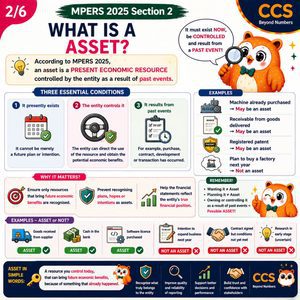
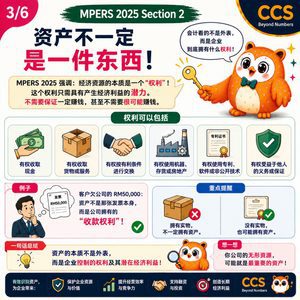
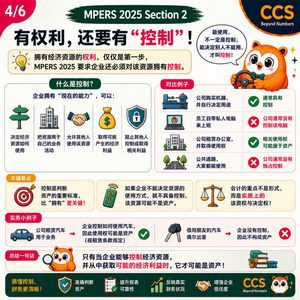
An asset is a present economic resource controlled by the entity as a result of past events.
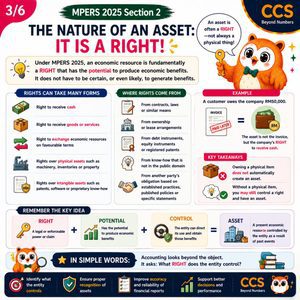
An economic resource is fundamentally a right that has the potential to produce economic benefits.
This means that an asset does not have to be a physical item owned by the company. It may arise from a right that the company controls and can use to generate benefits.
The key question is:
What economic resource or right does the company currently control?
What Is a Liability?
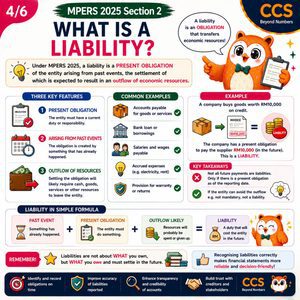
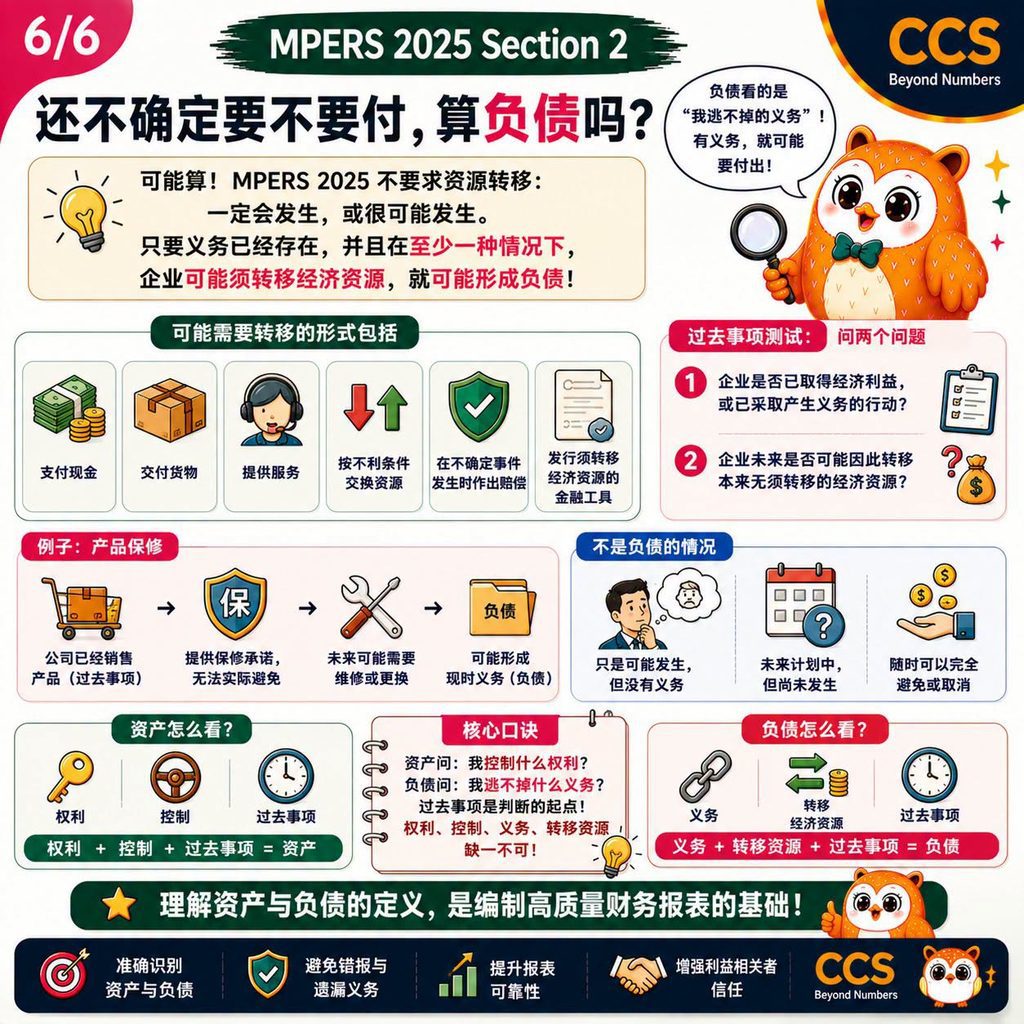
A liability is a present obligation arising from past events that may require the entity to transfer an economic resource.
The obligation may involve:
- Paying cash;
- Delivering goods or services;
- Transferring another asset; or
- Performing another contractual obligation.
The key question is:
What obligation does the company currently have that it cannot practically avoid?
How Do Income and Expenses Fit In?
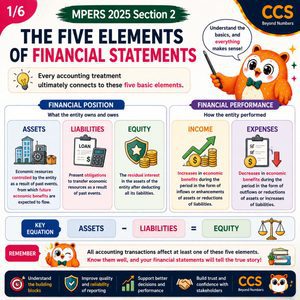
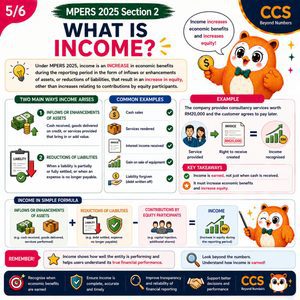
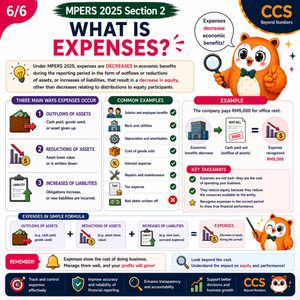
Income and expenses reflect changes in assets and liabilities that increase or decrease equity.
However, changes arising directly from transactions with equity holders—such as capital contributions or distributions—are excluded from income and expenses.
In simple terms:
- Income generally increases equity through increases in assets or decreases in liabilities; and
- Expenses generally decrease equity through decreases in assets or increases in liabilities.
The Key Principle
Accounting is not only about cash or physical items.
An asset is not merely something the company owns. It is a controlled right with the potential to produce economic benefits.
A liability is not merely money owed. It is a present obligation that may require the transfer of an economic resource.
Understanding these concepts helps businesses assess transactions based on their economic substance rather than relying only on legal ownership, physical possession or cash movements.
CCS | Beyond Numbers
MPERS 2025 第 2 节:理解资产、负债、收入与费用
资产只是公司“拥有的东西”,负债只是公司“欠的钱”吗?
答案是:
未必。
MPERS 2025 Section 2 采用更深入的概念,重点不只是看实物或现金流动,而是看企业所控制的经济资源、权利及义务。
什么是资产?
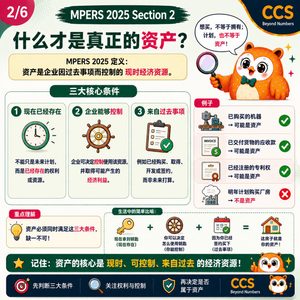
资产是指:
企业因过去事项而控制的现时经济资源。
而经济资源的本质,是一项具有产生经济利益潜力的权利。
因此,资产不一定是公司拥有的实物,也可能是一项由企业控制,并且能够为企业带来经济利益的权利。
关键问题是:
企业目前控制了什么经济资源或权利?
什么是负债?
负债是指:
企业因过去事项而产生的现时义务,而这项义务可能要求企业转移经济资源。
这项义务可能涉及:
- 支付现金;
- 交付商品或提供服务;
- 转移其他资产;或
- 履行其他合同义务。
关键问题是:
企业目前有什么实际上无法避免的义务?
收入与费用如何理解?
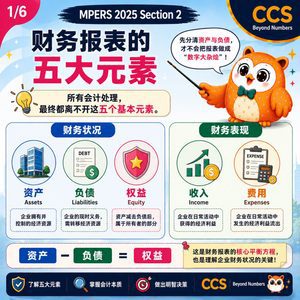
收入与费用,反映资产及负债的变动如何增加或减少权益。
不过,直接与权益持有人进行的交易所产生的变动,例如资本投入或利润分配,并不属于收入或费用。
简单来说:
- 收入通常通过增加资产或减少负债,使权益增加;以及
- 费用通常通过减少资产或增加负债,使权益减少。
关键原则
会计不只是看现金或实物。
资产不只是公司拥有的东西,而是企业所控制、并且具有产生经济利益潜力的权利。
负债不只是欠别人的钱,而是企业目前存在的一项义务,可能需要转移经济资源。
理解这些概念后,企业就能根据交易的经济实质进行判断,而不是只看法律所有权、实物是否在手上,或银行户口有没有发生现金流动。
CCS | Beyond Numbers