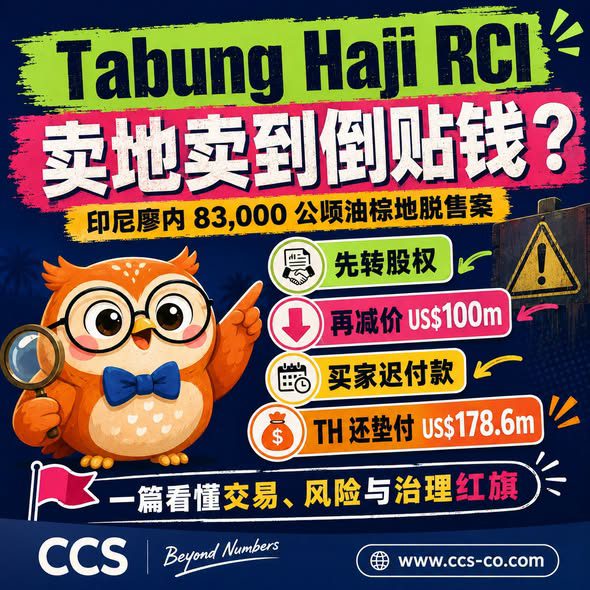
The PT TH Indo Plantations (THIP) transaction should not be understood simply as a case of “selling land at a loss”.
Its deeper lessons concern transaction structure, counterparty credit risk and corporate governance. These are matters that accountants, directors, audit committees and members of the public can all learn from.
Two points should first be clarified.
TH did not simply sell 83,000 hectares of land directly. Two TH subsidiaries sold a 95% interest in THIP, which owned approximately 83,000 hectares of Indonesian oil-palm plantations.
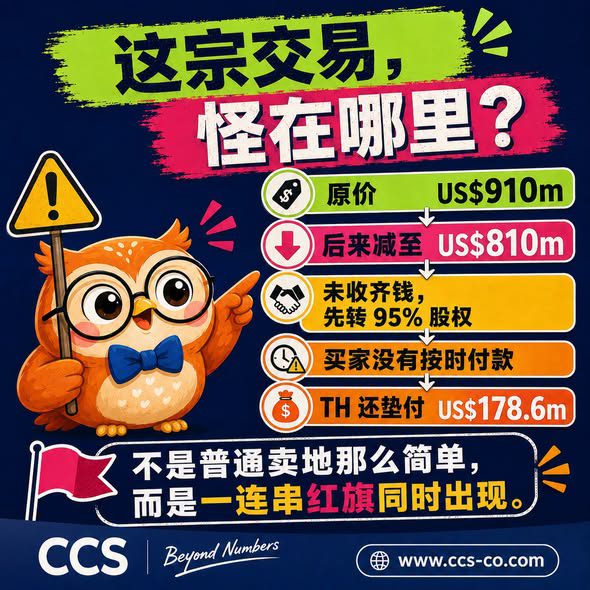
The transaction price announced in 2012 was US$910 million. Separately, the RCI referred to an advance of US$178.6 million. The original US$910 million consideration was subsequently reduced by US$100 million to US$810 million.
The Transaction in Simple Terms
Imagine that Mr Tan owns a durian plantation company.
A buyer offers:
“I will buy it for RM910.”
Mr Tan agrees. In a normal transaction, the expected sequence would be:
- The buyer pays most of the purchase price;
- Any deferred consideration is supported by a bank guarantee or other security;
- The balance is paid by instalments; and
- Completion takes place only after appropriate protection has been put in place.
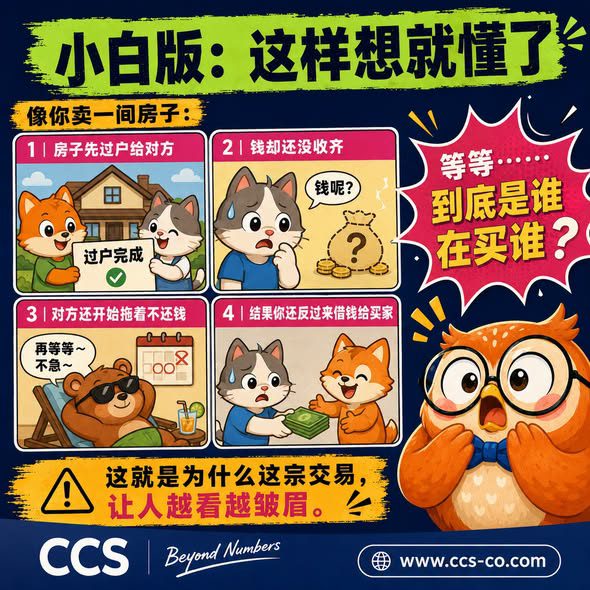
However, according to the RCI findings, TH transferred the THIP shares before receiving the full transaction consideration.
In simple terms:
- The ownership of the house was transferred first;
- The keys were handed over; but
- The money was to be paid later.
This does not mean that every transaction involving deferred consideration is improper. Large mergers and acquisitions may legitimately involve:
- Deferred consideration;
- Seller financing;
- Instalment payments; or
- Other structured settlement arrangements.
The key question is:
If the shares were transferred before full payment, what equivalent protection did TH receive?
The relevant safeguards could have included:
- A bank guarantee;
- An escrow arrangement;
- A share pledge;
- A parent company guarantee;
- Default interest;
- Staged transfer of the shares; or
- A mechanism allowing the seller to recover the shares if the buyer defaulted.
The important question is therefore not simply:
“How could the shares be transferred before full payment?”
It is:
“Since the shares were transferred first, what protection did TH receive in return?”
That is the question that directors, audit committees and investment committees should ask.
From a Controlling Asset to a Receivable
This is one of the most important aspects of the transaction.
Before the sale, TH held a 95% interest in a company with:
- Economic value;
- Control; and
- Underlying plantation assets.
After the shares were transferred, if the consideration had not been fully received, TH’s position changed significantly.
Instead of holding the investment, TH was left with a receivable.
In simple terms:
“I originally held a valuable business. I transferred it to you, and you gave me a paper stating that you owe me the money.”
That receivable may still be recognised as an asset in the accounting records.
However:
An asset is not the same as cash.
This distinction becomes especially important when the debtor begins to delay payment.
The transaction therefore converted part of TH’s asset risk into counterparty credit risk—the risk that the buyer may not be able to fulfil its payment obligations.
PT Borneo Pacific, the buyer, was a non-listed company at the time. Being unlisted does not automatically mean that a company is unsuitable as a counterparty. However, for a transaction of this size, the buyer’s financial capacity, beneficial ownership, source of financing, ability to provide security and capacity to perform should have been subject to rigorous credit due diligence.
The US$910 Million Consideration Was Reduced to US$810 Million
The RCI recorded that the original transaction price of US$910 million was subsequently reduced by US$100 million, resulting in a revised consideration of US$810 million.
It would be inappropriate to state automatically that the US$100 million was stolen or misappropriated. A renegotiation of the purchase price is not necessarily unlawful or unreasonable.
For example, a buyer may seek a price adjustment after discovering:
- Title issues affecting the land;
- A smaller-than-expected plantable area;
- Undisclosed liabilities;
- Tax risks;
- Higher environmental obligations; or
- Working capital adjustments.
The important questions are:
- Why was the US$100 million reduction made?
- Who proposed it?
- What was the basis for the reduction?
- Was a new independent valuation obtained?
- Was the reduction supported by due diligence findings?
- Who approved it?
- What did the Board paper state?
- Why was the reduction precisely US$100 million?
- What benefit or protection did TH receive in exchange?
- Were additional conditions attached to the price reduction?
These are the questions that a forensic audit should pursue.
A more precise conclusion would therefore be:
The original US$910 million consideration was reduced by US$100 million. Whether this concession had sufficient commercial justification, independent valuation support and appropriate approval must be explained.
The RCI subsequently identified serious governance weaknesses in a number of TH’s problematic investments and recommended forensic audits.
The US$178.6 Million Advance
The issue that may be even more concerning than the US$100 million price reduction is the US$178.6 million advance.
The RCI stated that TH did not receive the buyer’s payments according to the original schedule. Instead, TH provided an advance of US$178.6 million, even though the amount was originally expected to be resolved by PT Borneo Pacific.
Using the plantation example:
- The buyer says the original RM910 price is too high and proposes RM810;
- The seller agrees to the revised price;
- The buyer then says that it is unable to pay a further RM178.6 million; and
- The seller provides or advances the money on the buyer’s behalf.
At that point, the obvious question is:
Who was financing whom?
The description that TH “sold the plantation and then had to provide additional funds” may be vivid, but the accounting treatment requires greater precision.4
An Advance Does Not Automatically Mean an Immediate Loss
It is important not to assume that an advance of US$178.6 million automatically became an expense or loss on the date it was paid.
If TH had a legally enforceable right to recover the amount, and the amount was expected to be fully recoverable, the initial accounting may have been:
- Cash decreased by US$178.6 million; and
- A receivable or advance increased by US$178.6 million.
The initial entry would not necessarily be:
Expense: US$178.6 million
However, the credit-risk question would arise immediately.
If the same buyer:
- Had already failed to pay the purchase consideration on schedule; and
- Then required the seller to provide additional financing,
the recoverability of the receivable would require careful assessment.
If the buyer’s ability to repay became doubtful, the matter could involve:
- Impairment;
- Expected credit loss;
- Recoverability assessment; and
- The adequacy of security and guarantees.
A useful principle is:
A receivable means that someone owes you money. It does not mean that you already have the money.
Writing “PT Borneo owes me US$178.6 million” in an Excel spreadsheet does not cause the bank account to produce US$178.6 million.
Does a US$100 Million Price Reduction Equal a US$100 Million Accounting Loss?
Not necessarily.
Assume, for illustration, that the carrying amount of TH’s investment was US$600 million and the final sale consideration was US$810 million.
At a highly simplified level, the transaction could still result in an accounting gain of approximately US$210 million before considering other adjustments.
Therefore, it would be incorrect to say automatically:
“The price fell from US$910 million to US$810 million, so the accounting loss was US$100 million.”
The technically accurate statement is:
The agreed sale consideration was reduced by US$100 million.
Whether that reduction resulted in an accounting loss depends on matters such as:
- The carrying amount of the investment;
- Transaction costs;
- Other accounting adjustments; and
- The applicable financial reporting requirements.
However, from a commercial value-protection perspective, the US$100 million remains significant.
TH was originally expected to receive US$910 million, but the consideration was later reduced to US$810 million.
The Board should therefore be able to explain:
“What did TH receive in exchange for giving up US$100 million?”
If the answer is supported by a clear commercial rationale, independent evidence and proper approval, the reduction may be capable of explanation.
If the explanation remains merely:
“It was a commercial consideration,”
despite extensive review of the Board papers, further questions would be appropriate.
The Governance Red Flags Arise from the Combination
The most serious concern is not necessarily any single number viewed in isolation.
Consider the following:
- The shares were transferred before full payment;
- The purchase consideration was reduced by US$100 million;
- The buyer failed to make payments according to schedule; and
- TH provided a further US$178.6 million advance that was originally expected to be resolved by the buyer.
Individually:
- Early transfer of shares may be a transaction-structuring decision;
- A US$100 million price adjustment may be a commercial negotiation;
- Delayed payment may be an ordinary credit problem; and
- An advance may represent seller financing.
But when all four occur in the same transaction, they form a significant chain of governance and credit-risk red flags:
Shares transferred first
↓
Consideration not fully received
↓
Purchase price reduced by US$100 million
↓
Buyer fails to perform according to schedule
↓
Seller provides a US$178.6 million advance
Viewed together, this is no longer simply a question of whether one commercial judgment was reasonable.
It becomes a question of whether the transaction structure, approval process and risk controls were sufficiently robust.
The RCI’s broader findings regarding TH’s problematic investments were also serious. They included:
- An investment decision-making process that was not sufficiently orderly;
- Lack of coordination among key departments;
- Unclear investment procedures;
- Excessive reliance by the Investment Committee on management recommendations; and
- An acknowledgement by its chairman that the process had not been sufficiently rigorous, and was relatively relaxed and incomplete.
The RCI also recorded findings relating to suspicious transactions and the concealment of information.
Questions for the Audit and Risk Management Committee
If the transaction were presented to an Audit and Risk Management Committee today, the first question should not be:
“Why did the investment lose money?”
Investments can produce gains or losses. The Committee should instead trace the money and approval trail.
Key questions would include:
- How was the original US$910 million consideration determined?
- Why was the US$100 million reduction made?
- Who first proposed the reduction?
- How much cash had TH received when the 95% interest was transferred?
- Was the unpaid consideration secured?
- What was the buyer’s financial capacity at the time?
- Why was the transaction allowed to continue after the buyer could not perform according to schedule?
- Why did the arrangement become seller financing instead of buyer financing?
- Where did the US$178.6 million ultimately go?
- What was it used to pay?
- Who was legally liable to TH?
- Was interest payable?
- What security or guarantees existed?
- How much was ultimately recovered?
- Was an impairment recognised?
- What did management disclose to the Investment Committee and the Board?
- Was any material information withheld from the Board?
The most important question may be:
If this were your own US$910 million, would you approve the same transaction structure?
That question may be more useful than a ten-page risk matrix.
Internal Investigations and the Need for Careful Conclusions
According to public reports, TH’s new management conducted an internal investigation in 2018 and lodged a police report concerning the 2012 THIP transaction. The report related to alleged misrepresentations and concealment of material information in connection with the sale of the 95% interest.
Public RCI materials in 2026 also indicated that four individuals initially faced dismissal decisions in relation to the matter, which were later changed to demotion following appeals.
However, as described in the relevant reports, the police and MACC reports had not resulted in criminal charges being brought by the Attorney-General’s Chambers.
Two points must therefore be kept in view at the same time:
The RCI’s findings of serious red flags should not be minimised.
But:
A red flag, an internal disciplinary action or a police report is not the same as a court finding that a person has committed a criminal offence.
This distinction is essential when discussing matters involving public institutions.
The Main Accounting Lesson
The most important lesson is not a particular debit or credit entry.
It is not even impairment.
The central principles are:
Profit is not cash.
A receivable is not cash.
Sale price is not collection.
Disposing of an asset does not necessarily eliminate all related risks.
A company may report:
“The investment was sold for US$810 million.”
That may appear impressive. But an experienced accountant’s next question should be:
“How much was actually collected?”
If the answer is:
“The money has not all been received,”
the next question is:
“What happened to the shares?”
If the answer is:
“The shares have already been transferred,”
the next question is:
“What about the buyer’s unpaid balance?”
If the answer is:
“Payment was delayed,”
the next question is:
“What happened after that?”
If the answer is:
“We advanced US$178.6 million to the buyer,”
the issue is no longer merely a debit-and-credit question.
It becomes:
Who was financing whom?
Final Observations
The THIP matter should not be reduced to:
“83,000 hectares of land were sold, several hundred million disappeared, and another RM1.786 billion was given away.”
That may be attention-grabbing, but it is technically imprecise and leaves room for misunderstanding.
A more accurate conclusion is:
The most important issue in the THIP transaction is not simply whether the oil-palm plantation was sold at a high or low price. It is how TH protected the agreed consideration and managed the buyer’s credit risk.
The original US$910 million transaction for a 95% interest was later reduced by US$100 million. The shares were transferred before the full consideration was received. The buyer subsequently failed to pay according to the original schedule, and TH provided a US$178.6 million advance that was originally expected to be resolved by the buyer.
Any one of these matters may have a commercial explanation.
However, when the sequence is:
Transfer control first, reduce the price, receive payment late and then provide additional financing
the combination creates serious credit-risk and corporate-governance concerns.
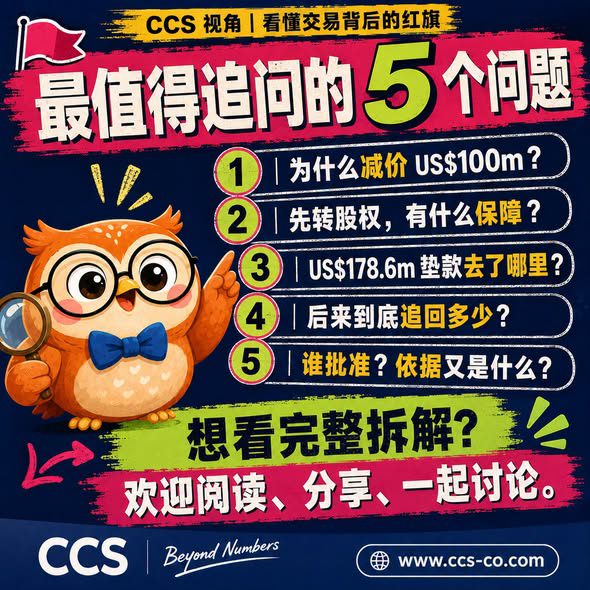
The questions requiring further examination are:
- Who approved the structure?
- What was the basis for the approval?
- What protection did TH receive?
- Why was the US$100 million concession granted?
- Where did the US$178.6 million ultimately go?
- How much was recovered?
- What information did the Board receive at the time?
This is why the matter requires more than online arithmetic.
It requires a forensic audit.
CCS | Beyond Numbers
THIP:交易结构、买方信用风险与公司治理的启示
PT TH Indo Plantations(THIP)这宗交易,不应该简单理解为“卖地卖亏了”。
它真正值得会计师、董事、审计委员会及普通人学习的,是一堂关于交易结构、交易对手信用风险及公司治理的课。
首先要澄清两点。
TH 并不是简单地把 83,000 公顷土地直接卖掉,而是由 TH 旗下两家子公司出售 THIP 95% 的股权。THIP 拥有约 83,000 公顷的印尼油棕园。
2012 年公布的交易价是 US$910 million。另外,RCI 所提到的 Advance 是 US$178.6 million。原本 US$910 million 的交易对价后来减少 US$100 million,变成 US$810 million。
这宗交易到底发生了什么?
把所有 “million” 换成比较容易理解的数字,可以这样想象。
假设老陈有一家榴莲园公司。
买家说:
“老板,我用 RM910 买。”
老陈答应了。
正常的交易安排可能是:
- 买家先支付大部分交易价;
- 如果有 Deferred Consideration,就由 Bank Guarantee 或其他 Security 支持;
- 余款按阶段或分期支付;以及
- 在适当的保护机制到位后,才完成交易交割。
但根据 RCI 的发现,TH 在还没有收到全部交易款之前,就已经把 THIP 的股份转给买方。
简单来说:
- 房子的名字先转给你;
- 钥匙也交给你;但是
- 钱以后再慢慢给。
这不代表所有“先交割、后付款”的交易一定有问题。大型 M&A 交易确实可能涉及:
- Deferred Consideration;
- Seller Financing;
- 分期付款;或
- 其他结构化结算安排。
真正的问题是:
如果股份先转了,TH 拿到了什么同等程度的保障?
相关保障可能包括:
- Bank Guarantee;
- Escrow Arrangement;
- Share Pledge;
- Parent Company Guarantee;
- Default Interest;
- 分阶段转让股份;或
- 买方违约时,卖方可以收回股份的机制。
所以,专业问题不是单纯问:
“怎么可以先转股份?”
而是:
“既然股份先转了,TH 得到了什么保护?”
这正是董事、审计委员会及投资委员会应该追问的问题。
TH 把有控制权的资产换成了别人答应偿还的钱
这是整宗交易最容易被忽略的地方。
出售之前,TH 手里拥有的是:
- 95% 的公司股权;
- 经济价值;
- 控制权;以及
- 相关油棕园资产所支持的投资。
出售之后,如果交易款还没有全部收到,TH 的状况就发生了重要变化。
TH 手里的东西变成了:
Receivable——应收款项。
白话来说:
“原来我手里有一头牛。后来我把牛交给你,你给我一张纸:放心,我欠你一头牛的钱。”
会计账上,那张纸可能确实仍然可以称为一项 Asset。
但是:
Asset 不等于 Cash。
尤其当债务人开始迟还钱时,两者更不是一回事。
因此,这宗交易的核心问题之一,并不只是:
“油棕园到底值多少钱?”
而是:
TH 是否把原本的资产风险,转换成了 Counterparty Credit Risk——买方信用风险?
买方 PT Borneo Pacific 当时是一家非上市公司。
非上市不等于一定不好,但对于如此大型的交易,买方的以下事项理论上都需要极其严格的 Credit Due Diligence:
- 资金能力;
- 最终受益人;
- 融资来源;
- 提供担保的能力;以及
- 实际履约能力。
US$910 Million 变成 US$810 Million
RCI 记录显示:
- 原来的交易价:US$910 million;
- 后来减少:US$100 million;
- 最终变成:US$810 million。
这里不应该没有证据就直接喊:
“US$100 million 被偷掉了!”
商业交易中,价格重新谈判本身并不违法,也不一定不合理。
例如,买方后来发现:
- 土地存在产权问题;
- 实际可种植面积比预期少;
- 存在隐藏负债;
- 有税务风险;
- 环境责任高于预期;或
- 需要调整营运资本,
双方重新谈价是有可能的。
但仍然必须追问:
- 为什么减 US$100 million?
- 谁提出减价?
- 减价依据是什么?
- 有没有新的 Independent Valuation?
- 有没有 Due Diligence Findings 支持?
- 谁批准?
- Board Paper 是怎样写的?
- 为什么刚好是 US$100 million?
- 这项减价换来了什么利益或保护?
- 有没有附加条件?
这些才是 Forensic Audit 真正应该追查的问题。
因此,更专业的说法是:
原先约定的 US$910 million 交易对价,后来被削减 US$100 million。这项价值让步是否具有充分的商业理由、独立估值支持及适当批准,必须得到解释。
RCI 后来认为,TH 多项问题投资存在严重治理弱点,并建议进行 Forensic Audit。
更令人皱眉的是 US$178.6 Million Advance
相比 US$100 million 的折价,更值得研究的可能是:
US$178.6 million Advance。
RCI 明确指出,TH 没有按照原定时间收到买方款项,反而提供了 US$178.6 million 的 Advance,而这笔款项原本应由 PT Borneo Pacific 解决。
继续用榴莲园的例子:
- 你原本以 RM910 卖公司;
- 买家说:“老板,RM910 有点贵,RM810 可以吗?”
- 你答应了;
- 买家接着说:“老板,我还有 RM178.6 应该付,但现在有点紧。”
- 卖家最后回答:“没关系,我先帮你垫。”
这时候,隔壁的 Accounting 小哥可能会放下计算器,问:
“等等……现在到底是谁买谁?”
所以,“卖地卖到还要倒贴钱”虽然不够会计准确,却非常形象。
但会计师必须补充:Advance 不等于当天马上亏损
这一点必须替会计准则说句公道话。
假设 TH 垫出了 US$178.6 million:
- Cash 减少 US$178.6 million;
- Receivable 或 Advance 增加 US$178.6 million。
如果这笔款项具有法律上的追索权,而且预计可以全数收回,第一天不一定要马上记录:
Expense US$178.6 million
所以:
TH 垫出 US$178.6 million,不等于 TH 当天就亏了 US$178.6 million。
但是,信用风险问题会立即出现。
如果同一个买家:
- 原本购买公司的钱已经没有按时间付清;以及
- 现在还需要卖方进一步垫钱,
那么会计师就必须问:
这笔 Receivable 到底能不能收回来?
如果收回能力越来越可疑,最终就可能涉及:
- Impairment;
- Expected Loss;
- Recoverability;以及
- 担保和抵押是否足够。
初学者可以记住一句话:
Receivable 只是“别人欠我的钱”,不是“我已经拿到的钱”。
银行户口不会因为 Excel 里写着:
“PT Borneo 欠我 US$178.6 million”
就自己长出 US$178.6 million。
US$100 Million 折价,等于 US$100 Million 会计亏损吗?
不一定。
这是社交媒体上很容易被讲错的地方。
假设 TH 这项投资的账面成本是 US$600 million,而最终销售价是 US$810 million。
在非常简化的情况下,交易仍然可能产生约:
US$210 million 的会计收益
因此,不能直接说:
“从 US$910 million 变成 US$810 million,所以会计亏损 US$100 million。”
比较准确的说法是:
销售对价减少了 US$100 million。
这项减少是否构成会计亏损,还要看:
- 投资的账面价值;
- 交易成本;
- 其他会计调整;以及
- 适用的财务报告要求。
不过,从商业价值保护的角度来看,US$100 million 仍然非常重要。
原本 TH 可能收到 US$910 million,后来只剩 US$810 million。
因此,董事会应该能够解释:
“TH 放弃 US$100 million,换来了什么?”
如果答案有具体的商业理由、独立证据及适当批准,事情可能可以解释。
但如果翻遍 18 份 Board Paper,答案还是:
“Commercial consideration。”
那么审计师自然会继续追问。
真正严重的是:这些情况组合在一起
如果只出现一个情况:
- 先转股份,后收余款;
这可能只是交易结构安排。
如果只有:
- US$100 million 价格调整;
这可能只是商业谈判。
如果只有:
- 买方延迟付款;
这可能是一般的 Credit Problem。
如果只有:
- 卖方提供 Advance;
这可能是 Seller Financing。
但如果四个情况同时发生:
股份先转了
↓
钱没有收齐
↓
价格再减少 US$100 million
↓
买方又没有按期履约
↓
卖方反而再垫 US$178.6 million
那就不再是单一的“Normal Business Judgement”。
这形成了一整条明显的 Governance Red-flag Chain。
RCI 对 TH 问题投资的整体发现也相当严厉,包括:
- 投资决策程序不够有序;
- 关键部门之间缺乏协调;
- 投资流程不清楚;
- 投资委员会过度依赖管理层建议;以及
- 投资委员会主席承认当时的做法不够严格、较为宽松和不全面。
RCI 也记录了可疑交易及隐瞒资讯的相关发现。
从 Audit Committee 角度,我会问什么?
如果今天这宗交易摆在 Audit & Risk Management Committee 面前,我不会先问:
“为什么亏钱?”
投资有赚有亏,本身很正常。
我会先追一条完整的 Money Trail:
- US$910 million 是怎样估出来的?
- 为什么后来不要 US$100 million?
- 谁先提出减价?
- TH 把 95% 股份交出去时,究竟已经收到多少现金?
- 未收金额有没有 Security?
- 买方当时的 Financial Capacity 怎样?
- 为什么买方不能按期履约后,交易仍然继续?
- 为什么最后不是 Buyer Financing,而变成 Seller Advance?
- US$178.6 million 最终流向谁?
- 这笔钱是用来支付什么?
- 法律上谁欠 TH 钱?
- 有没有利息?
- 有什么担保?
- 后来究竟追回多少?
- 有没有确认 Impairment?
- Management Paper 向 Investment Panel 和 Board 披露了什么?
- 有没有任何资料没有告诉 Board?
最关键的一题是:
如果这是你自己的 US$910 million,你还会不会批准同样的交易结构?
这一题,往往比十页 Risk Matrix 更有用。
TH 后来为何报警?
根据公开报道,TH 新管理层在 2018 年进行内部调查后,就这项 2012 年的 THIP 交易作出警方报告,涉及出售 95% 股权交易中的涉嫌失实陈述及隐瞒重要资料。
2026 年公开的 RCI 资料也显示,这宗案件曾导致四名相关人士最初面对 Dismissal 决定,之后在上诉后改为 Demotion。
不过,必须同时保留一个重要界线:
根据相关公开资料,截至 RCI 所述情况,警方及 MACC 报告并没有导致 Attorney-General’s Chambers 提出刑事控控。
因此,这两句话必须同时成立:
RCI 发现严重 Red Flags,不能淡化。
但是:
Red Flag、内部纪律处分或警方报告,不等于法院已经裁定某个人犯罪。
在讨论公共机构案件时,这条界线非常重要。
这宗案件最大的 Accounting Lesson
最大的 Lesson 不是 Debit,也不是 Credit。
甚至不只是 Impairment。
真正的重点是:
Profit 不等于 Cash。
Receivable 不等于 Cash。
Sale Price 不等于 Collection。
出售资产,不等于所有相关风险已经消失。
一家公司可以在纸上写:
“我把这项投资卖了 US$810 million。”
看起来很漂亮。
但有经验的会计师下一句一定会问:
“How much did you actually collect?”
如果答案是:
“钱还没有收完……”
下一句会是:
“股份呢?”
如果答案是:
“已经给了。”
再问:
“买家欠的钱呢?”
回答:
“迟还。”
再问:
“然后呢?”
回答:
“我们又 Advance US$178.6 million 给他。”
这时候已经不只是 Debit 和 Credit 的问题,而是:
到底是谁在 Financing 谁?
最终结论
我不会把 THIP 事件简单说成:
“卖了 83,000 公顷土地,几亿不见了,另外又送出 RM1.786 billion。”
这样虽然很吸引眼球,但技术上会留下许多误解空间。
更准确的总结是:
THIP 案最值得质疑的,不只是油棕园最后卖贵还是卖便宜,而是 TH 如何保护自己的交易对价,以及如何管理买方的信用风险。
原定 US$910 million 的 95% 股权交易后来减少 US$100 million;在尚未收到全部款项之前,股份已经转给买方;买方随后又没有按照原定时间履行付款,而 TH 还必须提供一笔原本应由买方解决的 US$178.6 million Advance。
这些事情单独来看,可能各自存在商业解释。
但当以下情况连续发生在同一宗交易中:
先交出控制权、再降低价格、迟收款项,最后还要由卖方垫钱,
就形成了非常严重的信贷风险及公司治理警讯。
因此,真正的问题不是一句“钱去了哪里”就结束,而是必须继续追查:
- 谁批准?
- 凭什么批准?
- TH 拿到了什么保障?
- US$100 million 为什么让步?
- US$178.6 million 最终去了哪里?
- 后来收回多少?
- 董事会当时到底获得了什么资料?
这也是为什么这宗案件需要的不是网络算术,而是:
Forensic Audit。
RCI 将 THIP 放在 TH 更广泛的“问题投资”治理框架下,并建议对相关问题投资进行更深入的法证审查。
CCS | Beyond Numbers