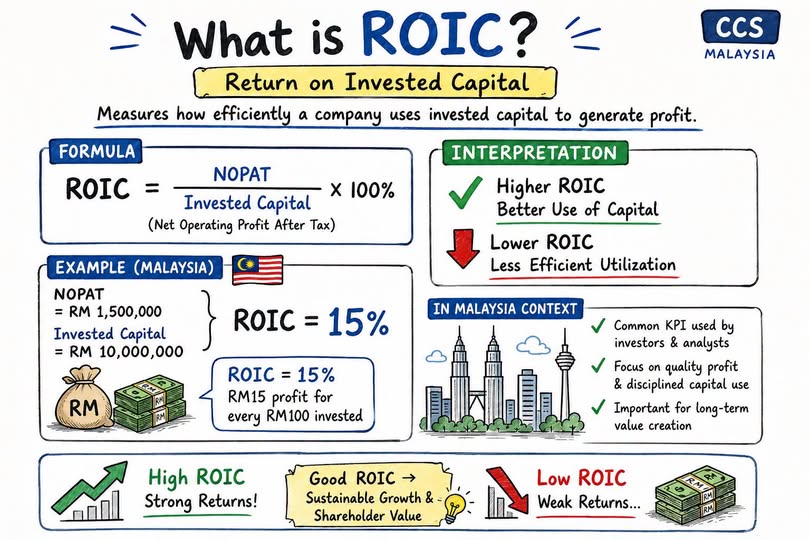
Let’s talk about ROIC, or Return on Invested Capital.
Imagine that you are a typical Malaysian uncle who invests RM10,000 to open a small mamak stall near an office.
After paying for staff, gas, Maggi, teh tarik and other operating expenses, the stall generates a net profit of RM1,500 a month.
In this simplified example, for every RM100 invested, the business generates RM15 in profit. This represents a 15% return on the invested capital for the period being measured.
Now imagine that your friend also invests RM10,000 but earns only RM300 a month after all expenses.
His return on the invested capital is only 3% for the same period.
You might tell him:
“Bro, your capital is working harder sleeping in the bank than working in your stall.”
A high ROIC suggests that the business is using its invested capital efficiently to generate returns.
A low ROIC may indicate that the capital is not being used effectively, or that the business is generating insufficient returns relative to the capital invested.
In simple terms:
High ROIC = Your money is working hard, like a Grab driver during peak hours.
Low ROIC = Your money is simply waiting around, like a car stuck in Kuala Lumpur traffic at 6 p.m.
ROIC helps business owners and investors assess whether a business is generating an attractive return on the capital committed to it.
However, the period measured, the definition of profit and the amount included as invested capital should be applied consistently when making comparisons.
Ultimately, ROIC helps answer an important question:
Is the business a worthwhile investment, or merely an expensive hobby?
CCS | Beyond Numbers
ROIC:衡量投入资本的回报
今天来讲讲 ROIC,也就是 Return on Invested Capital(投入资本回报率)。
假设你是一位很典型的马来西亚叔叔,投资 RM10,000,在办公室附近开了一间小型 Mamak 档口。
每个月扣除帮手工资、煤气、Maggi、Teh Tarik 及其他营业开支后,档口还可以赚取 RM1,500 的净利润。
在这个简化例子中,每投入 RM100,就可以赚取 RM15。这代表在所计算的期间内,投入资本取得了 15% 的回报。
现在,假设你的朋友也投资 RM10,000,但每个月扣除所有费用后,只赚到 RM300。
在相同计算期间下,他的投入资本回报率只有 3%。
这时你可能会对他说:
“Bro,你的本钱放在银行睡觉,都比放在档口里更有用。”
较高的 ROIC,通常表示企业能够更有效地运用投入资本来产生回报。
较低的 ROIC,则可能表示资本运用效率不高,或者企业相对于投入资本所产生的回报不足。
简单来说:
高 ROIC = 你的钱很努力工作,就像高峰时段的 Grab 司机一样拼命接单。
低 ROIC = 你的钱只是停在那里,就像傍晚 6 点卡在吉隆坡车龙里的汽车一样。
ROIC 可以帮助企业老板和投资人评估,一门生意能否通过所投入的资本产生具有吸引力的回报。
不过,在比较不同企业时,应统一计算期间、利润定义及投入资本的范围,才能作出有意义的比较。
归根结底,ROIC 要帮助我们回答一个重要问题:
这门生意是一项值得的投资,还是只是一项昂贵的兴趣?
CCS | Beyond Numbers