Property Sale: Income Tax or RPGT? Lessons from Exceptional Landmark
When a company sells a property at a substantial profit, does the gain automatically become taxable business income?
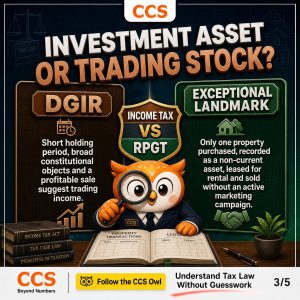
The High Court’s decision in Ketua Pengarah Hasil Dalam Negeri v Exceptional Landmark Sdn Bhd demonstrates that the answer depends on the commercial substance of the transaction—not merely on the company’s constitutional objects or the fact that the property was sold within a relatively short period.
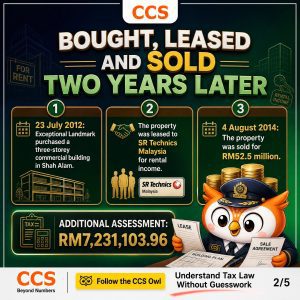
Exceptional Landmark purchased a three-storey commercial building, leased it to a tenant and subsequently sold it for RM52.5 million.
The Director General of Inland Revenue treated the gain as business income under section 4(a) of the Income Tax Act 1967. However, the Court found that the property had consistently been recorded as a non-current investment asset, rental income had been earned, there had been no active marketing campaign, and the improvements carried out were mainly to meet statutory and tenant requirements.
The DGIR’s appeal was dismissed, and the gain was treated as capital in nature within the RPGT framework
.
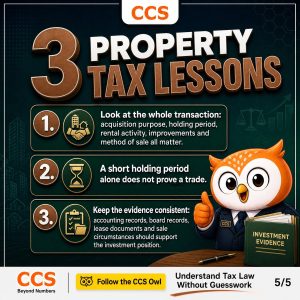
The key lesson for businesses is clear: maintain consistent records, document the intention behind an investment and assess the entire transaction before classifying a property gain.
物业出售所得:所得税还是房地产盈利税?——Exceptional Landmark案带来的启示
当一家公司以可观利润出售一项物业时,该项收益是否必然被视为应课税的业务收入?
高等法院在 Ketua Pengarah Hasil Dalam Negeri v Exceptional Landmark Sdn Bhd 一案中的判决表明,答案取决于有关交易的商业实质,而不仅仅是公司的组织章程所列业务范围,或有关物业在相对较短期间内被出售这一事实。
Exceptional Landmark购入一栋三层商业建筑,将其出租予租户,随后以5,250万令吉的价格出售该物业。
税收局局长(DGIR)根据《1967年所得税法令》第4(a)条,将该项收益视为业务收入。然而,法院认为,该物业一直被记录为非流动投资资产;公司曾从中赚取租金收入;公司并没有展开积极的市场推广活动;而有关改善工程主要是为了符合监管规定及租户的要求。
税收局局长的上诉被驳回,而该项收益则在房地产盈利税(RPGT)框架下被视为资本性质的收益。
这起案件为企业带来的主要启示十分明确:企业应维持一致的会计记录,记录并保存投资意图的相关文件,并在对物业收益进行分类前,全面评估整项交易的实质。