MPERS 2025 Section 23 introduces a more structured and unified approach to recognising revenue from contracts with customers.
1. A New Five-Step Model
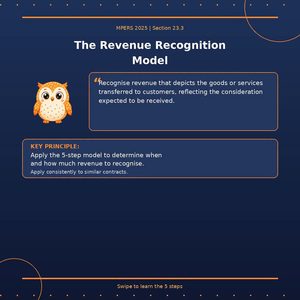
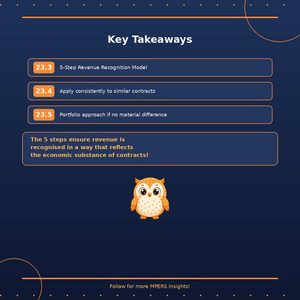
Section 23.3 introduces a five-step revenue recognition model that replaces the older approach, which applied separate recognition criteria to the rendering of services and the sale of goods.
The previous requirements were more fragmented and category-based. Section 23 now provides a single framework applicable to different types of customer contracts.
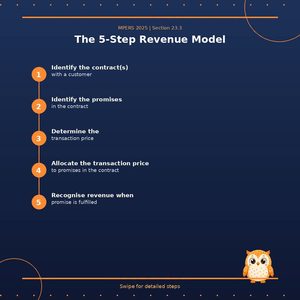
The five steps are:
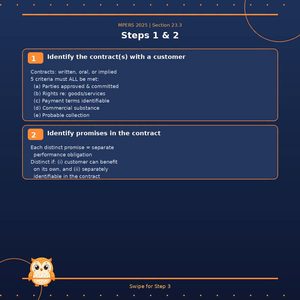
- Identify the contract with the customer;
- Identify the promises or performance obligations in the contract;
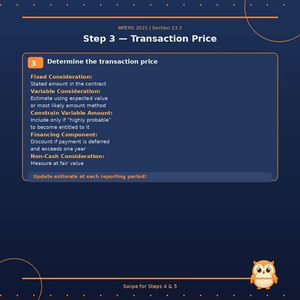
- Determine the transaction price;
- Allocate the transaction price to the performance obligations; and
- Recognise revenue when, or as, the entity satisfies a performance obligation.
2. Portfolio Approach
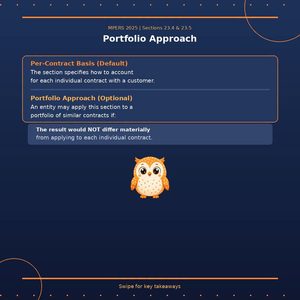
Sections 23.4 and 23.5 introduce a practical portfolio approach.
Instead of assessing every contract individually, an entity may apply the revenue recognition model to a group, or portfolio, of similar contracts if it reasonably expects that the result will not differ materially from applying the model to each contract separately.
This provides practical relief for entities with a large volume of contracts that have similar characteristics and circumstances.
3. Constraint on Variable Consideration
Section 23 introduces a “highly probable” constraint on variable consideration under paragraph 23.30.
Variable amounts, such as incentives, penalties, rebates or performance bonuses, should be included in the transaction price only to the extent that it is highly probable that a significant reversal of recognised revenue will not occur when the uncertainty is subsequently resolved.
This provides more specific guidance on the treatment of variable elements than the previous framework.
4. Consistent Application
Section 23.3 requires the five-step model to be applied consistently to contracts with similar characteristics and in similar circumstances.
This reinforces the need for uniformity in the application of revenue recognition policies and reduces the risk of applying different treatments to similar transactions without a valid reason.
5. Promises and Performance Obligations
Section 23 places greater emphasis on identifying the promises made to the customer and the related performance obligations.
This replaces the older concepts of bundling and separation with clearer guidance on when goods or services should be accounted for separately.
A good or service may generally be treated as a separate performance obligation when:
- The customer can benefit from it on its own or together with other readily available resources; and
- The promise to transfer it is separately identifiable from other promises in the contract.
What Does This Mean for Businesses?
Businesses applying MPERS should review:
- Their revenue recognition policies;
- The structure and terms of customer contracts;
- The identification of performance obligations;
- The treatment of variable consideration;
- The use of portfolio assessments; and
- The consistency of accounting treatment for similar contracts.
Section 23 moves revenue recognition from fragmented, category-based rules to a single, structured model based on contracts and performance obligations.
Businesses should assess the requirements based on their specific contracts and circumstances and seek professional advice where appropriate.
CCS | Beyond Numbers
MPERS 2025 第 23 节:全新的五步收入确认模式
MPERS 2025 第 23 节为客户合约收入确认带来更有结构、更统一的处理方式。
一、全新的五步法
Section 23.3 引入五步收入确认模式,取代旧有分别处理“提供服务”和“销售商品”的收入确认方法。
旧有要求较为分散,并根据交易类别设定不同的确认条件。Section 23 则提供一个适用于不同客户合约的统一框架。
五个步骤如下:
- 识别与客户签订的合约;
- 识别合约中的承诺或履约义务;
- 确定交易价格;
- 将交易价格分摊至各项履约义务;以及
- 在企业履行履约义务时,或随着履约义务的履行,确认收入。
二、投资组合方法(Portfolio Approach)
Section 23.4 及 Section 23.5 引入了较为务实的投资组合方法。
企业不一定需要逐一评估每一份合约。如果企业合理预期,将一组具有相似特征及相似情况的合约作为一个整体进行评估,所得结果不会与逐份合约评估产生重大差异,那么企业可以对该组合约应用收入确认模式。
这项安排对拥有大量相似合约的企业提供了实际上的便利。
三、可变对价的限制
Section 23 在 Paragraph 23.30 引入了可变对价的**“高度可能(Highly Probable)”限制条件**。
对于奖励、罚款、回扣或绩效奖金等可变金额,只有在以下情况下,企业才可以将其计入交易价格:
高度可能在不确定性解决时,已确认的收入不会发生重大转回。
相比旧有框架,Section 23 对可变金额的处理提供了更具体的指引。
四、一致应用的要求
Section 23.3 明确要求,对于具有相似特征并处于相似情况的合约,应一致应用这套五步模式。
这加强了收入确认政策统一应用的要求,也减少企业在没有合理理由的情况下,对相似交易采用不同会计处理的风险。
五、承诺与履约义务的概念
Section 23 更强调企业向客户作出的承诺,以及相关的履约义务(Performance Obligations)。
这取代了旧有关于合并及分拆项目的概念,并更清楚地说明,企业应在什么情况下将商品或服务分开进行会计处理。
当以下条件通常获得满足时,一项商品或服务可能被视为一项独立的履约义务:
- 客户可以单独使用该商品或服务,或与其他容易取得的资源一起使用并从中受益;以及
- 企业转移该商品或服务的承诺,在合约中可以与其他承诺区分开来。
对企业有什么影响?
采用 MPERS 的企业应检讨以下事项:
- 现有的收入确认政策;
- 客户合约的结构及条款;
- 履约义务的识别方式;
- 可变对价的处理;
- 是否适合采用投资组合方法;以及
- 相似合约是否采用一致的会计处理。
Section 23 将收入确认从分散的类别式规则,转变为以合约及履约义务为基础的统一五步模式。
企业应根据自身的合约及实际情况评估相关要求,并在适当情况下寻求专业意见。
CCS | Beyond Numbers