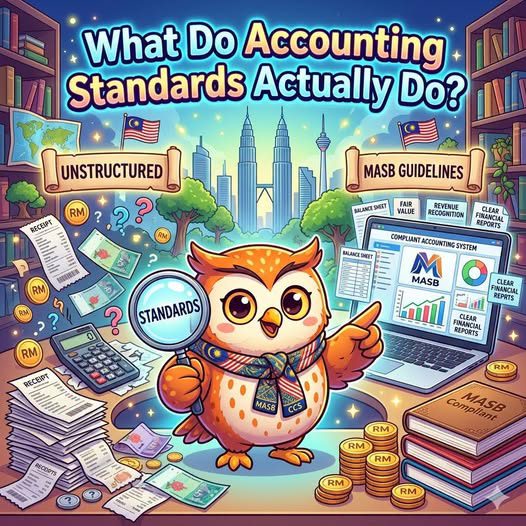
MFRS sets the rules for how transactions and events should be accounted for in four key areas:
- Recognition
- Measurement
- Presentation
- Disclosure
MFRS is based on the Conceptual Framework for Financial Reporting.
Four Questions Answered by Accounting Standards
1. Should It Be Recorded? — Recognition
Recognition determines whether an item should be included in the financial statements.
For example, a company purchases a machine. Should the machine be recognised as an asset?
2. How Much Should Be Recorded? — Measurement
Measurement determines the amount at which an item should be recorded.
For example, a machine is purchased for RM100,000. Should it be measured at:
- RM100,000;
- Fair value; or
- Its depreciated carrying amount?
The appropriate measurement depends on the applicable accounting requirements.
3. Where Should It Be Presented? — Presentation
Presentation determines where an item should appear in the financial statements.
For example, should an item be presented as:
- Property, plant and equipment;
- Inventory; or
- Investment property?
4. What Additional Information Should Be Disclosed? — Disclosure
Disclosure provides users with additional information needed to understand the item and its accounting treatment.
For example, users may need to know:
- The asset’s useful life;
- The depreciation method used; and
- Whether the asset has been pledged as security to a bank.
An Everyday Example: Building a House
The four concepts can be compared to building a house:
- Recognition: Deciding whether a room should exist;
- Measurement: Deciding how large the room should be;
- Presentation: Deciding where the room should be located; and
- Disclosure: Explaining why the room was designed in that way.
Why the Conceptual Framework Matters
The Conceptual Framework acts like an accounting GPS.
Sometimes, a transaction is not specifically addressed by an existing accounting standard. In such cases, the framework helps accountants determine the most appropriate accounting treatment based on fundamental accounting principles.
For example, 20 years ago, there was no specific accounting standard for cryptocurrency. Accountants therefore had to apply professional judgement based on the underlying accounting principles.
The Conceptual Framework helped guide those judgements.
MFRS provides the rules, while the Conceptual Framework helps explain the principles behind those rules and guides accounting judgement when a specific requirement is not available.
CCS | Beyond Numbers
MFRS 解析:确认、计量、列报与披露
MFRS 为交易和事项的会计处理制定了四个主要方面的规则:
- 确认(Recognition)
- 计量(Measurement)
- 列报(Presentation)
- 披露(Disclosure)
MFRS 是以 **《财务报告概念框架》(Conceptual Framework for Financial Reporting)**为基础。
会计准则回答的四个重要问题
1. 是否应当记录?——确认
确认,是判断某个项目是否应该列入财务报表。
例如,公司购买了一台机器。这台机器是否应该确认为资产?
2. 应该记录多少金额?——计量
计量,是决定某个项目应以多少金额记录。
例如,公司以 RM100,000 购买一台机器。该机器应该按照以下哪一种金额计量:
- RM100,000;
- 公允价值;或
- 扣除折旧后的账面金额?
适用的计量方式,取决于相关会计要求。
3. 应该列示在哪里?——列报
列报,是决定某个项目应在财务报表的哪个位置呈现。
例如,一项资产应列示为:
- 不动产、厂房及设备;
- 存货;或
- 投资性房地产?
4. 还需要披露哪些资料?——披露
披露,是提供使用者理解该项目及其会计处理所需要的额外信息。
例如,使用者可能需要了解:
- 资产的使用寿命;
- 所采用的折旧方法;以及
- 该资产是否已抵押给银行作为担保。
日常生活中的例子:建造一栋房子
这四个概念,可以比喻为建造一栋房子:
- **确认:**决定是否应该有这个房间;
- **计量:**决定房间应该有多大;
- **列报:**决定房间应该建在什么位置;以及
- **披露:**解释为什么房间要以这种方式设计。
为什么《财务报告概念框架》很重要?
《财务报告概念框架》就像一个会计 GPS。
有时,某项交易并没有被现有的具体会计准则明确涵盖。在这种情况下,会计师可以根据基本会计原则,通过概念框架判断最恰当的会计处理方式。
例如,20 年前还没有专门针对加密货币的会计准则。因此,会计师必须根据相关交易的实质及基本会计原则作出专业判断。
《财务报告概念框架》就能为这些判断提供方向。
MFRS 提供具体规则,而《财务报告概念框架》帮助我们理解这些规则背后的原则,并在没有具体规定时指导会计判断。
CCS | Beyond Numbers