Lease accounting under MFRS 16 and MPERS 2025 involves several areas that require careful professional judgement and consistent application of the relevant requirements.
The main differences concern the determination of the lease term, hire purchase arrangements, lease classification, complex arrangements, lease modifications and the effective date of MPERS 2025.
1. Determining the Lease Term
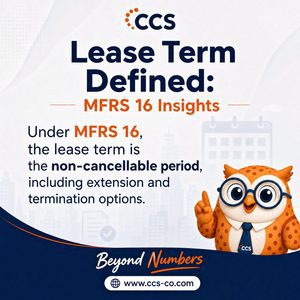
Under MFRS 16, the lease term is generally the non-cancellable period of the lease.
It must also include:
- Periods covered by an extension option if the lessee is reasonably certain to exercise the option; and
- Periods covered by a termination option if the lessee is reasonably certain not to exercise the option.
Entities must assess all relevant facts and circumstances when determining the lease term. These may include:
- Significant leasehold improvements;
- The importance of the underlying asset to the entity’s operations; and
- The economic incentives associated with extending or terminating the lease.
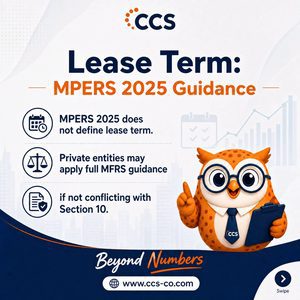
MPERS 2025 does not explicitly define “lease term” in the same way. In such circumstances, private entities may refer to the principles in the full MFRS framework, provided that the approach does not conflict with the hierarchy in Section 10 of MPERS.
2. Hire Purchase and Interest
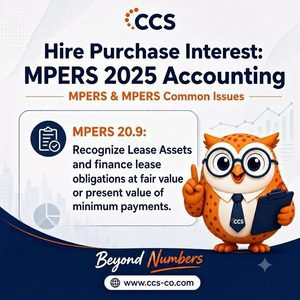
For hire purchase arrangements within the scope of MFRS 16, the lessee recognises a lease liability at the commencement date. The liability is measured at the present value of the unpaid lease payments.
The discount rate is:
- The interest rate implicit in the lease; or
- If that rate cannot be readily determined, the lessee’s incremental borrowing rate.
Interest expense is recognised over the lease term using a method that produces a constant periodic rate of interest on the remaining lease liability.
MPERS: Finance Lease and Operating Lease
MPERS retains the traditional lease accounting model, which distinguishes between:
- Finance leases; and
- Operating leases.
Finance Lease
A finance lease exists when substantially all the risks and rewards incidental to ownership are transferred to the lessee.
The lessee recognises:
- A leased asset; and
- A finance lease liability.
Under MPERS, the asset is not referred to as a Right-of-Use (ROU) Asset.
A typical entry may be:
Dr Property, Plant and Equipment or Leased Asset
Cr Finance Lease Obligation
The leased asset is accounted for under Section 17: Property, Plant and Equipment, rather than under an ROU asset model.
Operating Lease
For an operating lease, the lessee does not recognise:
- An ROU asset; or
- A lease liability.
Instead, lease payments are generally recognised as an expense on a straight-line basis over the lease term, unless another systematic basis better represents the pattern of benefit received.
A typical entry may be:
Dr Rental Expense
Cr Bank
A Simple Way to Remember the Difference
MFRS 16: ROU Asset + Lease Liability
MPERS 2025: Finance Lease vs Operating Lease
Under MPERS 2025, there is no ROU asset model for lessees. A finance lease is recognised as a leased asset, classified according to its nature, while an operating lease remains off the lessee’s statement of financial position and the lease payments are recognised as expenses over the lease term.
3. Classifying Complex Arrangements
Arrangements such as rent-to-own property transactions can be difficult to classify.
The key questions include:
- Does the contract contain a lease?
- If so, should it be classified as an operating lease or a finance lease?
- Which party bears the significant risks and rewards associated with ownership?
Under MFRS 16, lessors classify a lease based on whether substantially all risks and rewards incidental to ownership have been transferred to the lessee.
The assessment is based on the substance of the transaction, rather than its legal form.
Similarly, MPERS Section 20 requires lease classification to be assessed based on the transfer of risks and rewards.
4. Accounting for Lease Modifications
Lease modifications may include:
- Extending the contractual lease term;
- Changing the scope of the lease; or
- Adding or removing rights to use an underlying asset.
Under MFRS 16, a lease modification is a change to the scope or consideration of a lease that was not part of the original terms and conditions.
The entity must first determine whether the modification should be accounted for as a separate lease.
If it is not a separate lease, the lease liability is generally remeasured using a revised discount rate at the effective date of the modification. The corresponding accounting treatment depends on the nature of the modification.
MPERS 2025 does not explicitly define “lease modification” in the same way. Entities should therefore apply the hierarchy in Section 10, which may involve referring to the principles in the full MFRS framework while ensuring that the accounting treatment remains consistent with MPERS.
5. MPERS 2025 and the Effective Date
MPERS 2025 was issued by the Malaysian Accounting Standards Board (MASB) to align with the third edition of the IFRS for SMEs Accounting Standard.
The revised standard is effective for annual periods beginning on or after 1 January 2027.
Accountants and private entities should assess the effect of the revised requirements on:
- Lease contracts;
- Accounting policies;
- Financial reporting processes;
- Internal controls; and
- Accounting systems.
Early assessment can help entities identify areas requiring clarification, training or process changes and support a smoother transition.
Key Takeaway
The accounting treatment depends significantly on the financial reporting framework applied.
Under MFRS 16, lessees generally recognise an ROU asset and a lease liability.
Under MPERS 2025, lessees continue to distinguish between finance leases and operating leases.
The correct treatment should be assessed based on the substance of the arrangement, the contractual terms, the applicable reporting framework and the relevant professional judgement.
CCS | Beyond Numbers
MFRS 16 与 MPERS 2025 的租赁会计:主要差异与常见问题
根据 MFRS 16 和 MPERS 2025 处理租赁时,有几个领域需要企业作出谨慎的专业判断,并严格遵循适用的会计要求。
主要差异包括租赁期限的确定、分期付款购买安排、租赁分类、复杂交易安排、租赁修改,以及 MPERS 2025 的生效日期。
一、租赁期限的确定
根据 MFRS 16,租赁期限一般是租赁的不可撤销期间。
租赁期限也必须包括:
- 如果承租人合理确定会行使延期选择权,则包括延期选择权所涵盖的期间;以及
- 如果承租人合理确定不会行使终止选择权,则包括终止选择权所涵盖的期间。
企业在确定租赁期限时,必须评估所有相关事实和情况,例如:
- 重大的租赁改良;
- 标的资产对企业经营的重要性;以及
- 延长或终止租赁所涉及的经济诱因。
MPERS 2025 并没有以完全相同的方式明确界定“租赁期限”。在这种情况下,私人实体可以参考完整 MFRS 框架中的相关原则,但前提是有关处理方式不与 MPERS 第 10 节所规定的层次结构相冲突。
二、分期付款购买与利息的会计处理
对于属于 MFRS 16 范围内的分期付款购买安排,承租人需要在租赁开始日确认一项租赁负债。
该负债按未支付租赁付款的现值计量。
折现率应采用:
- 租赁中隐含的利率;或
- 如果无法轻易确定该利率,则采用承租人的增量借款利率。
利息费用应在租赁期内确认,并采用能够使剩余租赁负债产生固定期间利率的方法进行计算。
MPERS:融资租赁与经营租赁
MPERS 保留了传统的租赁会计模式,将租赁区分为:
- 融资租赁;以及
- 经营租赁。
融资租赁
当与资产所有权相关的绝大部分风险和报酬已经转移给承租人时,该租赁属于融资租赁。
承租人需要确认:
- 租赁资产;以及
- 融资租赁负债。
根据 MPERS,这项资产不称为 Right-of-Use Asset(使用权资产)。
常见会计分录可能是:
借:不动产、厂房及设备或租赁资产
贷:融资租赁负债
租赁资产应根据 **Section 17:Property, Plant and Equipment(不动产、厂房及设备)**进行核算,而不是采用 ROU Asset 模式。
经营租赁
对于经营租赁,承租人不确认:
- 使用权资产;或
- 租赁负债。
相反,租赁付款通常在租赁期内按直线法确认为费用,除非采用其他系统性分摊方法能够更准确地反映企业获得相关利益的模式。
常见会计分录可能是:
借:租金费用
贷:银行存款
一个简单的记忆方法
MFRS 16:使用权资产 + 租赁负债
MPERS 2025:融资租赁 vs 经营租赁
根据 MPERS 2025,承租人不存在 ROU Asset 模式。融资租赁会确认为租赁资产,并根据资产性质进行分类;经营租赁则不会在承租人的财务状况表中确认资产和负债,租赁付款在租赁期内确认为费用。
三、复杂安排的分类
例如 先租后买(Rent-to-Own)房地产交易,在会计上可能较难分类。
关键问题包括:
- 合同是否包含租赁?
- 如果包含租赁,应分类为经营租赁还是融资租赁?
- 与所有权有关的主要风险和报酬由哪一方承担?
根据 MFRS 16,出租人需要根据与所有权有关的绝大部分风险和报酬是否已经转移,来判断租赁的分类。
这项评估应根据交易的经济实质进行,而不是只看法律形式。
同样地,MPERS Section 20 也要求根据风险和报酬的转移情况对租赁进行分类。
四、租赁修改的会计处理
租赁修改可能包括:
- 延长原本的合同租赁期限;
- 改变租赁范围;或
- 增加或减少使用某项标的资产的权利。
根据 MFRS 16,租赁修改是指原本租赁条款及条件中没有包括的租赁范围或对价变更。
企业首先必须判断,该项修改是否应作为一项独立租赁进行会计处理。
如果不属于独立租赁,企业一般需要在修改生效日采用修订后的折现率重新计量租赁负债。相应的会计处理,则取决于修改的具体性质。
MPERS 2025 并没有以相同方式明确界定“租赁修改”。因此,企业应应用 Section 10 的层次结构,在确保会计处理符合 MPERS 原则的前提下,必要时参考完整 MFRS 框架中的相关原则。
五、MPERS 2025 与生效日期
MPERS 2025 由**马来西亚会计准则委员会(MASB)**发布,旨在与第三版 IFRS for SMEs Accounting Standard 对齐。
修订后的准则适用于 2027 年 1 月 1 日或之后开始的年度期间。
会计师及私人实体应评估修订要求对以下方面的影响:
- 租赁合约;
- 会计政策;
- 财务报告流程;
- 内部控制;以及
- 会计系统。
企业越早进行评估,就越能及时发现需要进一步澄清、培训或调整流程的领域,从而更顺利地完成过渡。
重点总结
租赁的会计处理,主要取决于企业所采用的财务报告框架。
根据 MFRS 16,承租人一般确认使用权资产及租赁负债。
根据 MPERS 2025,承租人继续区分融资租赁与经营租赁。
企业应根据交易的经济实质、合同条款、适用的财务报告框架及相关专业判断,确定正确的会计处理。
CCS | Beyond Numbers