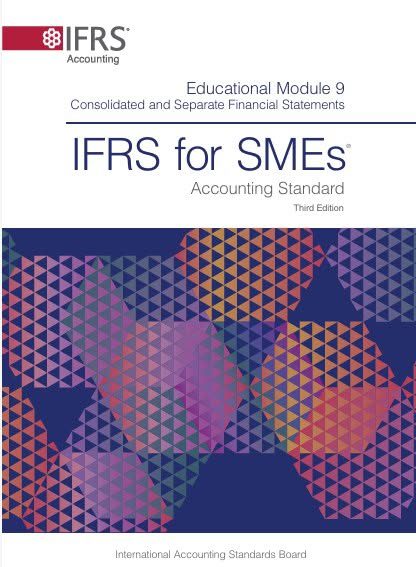
IFRS for SMEs Module 9 explains how an entity should report its financial position and performance when it owns or controls other businesses.
Rather than assessing each company in isolation, the Module explains when and how several entities should be presented as a single economic group.
In practical terms, it addresses questions such as:
- If a company owns other companies, should their financial statements be presented together or separately?
- Which entity actually controls the other?
- How can the financial statements present a true picture of the entire group?
The key concept is control. When one entity controls another, they are generally treated as a group and presented in a single set of consolidated financial statements.
Consolidated Financial Statements
Consolidated financial statements present the parent and its subsidiaries as a single economic entity, as if they were one business.
This helps banks, investors and other users to:
- Understand the group’s overall financial strength and risks;
- Avoid being misled by transactions between entities within the same group; and
- Identify who controls the group’s resources and is responsible for its obligations.
In most cases, a parent entity is required to prepare consolidated financial statements unless a specific exemption applies.
Separate Financial Statements
Separate financial statements focus on the financial position and performance of one entity, even when that entity owns or controls other businesses.
Module 9 does not require an entity to prepare separate financial statements. However, where separate financial statements are prepared, the Module explains how investments in subsidiaries and other entities should be presented. Depending on the applicable requirements and accounting policy selected, these investments may be measured at cost, fair value or using the equity method.
A simple distinction is:
- Separate financial statements: How is this individual entity performing on its own?
- Consolidated financial statements: How is the entire group performing as one economic unit?
Combined Financial Statements
Module 9 also addresses combined financial statements.
These may be prepared when several entities:
- Are not linked through a parent–subsidiary relationship; but
- Are controlled by the same individual or group of owners.
Combined financial statements present the entities together as if they formed one reporting group, providing users with a broader view of their overall financial position and performance.
Why Does Module 9 Matter?
Module 9 helps ensure that financial reporting:
- Reflects economic reality rather than merely legal structure;
- Clearly identifies who controls assets and decision-making; and
- Provides useful information to investors, lenders and other creditors.
The Third Edition, issued in February 2025, further clarifies:
- The definition of control;
- The accounting treatment when control of a subsidiary is lost; and
- The related disclosure requirements.
These changes are intended to make group reporting clearer and more consistent.
Practical Guidance for Accountants
Accountants should:
- Identify parent–subsidiary relationships correctly, even where ownership is below 50%;
- Apply professional judgement when assessing whether control exists;
- Eliminate intra-group transactions and balances when preparing consolidated financial statements;
- Select and apply accounting policies consistently in separate financial statements; and
- Explain clearly to clients why consolidation is required and how it affects the reported results.
When assessing control, the key question is not simply how many shares an entity owns. It is:
Who has the actual power to direct the relevant decisions and the ability to benefit from the business?
Control is determined by power and influence, not ownership percentage alone.
IFRS for SMEs 第 9 模块:合并、单独及组合财务报表
IFRS for SMEs 第 9 模块说明,当一家企业拥有或控制其他企业时,应如何呈现其财务状况及经营表现。
该模块不只是将每家公司单独分析,而是说明在什么情况下,以及如何将多个企业作为一个经济集团进行报告。
简单来说,它帮助企业回答以下问题:
- 如果公司拥有其他公司,财务报表是否需要合并?
- 哪一家企业才是真正拥有控制权的一方?
- 如何让财务报表更真实地反映整个集团的情况?
核心概念是控制(Control)。当一家企业控制另一家企业时,它们通常会被视为一个集团,并通过一套合并财务报表呈现。
合并财务报表
合并财务报表将母公司及其子公司作为一个经济实体呈现,就像它们是一家企业一样。
这有助于银行、投资者及其他使用者:
- 了解整个集团的财务实力及风险;
- 避免因集团内部企业之间的交易而受到误导;以及
- 了解谁控制集团的资源,以及谁承担集团的义务。
一般情况下,母公司必须编制合并财务报表,除非符合特定的豁免条件。
单独财务报表
单独财务报表只反映单一企业的财务状况及经营表现,即使该企业拥有或控制其他业务。
第 9 模块并不强制企业编制单独财务报表。不过,如果企业编制单独财务报表,该模块会说明应如何呈现对子公司及其他企业的投资。根据适用要求及所选择的会计政策,这些投资可能按成本、公允价值或权益法进行计量。
可以简单理解为:
- **单独财务报表:**这家企业本身的表现如何?
- **合并财务报表:**整个集团作为一个经济实体的表现如何?
组合财务报表
第 9 模块也涵盖组合财务报表(Combined Financial Statements)。
当多个企业:
- 之间不存在母公司与子公司的关系;但
- 由同一位业主或同一组投资者控制时,
这些企业可以编制组合财务报表。
组合财务报表将多个企业放在一起呈现,就像它们组成一个报告集团,使使用者能够更全面地了解整体财务状况及经营表现。
为什么第 9 模块重要?
第 9 模块有助于确保财务报告:
- 反映经济实质,而不只是法律结构;
- 清楚呈现谁控制资产及决策;以及
- 为投资者、贷款人及其他债权人提供有用信息。
2025 年 2 月发布的第三版进一步澄清了:
- 控制的定义;
- 失去对子公司控制权时的会计处理;以及
- 相关披露要求。
这些变化旨在让集团财务报告更加清晰及一致。
给会计人员的实务建议
会计人员应当:
- 正确识别母公司与子公司的关系,即使持股比例低于 50%;
- 在评估是否存在控制权时运用专业判断;
- 编制合并财务报表时抵销集团内部交易及余额;
- 在单独财务报表中选择并一致地应用会计政策;以及
- 向客户清楚解释为什么需要编制合并财务报表,以及合并处理会如何影响报告结果。
评估控制权时,关键并不只是企业持有多少股份,而是要问:
谁真正拥有指示相关决策的权力,并且能够从该业务中取得利益?
控制权取决于权力与影响力,而不只是持股比例。