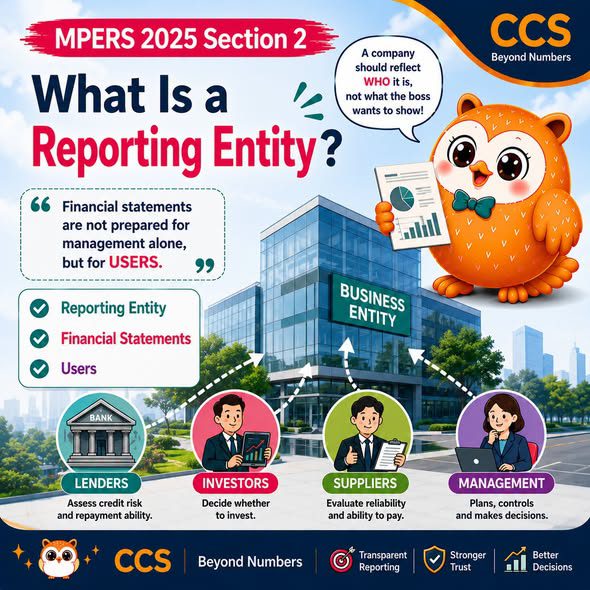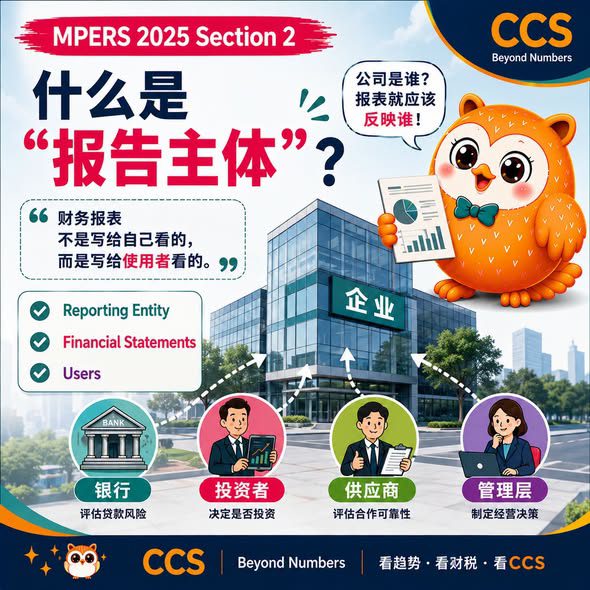
Many business owners assume that financial statements are prepared mainly for the boss or management.
In reality, MPERS 2025 emphasises that financial statements are prepared for users who rely on financial information to make economic decisions.
What Is a Reporting Entity?
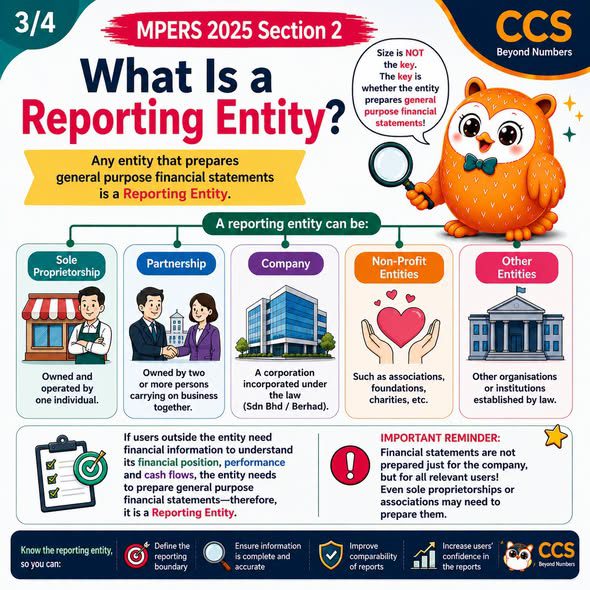
A reporting entity is the business or organisation that prepares general purpose financial statements. It is not the owner personally.
The reporting entity may be:
- A company;
- A partnership;
- A sole proprietorship;
- A non-profit organisation; or
- Another entity that prepares general purpose financial statements.
The key issue is not simply the size or legal form of the business. The important question is whether external users rely on its financial information.
Even a small business may have important financial reporting responsibilities if banks, creditors, investors or other external parties depend on its financial statements.
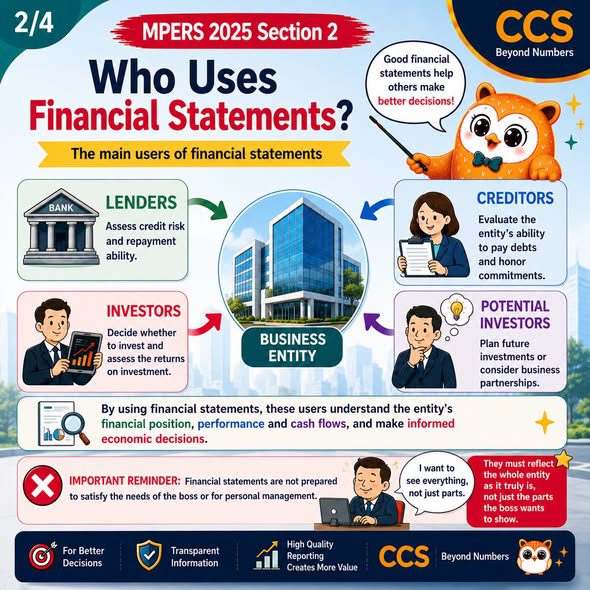
Who Uses Financial Statements?
Financial statements are relevant to more people than the accountant and business owner.
For example:
- Banks assess lending risk and the entity’s ability to repay borrowings;
- Investors evaluate investment opportunities and potential returns;
- Creditors assess the entity’s ability to settle its obligations; and
- Potential investors or business partners consider the entity’s financial strength and future prospects.
MPERS 2025 reminds us that financial reporting is intended to provide useful information for economic decision-making.
The Financial Statements Must Reflect the Whole Business
Financial statements should faithfully represent the reporting entity as a whole.
They should not present only the information that management wants others to see. Instead, they should provide a complete and balanced picture of the entity’s financial position, financial performance and cash flows.
Good financial reporting should be:
- Transparent;
- Reliable;
- Complete; and
- Useful for decision-making.
The Key Lesson
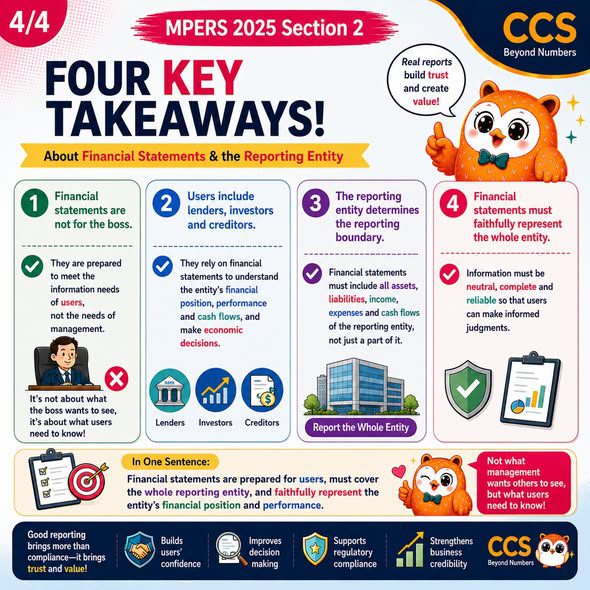
Financial statements are not prepared only to satisfy the owner or meet compliance requirements.
They are prepared for users who rely on them to make economic decisions.
When financial statements tell the complete story of a business, they do more than fulfil a reporting obligation. They also help build confidence and trust among banks, investors, creditors and business partners.
In that sense, high-quality financial reporting becomes one of an organisation’s most valuable business assets.
CCS | Beyond Numbers
财务报表到底是属于老板,还是属于企业?
很多企业老板以为,财务报表主要是写给老板或管理层看的。
实际上,MPERS 2025 强调,财务报表是为了所有需要依赖财务信息作出经济决策的使用者而编制。
什么是报告主体?
报告主体(Reporting Entity),是指编制通用财务报表的企业或组织,而不是老板个人。
报告主体可以是:
- 有限公司;
- 合伙企业;
- 独资企业;
- 非营利组织;或
- 其他编制通用财务报表的实体。
重点不只是企业的规模或法律形式,而是:
外部使用者是否需要依赖该企业的财务信息。
即使是一家小型企业,只要银行、债权人、投资者或其他外部人士需要依赖其财务报表,它同样可能承担重要的财务报告责任。
除了会计师,还有谁会看财务报表?
财务报表的重要性,远远不只是给会计师和老板阅读。
例如:
- 银行会评估贷款风险及企业偿还借款的能力;
- 投资者会分析投资机会及潜在回报;
- 债权人会评估企业履行偿债义务的能力;以及
- 潜在投资者或商业伙伴会了解企业的财务实力及未来发展前景。
MPERS 2025 提醒我们,财务报告的目的,是提供有用的信息,协助使用者作出经济决策。
财务报表必须反映整个企业
财务报表应当完整、忠实地反映整个报告主体。
它不应该只呈现管理层希望别人看到的部分,而应该提供企业财务状况、财务表现及现金流量的完整和平衡资料。
高质量的财务报告应当具备以下特点:
- 透明;
- 可靠;
- 完整;以及
- 有助于作出决策。
最重要的观念
财务报表不是只为了满足老板,也不只是为了完成合规要求。
财务报表是为需要依赖这些资料作出经济决策的使用者而编制。
当财务报表能够完整讲述企业的经营故事时,它不只是履行报告责任,也能帮助企业建立银行、投资者、债权人及商业伙伴的信心与信任。
从这个角度来看,高质量的财务报告本身,就是企业最有价值的资产之一。
CCS | Beyond Numbers