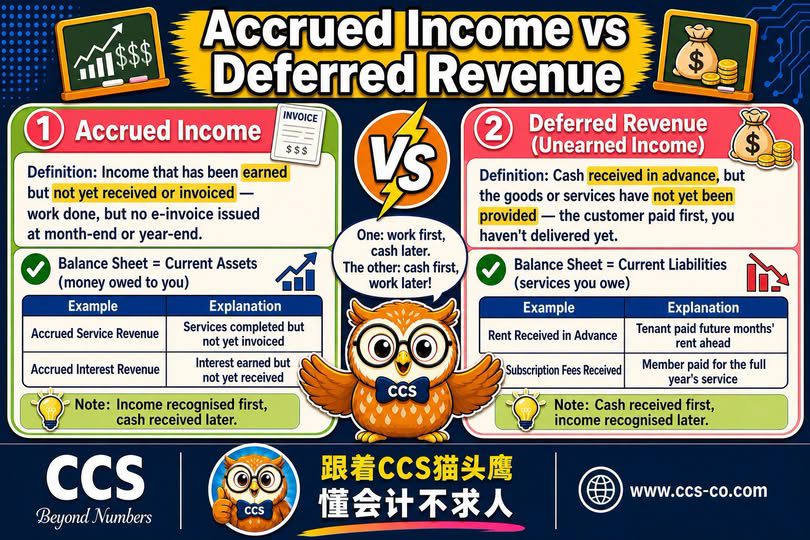
One means:
“I have already done the work. Where is my money?”
The other means:
“You have already paid me, but I have not performed the work yet.”
These two concepts are often confused, but the difference is straightforward.
Accrued Income: Perform First, Collect Later
Accrued income arises when:
- The service has already been performed or the income has already been earned;
- The customer has not yet paid; and
- The invoice may not yet have been issued.
Because the company has earned the income and has a right to receive payment, accrued income is recognised as an asset.
Example
A company completes a service for a client at the end of the month but has not yet issued the invoice.
The income has already been earned, so it is recognised as accrued income until the invoice is issued and the amount is transferred to accounts receivable.
Accrued income = Work completed, payment pending.
Deferred Revenue: Collect First, Perform Later
Deferred revenue, also known as unearned revenue or revenue received in advance, arises when:
- The customer has already paid;
- The company has not yet delivered the goods or services; and
- The company still has a performance obligation to the customer.
Because the company still owes the customer goods or services, deferred revenue is recognised as a liability.
Examples
- A tenant pays three months’ rent in advance; or
- A member pays for a full year’s subscription upfront.
The company cannot necessarily recognise the entire amount as revenue immediately. Revenue is recognised as the relevant goods or services are delivered or the performance obligations are satisfied.
Deferred revenue = Payment received, work pending.
A Simple Way to Remember
Perform first, collect later → Asset
Collect first, perform later → Liability
| Item | What Has Happened? | Balance Sheet Classification |
|---|---|---|
| Accrued income | Income earned, payment not yet received | Asset |
| Deferred revenue | Payment received, goods or services not yet delivered | Liability |
Do not confuse the two. Otherwise, the statement of financial position may not present the company’s rights and obligations accurately.
In simple terms:
Accrued income means the company is waiting for money. Deferred revenue means the customer is waiting for the company to perform.
CCS | Beyond Numbers
应收收入与递延收益:到底是资产还是负债?
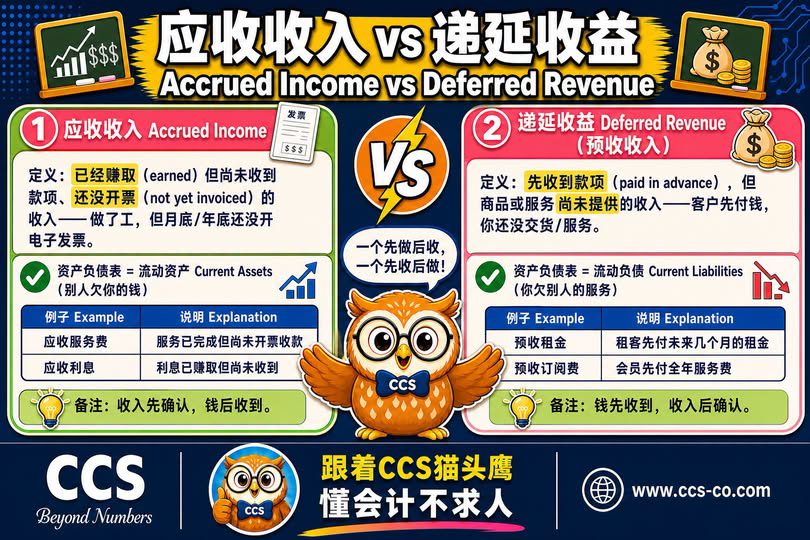
一个是:
“我已经做完工作了,钱呢?”
另一个是:
“你已经先把钱给我了,但我还没有做事。”
应收收入和递延收益经常被混淆,但两者的分别其实很清楚。
应收收入(Accrued Income):先做后收
当以下情况发生时,就可能产生应收收入:
- 服务已经完成,或收入已经赚取;
- 客户还没有付款;以及
- 发票可能还没有开出。
由于企业已经赚取了这笔收入,并且拥有收取款项的权利,应收收入会确认为一项资产。
例子
公司在月底已经完成客户所委托的服务,但还没有开出发票。
由于收入已经赚取,公司会先将其确认为应收收入。之后开出发票时,相关金额一般会转入应收账款。
应收收入 = 工作已经完成,款项还在等待收取。
递延收益(Deferred Revenue):先收后做
递延收益也称为未赚取收入(Unearned Revenue)或预收收入(Revenue Received in Advance)。
当以下情况发生时,就可能产生递延收益:
- 客户已经先付款;
- 企业还没有提供相关商品或服务;以及
- 企业仍然对客户承担履约义务。
由于企业仍然欠客户商品或服务,递延收益会确认为一项负债。
例子
- 租客预先支付三个月租金;或
- 会员预先支付全年的订阅费。
企业不能因为已经收到钱,就一定马上把全部金额确认为收入。相关收入通常应随着商品或服务的提供,以及履约义务的满足而确认。
递延收益 = 钱已经收到,工作还在等待完成。
一个简单的记忆方法
先做后收 → 资产
先收后做 → 负债
| 项目 | 已经发生什么? | 资产负债表分类 |
|---|---|---|
| 应收收入 | 收入已经赚取,款项尚未收到 | 资产 |
| 递延收益 | 款项已经收到,商品或服务尚未提供 | 负债 |
千万不要把两者混淆,否则财务状况表可能无法准确反映企业拥有的权利及承担的义务。
简单来说:
应收收入代表公司在等钱;递延收益代表客户在等公司履约。
CCS | Beyond Numbers