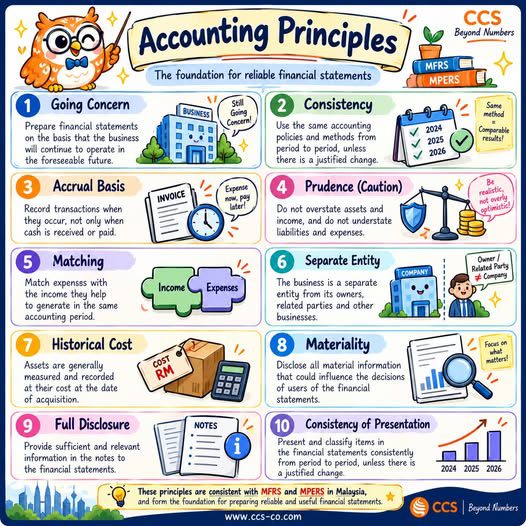
Accounting principles may appear complicated, but their purpose is straightforward: to ensure that financial information reflects reality rather than becoming “creative fiction”.
Consider a few basic examples:
- If the business is expected to continue operating, the going concern principle applies.
- If income has been earned before cash is received, it is recognised under the accrual basis.
- The owner’s money and the company’s money must be accounted for separately.
- An item does not have to involve a large amount of money to be material. Materiality depends on whether the information could influence users’ decisions.
Whether an entity applies MFRS or MPERS, the underlying logic remains clear:
Recognise what should be recognised, disclose what matters and keep separate what should not be combined.
Good accounting is not about making the numbers look attractive. It is about ensuring that the financial statements tell a consistent, credible and understandable story.
CCS | Beyond Numbers
会计原则:让财务报表真实、可信且前后一致
会计原则看起来很多、很复杂,但它们的目的其实很简单:确保财务资料反映真实情况,而不是让账目变成“创意小说”。
以下是几个基本例子:
- 如果企业预期会继续经营,就涉及**持续经营(Going Concern)**原则。
- 如果收入已经赚取,但现金尚未收到,就应根据**权责发生制(Accrual Basis)**确认。
- 老板的钱与公司的钱必须分开处理,不能混为一谈。
- 一项事项不一定要涉及很大的金额才具有重要性。**重要性(Materiality)**不只是看 RM 金额,也要看该信息是否可能影响使用者的决策。
无论企业采用 MFRS 还是 MPERS,背后的逻辑其实很清楚:
该确认的就确认,该披露的就披露,该分开的就不要混在一起。
会计做到最后,不是为了让数字看起来漂亮,而是为了让财务报表真实、可信、前后一致,并且能够清楚地讲述企业的经营故事。
CCS | Beyond Numbers