
Day: November 6, 2026

  • MyInvois e-POS: A Free Digital POS Option for Eligible MSMEs

    MyInvois e-POS: A Free Digital POS Option for Eligible MSMEs

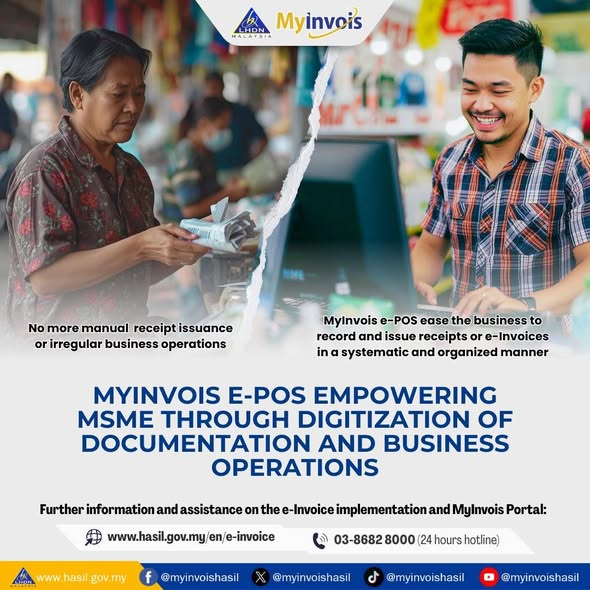
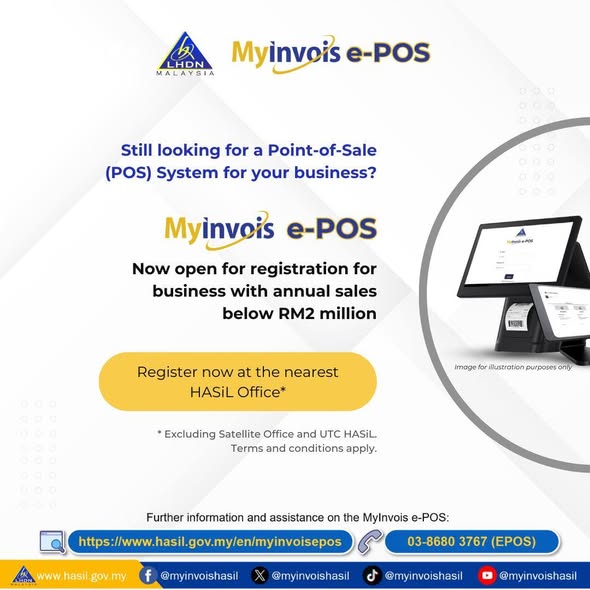
    For small businesses still relying on handwritten receipts or manual sales records, the MyInvois e-POS system offers a digital option. Provided free of charge by HASiL to eligible businesses, it combines point-of-sale functions with tools for sales management, inventory, financial reporting and e-Invoice implementation.

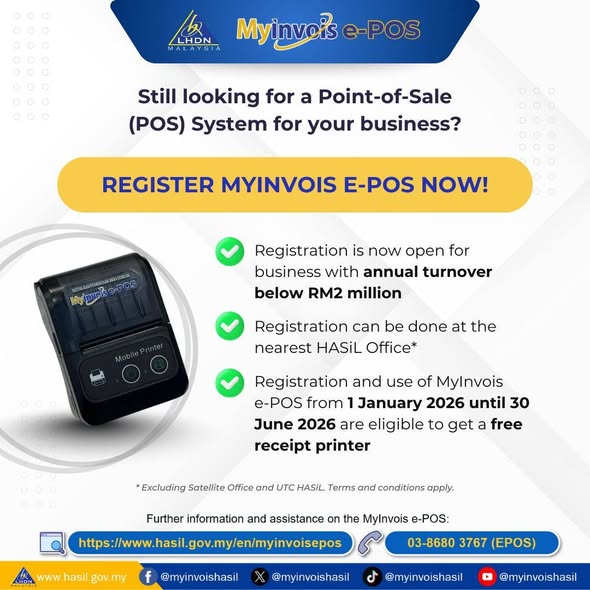
    Eligible businesses include sole proprietorships, partnerships, companies, cooperatives and other business types, provided they meet the relevant criteria: the owner or director is a Malaysian citizen, the business operates in Malaysia, and its annual turnover or revenue does not exceed RM5 million.

    With MyInvois e-POS, businesses can record sales, issue receipts or e-Invoices and generate sales reports. For example, a fruit seller who once recorded daily sales in a notebook could use the system to record transactions and produce reports in a more systematic way.

    A time-limited promotion offered a free receipt printer to businesses that registered and used the system between 1 January and 30 June 2026, while stocks lasted. The promotional period has ended. Eligible businesses may still use MyInvois e-POS free of charge, although they are responsible for the costs of the equipment and other minimum requirements needed to operate it.

    MyInvois e-POS can help businesses organise sales information and reduce reliance on manual record-keeping. As with any system, businesses should assess their operational needs and ensure that their processes and records meet the applicable requirements.

    MyInvois e-POS:符合资格的 MSME 可使用免费数码收银系统

    对于仍依赖手写收据或人工记录销售资料的小型企业,MyInvois e-POS 提供了数码化的选择。HASiL 向符合资格的企业免费提供此系统,并整合销售点功能,以及销售管理、库存管理、财务报告和 e-Invoice 实施工具。

    独资企业、合伙企业、公司、合作社及其他类型的企业均可能符合资格,但须满足相关条件:企业主或董事为马来西亚公民、企业在马来西亚营运,且年度营业额或收入不超过 RM5 million。

    企业可通过 MyInvois e-POS 记录销售、开具收据或电子发票,并生成销售报告。例如,过去用笔记本记录每日销售额的水果摊贩,现在可以使用系统记录交易,并以更有条理的方式生成报告。

    曾有一项限时优惠:在2026年1月1日至6月30日期间注册并使用该系统的企业,在库存有限的情况下可获赠一台收据打印机。该优惠期现已结束。符合资格的企业仍可免费使用 MyInvois e-POS,但须自行承担操作系统所需设备及其他最低使用条件的费用。

    MyInvois e-POS 有助企业整理销售资料,并减少对人工记录的依赖。与使用任何系统一样,企业应先评估自身营运需求,并确保业务流程及记录符合适用要求。
  • e-Invoice Specific Guideline Version 4.6: Changes from Version 4.5

    e-Invoice Specific Guideline Version 4.6: Changes from Version 4.5

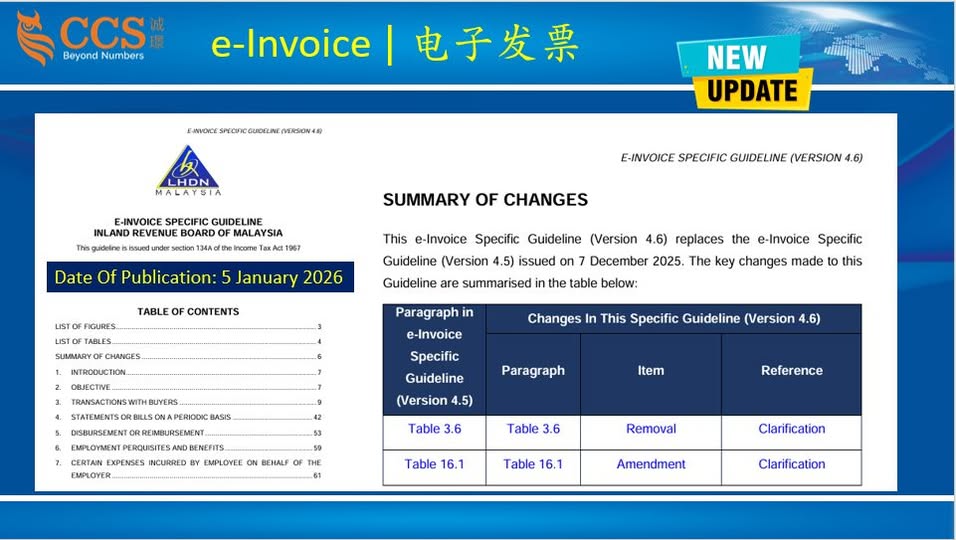
    Version 4.6 of the e-Invoice Specific Guideline differs from Version 4.5 in two areas: Table 3.6 was removed, and Table 16.1 was amended.

    Businesses should review these changes in the relevant guideline versions and consider whether they affect their invoicing or reporting processes, particularly for consolidated e-Invoices and the interim relaxation period. Any updates to internal procedures should be based on the wording of the applicable guidance.

    《e-Invoice Specific Guideline》版本4.6:与版本4.5的变更

    《e-Invoice Specific Guideline》版本4.6相较于版本4.5,有两项变更:表3.6已删除,表16.1则已修订。

    企业应查阅相关版本的指南,了解这些变更是否会影响自身的开票或申报流程,尤其是合并电子发票及临时宽限期的相关处理。更新内部程序时,应以适用指南的实际内容为依据。

  • Key Changes in the e-Invoice Specific Guideline: Version 4.5 Compared with Version 4.6

    Key Changes in the e-Invoice Specific Guideline: Version 4.5 Compared with Version 4.6

    Version 4.6 of the e-Invoice Specific Guideline differs from Version 4.5 in two areas:

    • Table 3.6 has been removed.

    • Table 16.1 has been amended.

    Businesses should review the revised guideline and compare the relevant sections with the previous version to understand any implications for their transactions and compliance processes, particularly in relation to consolidated e-Invoices and the interim relaxation period. The effect of each change should be assessed against the wording of the guideline rather than assumed from the table changes alone.

    e-Invoice 专项指南的主要变更:版本4.5与版本4.6对比

    《e-Invoice Specific Guideline》版本4.6相较于版本4.5,有两项主要变更:

    • 表3.6已删除。

    • 表16.1已修订。

    企业应仔细阅读修订后的指南,并将相关内容与前一版本进行对比,以了解这些变更对交易处理及合规流程可能产生的影响,尤其是合并电子发票和临时宽限期的相关安排。企业应依据指南的实际条文评估各项变更,不应仅凭表格的删除或修订推断其具体影响。

  • Related Companies Under PIA 1986: Control and the 20% Shareholding Rule

    Related Companies Under PIA 1986: Control and the 20% Shareholding Rule

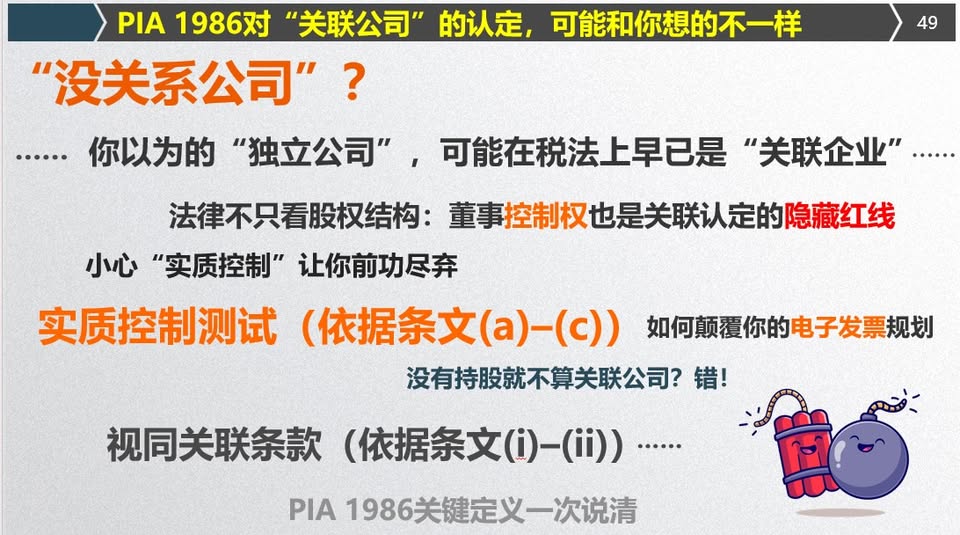
    The term “related company” is not limited to a parent–subsidiary relationship. Under section 2(1) of Malaysia’s Promotion of Investments Act 1986 (PIA 1986), the definition includes both control-based tests and a separate rule that deems companies related when specified shareholding thresholds are met.

    The Inland Revenue Board of Malaysia (IRBM) has referred to this definition in its e-Invoice FAQs. Where a tax rule adopts the PIA 1986 definition, businesses should consider both the ownership structure and who controls, or can control, the companies’ operations.

    The control-based tests

    Under paragraphs (a) to (c) of the definition, companies may be related if:

    • one company controls, or can control, the operations of the other;

    • one company’s operations are controlled, or can be controlled, by the other; or

    • the operations of both companies are controlled, or can be controlled, by the same person.

    These tests focus on actual or potential control. Paragraph (c) does not specify a minimum shareholding. As a result, a small shareholding does not, by itself, rule out a related-company relationship if the common-control test is otherwise met.

    A common director alone does not automatically make two companies related. However, the director’s powers and actual role in directing the companies’ operations may be relevant. Being the sole director may be a relevant indicator, but the conclusion depends on the circumstances and the applicable legal test.

    The 20% deemed-related rule

    The definition also provides that one company is deemed to be related to another if at least 20% of the issued share capital of one company is beneficially owned, directly or indirectly, by the other.

    This is a separate, shareholding-based rule. When the specified 20% threshold is met, the companies are deemed related without needing to establish operational control under paragraphs (a) to (c). Conversely, a shareholding below 20% does not satisfy this particular deeming rule, but the control-based tests may still need to be considered.

    Applying the tests

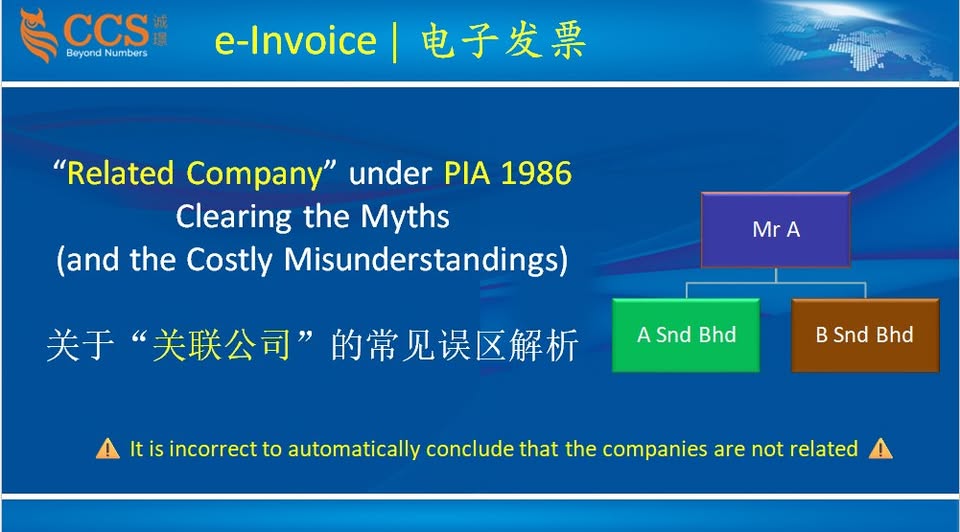
    Consider a situation where Mr A holds 10% of Company A and 10% of Company B, and is the sole director of both. The shareholdings do not meet the 20% deemed-related threshold. That alone, however, does not determine whether the companies are related. The assessment must also consider whether Mr A controls, or can control, the operations of both companies under paragraph (c).

    Similarly, where one company holds at least 20% of another, the deemed-related rule may apply even if the shareholder does not participate in the other company’s day-to-day management.

    Why the distinction matters

    A related-company determination may affect eligibility for tax incentives or other tax treatments where the relevant rules rely on the PIA 1986 definition. Separate incorporation or a small shareholding should therefore not be treated as conclusive on its own.

    Businesses should review both the legal ownership and the practical control arrangements, and assess the specific tax provision that applies. If the facts or the interpretation are uncertain, professional advice may be needed.

    《1986年投资促进法令》下的关联公司:控制权与20%持股规则

    “关联公司”并不只限于母公司与子公司之间的关系。根据马来西亚《1986年投资促进法令》(PIA 1986)第2(1)条,关联公司的定义既包括控制权测试,也包括根据特定持股门槛将公司视为关联公司的独立规则。

    马来西亚内陆税收局(IRBM)在电子发票常见问题中引用了这项定义。如果相关税务规定采用 PIA 1986 的定义,企业就应同时考虑股权结构,以及谁实际控制或有能力控制公司的营运。

    控制权测试

    根据定义中的(a)至(c)段,以下情况可能构成关联公司关系:

    • 一家公司控制或能够控制另一家公司的营运;

    • 一家公司的营运由另一家公司控制或能够被其控制;或

    • 两家公司的营运均由同一人控制或能够由同一人控制。

    这些测试关注实际或潜在的控制权。第(c)段没有规定最低持股比例。因此,即使持股比例较低,只要符合共同控制测试,两家公司仍可能构成关联公司。

    仅有共同董事,并不自动代表两家公司属于关联公司。不过,董事的权限及其在指挥公司营运方面实际发挥的作用,可能与判断有关。担任唯一董事可以是相关指标,但仍须根据具体情况及适用的法律测试作出判断。

    20%视同关联规则

    该定义也规定,如果一家公司的至少20%已发行股本由另一家公司直接或间接实益持有,则前者会被视为与后者有关联。

    这是一项独立的持股规则。达到规定的20%门槛后,即可适用视同关联规则,无须再依据(a)至(c)段证明存在营运控制。反之,持股低于20%并不符合这项特定的视同关联规则,但仍可能需要进一步考虑控制权测试。

    如何应用这些测试

    假设 A 先生持有公司 A 10%的股份、公司 B 10%的股份,并担任两家公司的唯一董事。该持股比例未达到20%的视同关联门槛,但这本身并不能决定两家公司是否属于关联公司。仍须根据第(c)段,评估 A 先生是否控制或有能力控制两家公司的营运。

    同样地,如果一家公司持有另一家公司至少20%的股份,即使该股东没有参与另一家公司的日常管理,也可能适用视同关联规则。

    为什么这项区别很重要

    如果相关税务规定采用 PIA 1986 的定义,关联公司关系可能影响企业是否符合税务优惠或其他税务处理条件。因此,公司分别注册成立或持股比例较低,本身都不足以作出最终判断。

    企业应检视法律上的股权结构及实际控制安排,并确认适用的具体税务条文。如事实或法律解释存在不确定性,可能需要寻求专业意见。

  • Related Companies Under Malaysia’s PIA 1986: Control Tests and the 20% Shareholding Rule

    Related Companies Under Malaysia’s PIA 1986: Control Tests and the 20% Shareholding Rule

    Many business owners assume that companies with separate shareholding structures and independent operations cannot be considered related. Under the definition in section 2(1) of Malaysia’s Promotion of Investments Act 1986 (PIA 1986), however, the assessment involves both operational control and a deemed-related-company rule based on share ownership.

    The operational control test

    A company may be considered related to another company if:

    • its operations are, or can be, controlled directly or indirectly by that other company;

    • it controls, or can control, the other company’s operations; or

    • both companies’ operations are, or can be, controlled directly or indirectly by the same person.

    This means the analysis is not limited to the percentage of shares held. The relevant question is whether a person or company controls, or can control, the companies’ operations.

    A common director does not, by itself, automatically make two companies related. The director’s actual or potential control over the companies’ operations is relevant to the assessment.

    The 20% deemed-related rule

    Section 2(1) also provides that one company is deemed to be related to another if at least 20% of the issued share capital of one is beneficially owned, directly or indirectly, by the other.

    This is a statutory deemed relationship. It should not be confused with the separate operational control test. A shareholding below 20% does not, on its own, meet this particular deemed-related threshold, but the companies may still be related if the operational control criteria are met.

    Why the distinction matters

    Where a tax provision uses the PIA 1986 definition, the relationship between companies may affect whether a business qualifies for a tax exemption or incentive. Separate incorporation or a shareholding below 20% should not be treated as an automatic safeguard: the control arrangements and the specific tax rule must also be considered.

    In practice, review both the shareholding structure and who has the ability to direct or control the companies’ operations. The applicable consequences depend on the particular tax provision, so the PIA 1986 definition should not be assumed to apply to every related-company test.

    马来西亚《1986年投资促进法令》下的关联公司:控制测试与20%持股规则

    许多企业主认为,只要公司的股权结构各自独立、营运也互不相干,就不会被视为关联公司。然而,根据马来西亚《1986年投资促进法令》(PIA 1986)第2(1)条的定义,判断时须考虑营运控制关系,以及以股权为基础的法定视同关联规则。

    营运控制测试

    在以下情况下,一家公司可能被视为与另一家公司有关联:

    • 该公司的营运由另一家公司直接或间接控制,或可由其控制;

    • 该公司直接或间接控制,或可控制另一家公司的营运;或

    • 两家公司的营运均由同一人直接或间接控制,或可由同一人控制。

    因此,判断不应只看持股比例,关键问题还包括个人或公司是否实际控制或有能力控制相关公司的营运。

    仅仅有共同董事,并不自动代表两家公司属于关联公司。评估时,还须考虑该董事是否实际或有能力控制两家公司的营运。

    20%视同关联规则

    PIA 1986 第2(1)条也规定,如果一家公司至少20%的已发行股本由另一家公司直接或间接实益持有,则该公司会被视为与另一家公司有关联。

    这是法定的视同关联规定,应与另一项独立的营运控制测试区分。低于20%的持股本身并不符合这项特定的视同关联门槛,但如果满足营运控制条件,两家公司仍可能被视为关联公司。

    为什么这项区别很重要

    如果某项税务规定采用 PIA 1986 的定义,公司之间是否构成关联,可能影响企业是否符合税务豁免或优惠条件。分别注册成立,或持股低于20%,都不应被视为自动的保障;企业也须考虑实际控制安排及相关税务规则。

    实务上,企业应同时检视股权结构,以及谁有能力指示或控制公司的营运。具体税务影响须视所适用的税务条文而定,因此不应假设 PIA 1986 的定义适用于所有关联公司测试。

  • MyInvois: A Central Platform for Managing e-Invoices

    MyInvois: A Central Platform for Managing e-Invoices

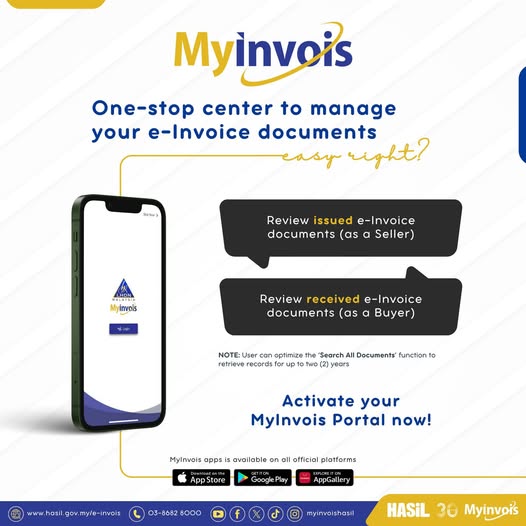
    MyInvois is the official e-Invoice platform provided by the Inland Revenue Board of Malaysia (HASiL). It enables taxpayers to manage e-Invoice documents in one place, whether they are acting as a seller or a buyer.

    Managing issued and received e-Invoices

    As a seller, users can view e-Invoices they have issued, track submitted documents and maintain sales records.

    As a buyer, users can review e-Invoices received from suppliers, cross-check purchases and expenses, and strengthen their record-keeping for compliance and audit purposes.

    The “Search All Documents” function can be used to find e-Invoice records for a period of up to two years, making document reviews and reconciliations easier.

    Accessing MyInvois

    The MyInvois application is available through the Apple App Store, Google Play Store and Huawei AppGallery, allowing users to access e-Invoice services through supported devices.

    MyInvois brings e-Invoice records together in one place and provides visibility over documents issued and received. It is a useful tool for managing e-Invoice information and supporting compliance with Malaysia’s e-Invoicing framework.

    MyInvois:集中管理电子发票的平台

    MyInvois 是马来西亚内陆税收局(HASiL)提供的官方电子发票平台,让纳税人可以在同一平台管理电子发票文件,无论是以卖方还是买方身份使用。

    管理已开具及已接收的电子发票

    作为卖方,用户可以查看已开具的电子发票、跟进文件提交状态,并管理销售记录。

    作为买方,用户可以查看供应商开具的电子发票、核对采购与费用,并加强记录管理,以支持合规及审计工作。

    用户可使用 “Search All Documents” 功能查询电子发票记录,搜索范围最长可达两年,让文件复核与对账更为方便。

    访问 MyInvois

    MyInvois 应用程式可通过 Apple App Store、Google Play Store 及 Huawei AppGallery 下载,让用户通过受支持的设备使用电子发票服务。

    MyInvois 将电子发票记录集中在一个平台,方便用户查看已开具及已接收的文件。它是管理电子发票资料、支持企业遵守马来西亚电子发票制度的实用工具。

  • What Is MyInvois e-POS?

    What Is MyInvois e-POS?

    MyInvois e-POS is a digital point-of-sale platform designed for micro, small and medium-sized enterprises (MSMEs). It is provided free of charge to help improve operational efficiency and support businesses in meeting e-Invoice requirements.

    什么是 MyInvois e-POS?

    MyInvois e-POS 是一款专为微型、小型及中型企业(MSME)设计的数字销售点(POS)平台。该平台免费提供,旨在协助企业提升营运效率并满足 e-Invoice 要求。

  • Who Is Eligible to Use MyInvois e-POS?

    Who Is Eligible to Use MyInvois e-POS?

    All types of businesses—including sole proprietorships, partnerships, companies and cooperatives—may be eligible to use MyInvois e-POS if they meet the following requirements:

    • The owner or director is a Malaysian citizen.

    • The business operates in Malaysia.

    • Annual revenue or sales do not exceed RM5 million.

    哪些企业有资格使用 MyInvois e-POS?

    所有类型的企业,包括独资企业、合伙企业、公司及合作社,只要符合以下条件,均可能有资格使用 MyInvois e-POS:

    • 企业主或董事为马来西亚公民。

    • 企业在马来西亚境内营运。

    • 年营业额或销售额不超过 RM5 million。

  • Which Businesses May Find MyInvois e-POS Suitable?

    Which Businesses May Find MyInvois e-POS Suitable?

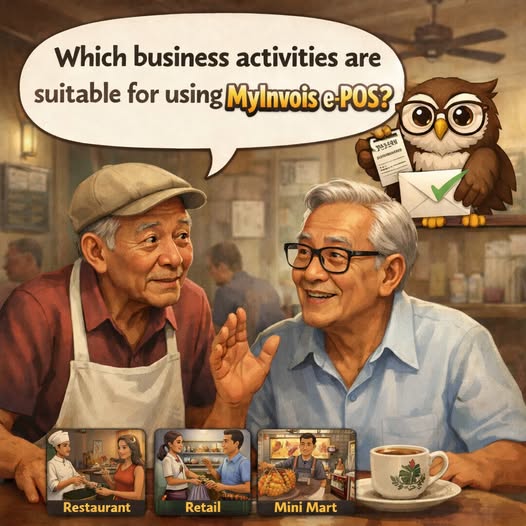
    MyInvois e-POS may be suitable for businesses that sell goods or services and need to manage inventory. Examples include businesses selling groceries, food and beverages, clothing, beauty products, and electrical or electronic goods, as well as vehicle repair businesses.

    These are examples only. The businesses that may find MyInvois e-POS suitable are not limited to those listed.

    哪些企业可能适合使用 MyInvois e-POS?

    MyInvois e-POS 可能适合销售商品或服务且需要管理库存的企业。例如,销售食品杂货、餐饮、服装、美容产品、电器或电子产品的企业,以及汽车维修业务。

    以上仅为示例,可能适合使用 MyInvois e-POS 的企业类型并不限于此。

  • Can Tax Agents, Service Providers or Intermediaries Use MyInvois e-POS?

    Can Tax Agents, Service Providers or Intermediaries Use MyInvois e-POS?

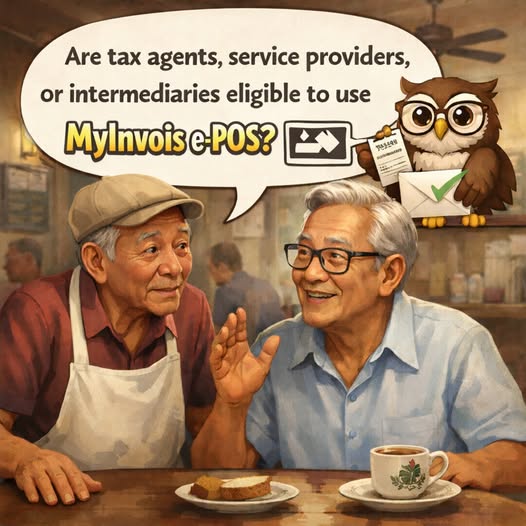
    Q: Are tax agents, service providers or intermediaries eligible to use MyInvois e-POS?

    A: No. MyInvois e-POS is intended for businesses that conduct transactions directly with customers at their business premises.

    税务代理、服务提供商或中介机构可以使用 MyInvois e-POS 吗?

    问:税务代理、服务提供商或中介机构是否符合使用 MyInvois e-POS 的资格?

    答: 不可以。MyInvois e-POS 仅供在营业场所直接与顾客进行交易的企业使用。