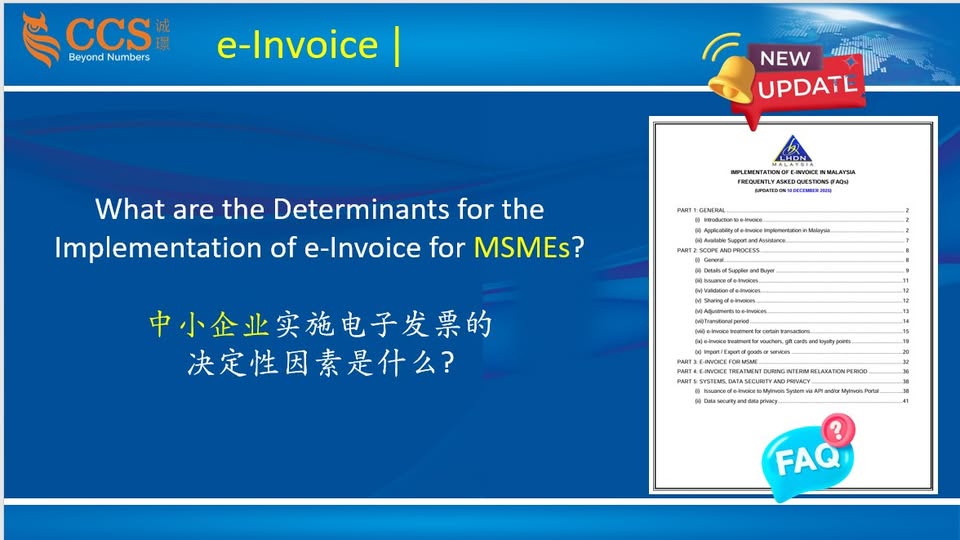
The source material refers to HASiL’s General FAQ version 4.6, dated 10 December 2025, which used a RM1 million threshold. HASiL subsequently updated its FAQ on 4 September 2026. The current threshold is RM3 million, subject to the applicable exemption criteria.
The current FAQ explains that a taxpayer’s annual turnover or revenue is determined using the relevant basis below:
- Taxpayers with audited financial statements: Use the annual turnover or revenue stated in the Statement of Comprehensive Income for the relevant year.
- Taxpayers without audited financial statements: Use the annual revenue reported in the income tax return for the relevant year of assessment.
- Taxpayers with annual turnover or revenue of at least RM3 million in the relevant year: The RM3 million threshold has been reached for e-Invoice implementation purposes.
The figure to assess is turnover or revenue, not net profit. For eligibility for exemption, taxpayers should also consider the applicable exemption criteria.
HASiL’s example
HASiL gives the example of Kedai Berkat Gemilang, which recorded product sales income of RM3.2 million as at 31 December 2026. As its annual sales income reached the RM3 million threshold in YA2026, it is required to implement e-Invoicing from 1 January 2028.
Keeping track of turnover or revenue
Businesses should maintain records that support their annual turnover or revenue figures, including audited financial statements where applicable, tax returns and business records. Regularly monitoring revenue can help identify when the threshold may be reached and allow time to prepare for implementation.
中小微企业如何判断是否达到 RM3 million 电子发票门槛
原文依据的是 HASiL 于2025年12月10日发布的《一般常见问题解答》4.6版,当时采用的门槛为 RM1 million。HASiL 于2026年9月4日更新了常见问题解答。现行门槛为 RM3 million,但仍须符合适用的豁免条件。
现行 FAQ 说明,纳税人的年度营业额或收入应根据以下适用依据确定:
- 有审计财务报表的纳税人:以相关年度审计财务报表中《综合收益表》(Statement of Comprehensive Income)所列的年度营业额或收入为依据。
- 没有审计财务报表的纳税人:以相关评税年度所得税申报表中申报的年度收入为依据。
- 相关年度营业额或收入至少达到 RM3 million 的纳税人:即达到电子发票实施门槛。
判断时应看营业额或收入,而非净利润。纳税人也应同时考虑适用的豁免条件,以确认是否符合豁免资格。
HASiL 提供的例子
HASiL 举例说明,Kedai Berkat Gemilang 截至2026年12月31日的产品销售收入为 RM3.2 million。由于其在 YA2026 达到 RM3 million 门槛,因此须从2028年1月1日起实施电子发票。
持续追踪营业额或收入
企业应妥善保存可支持年度营业额或收入数字的记录,包括适用时的审计财务报表、所得税申报表及业务记录。定期追踪收入,有助于企业及早判断何时可能达到门槛,并为实施电子发票做好准备。