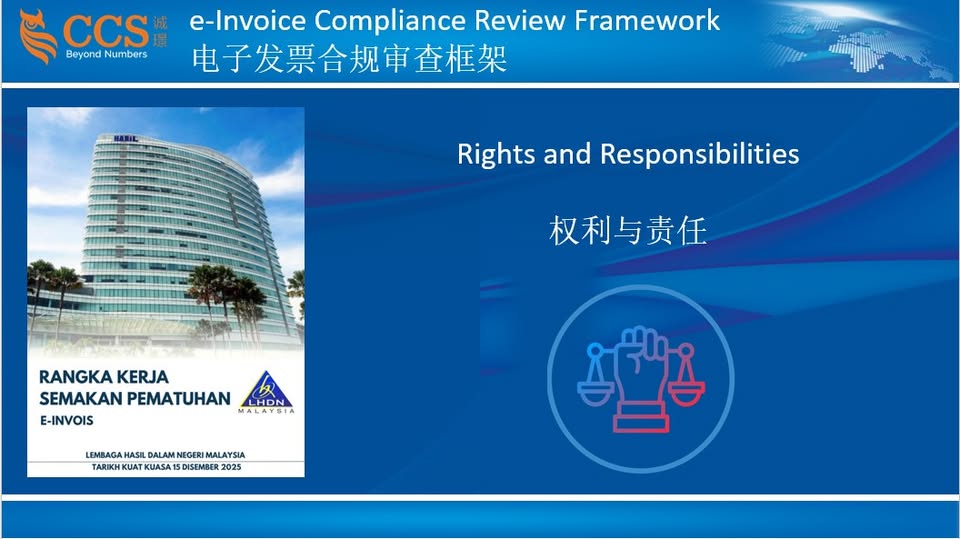
The e-Invoice Compliance Review Framework, effective from 15 December 2025, sets out the standards of conduct for e-Invoice Compliance Officers (PEI), how they must identify themselves and the conduct that is prohibited during a review.
Professional conduct and responsibilities
PEI must comply with LHDNM’s rules and code of ethics. They are expected to act professionally, courteously, honestly and with integrity throughout the review. They should remain respectful even when a taxpayer is anxious or upset.
Officers should be ready to explain the purpose of the review and the taxpayer’s rights and responsibilities. They must have the necessary knowledge of tax laws and apply them fairly and consistently, without bias.
A PEI’s role includes providing guidance as well as conducting reviews. For example, if a business has misunderstood how to issue self-billed e-Invoices, the officer should explain the correct process. Reviews should also be carried out efficiently, without unnecessary delays or repeated requests. Where possible, officers should provide a clear list of required documents in advance.
PEI may request only documents and information relevant to the review. They must explain their findings and give the taxpayer an opportunity to respond or provide further evidence within the specified timeframe. They must also respect taxpayer rights, treat tax agents fairly and protect taxpayer documents from misuse or disclosure to unauthorised parties.
Identifying a PEI
Every PEI is issued an official authority card showing the officer’s name and photograph, together with a statement that the officer is authorised to inspect records at the taxpayer’s premises. Taxpayers are encouraged to check the card to verify the officer’s identity before a review begins.
If a taxpayer has doubts about an officer’s identity, they may contact the State Operations Director (e-Invoice & Employer Audit) or the Director of the Special Branch of LHDNM to verify it.
Conduct that is prohibited
A PEI must not have a personal or financial interest in the business being reviewed. An officer must not review a company owned by a close family member.
PEI must not recommend or pressure a taxpayer to appoint a particular tax agent. They must also not misuse their position or authority. The framework refers to section 118 of the Income Tax Act 1967 and section 56 of the Petroleum Income Tax Act in relation to the prohibition on abuse of authority.
These safeguards are intended to support a fair and professional review process. Taxpayers who understand the framework can better recognise what to expect and how to verify an officer’s authority.
电子发票合规审查中的纳税人权益:合规官的职责与操守
自2025年12月15日起生效的《e-Invoice Compliance Review Framework》,说明电子发票合规官(PEI)在审查期间应遵守的行为标准、身份识别方式,以及不得从事的行为。
职业操守与职责
PEI 必须遵守 LHDNM 的规章与职业道德,在审查过程中保持专业、有礼、诚实及正直。即使纳税人感到紧张或不安,官员也应保持冷静与尊重。
PEI 应准备好说明审查目的,以及纳税人的权利与责任。他们必须具备必要的税务法律知识,并以公平、一致且不带偏见的方式执行审查。
PEI 除了进行审查,也应提供合规指导。例如,若企业误解了自开电子发票的开具方式,官员应说明正确流程。审查也应有效率地进行,避免不必要的拖延或反复索取资料;在可行情况下,应预先清楚列出所需文件。
PEI 只能要求与审查事项相关的文件及资料。他们必须向纳税人说明审查发现,并给予纳税人在规定期限内回应或提供补充证据的机会。同时,PEI 必须尊重纳税人权益、公平对待税务代理,并保护纳税人文件,避免遭到滥用或披露给未获授权的人士。
核实 PEI 身份
每位 PEI 均持有官方授权证件,证件上载有官员姓名与照片,并注明其获授权检查纳税人营业场所的记录。纳税人可在审查开始前检查该证件,核实官员身份。
如对官员身份有疑问,纳税人可联系州属营运总监(电子发票与雇主审计)或 LHDNM 特别分行主任进行核实。
禁止的行为
PEI 不得对受审企业拥有任何个人或财务利益。例如,官员不得审查由其近亲拥有的公司。
PEI 不得推荐或施压要求纳税人聘用某一特定税务代理,也不得滥用职权或职位。框架在有关禁止滥用职权的规定中,提及《1967年所得税法令》第118条及《石油所得税法令》第56条。
这些保障措施旨在确保审查过程公平且专业。了解相关框架,有助纳税人掌握审查时应有的程序,并核实官员的授权身份。