When e-Invoicing began in August 2024, some businesses faced system issues, uncertainty about the requirements and questions about which transactions needed an e-Invoice. For businesses that missed submissions or need to correct earlier records, HASiL’s e-Invoice Special Voluntary Disclosure Programme (SVDP), also known as PKPS e-Invois, provides a way to regularise their e-Invoice records.
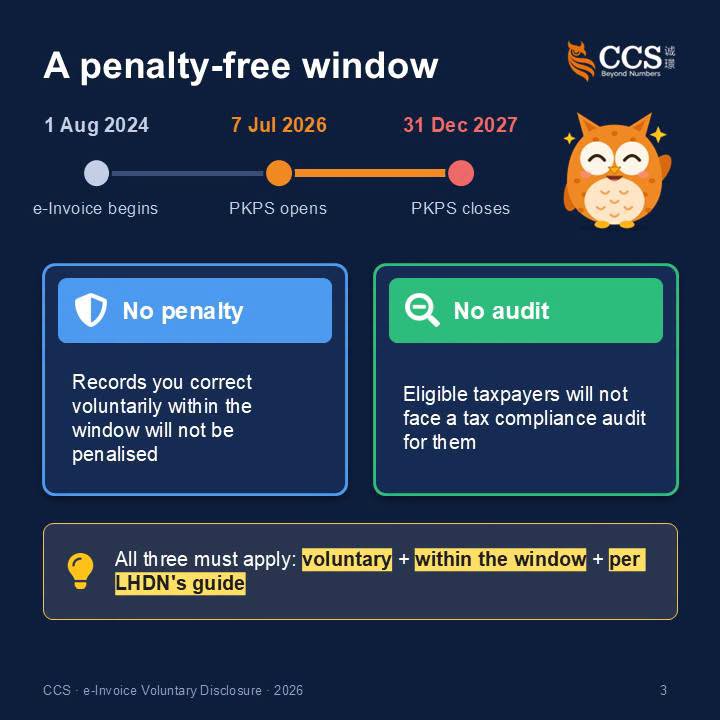
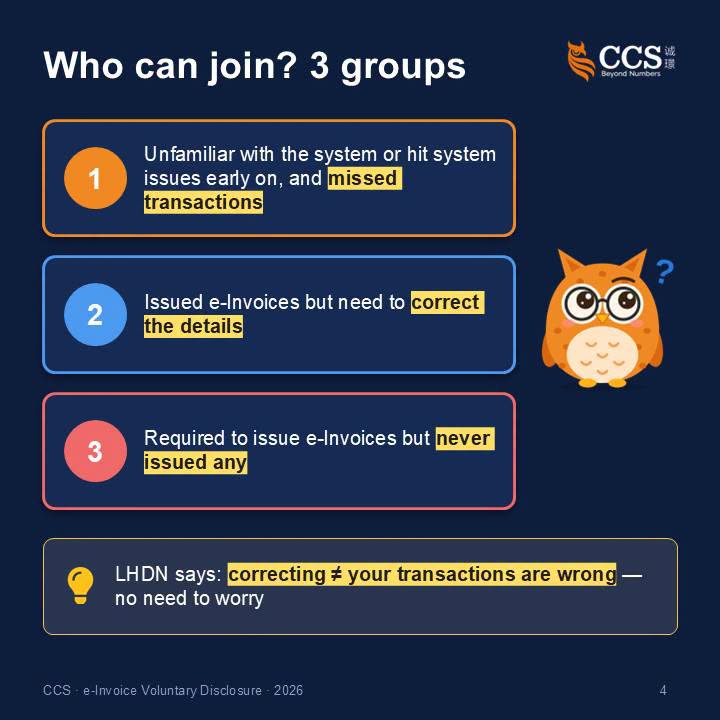
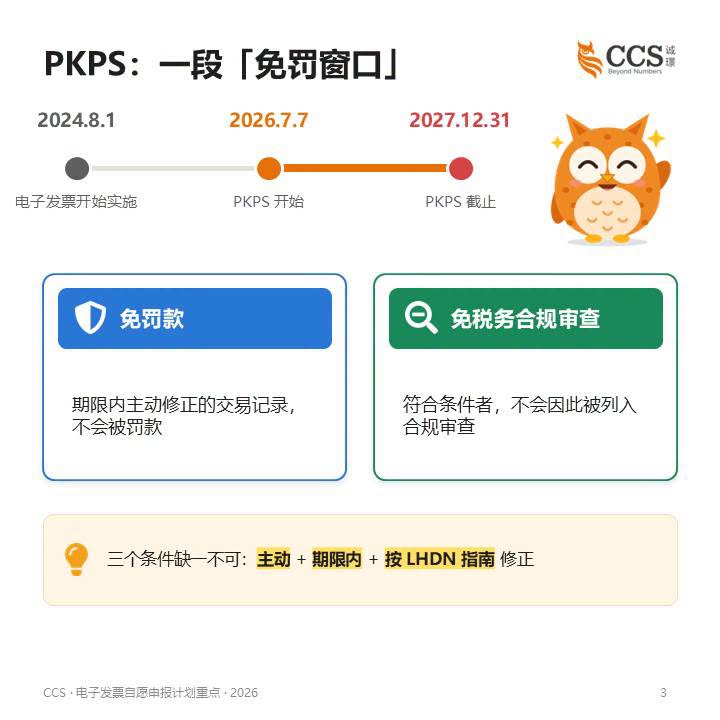
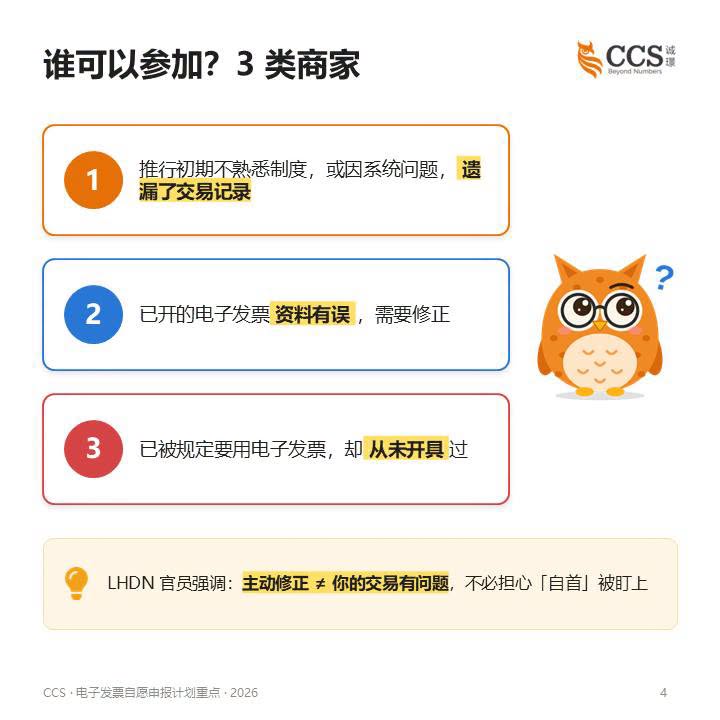
The programme runs from 7 July 2026 to 31 December 2027. It covers taxpayers who missed or did not submit e-Invoices, submitted e-Invoices with errors or details that do not meet the requirements, or have not issued any e-Invoices since their mandatory implementation date. The guidelines also cover taxpayers who are undergoing, or have been notified that they will undergo, an e-Invoice compliance review.
What the programme provides
For e-Invoices disclosed under the programme, HASiL will not conduct e-Invoice compliance reviews or enforcement actions, including imposing penalties or pursuing prosecution, provided the disclosure is made in good faith and meets the prescribed requirements.
This relief does not apply if the submitted e-Invoices fail to meet the required specifications or if the disclosure involves fraud, wilful default or negligence. Making a correction under the programme does not, by itself, mean that all the taxpayer’s transactions were incorrect; some records may simply need to be updated.
How to make a disclosure
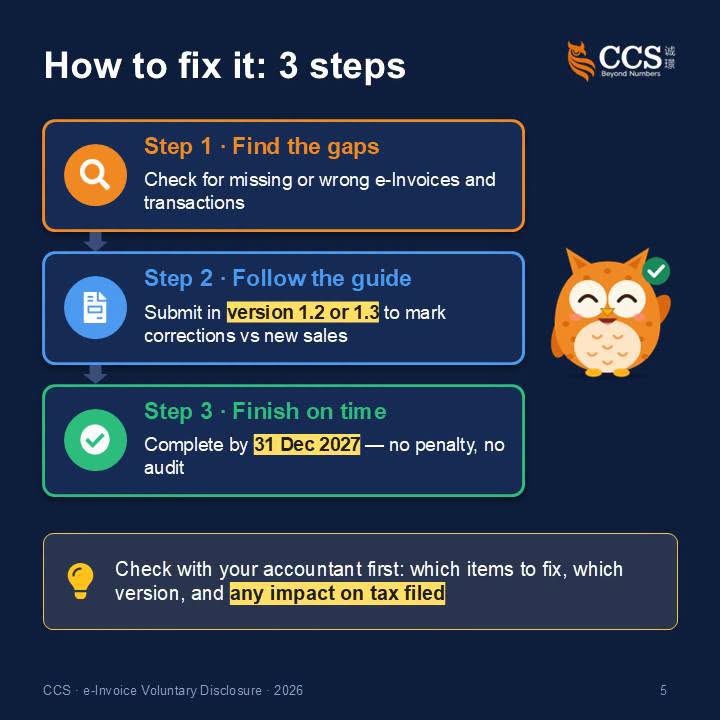
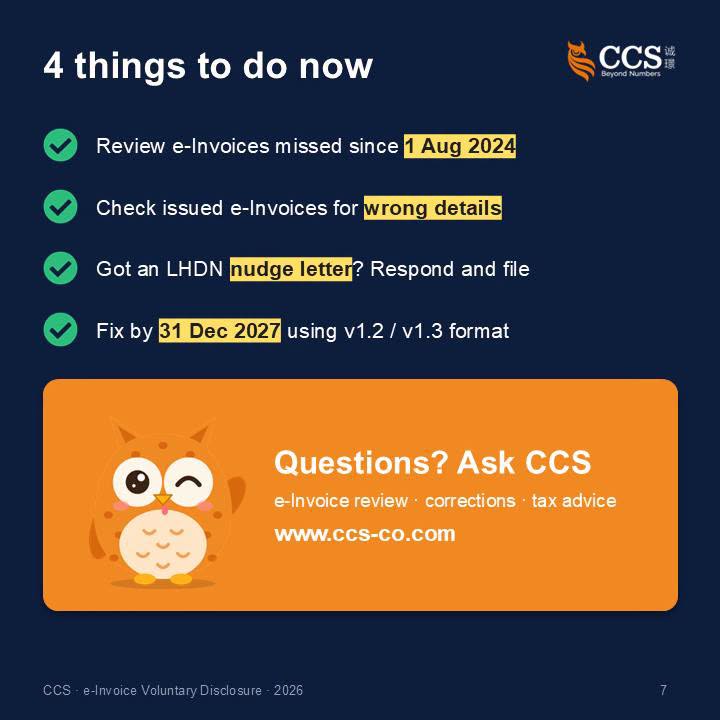
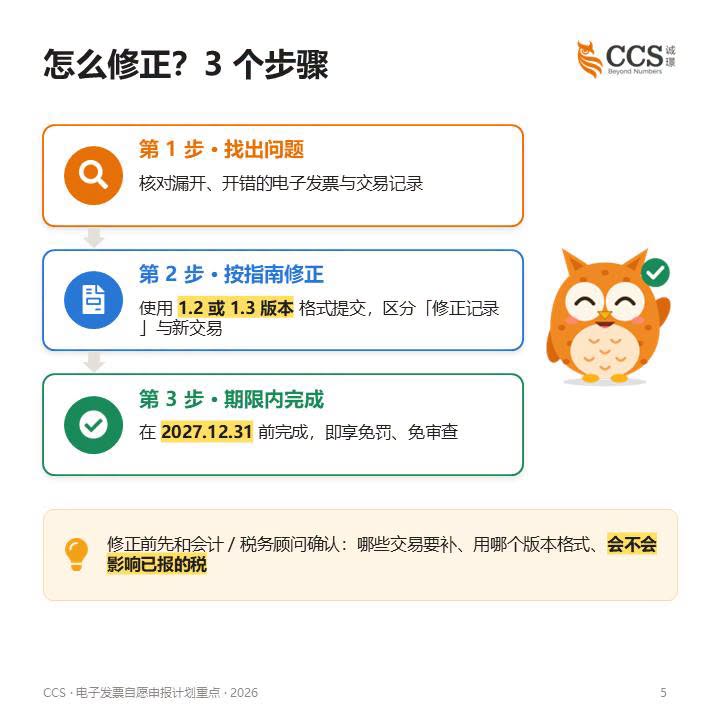
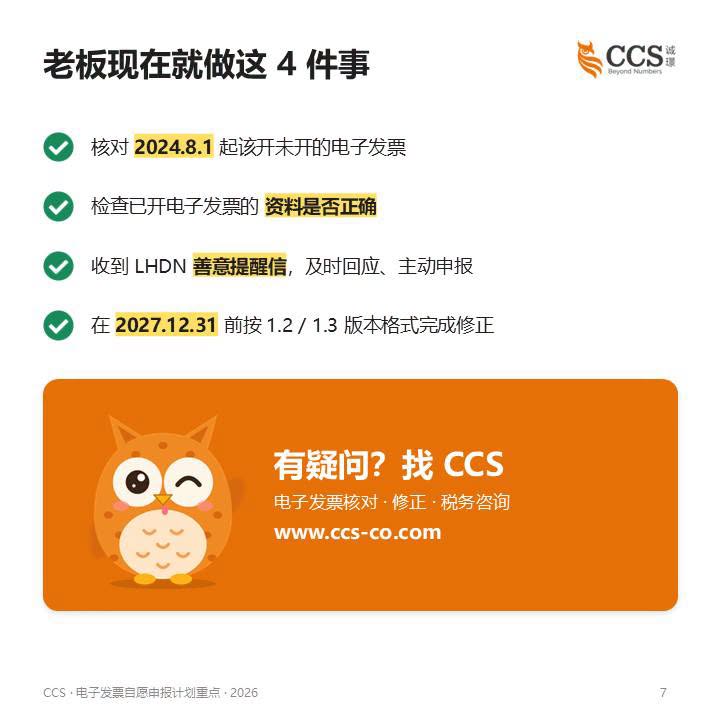
Taxpayers should identify the missing or incorrect records and submit them using the designated SVDP 1.2 format if submitting without a digital signature, or SVDP 1.3 if submitting with a digital signature. These formats are for SVDP submissions only.
Where previously unsubmitted consolidated e-Invoices are involved, they must be submitted according to the relevant transaction month, not as one lump-sum submission covering several months. Disclosures should be accurate and completed by 31 December 2027.
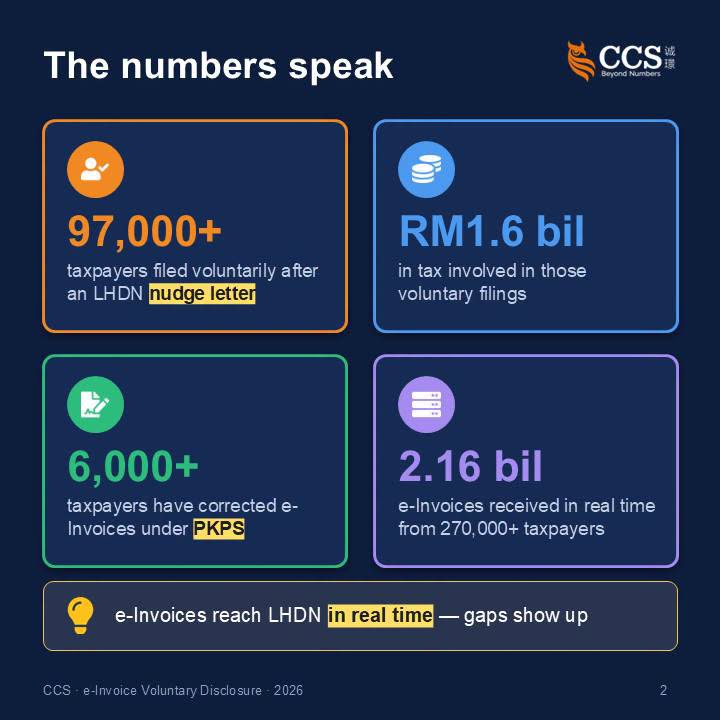
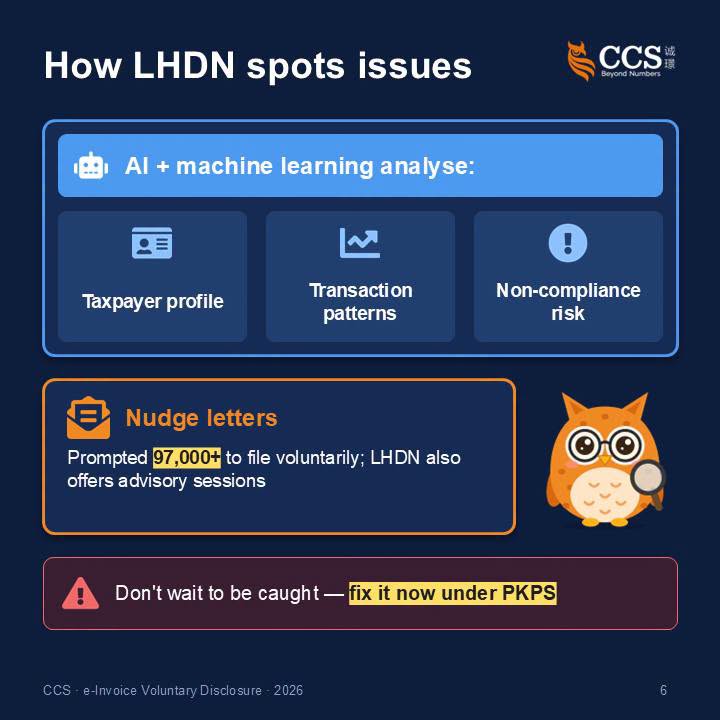
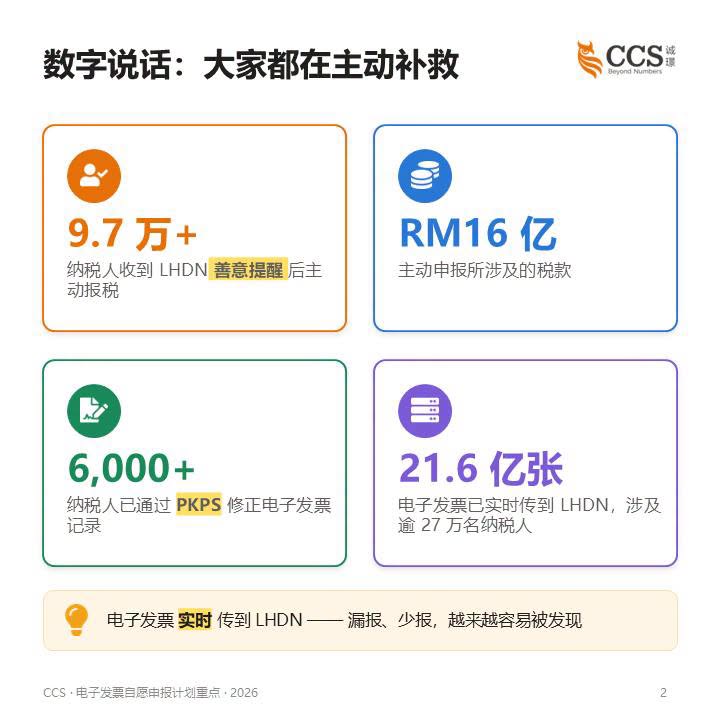
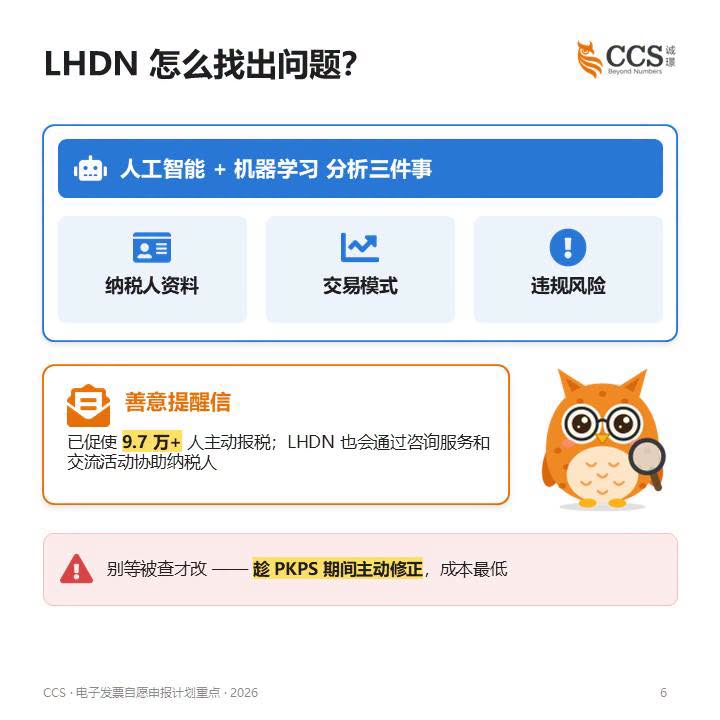
The programme is already being used by taxpayers. As reported on 7 November 2026, more than 6,000 taxpayers had come forward to correct their e-Invoice transaction records. HASiL had also received 2.16 billion e-Invoices from more than 270,000 taxpayers since the system began on 1 August 2024. The report noted that HASiL uses artificial intelligence and machine learning to analyse taxpayer profiles, identify transaction patterns and assess potential tax-compliance risks.
HASiL also reported that its nudge-based approach had encouraged more than 97,000 taxpayers to file tax returns voluntarily, involving RM1.6 billion in tax payable. These figures underline the importance of reviewing e-Invoice records and addressing gaps while the programme remains open.
马来西亚电子发票自愿披露计划:把握期限,于2027年12月31日前更正
电子发票于2024年8月开始推行时,部分企业面对系统问题、对规定不确定,也不清楚哪些交易需要开具电子发票。对于曾遗漏提交或需要更正记录的企业,HASiL 推出的电子发票特别自愿披露计划(SVDP),亦称 PKPS e-Invois,为纳税人提供了补正电子发票记录的途径。
计划开放日期为 2026年7月7日至2027年12月31日。适用对象包括遗漏或未提交电子发票、已提交但资料错误或不符合要求,以及自强制实施日期起尚未开具任何电子发票的纳税人。指南也涵盖正在接受电子发票合规审查,或已接获通知将接受审查的纳税人。
计划提供的安排
对于根据计划披露的电子发票,只要纳税人秉持诚信并符合规定要求,HASiL 将不会就相关电子发票进行合规审查或采取执法行动,包括施加罚款或提起检控。
如果提交的电子发票不符合规定规格,或披露涉及欺诈、蓄意违约或疏忽,则不适用上述安排。根据计划进行更正,本身并不代表纳税人的所有交易都有错误;部分记录可能只是需要更新。
如何进行披露
纳税人应先找出遗漏或资料有误的记录,再按规定格式提交:未使用数码签名的,使用指定的 SVDP 1.2 格式;使用数码签名的,则使用 SVDP 1.3 格式。这些格式仅供 SVDP 申报使用。
若涉及之前未提交的合并电子发票,须按相关交易月份分别提交,不可将数个月份的资料合并成一笔总额提交。披露资料应准确,并须于 2027年12月31日前完成。
纳税人已开始使用这项计划。截至2026年11月7日,已有超过6,000名纳税人主动更正电子发票交易记录。自2024年8月1日系统启用以来,HASiL 已从超过270,000名纳税人收到21.6亿张电子发票。报道指出,HASiL 正运用人工智能与机器学习分析纳税人资料、识别交易模式,并评估潜在的税务合规风险。
HASiL 也表示,其提醒式推动措施促使超过97,000名纳税人自愿提交报税表,涉及 RM1.6 billion 的应缴税款。这些数据提醒企业检视电子发票记录,并在计划开放期间处理任何遗漏或需要更正的事项。