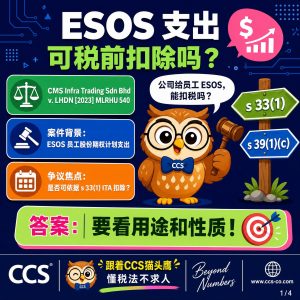
In CMS Infra Trading v LHDN [2023] MLRHU 540, the court considered whether expenditure incurred under an Employee Share Option Scheme (ESOS) could be deducted under section 33(1) of the Income Tax Act 1967 (ITA).
The key question was whether the ESOS expenditure was incurred wholly and exclusively in the production of income.
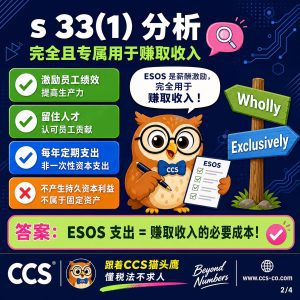
Section 33(1) Analysis
The analysis focused on the purpose and nature of the expenditure. The ESOS was implemented to:
- Motivate employees to improve their performance;
- Retain talent within the organisation;
- Provide a recurring employee incentive; and
- Avoid creating any enduring capital benefit.
Based on these considerations, the ESOS expenditure was regarded as a necessary cost incurred in earning income.
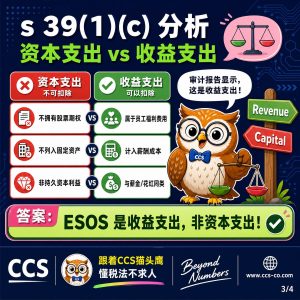
Section 39(1)(c) Analysis
The court also considered whether the expenditure was capital or revenue in nature.
| Capital expenditure considerations | Revenue expenditure considerations |
|---|---|
| The company did not own the share options | The expenditure formed part of employee benefits |
| The share options were not recorded as fixed assets | The expenditure was included as part of remuneration costs |
| The expenditure did not create an enduring capital benefit | The expenditure was similar in nature to salaries and bonuses |
On this basis, the ESOS expenditure was considered revenue expenditure rather than capital expenditure.
Court’s Decision and Key Takeaway
The court held that the ESOS expenditure was deductible under section 33(1) of the ITA because it constituted a form of remuneration and employee incentive incurred wholly in the production of income.
The decision highlights that a recurring employee incentive scheme may be treated as revenue expenditure where its purpose is to motivate employees, retain talent and support the generation of income, without creating an enduring capital benefit.
ESOS 支出是否可获税前扣除?——CMS Infra Trading v LHDN 案例的启示
在 CMS Infra Trading v LHDN [2023] MLRHU 540 一案中,法院审理了员工股份期权计划(Employee Share Option Scheme,简称 ESOS)所产生的支出,是否可依据《所得税法令 1967》(Income Tax Act 1967,简称 ITA)第 33(1) 条扣除的问题。
争议的关键在于,该项 ESOS 支出是否属于完全且专属用于赚取收入的支出。
第 33(1) 条分析
法院主要从支出的用途和性质进行分析。有关 ESOS 的设立目的包括:
- 激励员工提升工作表现;
- 挽留公司内部的人才;
- 提供定期性的员工激励;以及
- 不产生任何持久性的资本利益。
基于上述因素,ESOS 支出被视为赚取收入所需承担的必要成本。
第 39(1)(c) 条分析
法院亦进一步考虑该项支出属于资本支出还是收益支出。
| 资本支出的考量 | 收益支出的考量 |
|---|---|
| 公司并不拥有有关股份期权 | 有关支出属于员工福利费用 |
| 股份期权并未列入固定资产 | 有关支出计入薪酬成本 |
| 有关支出并未产生持久性的资本利益 | 有关支出的性质类似薪金和花红 |
因此,ESOS 支出被认定为收益支出,而非资本支出。
法院判决与关键启示
法院裁定,ESOS 支出可依据 ITA 第 33(1) 条扣除,因为该支出属于薪酬及员工激励的一部分,并且完全用于赚取收入。
这项判决说明,若定期支出的员工激励计划旨在激励员工、挽留人才并支持收入的赚取,同时没有产生持久性的资本利益,该项支出可被视为收益支出。