Yes. Both of these have their own unique qualities that set them apart.
Auditing may primarily be broken down into two categories: internal and external.
An internal audit department is staffed by employees of that entity who will provide internal audit functions that benefit the entity as a whole. However, it is common for businesses to contract out their internal audit function.
This is typically done when the expenses of having an in-house audit function do not outweigh the benefits of having one.
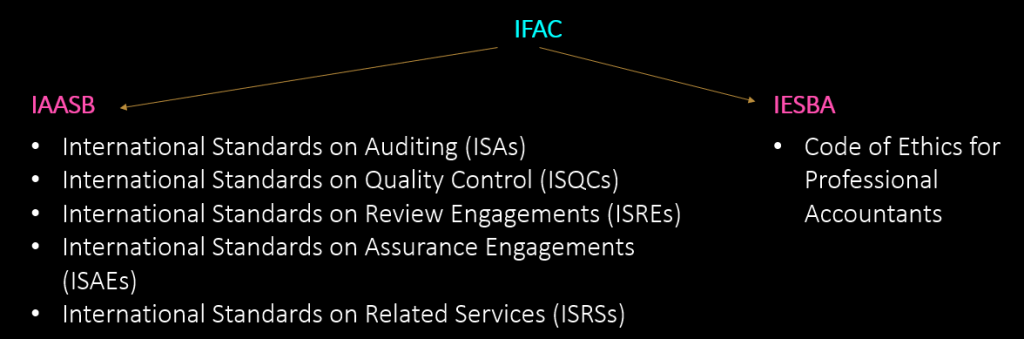
Internal audit departments will conform to their own auditing standards, generally independent of the International Standards on Auditing (ISAs). They will have their tasks outlined by the organisation’s management.
Internal auditing serves its purpose by, among other things, examining, evaluating and reporting to management with reports on the adequateness and efficiency of various accounting and internal control systems.
To put it another way, the purpose of an internal audit is to provide value to and enhance an organisation’s operations.

是的,这两者都有自己独特的品质,使它们与众不同。
审计主要可分为两类:内部和外部。
内部审计部门由该实体的员工组成,他们将提供有利于整个实体的内部审计功能。然而,企业将其内部审计职能外包出去也是很常见的。
这通常是在本身设立一个内部审计部门的费用,远远超过了拥有一个内部审计职能的好处时,才会考虑外包。
内部审计部门将按照他们自己的审计标准进行其职务,这通常独立于《国际审计标准》(ISA)。他们的任务,主要是由组织的管理层概述。
内部审计的目的是,除其他事项外,检查、评估和向管理层报告各种会计和内部控制系统的充分性和效率。
换句话说,内部审计的目的是为一个组织的运作提供价值,并加强其运作。

On the other hand, an external audit is almost always a requirement that must be fulfilled (either by legislation or other rules and regulations, such as listing rules or because financiers require an audit of the financial statements to be undertaken).
The Companies Act 2016 mandates that all entities established under the Act must have their financial statements audited by a certified auditor, except for those companies exempt from this requirement.
The entity’s financial statements will constitute the exclusive and primary focus of the aim of the independent audit (in contrast to the internal audit, which is focused on the operations of the entire business).

另一方面,外部审计几乎总是一个遵循的要求(要么是立法或其他规则和条例,如上市规则或因为金融家要求对财务报表进行审计)。
马来西亚2016年公司法令则要求,除符合豁免资格的公司外,所有在有关法令下成立的公司,其账目都需要委任合格审计师进行审计。
实体的财务报表将构成独立审计目标的唯一和主要重点(与内部审计相反,内部审计的重点是整个企业的运作)。
The following is a table that compares and contrasts internal auditing with external auditing:
以下是内部审计与外部审计的对比表:
| | Internal Audit | External Audit |
|---|---|---|
| Objective | It is developed to enhance the performance of an entity’s activities. | To provide an opinion about whether or not the financial statements are presented fairly (or to give a true and fair view) |
| Reporting | Those responsible for governance (such as the audit committee) or management (the board of directors) are the ones who receive reports from this department. Internal audit reports are not made public and are kept strictly confidential. | Contains information that is communicated to the entity’s shareholders or members on the truth and fairness of the financial statements. Reports are given to shareholders and anyone else who might be interested in the reporting company. They are also available to the general public. |
| Scope | The work of internal audit relates to the operations of the organisation | The work of the external auditors relates to the financial statements |
| Relationship | Employees of the organisation frequently fill positions in the organization’s internal audit departments (where the role of internal audit is not outsourced) | Auditors appointed by the company’s shareholders are considered external auditors because of their independence from the corporate entity. |
| Planning and evidence collection | Long-term planning will take place, emphasising the business’s overall strategy and the goals it aims to accomplish. There will be no materiality level established, and the evidence gathered by the internal audit will often be internal. | Its purpose is to have external audits done to see if the financial statements are true and fair in how they show the business. The importance of the financial statements and the company’s performance will be figured out, and evidence will be gathered in several ways that will be sufficient and appropriate. |

There are no legal requirements to become an internal auditor. As a result, internal auditors are not required to be members of a professional body.
This is because business policy, as opposed to external rules or standards, is more likely to be responsible for defining the function of internal audits.
On the other hand, a significant number of internal auditors hold accounting degrees, and there is a recognised institution for internal auditors known as the Institute of Internal Auditors, [the Institute of Internal Auditors Malaysia (IIA Malaysia)], which internal auditors can join as members.
要成为一名内部审计师,没有任何法律要求。
因此,内部审计师不需要成为专业机构的成员。
这是因为,相对于外部规则或标准,商业政策更有可能负责界定内部审计的功能。
另一方面,相当多的内部审计师拥有会计学位,而且有一个被称为内部审计师协会的认可机构,[马来西亚内部审计师协会(IIA Malaysia)],内部审计师可以作为会员加入。

Our website's articles, templates, and material are solely for reference. Although we make every effort to keep the information up to date and accurate, we make no representations or warranties of any kind, either express or implied, regarding the website or the information, articles, templates, or related graphics that are contained on the website in terms of its completeness, accuracy, reliability, suitability, or availability. Therefore, any reliance on such information is strictly at your own risk.
Keep in touch with us so that you can receive timely updates |
要获得即时更新,请与我们保持联系
1. Website ✍️ https://www.ccs-co.com/ 2. Telegram ✍️ http://bit.ly/YourAuditor 3. Facebook ✍
- https://www.facebook.com/YourHRAdvisory/?ref=pages_you_manage
- https://www.facebook.com/YourAuditor/?ref=pages_you_manage
4. Blog ✍ https://lnkd.in/e-Pu8_G 5. Google ✍ https://lnkd.in/ehZE6mxy
6. LinkedIn ✍ https://www.linkedin.com/company/74734209/admin/