High Court of Justice
(Chancery Division)
Court of Appeal
Benson (H.M. Inspector of Taxes)
v
Yard Arm ClubLtd
15 January 1979
England & Wales
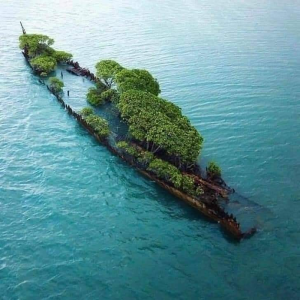
In 1962 the Company bought a secondhand ship and converted her into a floating restaurant.
The converted hulk had no means of propulsion or steering.
She was moored with an attendant barge at a permanent site on the Victoria Embankment.
The Inspector refused capital allowances for the cost of the ship and subsequent expenditure upon her for the years 1963-64 to 1965-66 and for subsequent accounting periods up to and including the year to 31 December 1973.
On appeal the General Commissioners upheld the Company’s contention that the hulk was plant, on the grounds that it was the principal means of attracting people to the restaurant.
In the High Court, the Company did not seek to defend the grounds of the Commissioners’ decision, but contended that for the purpose of deciding if something is plant, assets fall into two classes:
- the first class being land and buildings and structures on land,
- the second comprising all other assets, including the floating restaurant.
The test for the former, it was argued, is stricter: the asset has to play a part in the commercial process.
For the second class the asset merely needs to be something kept for permanent employment in the trade; the authorities establishing a rigorous functional test were all concerned with the former class and thus irrelevant.
Alternatively, the Company’s trade was not merely that of a restaurant, but a floating restaurant.
In that specialised trade the hulk had a functional role.
The Crown contended that the hulk and its barge were simply the place or setting of the trade and not a means for carrying it on.
The Chancery Division, allowing the Crown’s appeal, held
- that the Company’s main argument had no foundation in the authorities even if it were not explicitly inconsistent with them;
- that its alternative argument was really for an amenity test, not a functional test; the hulk had amenity value in the Company’s trade, but it was not plant, because it was the setting of the trade and not the apparatus used for carrying on the trade.
Dixon v. Fitch’s Garage Ltd. 50 TC 509; [1976] 1 WLR 215 followed.
In the Court of Appeal, it was also contended for the Company that ships and hulks were by their very nature “plant”, on the authority of John Hall, Junior & Co. v. Rickman [1906] 1 KB 311, and capital expenditure on them therefore qualified for capital allowances.
The Court of Appeal, dismissing the Company’s appeal, held that the hulk and the barge, though chattels, were the premises where the business was carried on and not apparatus employed in the Company’s commercial activities. John Hall, Junior & Co. v. Rickman (above) distinguished and explained.
Case
Stated by the Commissioners for the General Purposes of the Income Tax for the Division of Spelthorne in the County of Middlesex pursuant to s 56 of the Taxes Management Act 1970, for the opinion of the High Court of Justice.
1. At a meeting of the said Commissioners at Sunbury Council Chambers, Green Street, Sunbury-on-Thames, Middlesex, on 15 December 1976, the Yard Arm Club Ltd. (hereinafter called “the Company”) appealed against income tax assessments made on the Company under Case 1 of Schedule D in respect of profits from its trade as restaurateurs, as follows:
1963-64: £200
1964-65: £300
1965-66: £300.

The Company further appealed against corporation tax assessments made on the Company in respect of profits from its trade as restaurateurs, as follows:
Accounting period
- 1.10.66-30.9.67: £1,000
- 1.10.67-31.12.67: £200
- 1.10.67-30.9.68: £1,000
- 1.1.68-31.12.68: £2,000
- 1.1.69-31.12.69: £2,000
- 1.1.70-31.12.70: £12,000
- 1.1.71-31.12.71: £20,000
- 1.1.72-31.12.72: £20,000
- 1.1.73-31.12.73: £20,000.
2. The question for our determination was as follows: whether the Company was entitled to capital allowances in respect of capital expenditure incurred in acquiring the vessel “Hotspur” later known as “Hispaniola” (and referred to here as Hispaniola 1) and the cost of its conversion into a floating restaurant, together with a barge which provided services to it.
The expenditure in dispute related to the hull and structure of the vessels, the Revenue having agreed that capital allowances were due in respect of restaurant furniture, sewage pumps etc.
3. Oral evidence was given by Mr. W.R. Watson-Smyth, formerly chairman of the Company.
4. The following documents were proved or admitted before us:

- A schedule of the profits assessable and capital allowances for each period if the case were determined in favour of the Revenue.
- A schedule of the profits assessable and capital allowances for each period if the case were determined in favour of the Company.
- (A schedule showing summaries of the capital expenditure incurred, the capital allowances granted and the capital allowances disputed for each period.
- Schedules showing details of the capital expenditure incurred.
- A copy of an advertising circular sent to the Board of Inland Revenue.
- Two photographs of Hispaniola 1.
- The certificate of registration of Hispaniola 1.
5. The following facts were proved or admitted:

- Hispaniola 1 had been originally built in 1927 for use as a ferry between Southampton and the Isle of Wight. Subsequently it had been sold to a firm in Norfolk who used it as a pleasure craft. It was acquired by the Company for £2,449 in 1962.
- The reason for acquisition of the vessel was in order to convert it into a restaurant club.
- The ship was initially registered as the “Hotspur” at Southampton. Since acquisition by the Company it had been re-registered at Southampton as the “Hispaniola”.
- During the conversion of the vessel the engines and boiler were removed and it had thereafter no power or steering ability.
- The vessel, after conversion, was towed to a permanent site of the Victoria Embankment, where it was used initially as a floating restaurant club and later as a floating restaurant open to the public at large from 13 August 1963 until 1975 when it was replaced by a larger vessel.
- The vessel was moved under tow to dry dock for repainting and maintenance every few years (maximum five).
- When the shares of the Company were acquired (in 1967) by Mr. Watson-Smyth and other members of his family, the ship comprised three decks;
- a hold where the washing-up etc., was done, which was served by a lift from the other decks,
- a main deck containing bars, toilets and restaurant facilities and
- an upper deck comprising table facilities and the kitchen.
- Associated with that was the barge which was necessary for the gangway to come down and slide on.
- It also contained sewage disposal equipment and waiters’ changing rooms, etc. In 1972 a new kitchen was built on the barge.
- The barge was fixed to mooring posts and was able to slide up and down those posts as required by tidal movement.
- The maximum tidal difference at the site was about 30 ft.
- The Hispaniola 1 was attached to the barge by ropes and chains and was subject to the vertical tide movement of up to 30 ft. and also to movement up and down river to the extent of some 5 ft. caused by the ebb and flow of the tide.
- The waves caused it to rock gently from side to side.
- The customers of the restaurant nearly all joined the vessel by way of the gangway from the Victoria Embankment but some came by boat, mooring to the barge. They came, to quote the former chairman, “to get good food somewhere different with views of the river, etc. and a shipboard feeling”.
- The vessel was intended to be kept in a permanently fixed position although it could be moved if required. It was never intended to carry passengers or cargo on voyages.
- When it was replaced by a larger vessel in 1975 attempts were made to sell Hispaniola 1 but these attempts had failed and a new mooring was being sought at Hammersmith Pier where negotiations with the local authority had reached an advanced stage.
- In the period 1962-73 capital expenditure was incurred as follows:
- Cost of hull alterations (including cost of vessel) – £41,254
- Cost of lifts, machinery and furniture – £8,517
- Cost of additional fixtures, etc.- £26,091
- Total: £75,862.
- Capital allowances have been granted in respect of the expenditure on the items 2 and 3 above. The dispute arises over item 1.
6. We were referred to the following authorities:

- Gibson v. Small (1852-54) 4 HL Cas 353
- European and Australian Royal Mail Co. Ltd. v. The Peninsular and Orient Steam Navigation Co. (1866) 14 LT 704
- The Mac (1882) 7 P 126
- Yarmouth v. France ELR(1887) 19 QBD 647
- The Gas Float Whitton No. 2 ELRELR (1896) P 42; (1895) 65 LJ P 17; (1895) P 301
- Andrews v. Andrews and Mears ELR [1908) 2 K B 567
- Polpen Shipping Co., Ltd. v. Commercial Union Assurance Co., Ltd.ELR [1943]
- J. Lyons & Co. v. Attorney-General UNK [1944] 1 All ER 477
- Hinton v. Maden & Ireland, Ltd. TAXWLR38 TC 391; [1975] 1 WLR 875
- Jarrold v. John Good & Sons TAXWLR40 TC 681; [1963] 1 WLR 214
Judgement
The test of whether an item is apparatus used in carrying on a business is sometimes called the Functional Test. In this case, Buckley LJ stated:
'The functional test provides the criterion to be applied. Is the subject matter the apparatus or part of the apparatus employed in carrying on the activities of the business?'
In this case, the company claimed plant and machinery allowances on an old ship that was adapted for use as a floating restaurant.
The ship was the structure within which the restaurant trade was carried on, rather than apparatus with which it was carried on.
In the Court of Appeal, Templeman LJ said that he could see no distinction between a restaurant on the Thames and a fish and chip shop in Bethnal Green.
Both act as premises in which the trade is carried on.
Note that the functional test is not whether an asset has a function.
All business assets have a function.
The test is whether the asset functions as apparatus used in carrying on the activities of the business.
For example, an asset that functions as the business premises is not plant, as it is not apparatus used in carrying on the activities of the business.
What this Means
It was decided in the well-known English case of Yarmouth v. France[7] that a horse owned by the defendant and utilised by the enterprise to carry carts is considered to be a “plant.” According to Lindley L.J., who asserted that:
“There is no definition of plant in the Act: but, in its ordinary sense, it includes whatever apparatus is used by a business man for carrying on his business, - not his stock-in-trade which he buys or makes for sale; but all goods and chattels, fixed or moveable, live or dead, which he keeps for permanent employment in his business”
Therefore, the determination of whether or not anything is a plant is based on whether or not it is apparatus that is preserved for permanent employment in the process of running the business.

This procedure is referred to as the “Apparatus Test,” and it has been widely adopted by other jurisdictions as well as the Malaysian jurisdiction.
However, other tests, such as the “Premises Test,” the “Business Use Test,” and the “Functional Test,” were established over the course of time and through the use of various noteworthy cases.
In practice, the distinction between these tests may sometimes be unclear,
The ‘business use test’ is basically the same as the functional test,
The “business use test” examines whether an asset has a business use that is neither as stock-in-trade nor as merely the premises where business is conducted.
Functional Test looks at the function of the item in dispute and asks whether it has a functional purpose that enables the business’ performance.
Whereas the “premises test” requires that the following question be asked:
- whether or not the premise in question was the means by which business was conducted or,
- whether it was merely the premises where business was carried on.
In light of this, a taxpayer or their tax agent, who is preparing to make a claim for capital allowances, should take into consideration the particulars of their own business and the industry in which they operate in order to determine for themselves whether or not the apparatus in question qualifies as a plant for them.
Our website's articles, templates, and material are solely for reference. Although we make every effort to keep the information up to date and accurate, we make no representations or warranties of any kind, either express or implied, regarding the website or the information, articles, templates, or related graphics that are contained on the website in terms of its completeness, accuracy, reliability, suitability, or availability. Therefore, any reliance on such information is strictly at your own risk.
Keep in touch with us so that you can receive timely updates |
要获得即时更新,请与我们保持联系
1. Website ✍️ https://www.ccs-co.com/ 2. Telegram ✍️ http://bit.ly/YourAuditor 3. Facebook ✍
- https://www.facebook.com/YourHRAdvisory/?ref=pages_you_manage
- https://www.facebook.com/YourAuditor/?ref=pages_you_manage
4. Blog ✍ https://lnkd.in/e-Pu8_G 5. Google ✍ https://lnkd.in/ehZE6mxy
6. LinkedIn ✍ https://www.linkedin.com/company/74734209/admin/