It is no secret that claiming Capital Allowances on plant and machinery expenditure can be a complicated business.
While claiming allowances on business equipment such as motor vehicles, computers, tables, and chairs is straightforward, fully maximising a Capital Allowances claim on renovation and property purchases is fraught with complexities.
Even the most basic question doesn’t have a simple answer, namely, what is “Plant and Machinery”?
To this day, the question of whether or not a specific asset qualifies as a plant is one that the court must decide as a matter of legal principle (a question of law) and a vast amount of case law and legislation have to be interpreted when considering the question.
Yarmouth v France: CA 11 Aug 1887
The starting point in the search for a definition of the plant is relatively easy to find.
One case, concerned not with taxation but with compensation under the Employers’ Liability Act 1880, has been quoted and referred to in nearly every judgment that has considered the meaning of plant.
The case in question, Yarmouth v France, was heard by the Court of Appeal in 1887.
The defendant employed the plaintiff to drive carts. He objected that the horse had a vicious nature but was obliged to drive it. The horse kicked him.
For the 1880 Act, the plaintiff was an employee, the horse was a plant in the employer’s business, and its character was a defect in that plant.
In this case, Lindley LJ said:
'There is no definition of plant in the Act, but in its ordinary sense, it (that is, plant) includes whatever apparatus is or instruments used by a businessman for carrying on his business, not his stock-in-trade which he buys or makes for sale; but all goods and chattels, fixed or movable, live or dead, which he keeps for permanent employment in the business.'
The facts on which the decision was based have ceased to be relevant, but the following short quotation from the judgment of Lindley J has become the cornerstone.
This definition has received judicial approval at the highest level, as by the House of Lords in, for example, the cases of Maden & Ireland and IR Commrs v Barclay, Curle & Co Ltd.
It was also used as the justification for overturning, after 50 years, the Daphne v Shaw decision which had held that a law library was not plant.
That the definition is sound is beyond doubt, but it tells us little beyond what is seemingly rather obvious.
The concept that a plant may be live or dead has not in practice exercised the courts, though the case itself concerned a horse, and in recent times an inspector has been known to accept horses in a riding stable as a plant for tax purposes.
The practical importance of the definition can perhaps be said to be threefold:
that plant is Apparatus; and
that it includes ‘all goods and chattels’.
The same case is also relevant for the concept of ‘all goods and chattels’ in the related matter of whether numerous short-lived small items can qualify as a plant. Lord Reid commented:
‘Subject to one point [that of durability], I have no doubt that these knives and lasts are plant in the ordinary sense of the word. It is true that they are numerous, small and cheap. But one trader may have to use a few large articles while another may have to use a large number of small articles.’
Otherwise, the significance of ‘goods or chattels’ has not unduly concerned the courts.
In Jarrold v John Good & Sons Ltd, it was considered that the reference to goods and chattels ‘impliedly excludes the premises in which the business is carried on’.
This interpretation was also accepted in the Yard Arm Club case and subsequently in Wimpy International Ltd v Warland.
Of the different aspects of the Yarmouth v France definition, it is undoubtedly the reference to ‘apparatus used by a businessman for carrying on his business’ that has given rise to the most significant level of argument in the courts.
The contrast has been drawn between the ‘apparatus with which’ and the ‘setting within which’ a business is conducted.
However, this dichotomy is an uneasy one, for the two are not mutually exclusive on occasion. Furthermore, the definition of apparatus has itself given rise to a new problem, the so-called ‘functional test’, which, in turn, raises a different set of considerations.
Yarmouth v France also made it clear that something not used for carrying on the business is not plant. It also made it clear that ‘plant’ excludes stock in trade.
In Malaysia
Previously, since the term “plant” was not defined under the Income Tax Act of 1967, taxpayers were guided by the legal principles established in case law.
Consequently, traditionally, tax practitioners and tax officials will seek the courts for guidance on the definition of a plant. In particular, they will also look to the well-known case of Yarmouth v. France.
In Malaysia, the definition of Lindley LJ has been applied for a long time.
This is evident from prominent cases of capital allowance claims in Malaysia, such as:
Ketua Pengarah Hasil Dalam Negeri v Tropiland Sdn Bhd; and
Infra Quest Sdn Bhd v Ketua Pengarah Hasil Dalam Negeri.
Ketua Pengarah Hasil Dalam Negeri v Tropiland Sdn Bhd
In this case, the taxpayer submitted a claim for capital allowance to receive reimbursement for the expenses incurred while building a multi-level carpark.
The approach used in the case of Yarmouth was essentially embraced by the Court of Appeal when it issued its decision that the multi-level carpark qualified as a qualifying plant.
To assess whether or not a particular subject matter is a qualifying plant, the Court considered a wide variety of standards, such as the “premise” test, the “Business Use Test”, and the “Functional Test”.
Infra Quest Sdn Bhd v Ketua Pengarah Hasil Dalam Negeri
In this case, the High Court held that telecommunication towers were plant and commented that:
“This court is of the considered opinion that in distinguishing between the functional use and the setting, it must be noted that in some cases, buildings and structures have been held to be plant in their entirety as the courts considered the structures as performing an integral function with the machinery and plant contained within it.”
The Court of Appeal subsequently affirmed the High Court’s decision.
Paragraph 70A Of Schedule 3
Section 28(a) of the Finance Act 2020 introduced a new paragraph 70A into Schedule 3 of the ITA, which reads as follows:
“In this Schedule, “plant” means an apparatus used by a person for carrying on his business but does not include a building, an intangible asset, or any asset used and that functions as a place within which a business is carried on.”
Taxpayers are now required to examine the legal position of what constitutes a plant for the purposes of capital allowances by analysing the approach taken by the courts in the past and the new paragraph 70A of the Income Tax Act 1967.
While it is clear that some of paragraph 70A was written based on the wordings from Yarmouth, paragraph 70A did significantly narrow the scope of the plant by the Inland Revenue Board of Malaysia.
Buildings, Intangible Assets, and places where business is conducted are no longer considered “plant” under the new wording of paragraph 70A.
What this Means
The legal environment has moved towards a more restricted plant definition at this point.
Despite this, the development and implementation of paragraph 70A did not correctly define the definition of the plant; instead, it imposed a more narrow interpretation of the term.
Our website's articles, templates, and material are solely for reference. Although we make every effort to keep the information up to date and accurate, we make no representations or warranties of any kind, either express or implied, regarding the website or the information, articles, templates, or related graphics that are contained on the website in terms of its completeness, accuracy, reliability, suitability, or availability. Therefore, any reliance on such information is strictly at your own risk.
Keep in touch with us so that you can receive timely updates |
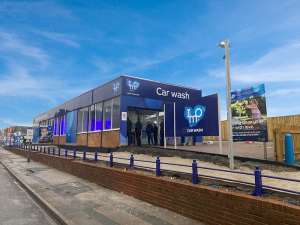
This was an appeal by the Revenue from a decision of the special commissioners that the entire site on which stood a building incorporating car washing machinery and control equipment qualified as “plant” for the purposes of capital allowances.
Anduff’s trade was operating some 78 car wash sites throughout the UK, each site extending to about 20 metres by 6.5 metres.
On each site was a “washhall” incorporating the car wash machinery and control equipment, and surrounding tarmac areas used for circulation, queuing and parking.
The wash hall had an unusually shaped roof which enabled rain water to be retained and, after going through settling tanks and filters, to be used again for washing cars.
The sites were laid out in accordance with a special German system known as the “IMO” system which allowed for a very rapid throughput of vehicles, with provision for four vehicles to pass through the wash hall at one time.
The IMO system encompassed the design and layout of the whole site.
The site included pre-wash and post-wash pads, and vacuum machines for drivers to clean the interiors of their cars if they wished.
The company claimed capital allowances on the full cost of each site as a single item of plant. The Inland Revenue rejected this: they accepted that some of the facilities would constitute plant and machinery but not the entire site.
The evidence was that the site was crucial to the car wash operation, ensuring that cars passed round the site through the washhall, and out again on one continuous conveyor belt.
Case Stated
On 20, 21, 22, 23, 26 and 27 April and 1 November 1993 two special commissioners (Mr THK Everett and Mr DA Shirley) heard the appeals of Anduff Car Wash Ltd (“Anduff”) against seven assessments to corporation tax relating to accounting periods ended on 31 December 1984-1990 inclusive.
Two separate questions arose for decision in relation to the appeals and they were considered separately.
The first question concerned the status of the structures used by Anduff in its trade of operating car washes, claimed by Anduff to be plant; a claim rejected in large measure by the Inland Revenue.
The commissioners decided that question in favour of Anduff and issued a written decision in principle to that effect on 17 May 1993.
That decision set out the facts found on the evidence adduced and the commissioners’ conclusions.
Subsequently, on 1 November 1993 the commissioners were asked to decide the date on which the expenditure on part of the plant comprising car washing equipment imported from Germany was incurred by Anduff.
That question was decided in favour of the Revenue.
Anduff did not appeal the supplementary decision on that point, issued on 22 November 1993.
Accordingly it was only the first decision dated 17 May 1993 which was under appeal.
Figures were not agreed between the parties until 5 August 1994 and on 12 August 1994 the commissioners adjusted the assessments accordingly.
The Revenue immediately after the determination of the appeals declared dissatisfaction therewith as being erroneous in point of law and on 24 August 1994 required a case for the opinion of the High Court to be stated pursuant to the Taxes Management Act 1970 section 56.
The question of law for the opinion of the court was:
whether the commissioners applied the correct principles laid down in the relevant authorities to the facts found in reaching the conclusion that each Anduff site is one single unit of plant within the provisions of the Finance Act 1971 and the Capital Allowances Act 1990.
The only trade of Anduff is that of operating car washes.
It does not sell petrol nor does it operate its facilities on the forecourts of garages or petrol filling stations.
Its car wash sites are free-standing, each site being approximately 20 metres long by 6.5 metres wide, which contains the car washing equipment imported from Germany.
Most of the remainder of each site is covered in tarmacadam or similar material and laid out with signs and bollards to ensure the smooth progress of customers’ cars from the entrance, round the site, through the washhall and back to the entrance/exit.
Coin operated vacuum cleaners are also provided to enable customers to clean the interiors of their cars if they so wish, either before or after entering the washhall.
Judgement
HM Revenue and Customs (HMRC, a non-ministerial department of the UK Government responsible for the collection of taxes, the payment of some forms of state support, the administration of other regulatory regimes including the national minimum wage and the issuance of national insurance numbers) accept that a car wash system will contain items that will certainly qualify as plant or machinery.
The point of the Anduff case, however, was that the company claimed that the entire car wash site should qualify as plant.
The company was successful in front of the special commissioners in May 1993 but the decision was overturned in the Chancery Division, and HMRC successfully gained confirmation of their view in the Court of Appeal in July 1997.
In reaching their decision that the entire ‘wash hall’ should qualify as plant, the commissioners had regarded it ‘not as a building but as a structure akin to a machine which takes into its large maw motor cars at up to four at a time, washes them thoroughly, dries them and ejects them’.
They decided that any protection from the elements provided by the hall was merely incidental.
The commissioners also noted the various special features of the structure including its unusually shaped roof designed to collect rainwater.
The courts, however, would have none of it.
In the Chancery Division, the judge decided that the commissioners had failed to apply the ‘Premises Test’.
The site on which the car wash business was operated, as well as the building in which the various items of machinery were housed; all constituted the premises within which the trade was carried on rather than the apparatus.
The Court of Appeal agreed with the judge in the Chancery Division.
In the Court of Appeal judgment, it was pointed out that only 130 square metres out of the total of 1,150 square metres were actually occupied by the wash hall.
The judge rejected outright the view of the commissioners that most of the site was designed and operated as a conveyor belt.
He concluded that it was impossible to describe the whole site as a single unit of plant.
The judge went on to consider whether the wash hall alone could be treated as one composite unit of plant.
Even there, however, he concluded that such a view was untenable.
The wash hall contained a lobby and WC, a pump room, an inspection area and a store.
As such, the judge concluded that ‘quite plainly the building functions as premises, housing the machinery’. He found it ‘impossible to say that the wash hall as a whole was apparatus functioning as plant’.
What this Means
It was held that an item used IN carrying on the business passes the “business use” test but is excluded as being plant if it use is as the premises FROM which the business is carried on.
Anduff’s appeal was dismissed as it was clear that part of the site were the premises from which the business traded.
The fact that aspects of the building e.g. the water-efficient roof, performed a function in the business would not lead the entire building to be treated as plant.
Our website's articles, templates, and material are solely for reference. Although we make every effort to keep the information up to date and accurate, we make no representations or warranties of any kind, either express or implied, regarding the website or the information, articles, templates, or related graphics that are contained on the website in terms of its completeness, accuracy, reliability, suitability, or availability. Therefore, any reliance on such information is strictly at your own risk.
Keep in touch with us so that you can receive timely updates |
It was held by the First-Tier Tax Tribunal that the valeting bay was not plant. The building does not perform a function, it was a place of work which does not amount to plant.
Rogate Services Limited v HMRC
Sitting in public at Southampton Appeals Service, 83-85 London Road, Southampton, S015 2SH on 11 September 2013
Geoffrey Hicks, Accountant, of Wood, Hicks & Co for the Appellant Paul Shea of HM Revenue and Customs, for the Respondents CROWN COPYRIGHT 2014
Introduction
1. This is an appeal by Rogate Services Limited (“the Taxpayer”) against the disallowance of plant or machinery allowances in respect of what the Taxpayer described as a valeting bay (“the Building”).
2. The disallowance was notified by letter dated 29 June 2012.A Closure Notice was issued on 5 July 2012 and reissued on 20 July 2012.
This was confirmed to the Taxpayer by letter dated 22 August 2012.
The Issue
3. In essence, the issue in this case was whether or not the cost of construction of the Building qualified for plant or machinery allowances as plant.
4. It was accepted that there is a qualifying activity here.
5. Only a small amount of expenditure in connection with the Building relating to the accounting period ending 31 October 2008 and some for 2010 was before us.
We only have jurisdiction to deal with the matters under appeal and so confine ourselves to them.
This decision only relates to the expenditure disallowed. As a matter of law it does not decide any other matters.
The Law
Statute
6. The statute law is found in the Capital Allowances Act 2001 ( CAA) and in particular sections 21-23.
Section 28 makes special provision for the cost of Thermal Insulation of Buildings.
References to sections in this decision are to sections of the CAA unless the context otherwise requires.
7. Section 21 is headed Buildings and provides:
(1) For the purposes of this Act, expenditure on the provision of plant or machinery does not include expenditure on the provision of a building.
(2) The provision of a building includes its construction or acquisition.
(3) In this section, building includes an asset which
(a) is incorporated in the building,
(b) although not incorporated in the building (whether because the asset is moveable or for any other reason), is in the building and is of a kind normally incorporated in a building, or
(c) is in, or connected with, the building and is in list A.
LIST A
Assets treated as buildings
Walls, floors, ceilings, doors, gates, shutters, windows and stairs.
Mains services, and systems, for water, electricity and gas.
Waste disposal systems.
Sewerage and drainage systems.
Shafts or other structures in which lifts, hoists, escalators and moving walkways are installed.
Fire safety systems.
(4) This section is subject to section 23 .
(1) For the purposes of this Act, expenditure on the provision of plant or machinery does not include expenditure on
(a) the provision of a structure or other asset in list B, or
(b) any works involving the alteration of land.
LIST B
Excluded structures and other assets
A tunnel, bridge, viaduct, aqueduct, embankment or cutting.
A way, hard standing (such as a pavement), road, railway, tramway, a park for vehicles or containers, or an airstrip or runway.
An inland navigation, including a canal or basin or a navigable river.
A dam, reservoir or barrage, including any sluices, gates, generators and other equipment associated with the dam, reservoir or barrage.
A dock, harbour, wharf, pier, marina or jetty or any other structure in or at which vessels may be kept, or merchandise or passengers may be shipped or unshipped.
A dike, sea wall, weir or drainage ditch.
Any structure not within items 1 to 6 other than
a structure (but not a building) within Chapter 2 of Part 3 (meaning of industrial building ),
a structure in use for the purposes of an undertaking for the extraction, production, processing or distribution of gas, and
a structure in use for the purposes of a trade which consists in the provision of telecommunication, television or radio services.
(2) The provision of a structure or other asset includes its construction or acquisition.
(3) In this section
Structure means a fixed structure of any kind, other than a building (as defined by section 21(3)), and
and does not include buildings or other structures, but otherwise has the meaning given in Schedule 1 to the Interpretation Act 1978.
(4) This section is subject to section 23.
Sections 21 and 22 do not apply to any expenditure to which any of the provisions listed in subsection (2) applies.
The provisions are
section 28 (thermal insulation of industrial buildings);
section 29 (fire safety); section
30 (safety at designated sports grounds); section 31 (safety at regulated stands at sports grounds); section
31 (safety at regulated stands at sports grounds); section
32 (safety at other sports grounds); section
33 (personal security);
section 71 (software and rights to software);
section 40D of F (No.2) A 1992 (election relating to tax treatment of films expenditure).
3. Sections 21 and 22 also do not affect the question whether expenditure on any item described in list C is, for the purposes of this Act, expenditure on the provision of plant or machinery.
4. But items 1 to 16 of list C do not include any asset whose principal purpose is to insulate or enclose the interior of a building or to provide an interior wall, floor or ceiling which (in each case) is intended to remain permanently in place.
Expenditure unaffected by sections 21 and 22
1. Machinery (including devices for providing motive power) not within any other item in this list.
2. Electrical systems (including lighting systems) and cold water, gas and sewerage systems provided mainly
to meet the particular requirements of the qualifying activity, or
to serve particular plant or machinery used for the purposes of the qualifying activity.
…..
4. Manufacturing or processing equipment; storage equipment (including cold rooms); display equipment; and counters, checkouts and similar equipment.
22. The alteration of land for the purpose only of installing plant or machinery.
23. The provision of dry docks .
Case Law
10. We were provided with copies of the following cases which we have carefully
considered.
IRC vs Barclay, Curie & Co (1969)
Cook vs Beach Station Caravans Limited (1974) 4
Bentsen vs Yard Arm Club Limited (1979) 53 TC 67
Attwood vs. Panda Car Wash Limited 119971 BTC 454
IRC vs. Anchor International Limited (2004) 44 TC38 Evidence
11. We were provided with a bundle of documents. No objection was taken to any of them and they were all admitted in evidence.
12. We heard oral evidence from Mr Iain Stannard, who, at the time, was an Inspector working in the Local Compliance enquiry team in Portsmouth.
A witness statement was produced for him. He was questioned by Mr. Hicks on behalf of the Taxpayer.
13. We also allowed Mr Luff, a director of the Taxpayer, to give evidence notwithstanding the directions. HMIRE raised no objection. He was cross examined on behalf of HMRC.
14. No photographs were produced of the building.
We were told that HMRC had suggested some should be produced but the Taxpayer had not wished to do so.
As there was no agreement, no photographs were produced. This meant we had to rely on the documents and the evidence of Mr Stannard
15. We did not have the benefit of a site visit.
Facts
16. From the evidence we make the following findings fact.
Rogate’s Business
17. The Taxpayer carried on business in the motor trade.
In particular, the Taxpayer supplied Renault cars. It operated a Renault franchise.
18. The Director’s Report stated that the company’s principal activity remains that of new and second-hand motor dealers and related motor service.
19. This required it to have the capability of applying glass-coat finishes to the cars to be supplied to customers.
This was a Renault requirement for its dealers.
This had to meet the Renault quality standards.
20. There was a statement of fact not in dispute which read:
The appellant is an independent garage that operates a Renault franchise.
It offers the normal services associated with a garage ranging from new and second-hand car sales through to after sales care, including servicing, parts and repairs.
Amongst the activities is the need to valet cars, including the specialist’s [sic] activity of applying wax to new cars. These activities have to meet the strict quality standards laid down by Renault .
21. Before the Building was available, the Taxpayer had used the old valeting bay for this process.
22. This process requires application of one or other of the two products specified by Renault at specified temperatures.
23. The application of the product had to be made at a temperature of between 60 and 70 degrees Fahrenheit. This is so the worker can apply the product to the vehicle effectively.
24. Equipment was used to apply the product but this was essentially hand held buffing equipment.
The Building
25. Mr Stannard had the benefit of a site visit which we did not. His evidence was not challenged on factual matters and we accept it in full.
26. Mr Stannard said “In basic appearance the structure resembled a conventional garage, being of brick construction with a concrete floor raised a few inches above ground level.
The interior, which was fully visible to me because of the absence of the door, appeared to have no remarkable features...”
27. This description fits in with what is said in the planning documents produced. The design and access statement referred to Proposed Double Garage”. These emphasise that the building will not harm the character or appearance of this rural landscape and would be of matching brick.
28. The permission given was for the “Erection of double garage and retaining brick wall“. It was to be used as “a private domestic garage and parking area “.
29. Mr Stannard was told that the walls had insulation material in them and the floor was raised as part of the design to assist in keeping the internal temperature above the ambient temperature. We accept that this is the case here.
30. Mr Stannard considered that what was involved here were “… walls, a floor, a ceiling and subsequently a door…” and presumably a roof (although not as relevant for the specific legislative purposes).
31. The Building had not been fully completed at the times in question.
In particular, the heat retaining doors had not been installed. Instead, a wooden board or screen was put across the opening to retain the heat.
32. The Building had six wall fixed heaters powered by electricity to provide the heat necessary to attain the optimal temperatures.
33. The Building was kept clean and used solely for the application of glass-coat.
34. Nothing was drawn to our attention that showed that there was “anything so unique” about the Building that it could only be used for the application of the glass-coat product.
35. It was accepted that the Building could be used for other purposes such as storage. It was useable space which the Taxpayer emphasised was essentially used for the application of glass-coat.
36. We find that the Building consisted of :
A concrete floor;
Walls of standard concrete block construction;
A flat roof set on wooden beams.
It seems to be no more than a garage as the planning application suggested.
37. We find that the Building:
Was a building for the purposes of section 21; and
If not a building a structure within Item 7 of List B in section 22 as a structure not within Items 1-6 of List B in section 22. It does not fall within any of the exclusions from Item 7.
Expenditure
38. The expenditure in question included 875 in the Taxpayer’s 2008 accounts de-scribed as “expenditure on planning and topographical surveys“.
39. This was not the total cost of the Building.
Submissions
Taxpayer’s submissions in outline
40. The taxpayer in essence submitted that the Building was plant and so entitled to plant and machinery allowances in respect of the expenditure in question.
41. In more detail, the Taxpayer argued that the Building was a necessary part of the process which enabled the glass-coat to be applied.
It was a tool of the trade.
42. The legislation had to be interpreted to reflect and give effect to this.
43. One should not start with section 21 etc. and decide whether there was a building or structure. Rather one should consider whether or not there was expenditure on plant which was clearly the case here.
This was because it performed a function in the trade.
The Building was a tool of the trade. As a tool of the trade the Building is plant and so was entitled to the allowances. The case law supported this.
44. The Andruff case is not a guide to deciding this case. Here, as it is a tool of the trade, the allowances must be given
HMRC
45. In essence HMRC submitted that the Building was a building for the purposes of section 21 and/or a structure for the purposes of section 22 and not within any of the exceptions and so the expenditure could not be expenditure on plant.
46. Accordingly, no plant or machinery allowances were available.
47. Consequently, the appeal must be dismissed as the allowances were not available.
Discussion
48. In our view, this appeal requires us to consider (inter alia):
Whether the Building is plant as a matter of general law?
If the Building could be plant are the allowances denied because of sections 21 and 22? This is essentially the question whether the building is a building or structure?
Is the building plant?
49. On the general approach to whether something amounts to plant, we consider that the Building is not plant on general principles.
50. The Building does not perform a function like the dry dock in the Barclay Curle case of raising and lowering ships.
51. The Beach Station Caravans case provides the most potential help to the Taxpayer.
However, there Megarry J considered that the pool was an active component of the business.
He also said to some extent the matter must be one of impression.
Here there is something not for clients to disport themselves but a workshop designed to allow glass-coat to be applied advantageously.
The Building keeps out the elements and some dust and similar matters and is like an office or workshop in the sense of being a place where people work. It is not a tool of the trade. It is a place of work which does not amount to plant.
52. To the further extent possible we find as a matter of fact we find that the Building is not plant but a place where people work.
53. As a matter of impression and otherwise we find that the Building is not plant. As a matter of law it does not amount to plant here and we so find.
54. This would be sufficient to dispose of the appeal.
However, in case it was decided that this was wrong we go on to consider whether statute excludes the Building from being plant even if the Building were plant on general principles contrary to our view.
Is the Building excluded from being plant by sections 21 and 22?
to a building or structure
55. We have found that building consists of a concrete floor, standard concrete block wall and a flat roof and is akin to a garage.
56. The question then is:
Does this amount to a building for the purposes of section 21?
57. We consider that as a matter of ordinary language what is described in findings set out above this amounts to a building.
58. Item 1 in List A in section 21 says a building includes Walls, floors, ceilings
59. We note the word includes here and consider that it is not exhaustive in this context.
60. We find that the Building is a building for the purposes of section 21.
61. Section 22 excludes structures which are not buildings (as defined in the statute) from being plant.
62. If the Building is not a building for this purpose we consider that it is a structure.
We consider Item 7 of list B in section 22 if it is not a building as a structure.
We consider that the Building does not fall within any of the exclusions from Item 7.
63. We consider that the Building, if it could otherwise be plant, is excluded from being plant by the statutory provisions.
64. We find that the Building is a building or structure for the purposes of sections 21 and 22.
65. Accordingly, it is not plant and so cannot qualify for plant or machinery allowances.
66. Section 28 Conclusion 67. We have found that:
the Building is not plant on general principles;
Even if this is wrong the Building is a building or structure for the purposes of sections 21 and 22.
68. We do not accept the Taxpayer’s argument that this is based on a wrong construction of the legislation.
We consider the construction applied here gives the legislation its ordinary meaning.
We consider the Taxpayer’s construction to be a strained construction designed to produce a particular conclusion.
69. As the Building is not plant the appeal cannot succeed. Accordingly, the appeal is discussed.
70. This document contains full findings of fact and reasons for the decision.
Any party dissatisfied with this decision has a right to apply for permission to appeal against it pursuant to Rule 39 of the Tribunal Procedure (First-tier Tribunal) (Tax Chamber) Rules 2009.
The application must be received by this Tribunal not later than 56 days after this decision is sent to that party.
The parties are referred to Guidance to accompany a Decision from the First-tier Tribunal (Tax Chamber) which accompanies and forms part of this decision notice.
What this Means
It comes as something of a shock to learn that the taxpayer in question believed there to be a worthwhile basis. As in the case of Anduff Carwash Ltd. v. Attwood, which took place in 1997, it was determined that a car wash structure is considered to be premises rather than plant. Please also see the entry on London Electricity plc.
There is still a chance for the taxpayer to claim capital allowances in the situation described above by dividing the money spent on the valeting bay into two categories: those that are eligible for capital allowances and those that are not eligible for capital allowances.
Our website's articles, templates, and material are solely for reference. Although we make every effort to keep the information up to date and accurate, we make no representations or warranties of any kind, either express or implied, regarding the website or the information, articles, templates, or related graphics that are contained on the website in terms of its completeness, accuracy, reliability, suitability, or availability. Therefore, any reliance on such information is strictly at your own risk.
Keep in touch with us so that you can receive timely updates |
In 1962 the Company bought a secondhand ship and converted her into a floating restaurant.
The converted hulk had no means of propulsion or steering.
She was moored with an attendant barge at a permanent site on the Victoria Embankment.
The Inspector refused capital allowances for the cost of the ship and subsequent expenditure upon her for the years 1963-64 to 1965-66 and for subsequent accounting periods up to and including the year to 31 December 1973.
On appeal the General Commissioners upheld the Company’s contention that the hulk was plant, on the grounds that it was the principal means of attracting people to the restaurant.
In the High Court, the Company did not seek to defend the grounds of the Commissioners’ decision, but contended that for the purpose of deciding if something is plant, assets fall into two classes:
the first class being land and buildings and structures on land,
the second comprising all other assets, including the floating restaurant.
The test for the former, it was argued, is stricter: the asset has to play a part in the commercial process.
For the second class the asset merely needs to be something kept for permanent employment in the trade; the authorities establishing a rigorous functional test were all concerned with the former class and thus irrelevant.
Alternatively, the Company’s trade was not merely that of a restaurant, but a floating restaurant.
In that specialised trade the hulk had a functional role.
The Crown contended that the hulk and its barge were simply the place or setting of the trade and not a means for carrying it on.
The Chancery Division, allowing the Crown’s appeal, held
that the Company’s main argument had no foundation in the authorities even if it were not explicitly inconsistent with them;
that its alternative argument was really for an amenity test, not a functional test; the hulk had amenity value in the Company’s trade, but it was not plant, because it was the setting of the trade and not the apparatus used for carrying on the trade.
In the Court of Appeal, it was also contended for the Company that ships and hulks were by their very nature “plant”, on the authority of John Hall, Junior & Co. v. Rickman [1906] 1 KB 311, and capital expenditure on them therefore qualified for capital allowances.
The Court of Appeal, dismissing the Company’s appeal, held that the hulk and the barge, though chattels, were the premises where the business was carried on and not apparatus employed in the Company’s commercial activities. John Hall, Junior & Co. v. Rickman (above) distinguished and explained.
Case
Stated by the Commissioners for the General Purposes of the Income Tax for the Division of Spelthorne in the County of Middlesex pursuant to s 56 of the Taxes Management Act 1970, for the opinion of the High Court of Justice.
1. At a meeting of the said Commissioners at Sunbury Council Chambers, Green Street, Sunbury-on-Thames, Middlesex, on 15 December 1976, the Yard Arm Club Ltd. (hereinafter called “the Company”) appealed against income tax assessments made on the Company under Case 1 of Schedule D in respect of profits from its trade as restaurateurs, as follows:
1963-64: £200
1964-65: £300
1965-66: £300.
The Company further appealed against corporation tax assessments made on the Company in respect of profits from its trade as restaurateurs, as follows:
Accounting period
1.10.66-30.9.67: £1,000
1.10.67-31.12.67: £200
1.10.67-30.9.68: £1,000
1.1.68-31.12.68: £2,000
1.1.69-31.12.69: £2,000
1.1.70-31.12.70: £12,000
1.1.71-31.12.71: £20,000
1.1.72-31.12.72: £20,000
1.1.73-31.12.73: £20,000.
2. The question for our determination was as follows: whether the Company was entitled to capital allowances in respect of capital expenditure incurred in acquiring the vessel “Hotspur” later known as “Hispaniola” (and referred to here as Hispaniola 1) and the cost of its conversion into a floating restaurant, together with a barge which provided services to it.
The expenditure in dispute related to the hull and structure of the vessels, the Revenue having agreed that capital allowances were due in respect of restaurant furniture, sewage pumps etc.
3. Oral evidence was given by Mr. W.R. Watson-Smyth, formerly chairman of the Company.
4. The following documents were proved or admitted before us:
A schedule of the profits assessable and capital allowances for each period if the case were determined in favour of the Revenue.
A schedule of the profits assessable and capital allowances for each period if the case were determined in favour of the Company.
(A schedule showing summaries of the capital expenditure incurred, the capital allowances granted and the capital allowances disputed for each period.
Schedules showing details of the capital expenditure incurred.
A copy of an advertising circular sent to the Board of Inland Revenue.
Two photographs of Hispaniola 1.
The certificate of registration of Hispaniola 1.
5. The following facts were proved or admitted:
Hispaniola 1 had been originally built in 1927 for use as a ferry between Southampton and the Isle of Wight. Subsequently it had been sold to a firm in Norfolk who used it as a pleasure craft. It was acquired by the Company for £2,449 in 1962.
The reason for acquisition of the vessel was in order to convert it into a restaurant club.
The ship was initially registered as the “Hotspur” at Southampton. Since acquisition by the Company it had been re-registered at Southampton as the “Hispaniola”.
During the conversion of the vessel the engines and boiler were removed and it had thereafter no power or steering ability.
The vessel, after conversion, was towed to a permanent site of the Victoria Embankment, where it was used initially as a floating restaurant club and later as a floating restaurant open to the public at large from 13 August 1963 until 1975 when it was replaced by a larger vessel.
The vessel was moved under tow to dry dock for repainting and maintenance every few years (maximum five).
When the shares of the Company were acquired (in 1967) by Mr. Watson-Smyth and other members of his family, the ship comprised three decks;
a hold where the washing-up etc., was done, which was served by a lift from the other decks,
a main deck containing bars, toilets and restaurant facilities and
an upper deck comprising table facilities and the kitchen.
Associated with that was the barge which was necessary for the gangway to come down and slide on.
It also contained sewage disposal equipment and waiters’ changing rooms, etc. In 1972 a new kitchen was built on the barge.
The barge was fixed to mooring posts and was able to slide up and down those posts as required by tidal movement.
The maximum tidal difference at the site was about 30 ft.
The Hispaniola 1 was attached to the barge by ropes and chains and was subject to the vertical tide movement of up to 30 ft. and also to movement up and down river to the extent of some 5 ft. caused by the ebb and flow of the tide.
The waves caused it to rock gently from side to side.
The customers of the restaurant nearly all joined the vessel by way of the gangway from the Victoria Embankment but some came by boat, mooring to the barge. They came, to quote the former chairman, “to get good food somewhere different with views of the river, etc. and a shipboard feeling”.
The vessel was intended to be kept in a permanently fixed position although it could be moved if required. It was never intended to carry passengers or cargo on voyages.
When it was replaced by a larger vessel in 1975 attempts were made to sell Hispaniola 1 but these attempts had failed and a new mooring was being sought at Hammersmith Pier where negotiations with the local authority had reached an advanced stage.
In the period 1962-73 capital expenditure was incurred as follows:
Cost of hull alterations (including cost of vessel) – £41,254
Cost of lifts, machinery and furniture – £8,517
Cost of additional fixtures, etc.- £26,091
Total: £75,862.
Capital allowances have been granted in respect of the expenditure on the items 2 and 3 above. The dispute arises over item 1.
The test of whether an item is apparatus used in carrying on a business is sometimes called the Functional Test. In this case, Buckley LJ stated:
'The functional test provides the criterion to be applied. Is the subject matter the apparatus or part of the apparatus employed in carrying on the activities of the business?'
In this case, the company claimed plant and machinery allowances on an old ship that was adapted for use as a floating restaurant.
The ship was the structure within which the restaurant trade was carried on, rather than apparatus with which it was carried on.
In the Court of Appeal, Templeman LJ said that he could see no distinction between a restaurant on the Thames and a fish and chip shop in Bethnal Green.
Both act as premises in which the trade is carried on.
Note that the functional test is not whether an asset has a function.
All business assets have a function.
The test is whether the asset functions as apparatus used in carrying on the activities of the business.
For example, an asset that functions as the business premises is not plant, as it is not apparatus used in carrying on the activities of the business.
What this Means
It was decided in the well-known English case of Yarmouth v. France[7] that a horse owned by the defendant and utilised by the enterprise to carry carts is considered to be a “plant.” According to Lindley L.J., who asserted that:
“There is no definition of plant in the Act: but, in its ordinary sense, it includes whatever apparatus is used by a business man for carrying on his business, - not his stock-in-trade which he buys or makes for sale; but all goods and chattels, fixed or moveable, live or dead, which he keeps for permanent employment in his business”
Therefore, the determination of whether or not anything is a plant is based on whether or not it is apparatus that is preserved for permanent employment in the process of running the business.
This procedure is referred to as the “Apparatus Test,” and it has been widely adopted by other jurisdictions as well as the Malaysian jurisdiction.
However, other tests, such as the “Premises Test,” the “Business Use Test,” and the “Functional Test,” were established over the course of time and through the use of various noteworthy cases.
In practice, the distinction between these tests may sometimes be unclear,
The ‘business use test’ is basically the same as the functional test,
The “business use test” examines whether an asset has a business use that is neither as stock-in-trade nor as merely the premises where business is conducted.
Functional Test looks at the function of the item in dispute and asks whether it has a functional purpose that enables the business’ performance.
Whereas the “premises test” requires that the following question be asked:
whether or not the premise in question was the means by which business was conducted or,
whether it was merely the premises where business was carried on.
In light of this, a taxpayer or their tax agent, who is preparing to make a claim for capital allowances, should take into consideration the particulars of their own business and the industry in which they operate in order to determine for themselves whether or not the apparatus in question qualifies as a plant for them.
Our website's articles, templates, and material are solely for reference. Although we make every effort to keep the information up to date and accurate, we make no representations or warranties of any kind, either express or implied, regarding the website or the information, articles, templates, or related graphics that are contained on the website in terms of its completeness, accuracy, reliability, suitability, or availability. Therefore, any reliance on such information is strictly at your own risk.
Keep in touch with us so that you can receive timely updates |
These were appeals by the two taxpayer companies against the decision of Hoffmann J. ([1987] BTC 591) that the Special Commissioners were entitled to hold that items such as floor and wall tiles, raised floors, staircases and shop fronts were not plant for the purposes of first-year allowances under the Finance Act 1971 section 41 subsec-or-para (1) Finance Act 1971, sec. 41(1).
Wimpy International Ltd. owned and franchised hamburger restaurants while Associated Restaurants Ltd. owned restaurants trading under the name Pizzaland.
Both companies installed shop fronts, wall and floor tiles, a suspended ceiling, mezzanine and raised floors, balustrades, staircases and light fittings.
Those fixtures were designed to attract potential customers and to provide a particular atmosphere which was considered conducive to the enjoyment of the type of meals which they served.
The Special Commissioners, having considered the authorities, determined that the various items were not plant qualifying for first-year allowance under the Finance Act 1971 section 41 subsec-or-para (1) Finance Act 1971, sec. 41(1).
Hoffmann J. dismissed the companies’ appeals except in relation to special lighting which he allowed.
The companies appealed contending that, in relation to anything which formed part of a building in which the business was carried on, the question was:
whether it was merely part of the building; or
whether it performed some additional function in relation to the business, such as the provision of a particular atmosphere in a restaurant.
If it did perform such a function then it would be plant even though in ordinary terms it was part of the premises.
Facts
Both Wimpy and Associated Restaurants improved and modernised their restaurants.
They claimed plant and machinery allowances on items such as replacement shop fronts, floor and wall tiles, murals, lighting, water tanks, staircases and raised floors.
The Special Commissioners followed the Scottish and Newcastle decision and allowed such things as murals, decorative brickwork and wall panels, but disallowed the rest.
The companies appealed to the High Court and then the House of Lords.
The Special Commissioners’ decision was upheld apart from one item – the Wimpy light fittings.
In his judgment, Hoffman J said that there were three tests, all of which could be called ‘functional’, to be considered when deciding whether an item was plant.
These tests are:
Is the item stock in trade?
Is the item the business premises or part of the business premises (known as ‘the premises test’)?
Is the item used for carrying on the business (the ‘business use test’)?
The ‘business use test’ is basically the same as the functional test.
The fact that an item passes the business use test is not enough to make it plant.
If the business use is as stock in trade – that is, if the answer to question 1 above is ‘yes’ – then the item is not plant.
Furthermore, it is not sufficient that the asset is used in the business – it must be employed in carrying on the business.
Hoffman J also said that an item used for carrying on the business is not plant if the business use is as the premises (or part of the premises) or place in which the business is conducted – the ‘premises test’.
That is, if the answer to question 2 above is ‘yes’, then the item is not plant.
He made it clear that the degree to which the premises are purpose-built does not matter – they are the premises, and therefore are not the plant.
Hoffman J was not using ‘part of the premises’ here to mean the same as in a determination of whether an item has become part of the realty for the purposes of the law of real property, or a fixture for the purposes of the law of landlord and tenant.
He suggested five general factors to be considered in deciding whether an item is part of the premises:
Does the item appear visually to retain a separate identity?
What degree of permanence has it been attached to the building?
To what extent is the structure complete without it?
To what extent is it intended to be permanent?
Is it likely to be replaced within a short period?
These are questions of fact and degree. They are not absolute hurdles, each of which must be surmounted.
Held, dismissing the companies’ Appeal
Something which became part of the premises, instead of merely embellishing them, was not to be regarded as plant, except in the rare cases where the premises themselves were plant such as the dry dock in I.R. Commrs. v. Barclay, Curle & Co. Ltd. TAX (1969) 45 T.C. 221. (Dictum of Lord Lowry in I.R. Commrs. v. Scottish & Newcastle Breweries Ltd.TAX [1982] BTC 187 at p. 195, applied.)
An item’s function had to be considered: if it functioned as premises it was not plant.
Items whose only function was to make the premises attractive to potential customers were plant, while others such as floor tiles, although chosen to be attractive to customers, provided a floor for the premises and were not plant.
The fact that different things might perform the same function of creating atmosphere was not relevant: one thing might function as part of the premises and the other as part of the plant.
It was therefore not sufficient to say that an item was part of the real property.
The question was whether it would be more appropriate to describe it as part of the premises rather than as having retained its own identity.
The Commissioners were justified in coming to the conclusion that the items in dispute were part of the premises.
Per Lloyd L.J.
There was no single test or universal formula which could solve every problem. The court should therefore be reluctant to upset the decision of the Commissioners unless it could be shown not only that they erred in law but also that their error was palpable.

Here, all the items in dispute were items which could have fallen on either side of the line and the appeal should be dismissed on the simple ground that the taxpayers had failed to show any error of law on the part of the Commissioners.
What this Means
Although there are instances when it is difficult to differentiate between the Premises Test, the Functional Test, and the Business Ese Test, Hoffmann J. provided a detailed analysis of the tests that have grown over time.
Hoffmann J. highlighted in his analysis in Yarmouth v. France that in the cases of Wimpy International Ltd. v. Warland (Inspector of Taxes); Associated Restaurants Ltd. v. Warland (Inspector of Taxes):
“It is important to notice the various discriminations which are stated or implied in this description.
First, it excludes anything which is not used for carrying on the business.
Secondly, it excludes stock-in-trade both expressly and because, although used for the purposes of the business, its use lacks permanence.
Thirdly, it excludes things which are not ‘apparatus… goods and chattels, fixed or moveable, live or dead’ or not employed in the business. This excludes the premises or place in or upon which the business is conducted.
It will be seen, therefore, that although the three distinctions in Yarmouth v France (1887) each involves a test which can be called functional, they are subtly different from each other.
If the item is neither stock-in-trade nor the premises upon which the business is conducted, the only question is whether it is used for carrying on the business. I shall call this the ‘business use’ test.
However, under the second distinction, an article which passes the ‘business use’ test is excluded if such use is as stock-in-trade.
And under the third distinction, an item used in carrying on the business is excluded if such use is as the premises or place upon which the business is conducted.
The fact that an item may pass the ‘business use’ test but fail what I may call the ‘premises’ test is central to this case.”
Our website's articles, templates, and material are solely for reference. Although we make every effort to keep the information up to date and accurate, we make no representations or warranties of any kind, either express or implied, regarding the website or the information, articles, templates, or related graphics that are contained on the website in terms of its completeness, accuracy, reliability, suitability, or availability. Therefore, any reliance on such information is strictly at your own risk.
Keep in touch with us so that you can receive timely updates |