Day: October 19, 2026

  • Malaysia e-Invoice Guide: Individual Buyers Can Provide an Identification Number Instead of a TIN

    Malaysia e-Invoice Guide: Individual Buyers Can Provide an Identification Number Instead of a TIN

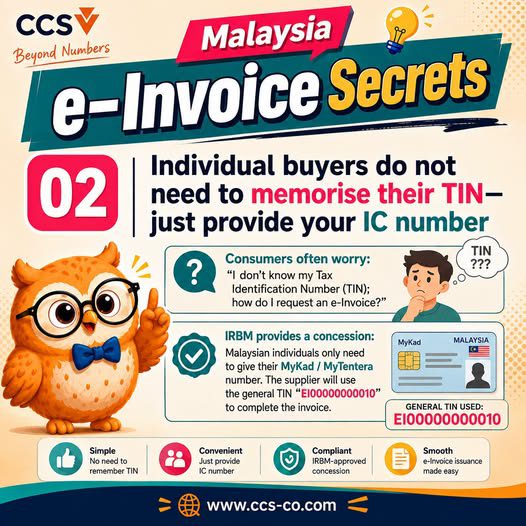
    Individual buyers do not need to memorise their Tax Identification Number (TIN) to request an e-Invoice. Malaysian individuals can provide their MyKad or MyTentera number to the merchant.

    The merchant can use the General TIN EI00000000010 in the TIN field and enter the identification number provided by the buyer in the relevant identification-number field.

    马来西亚 e-Invoice指南:个人买家提供身份证号码即可,无须记住TIN

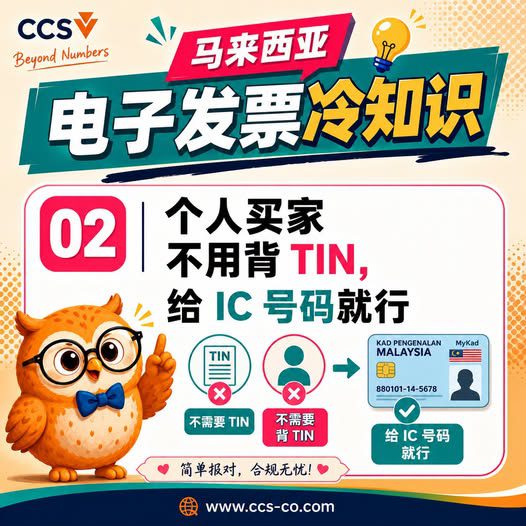
    个人买家索取 e-Invoice 时,无须记住自己的税务识别号码(TIN)。马来西亚个人买家可向商家提供MyKad或MyTentera号码。

    商家可在TIN栏填写通用TIN EI00000000010,并在相应的身份证号码栏填写买家提供的身份证号码。

  • Malaysia e-Invoice Guide: Consolidating B2C Transactions When Customers Do Not Request an Invoice

    Malaysia e-Invoice Guide: Consolidating B2C Transactions When Customers Do Not Request an Invoice

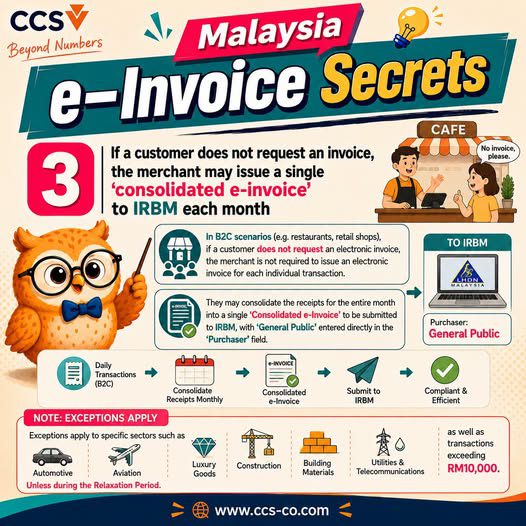
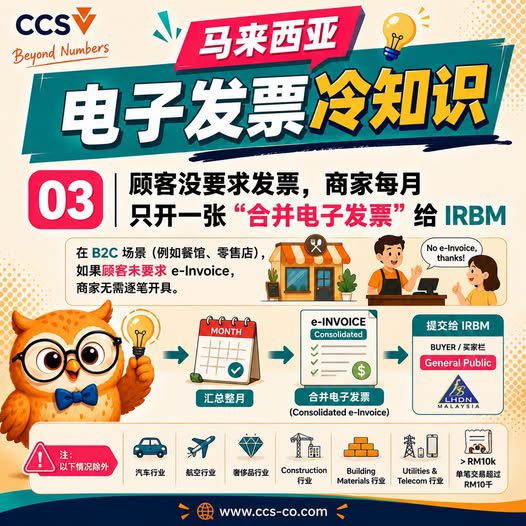
    In business-to-consumer (B2C) transactions, such as those at restaurants and retail shops, a merchant generally does not need to issue an e-Invoice for each individual transaction if the customer does not request one.

    Instead, the merchant may consolidate the month’s receipts into a single Consolidated e-Invoice and submit it to the Inland Revenue Board of Malaysia (IRBM). The “Purchaser” field should state “General Public”.

    Exceptions apply to certain sectors, including automotive, aviation, luxury goods, construction, building materials, utilities and telecommunications, as well as to transactions exceeding RM10,000. The stated exceptions do not apply during the Relaxation Period.

    马来西亚 e-Invoice指南:顾客未索取发票时如何合并B2C交易

    在企业对消费者(B2C)交易中,例如餐厅和零售店,如果顾客没有要求开具 e-Invoice,商家通常无需为每笔交易分别开具。

    商家可以将整个月的收据汇总成一张合并电子发票(Consolidated e-Invoice),提交给马来西亚内陆税收局(IRBM)。买方(Purchaser)栏应填写“General Public”。

    汽车、航空、奢侈品、建筑、建材、公用事业及电信等特定行业,以及单笔交易金额超过RM10,000的情况,适用例外规定。上述例外在宽限期(Relaxation Period)内不适用。

  • Prime Minister’s National Day Address: e-Invoice Exemption Threshold Raised to RM3 Million

    Prime Minister’s National Day Address: e-Invoice Exemption Threshold Raised to RM3 Million

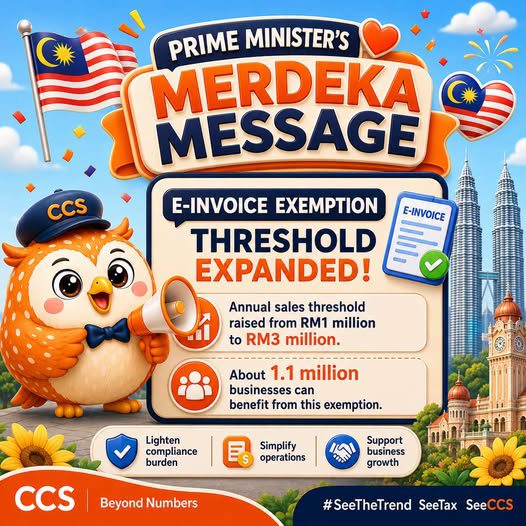
    The annual sales threshold for the e-Invoice exemption has been raised from RM1 million to RM3 million. Approximately 1.1 million businesses are expected to benefit from the expanded exemption.

    首相国庆献词:e-Invoice豁免门槛提高至RM300万

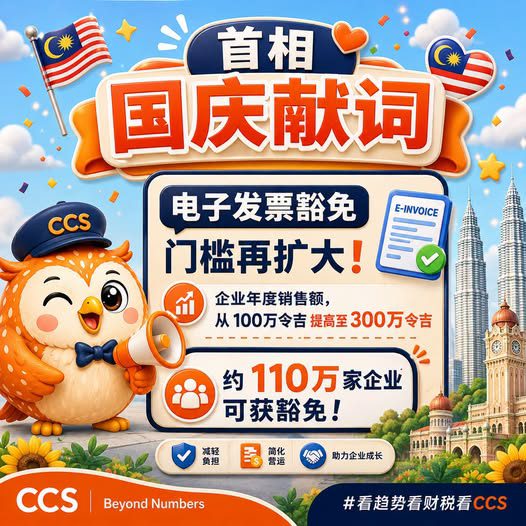
    e-Invoice豁免的企业年度销售额门槛已从RM100万提高至RM300万。预计约有110万家企业将从扩大后的豁免中受惠。

  • Budget 2027: How Much Could Eligible MSMEs Save from the Proposed Tax Rate Cuts?

    Budget 2027: How Much Could Eligible MSMEs Save from the Proposed Tax Rate Cuts?

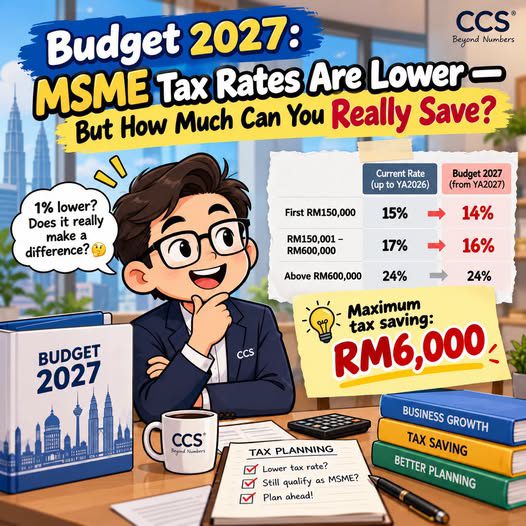
    Budget 2027 proposes reducing the tax rates for qualifying micro, small and medium-sized enterprises (MSMEs) from YA 2027:

    • First RM150,000 of chargeable income: from 15% to 14%

    • RM150,001 to RM600,000: from 17% to 16%

    • Above RM600,000: remains at 24%

    For a company with chargeable income of at least RM600,000, the proposed reductions could result in:

    • RM1,500 saved on the first RM150,000; and

    • RM4,500 saved on the next RM450,000.

    The maximum combined tax saving would therefore be RM6,000.

    However, not every company automatically qualifies for the preferential MSME tax rates. Eligibility remains subject to the relevant conditions, including the applicable paid-up ordinary share capital or LLP capital contribution threshold, the gross business income limit, group conditions and restrictions on foreign ownership.

    The stated conditions include paid-up ordinary share capital or LLP capital contribution not exceeding RM2.5 million, total income from all sources not exceeding RM50 million in the relevant Year of Assessment, and applicable group and foreign shareholding requirements.

    For tax planning, businesses should consider not only how to manage taxable profits, but also whether they will continue to qualify for the MSME rates following a restructuring, capital injection or share transfer. Business growth may be welcome, but changes to capital, ownership or group structure could affect eligibility.

    In short: Budget 2027 proposes lower tax rates for eligible MSMEs, but businesses should also protect their eligibility for those rates as they grow and change.

    Budget 2027:合资格中小企业税率下调,实际能省多少税?

    《2027年财政预算案》提出从YA 2027起,下调符合条件的微型、中小型企业(MSME)税率:

    • 首RM150,000课税收入:由15%下调至14%

    • RM150,001至RM600,000:由17%下调至16%

    • 超过RM600,000:维持24%

    如果公司的课税收入至少为RM600,000,按拟议税率计算,可节省:

    • 首RM150,000可节省 RM1,500;以及

    • 接下来的RM450,000可再节省 RM4,500。

    因此,合计最高可节省 RM6,000税款。

    不过,并非所有公司都会自动符合MSME优惠税率资格。企业仍须符合相关条件,包括适用的普通股实缴资本或LLP资本出资门槛、营业收入上限、集团条件及外国持股限制。

    所列条件包括:普通股实缴资本或LLP资本出资不超过RM250万;相关课税年度所有来源的总收入不超过RM5,000万;并符合适用的集团及外国持股要求。

    税务规划时,企业除了考虑如何管理应课税利润,也应留意在重组、注资或股份转让后,是否仍符合MSME优惠税率资格。业务增长固然可喜,但资本、股权或集团架构的变化可能影响企业的资格。

    简单来说:Budget 2027拟为符合条件的MSME下调税率;企业在发展和调整架构时,也应留意如何维持相关优惠资格。