
Day: September 12, 2022

  • Foreign Account Tax Compliance Act (FATCA)

    Foreign Account Tax Compliance Act (FATCA)

    Understanding the laws and regulations of FATCA

    The global tax structure is being altered as a result of globalisation, rising economies, and more regulation, which is presenting difficult-to-overcome issues for financial institutions located all over the world.

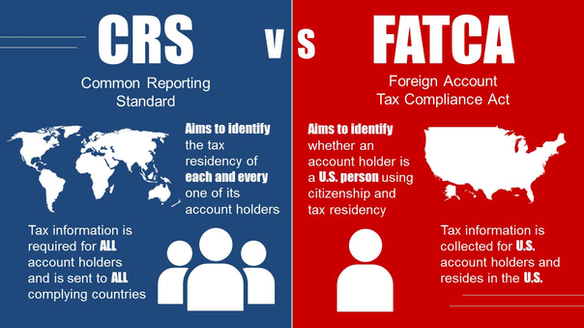
    Changes of a fundamental structural nature have been made to both the Foreign Account Tax Compliance Act (FATCA) and the Common Reporting Standard (CRS) as part of the efforts of the US government to increase worldwide tax compliance.

    What exactly is FATCA?

    The Foreign Account Tax Compliance Act, also known as FATCA, is a law that was passed to collect information on citizens of the US who avoid taxes in the United States while living abroad.

    It requires banks and other foreign institutions (“FIs“) located outside of the US to disclose information about their customers who are citizens of the US and hold accounts at those institutions.

    The goal of the Foreign Account Tax Compliance Act is to prevent US “Person” taxpayers from evading US taxes through the use of personal accounts held at foreign financial institutions and investment vehicles. In this regard, Malaysia is aiding the United States in implementing the Foreign Account Tax Compliance Act.

    What is a US Person?

    Definition of a US Person includes the following:

    1. US citizen or nationality, including an individual born in the US who has not given up his/ her US citizenship (maybe a resident in another country)
    2. US resident or green card holder
    3. US passport holder

    The Act mandates

    financial institutions to:

    • Identify people living in the United States who have financial accounts in other countries, as well as investors from other nations who have investments in the United States;
    • Performing due diligence procedures on customers to determine their FATCA status, covering both individual and entity customers
    • Report on US Individual and Legal Entity’s foreign financial assets, including US individuals who exercise control over the Legal Entity; and
    • Impose 30% withholding tax on any US FDAP* source income paid to recalcitrant and NPFI customers.

    * U.S FDAP source income examples are annuities, dividends, emoluments, interest, premiums, remunerations, rental, salary, wages, etc.

    What precisely is the CRS?

    The Common Reporting Standard (CRS), which was developed by the Organization for Economic Co-operation and Development (OECD), is the global reporting standard for the Automated Exchange of Information (AEOI).

    Therefore, Common Reporting Standard (CRS) is a new information-gathering and reporting requirement for financial institutions in participating countries/jurisdictions to help fight against tax evasion and protect the integrity of tax systems.

    The purpose of the CRS is to provide tax authorities with a more accurate picture of the taxable financial assets held by their residents who are located outside of their home country.

    The FATCA and the CRS appear to share some similarities, but there are important distinctions between the two. CRS is substantially broader in scope and requires a united, cross-team effort to assure readiness and compliance.

    You are free to go on to the following post now that you have an understanding of what FATCA is:

    Our website's articles, templates, and material are solely for reference. Although we make every effort to keep the information up to date and accurate, we make no representations or warranties of any kind, either express or implied, regarding the website or the information, articles, templates, or related graphics that are contained on the website in terms of its completeness, accuracy, reliability, suitability, or availability. Any reliance on such information is therefore strictly at your own risk.

    Keep in touch with us so that you can receive timely updates |

    要获得即时更新,请与我们保持联系

    1. Website ✍️ https://www.ccs-co.com/ 2. Telegram ✍️ http://bit.ly/YourAuditor 3. Facebook ✍

    4. Blog ✍ https://lnkd.in/e-Pu8_G 5. Google ✍ https://lnkd.in/ehZE6mxy

    6. LinkedIn ✍ https://www.linkedin.com/company/74734209/admin/

    19
  • Malaysia joins 113 countries to implement the Foreign Account Tax Compliance Act (FATCA)

    Malaysia joins 113 countries to implement the Foreign Account Tax Compliance Act (FATCA)

    FATCA is one of the initiatives introduced by the United States to improve the practice of exchange of information on tax matters, especially among US persons.

    To know more about FATCA:

    For Malaysia, this bilateral initiative adds to the work it has been doing at international meetings led by the Organization for Economic Cooperation and Development (OECD) to improve tax transparency in line with best practices.

    The signing of the Intergovernmental Agreement between the Government of Malaysia and the Government of the United States continues to mark the warm bilateral relationship between both countries.

    The Agreement, signed on 21st July 2021 by the Secretary General of Treasury, YBhg Dato’ Asri bin Hamidon and the United States Ambassador to Malaysia, His Excellency Amb. Brian McFeeters took place virtually at Putrajaya and Kuala Lumpur in the presence of the Deputy Minister of Finance II, YB Tuan Mohd Shahar bin Abdullah.

    Malaysia joins 113 countries through this signing to implement the Foreign Account Tax Compliance Act (FATCA).

    The Agreement between the governments of Malaysia and the United States of America to improve international tax compliance and implement the Foreign Account Tax Compliance Act (called “the Agreement”) was signed on July 21, 2021. It was gazetted on September 1, 2022, as required by section 132B of the Income Tax Act of 1967.

    To meet its obligations under the Agreement, the Malaysian Government gazetted the following subsidiary laws on September 1, 2022:

    • P.U.(A) 279/2022
      • Income Tax (Automatic Exchange of Financial Account Information between the Government of Malaysia and the Government of the United States of America to Improve International Tax Compliance and to Implement the Foreign Account Tax Compliance Act) Rules 2022 (‘the Rules’); and
    • P.U.(A) 280/2022
      • Labuan Business Activity Tax (Automatic Exchange of Financial Account Information between the Government of Malaysia and the Government of the United States of America to Improve International Tax Compliance and to Implement the Foreign Account Tax Compliance Act) Regulations 2022 (‘the Regulations’).

    The Rules and Regulations, among other things, say that a Reporting Malaysian “Financial Institution” must furnish the Director General of Inland Revenue of Malaysia a return with the information (if any) listed in Article 2 of the Agreement in the format that the Director General may determine:

    1. for the years 2014 – 2022, on or before June 30, 2023; and
    2. For each following calendar year, by June 30 of the year after the end of the year to which the return applies.

    Financial Institution (FI)

    any entity that

    1. accepts deposits in the ordinary course of a banking or similar business,
    2. holds financial assets for the account of others as a substantial portion of its business, or
    3. is engaged (or holding itself out as being engaged) primarily in the business of investing, reinvesting, or trading securities, partnership interests, commodities or similar financial instruments

    Note that a Reporting Malaysian Financial Institution can be a Custodial Institution, a Depository Institution, an Investment Entity, or a Specified Insurance Company, as long as certain rules are followed (each as defined in the Agreement).

    Our website's articles, templates, and material are solely for reference. Although we make every effort to keep the information up to date and accurate, we make no representations or warranties of any kind, either express or implied, regarding the website or the information, articles, templates, or related graphics that are contained on the website in terms of its completeness, accuracy, reliability, suitability, or availability. Any reliance on such information is therefore strictly at your own risk.

    Keep in touch with us so that you can receive timely updates |

    要获得即时更新,请与我们保持联系

    1. Website ✍️ https://www.ccs-co.com/ 2. Telegram ✍️ http://bit.ly/YourAuditor 3. Facebook ✍

    4. Blog ✍ https://lnkd.in/e-Pu8_G 5. Google ✍ https://lnkd.in/ehZE6mxy

    6. LinkedIn ✍ https://www.linkedin.com/company/74734209/admin/

    16
  • Income Tax (Restriction on Deductibility of Interest) (Amendment) Rules 2022

    Income Tax (Restriction on Deductibility of Interest) (Amendment) Rules 2022

    In the exercise of the powers conferred by paragraph 154(1)(ed) of the Income Tax Act 1967 [Act 53], the Minister, on January 31, 2022, gazetted the Income Tax (Restriction on Deductibility of Interest) (Amendment) Rules 2022 (P.U. (A) 27/2022) (“Amendment Rules“) to amend the Income Tax (Restriction on Deductibility of Interest) Rules 2019 [P.U. (A) 175/2019] (“Principal Rules”).

    It came into effect on February 1, 2022.

    For taxpayers who have been granted financial assistance in a controlled transaction, the Principal Rules, among other things, restrict the amount of interest that can be deducted.

    In this context, as specified in section 140C(3) of the Income Tax Act of 1967 (hereafter referred to as “the Act”), the term “controlled transaction” refers to the following types of financial assistance:

    1. between persons, one of whom has control over the other; or
    2. between persons, both of whom are controlled by some other person.

    “Financial Assistance” includes loans, interest-bearing trade credit, advances, debt or the provision of any security or guarantee;

    “Interest Expense” means—

    1. interest on all forms of debt; or
    2. payments economically equivalent to interest (excluding expenses incurred in connection with the raising of finance).

    The Principal Rules are amended in two different ways by the Amendment Rules, both of which are detailed further below:

    1. Qualifying deduction

    Under Rule 4, the maximum amount of interest referred to in section 140C of the Act shall be an amount equal to 20% of the amount of tax-EBITDA of that person from each of his sources consisting of a business for the basis period of a year of assessment.

    According to Rule 5, the total amount of the “qualifying deduction” allowed is one of the components that goes into the calculation of the amount of “tax-EBITA.”

    The Amendment Rules replace the definition of ‘qualifying deduction’ in the Principal Rules with the following:

    2. Carrying forward of excess interest

    Rule 6(1) of the Principal Rules, which allows a company to carry forward any interest expense exceeding the amount ascertained under rule 4 to subsequent years of assessment, has expanded its scope. It now applies to any person, including a company, a limited liability partnership, a corporation sole, and a body of persons (i.e. any unincorporated body of persons including a Hindu joint family but excluding a partnership).

    Previously, this provision only applied to companies.

    Rule 6(2) of the Principal Rules imposes a condition (i.e. the shareholding of the company) that restricts the carrying forward of excess interest.

    The Amendment Rules have clarified that this condition only applies to a company and does not apply to other persons permitted under rule 6(1) to carry forward excess interest.

    To Download:

    Income Tax (Restriction on Deductibility of Interest) (Amendment) Rules 2022 [P.U.(A) 27/2022]

    Photo: Yo Yo Wang

    Our website's articles, templates, and material are solely for reference. Although we make every effort to keep the information up to date and accurate, we make no representations or warranties of any kind, either express or implied, regarding the website or the information, articles, templates, or related graphics that are contained on the website in terms of its completeness, accuracy, reliability, suitability, or availability. Any reliance on such information is therefore strictly at your own risk.

    Keep in touch with us so that you can receive timely updates |

    要获得即时更新,请与我们保持联系

    1. Website ✍️ https://www.ccs-co.com/ 2. Telegram ✍️ http://bit.ly/YourAuditor 3. Facebook ✍

    4. Blog ✍ https://lnkd.in/e-Pu8_G 5. Google ✍ https://lnkd.in/ehZE6mxy

    6. LinkedIn ✍ https://www.linkedin.com/company/74734209/admin/

    22