With effect from 1 April 2022, an e-Telegraphic Transfer (eTT) system has been implemented for the payment of:
Income Tax,
Petroleum Tax,
Real Property Gains Tax (RPGT),
Compound Payment,
Public Entertainer Tax (Seniman Kembara), and
Withholding Tax (WHT)
through Telegraphic Transfer (TT), Electronic Funds Transfer (EFT), and Interbank GIRO Transfer (IBG) methods from within and outside Malaysia.
There are a total of 18 questions that are presented in the form of frequently asked questions (in the Bahasa Malaysia version) on the implementation of the e-TT system for TT, EFT, and IBG payment methods issued in March 2022.
English version of the Frequently Asked Questions
The English version of the Frequently Asked Questions (“FAQ”) has been uploaded by the Inland Revenue Board of Malaysia at https://mytax.hasil.gov.my > ezHasil Services > e-TT > FAQ.
The differences between the two versions are that the English version has added 2 additional frequently asked questions as follows:
These Frequently Asked Questions can be found here:-
Companies that make payments in monetary form to agents, dealers and distributors arising from sales, transactions, or schemes carried out will be required to withhold tax at a rate of 2% on the gross amount beginning on January 1, 2022, under the provisions of Section 107D of the Income Tax Act 1967, which was introduced into the act as a result of the Finance Act 2021 and became effective on January 1, 2022.
Press Release
The announcement of the following administrative requirements was made in a press release released by the Inland Revenue Board (IRB) on July 9, 2022:-
Companies that make payments to agents, dealers and distributors are expected to compute the total WHT applicable for a specific month (i.e., on a monthly basis) and submit the accumulated amount to the IRB by the end of the following month.
For instance, the WHT for payments that were made to agents, dealers and distributors in the month of October 2022 (i.e., from the 1st of October 2022 to the 31st of October 2022) needs to be remitted to the IRB by the 30th of November 2022.
According to these FAQs, any payments made according to Section 107D (Deduction from Commission) are not permitted to be carried out through the e-TT system.
A special electronic payment system will be developed to handle payments made under Section 107D.
Before sending in their WHT payments, businesses are obliged to provide the most latest version of Form CP107D (Pin 2/2022) and Appendix CP107D(2) to the appropriate IRB payment centres in the form of an email.
When you pay the withholding tax, you must give the payment centre a copy of the email so they can check and ensure everything is correct.
The e-mail addresses of the respective payment centres are as outlined below:
Our website's articles, templates, and material are solely for reference. Although we make every effort to keep the information up to date and accurate, we make no representations or warranties of any kind, either express or implied, regarding the website or the information, articles, templates, or related graphics that are contained on the website in terms of its completeness, accuracy, reliability, suitability, or availability. Therefore, any reliance on such information is strictly at your own risk.
Keep in touch with us so that you can receive timely updates |
Income Tax (Capital Allowance) (Development Cost for Customised Computer Software) Rules 2019
On 3 October 2019, the Minister, in the exercise of the powers conferred by paragraphs 154(1)(b), 33(1)(d) and paragraphs 10 and 15 of Schedule 3 to the Income Tax Act 1967 [Act 53], gazetted the Income Tax (Capital Allowance) (Development Cost for Customised Computer Software) Rules 2019 [P.U (A) 274/2019].
On April 9, 2020, the Malaysian Inland Revenue Board (also known as the “IRBM”/”LHDNM”) issued Practice Note No. 2/2020 (“Practice Note”) with a publication date of March 16, 2020.
The purpose of this Practice Note is to provide some direction on how these Rules should be put into practice.
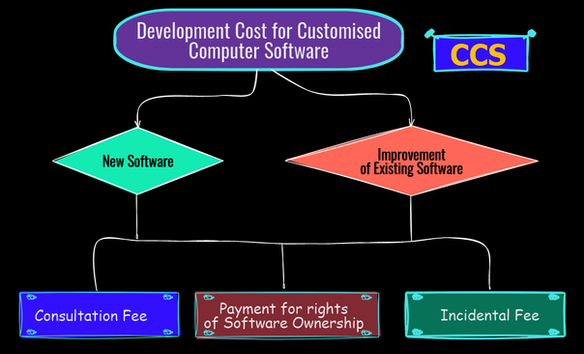
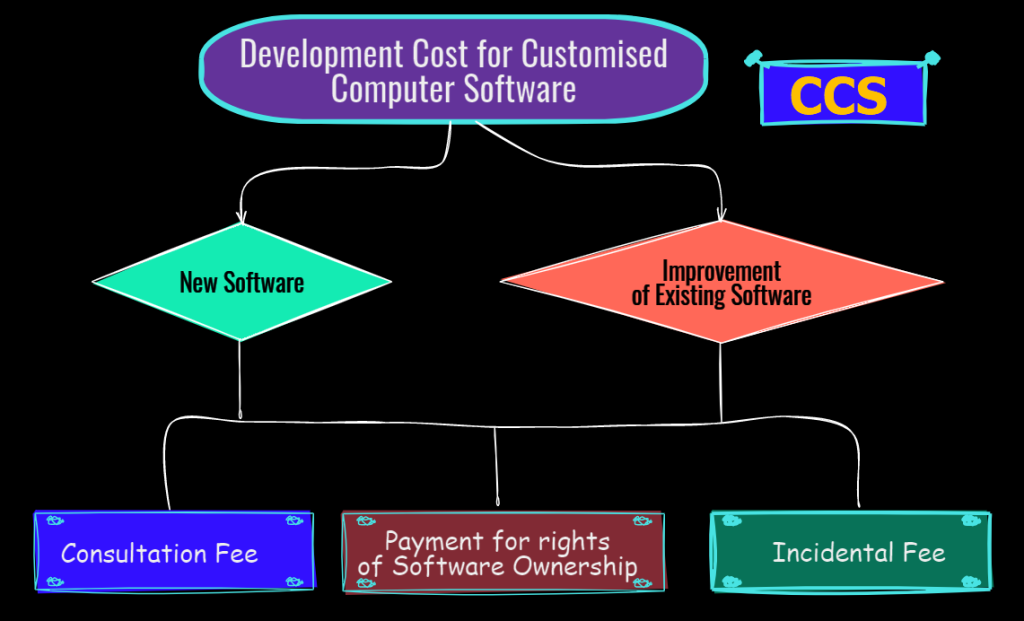
According to the Practice Note, the term “development cost” for customised computer software refers to:
the expenses incurred in:
producing new software; or
improving the existing software
for it to be used to conduct business.
Based on the Rules effective from YA 2018:
a Malaysian resident who has incurred qualifying development costs for customised computer software
will be eligible for CA claims at 20% Initial Allowance (IA) and 20% Annual Allowance (AA).
Qualifying Development Costs
Consultation Fee
Consultation fee incurred on the development of the software specifically to develop a new software system, modification or modernisation of the existing software, excluding consultation fees related to initial procedure or planning stage such as feasibility study or preliminary study.
Payment for rights of software ownership
Payment for the right to use the software exclusively.
The incidental fee relating to the development of customised computer software
Payment incurred, which enabled the use of the software in a business and capitalised such as change of requirement the software.
However, the Practice Note does not include a comprehensive list of examples of incidental expenses that may be seen as related to customised computer software production.
Withholding Tax Implications
Withholding tax (often known as “WHT”) may be applied to payments made to non-residents for the costs of developing customised computer software under either Section 109 or Section 109B of the Income Tax Act (ITA), depending on the specific circumstances of each transaction.
If the appropriate WHT is not withheld and remitted to the MIRB within one month after paying or crediting the non-resident:
A penalty equal to 10% of the unpaid WHT will be assessed.
In addition, a capital allowance would not be granted for any qualifying capital expenditures that were incurred but for which the WHT, if applicable, had not been paid or remitted to the MIRB. In this case, the expenditure would not be eligible for a capital allowance.
Capital allowance can be claimed in the basis period for a YA that the customised computer software can be used in a business.
Effective Date and Timing of Claim
The Practice Note provides:
The Rules apply to development costs for customised computer software incurred in the basis period from YA 2018.
The cost is considered/deemed to have been incurred when the customised software can be used for business purposes.
To better demonstrate the position of the IRBM on the conditions above, the following examples have been provided in Practice Note 2/2020.
* Y/A 2017’s cost of development does not qualify.
Non Application
The claim for capital allowance for the development cost of customised software provided under these Rules, however, will not be applicable if the person has claimed in respect of the customised software:
Any incentive under the Promotion of Investment Act 1986
Deduction under s 33 of the Income Tax Act 1967 (ITA)
Deduction for research and development expenditure under s 34A of ITA
Reinvestment allowance
Investment allowance for the services sector
Accelerated capital allowance under any Rules, or
Any tax exemption which is equivalent to any part or the whole amount of the development cost incurred.
Response from the IRBM on 19 May 2022
On 19 May 2022, CTIM sought confirmation on whether the following constitute qualifying expenditure as development cost for customised computer software (CCS) under the P.U. (A) 274/2019:
Cloud service charges incurred during the development phase;
Staff costs were incurred explicitly during the development of the CCS;
Data migration from legacy IT system to the new CCS as part of the implementation of the CCS before “go live”;
Development of mobile application.
The following is a response from the IRBM to the points that CTIM made on 16 September 2021:
Cloud Service charges incurred during the Development Phase
Suppose cloud service payments are part of the expenses incurred while the CCS is being developed to enable the CCS to be used in business. In that case, the payment of the cloud service charges may be included as development costs for the CCS under the P.U. (A) 274/2019 on the assumption that the expenses are incurred during the CCS development period before the CCS can be fully utilised in business and capitalised.
After the CCS development period has ended and the CCS can be used in business, maintenance-related expenses can be claimed under S.33 of the ITA.
Staff Costs were incurred explicitly during the Development of the CCS
Staff cost may be included as development cost for the CCS under P.U.(A) 274/2019, subject to the following conditions: –
The staff cost is not included in the salary payment to existing company employees. (Note: The staff is explicitly appointed to develop the CCS.)
The job description of the staff is clearly and manifestly for CCS development.
Data Migration from legacy IT Systems to the new CCS as part of the implementation of the CCS before “go live.”
Based on the fact that payment of data migration from legacy IT systems needs to be incurred while the CCS is developed to enable it to be used in business, LHDNM is of the view that it can be included as a development cost for the CCS under the P.U.(A) 274/2019.
It is eligible to be claimed under the Incidental fee provided that the expenses are incurred during the CCS development period to enable the software to be used in business and not for routine data migration activities.
Expenditure for data migration from a legacy system that is usual/customary or routine and incurred in generating business income can be claimed under S.33 of the ITA.
Development of the Mobile Application
LHDNM agrees with CTIM’s view that this mobile application is part of the CCS developed.
Consequently, mobile application expenditure can be included as a development cost for the CCS under P.U.(A) 274/2019.
Response from the IRBM on 4 June 2020
Issue 1:
CTIM urged IRBM to confirm that “customised computer software” refers to software other than commercial off-the-shelf software and includes tailor-made software, software developed from scratch that caters to specific requirements of the business. software customised from a base software module; and
also to confirm that any subsequent enhancements or upgrades made to the customised computer software would qualify for capital allowance under the Rules.
Feedback from IRBM:
Based on P.U.(A) 274/2019, the development cost for software specifically refers to expenses incurred in developing new software or enhancing existing software for use in business purposes.
Please refer to Practice Note No. 2/2020 (“Practice Note”).
Issue 2:
‘Under rule 2, “development cost for customised computer software” means “consultation fee, payment for rights of software ownership and incidental fee relating to the development of customised computer software’.
CTIM urged IRBM to clarify the following:-
a. If “payment for rights of software ownership‘ is intended to cover all types of software licensing fees.
Feedback from IRBM:
Payment refers only to the right to exclusively use the software, where the payment enables the software to be used in business for the first time.
Periodic software licensing fees are eligible for income tax deduction under subsection 33(1) of the Income Tax Act 1967.
b. If “incidental fee relating to the development of customised computer software” would include testing and commissioning expenses, reimbursement/out-of-pocket expenses such as accommodation and travelling expenses.
Feedback from IRBM:
Please refer to Practice Note No. 2/2020 (“Practice Note”).
c. Based on the Public Ruling (PR) No. 12/2014 on ‘Qualifying Plant and Machinery for Capital Allowances’, the payment for developing software, such as consulting fees, right to use the software such as licence fees, and other incidental charges do not qualify as plant and hence not eligible for capital allowance.
CTIM suggested that:
this PR be amended accordingly following the gazette of P.U. (A) 274/2019; and
further clarification and examples should be provided in the PR to address the application of the Rules.
Feedback from IRBM:
This matter is duly noted.
However, the LHDNM believes that Practice Note No. 2/2020 (“Practice Note”) has already clarified tax treatments related to this issue.
The articles, templates, and other materials on our website are provided only for your reference.
While we strive to ensure that the information presented is current and accurate, we cannot guarantee the completeness, reliability, suitability, or availability of the website or its content, including any related graphics. Consequently, any reliance on this information is entirely at your own risk.
If you intend to use the content of our videos and publications as a reference, we recommend that you take the following steps:
Verify that the information provided is current, accurate, and complete.
Seek additional professional opinions, as the scope and extent of each issue, may be unique.
1. The question of whether payments made to foreign digital service providers for software and payments for the use of or right to use the information and digitized products are subject to withholding tax has been debated for some time.
2. The Inland Revenue Board (IRB) may take a position that differs from the position expressed by the taxpayers in any given situation.
3. The IRB believes that the vast majority of payments made to overseas digital service providers who do not have a tax presence [permanent establishment, PE] in Malaysia should be subject to withholding tax under the royalty provisions of the Income Tax Act 1967.
4. Businesses cannot operate without purchasing digital services to service customers, deal with suppliers, and run business functions in today’s society. 5. As a result, advertising on Facebook and Google has become a trend. 6. Owners of hotel accommodation are also using the services of the Agoda platform to attract more customers. 7. Are these payments subject to withholding tax? 8. In today’s article, we will discuss this topic.
1. The 2% Withholding Tax that must be withheld from commission payments to agents, dealers, and distributors has been a source of confusion for many businesses. 👉 What exactly is going on? 👉 Is there any news? 👉 Have the Remittance Forms been made available yet? 2. In reality, it appears that many people, maybe including the Inland Revenue Board of Malaysia, are not fully prepared for it.
3. To ensure that all paying companies are prepared and can give proper notice to all their agents, distributors, or dealer, the Inland Revenue Board of Malaysia (IRBM) issued a press release on January 12, 2022: 👉 agreeing to postpone the implementation of the tax deduction remittance under Section 107D of ITA 1967 until March 31, 2022.
4. Accordingly, 👉 the payee company is allowed to remit the 2% tax deduction on cash payments paid to agents, distributors, or addicts for January to March 2022 beginning April 1, 2022 •[The FAQ dated February 28, 2022, on the other hand, provides a different interpretation.] 👉 without any penalty.