The Ministry of Finance (MOF) has updated the guidelines published on its website on April 1, 2022, regarding the application for approval of COVID-19 Relief Funds under Section 44(11C) of the Income Tax Act.
The Guidelines are in Bahasa Malaysia and are named “Garis Panduan Permohonan Untuk Kelulusan Di Bawah Subseksyen 44(11C), Akta Cukai Pendapatan 1967 Bagi Tabung Relif COVID-19” (Guidelines).
The Guidelines can be found here:-
The revised Guidelines, effective from 1 April 2022 to 31 December 2022, much like the earlier Guidelines, offer direction on the process that must be followed and the requirements that must be met to acquire the approval specified before the formation of COVID-19 Relief Funds.
Key Updates
1. Qualified Contributions
Under the Revised Guidelines, Contributions to the COVID-19 Relief Fund that will currently be accepted are limited to the following categories only:
Cash
Equipment (e.g., ventilators, patient beds, air conditioners, air purifiers or filtration equipment)
Consumables (e.g., masks, hand sanitisers, gloves, test kits and PPE)
In the previous Guidelines, the following were also considered to be contributions that qualified:
Services (e.g., cost of disinfection and sanitisation (of roads, buildings, markets, places of worship etc.), portable toilets and delivery of supplies)
Sponsorships (e.g., provision of permanent or temporary infrastructure such as tents or marquee tents)
2. Qualifying Recipients
Under the Revised Guidelines, Qualifying recipients from the COVID-19 Relief Fund are now restricted to the following:
Government departments or agencies
Non-governmental agencies that are registered with the Companies Commission of Malaysia, Registrar of Societies or Legal Affairs Division of the Prime Minister’s Department
Government hospitals
Government schools
Orphanages, old folks’ homes or homes for people with disabilities
Homeless, hardcore poor or refugees
Animal shelters or zoos
In the previous Guidelines, qualifying recipients also included the following:
– Private hospitals
– Public universities
Application
Applications for the establishment of the COVID-19 Relief Fund must be filed between the 30th of April 2020 and the 31st of December 2022, or the day the pandemic is deemed to have ended by the WHO, whichever comes first.
Our website's articles, templates, and material are solely for reference. Although we make every effort to keep the information up to date and accurate, we make no representations or warranties of any kind, either express or implied, regarding the website or the information, articles, templates, or related graphics that are contained on the website in terms of its completeness, accuracy, reliability, suitability, or availability. Therefore, any reliance on such information is strictly at your own risk.
Keep in touch with us so that you can receive timely updates |
The announcement that contributions (in cash or in-kind) to overcome the COVID-19 outbreak is allowed for deduction under s 34(6)(h) of the Income Tax Act was made by the Government on March 23, 2020.
A guideline was then issued by the Ministry of Finance (MOF) to explain the conditions and procedures in such claims.
Further, donations made to vaccination centres (PPVs) would be eligible for tax deductions under the provisions of the National People’s Well-Being and Economic Recovery Package (PEMULIH).
As a result of this announcement, the guideline issued by the MOF was updated on 2 August 2021 to include contributions to PPVs under s 34(6)(h).
The Ministry of Finance (MOF) has revised the guidelines published on its website on April 1, 2022, regarding Income Tax Deduction for Community/Charity Projects to curb Covid-19 under Section 34(6)(h) of the Income Tax Act.
The Guidelines are in Bahasa Malaysia and are named “Garis Panduan Khas Permohonan Potongan Cukai Bagi Projek Komunity/Amal untuk Menangani Wabak Covid-19” (Guidelines).
The Guidelines apply to contributions made from April 1, 2022, to December 31, 2022.
Key Updates
1. Qualifying contributions
Under the Revised Special Guidelines, Qualifying contributions are now limited to:-
Equipment – ventilators, beds, air-conditioners and air purifier/filtration
Consumables – masks, hand sanitisers, gloves, test kits and personal protective equipment
Under the revised Special Guidelines, the following are no longer considered qualifying contributions and have been taken off the list of qualifying contributions:
Cash
Raw food ingredients and ready-to-eat foods
Sanitisation services, provision of portable toilets, costs of delivery of supplies
Sponsorships such as the provision of permanent or temporary site infrastructure (e.g. marquee tents)
Provision of COVID-1 9 vaccination facilities such as halls, equipment and supplies in respect of PPVs
2. Qualifying Recipients
Under the Revised Special Guidelines, the donees are restricted to the following:
Government departments//agencies
Public hospitals
Public schools
Under the revised Special Guidelines, the following recipients who were once eligible to get donations are no longer on the list:
Registered non-governmental agencies which are not profit oriented or politically affiliated
Private hospitals
Universities and educational institutions
PPVs throughout the country which are managed by the COVID-19 Immunisation Task Force (CITF) or private sectors with the approval of CITF
Effective Date
These guidelines apply to donations made to community or charity projects to combat the spread of the COVID-19 outbreak during the period beginning in February 2020 and ending on December 31, 2022, or until the outbreak of COVID-19 is declared over by the World Health Organisation (WHO), whichever comes first
Tax deduction claims can be claimed from the assessment year 2020 and are applicable for the assessment year the contribution is made.
Our website's articles, templates, and material are solely for reference. Although we make every effort to keep the information up to date and accurate, we make no representations or warranties of any kind, either express or implied, regarding the website or the information, articles, templates, or related graphics that are contained on the website in terms of its completeness, accuracy, reliability, suitability, or availability. Therefore, any reliance on such information is strictly at your own risk.
Keep in touch with us so that you can receive timely updates |
At the international level, sick leave with adequate sickness benefit is enshrined in the International Labour Organization’s (ILO) Social Security (Minimum Standards) Convention (No. 102), the ILO Medical Care and Sickness Benefits Convention (No. 130), which emphasises standards of benefits, the ILO Decent Work Agenda, the Social Protection Floor Initiative led by the ILO and the World Health Organization (WHO), the Universal Declaration of Human Rights (Articles 22 and 25), and finally the International Covenant on Economic, Social and Cultural Rights (ICESCR, Article 9).
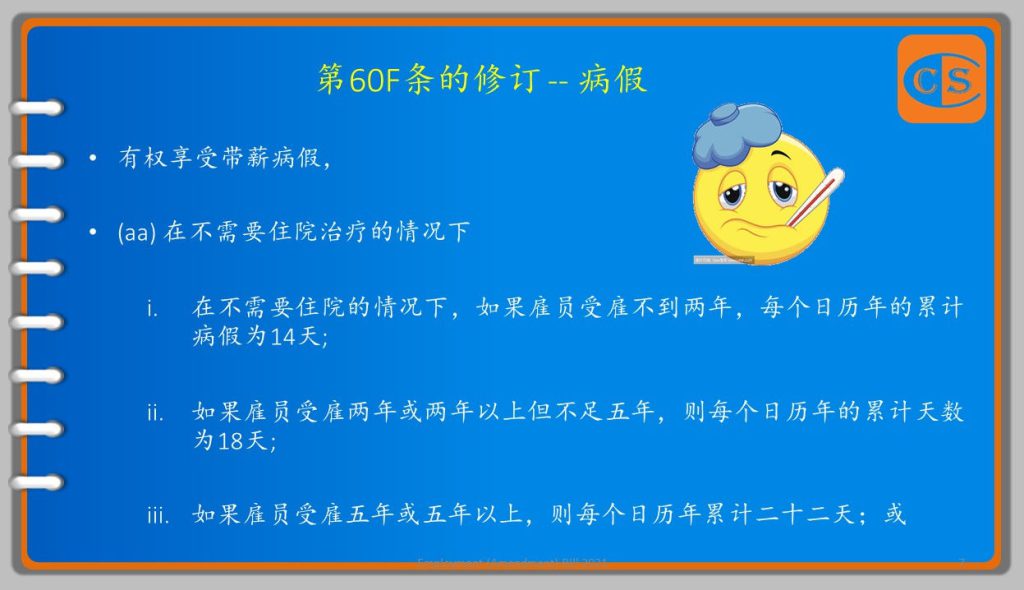
In Malaysia, an employee’s length of service determines the number of paid sick days they are entitled to receive.
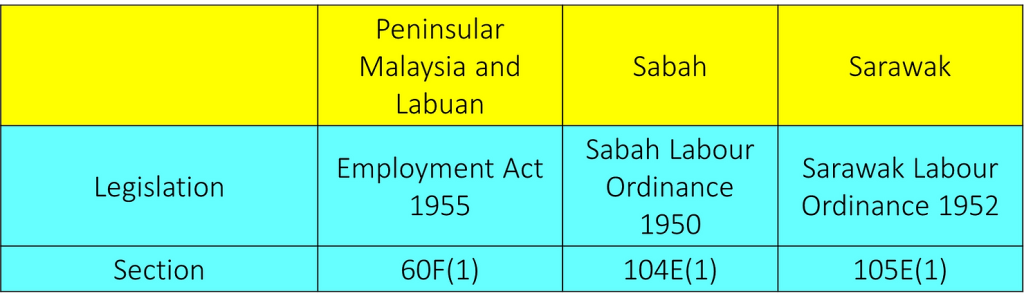
This is stipulated under s. 60F of the Employment Act 1955 [s 104E(1) and s 105E(1) of the Sabah Labour Ordinance 1950 and Sarawak Labour Ordinance 1952 respectively].
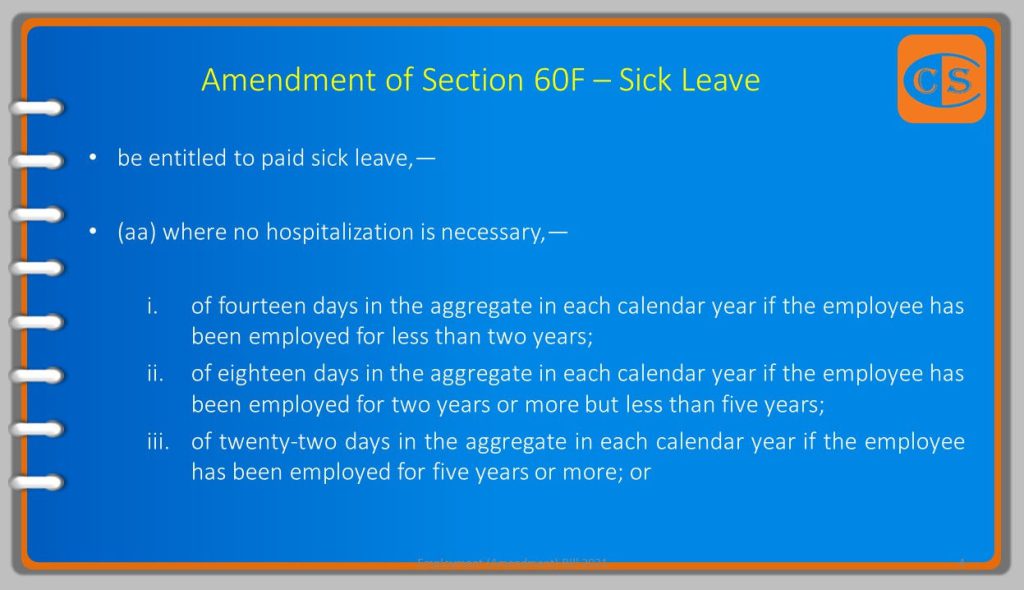
Consequently, those employees who are affected with illnesses but do not require them to be hospitalised are qualified for the following paid sick leaves:
因此,那些受疾病影响但不需要住院的雇员有资格享受以下的带薪病假:-
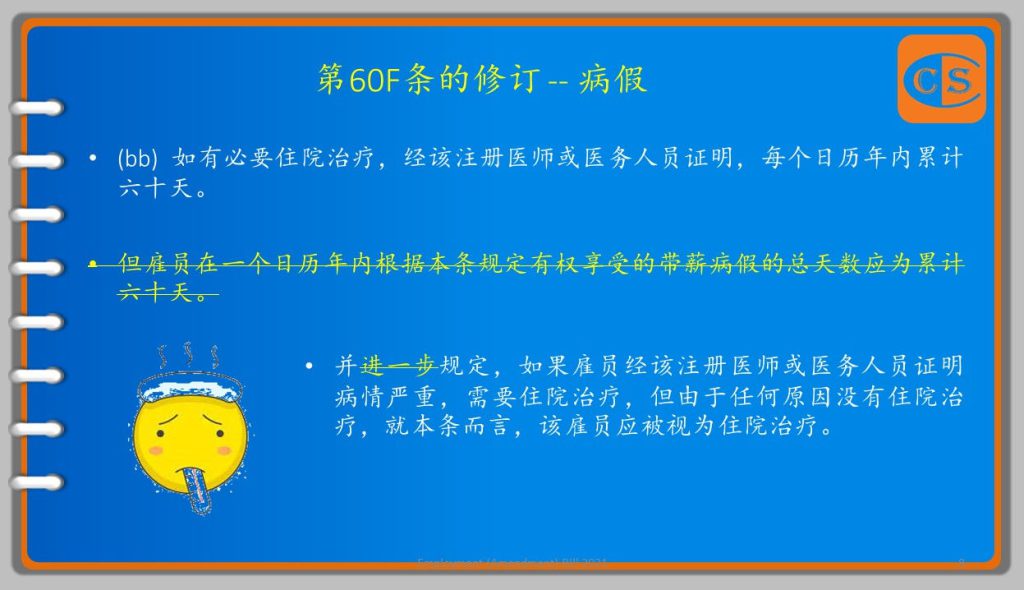
Employees who the EA protects are eligible for an additional sixty days’ worth of paid sick leave if they are required to be hospitalised.
However, throughout a single calendar year, these employees are only eligible for a combined total of sixty days of paid sick leave, this also includes MCs issued by dental surgeons, as provided by the Act.
The idea, in its most basic form:
Total paid Sick Leave + total paid Hospitalisation Leave = 60 days.
Take, for example, the scenario in which Mr Ali started working for Company XYZ on January 1, 2022.
He is eligible for 14 days of sick leave, followed by 46 days of hospitalisation leave.
The following are examples of circumstances that qualify for hospitalisation leave:
The employee was either admitted to the hospital or underwent surgery as an outpatient.
The employee is not admitted to a medical facility, but they have been told to rest in bed. Take, for instance, the problems that can arise during pregnancy.
After being released from the hospital, the employee needs to rest or continue receiving medical care for their ailment to recuperate.
以下是符合住院假的例子:
员工被送入医院或作为门诊病人接受手术;
雇员没有住进医疗机构,但他们被告知要在床上休息。以怀孕期间可能出现的问题为例;
从医院出院后,雇员需要休息或继续接受疾病的医疗护理来休养。
The illness should be confirmed by the medical practitioner, medical officer, or dental surgeon.
One more thing that you should be aware of is that, according to the Employment Act of 1955, employees are required to inform (or attempt to inform) their employers of sick leave at least 48 hours in advance.
claim to be on sick leave but do not have a medical certificate; or
do not inform or attempt to notify their employer within 48 hours of the commencement of their sick leave,
will be regarded as absent from work without the authorization of their employer.
Absenteeism without permission and a legitimate cause is considered misconduct, which may perhaps trigger termination of employment.
雇员如果
声称正在休病假但没有医疗证明;或
在病假开始后48小时内没有通知或试图通知其雇主
将被视为未经雇主批准而缺勤。
未经许可及没有合法理由的缺勤将会被视为不当行为,也许会引发解雇。
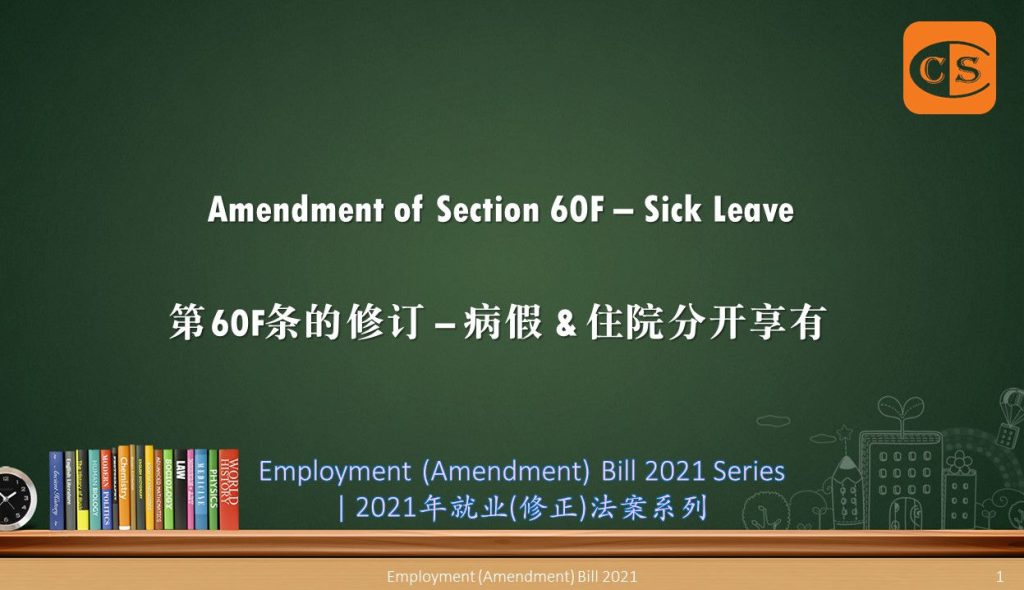
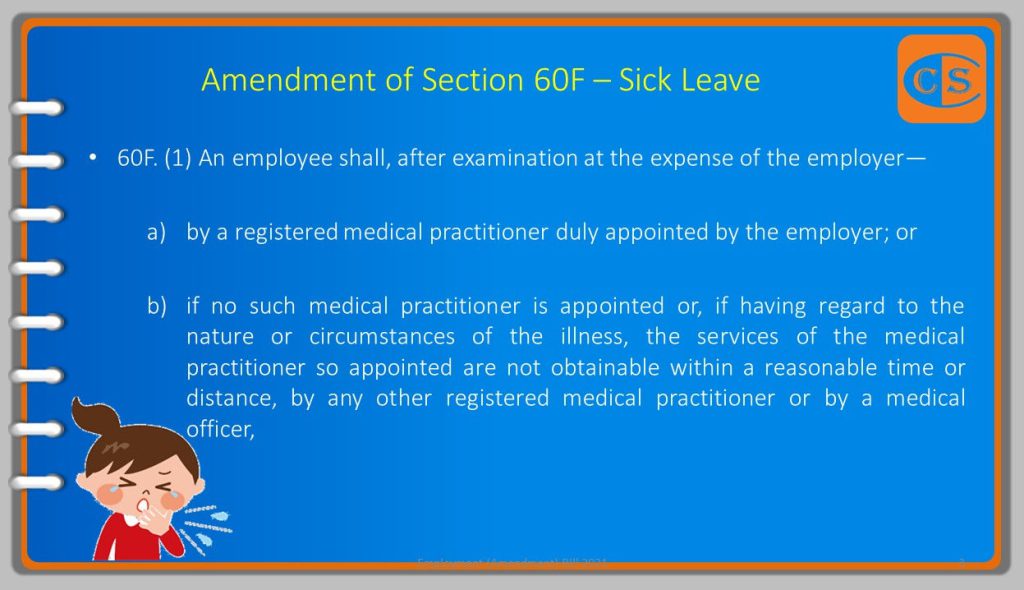
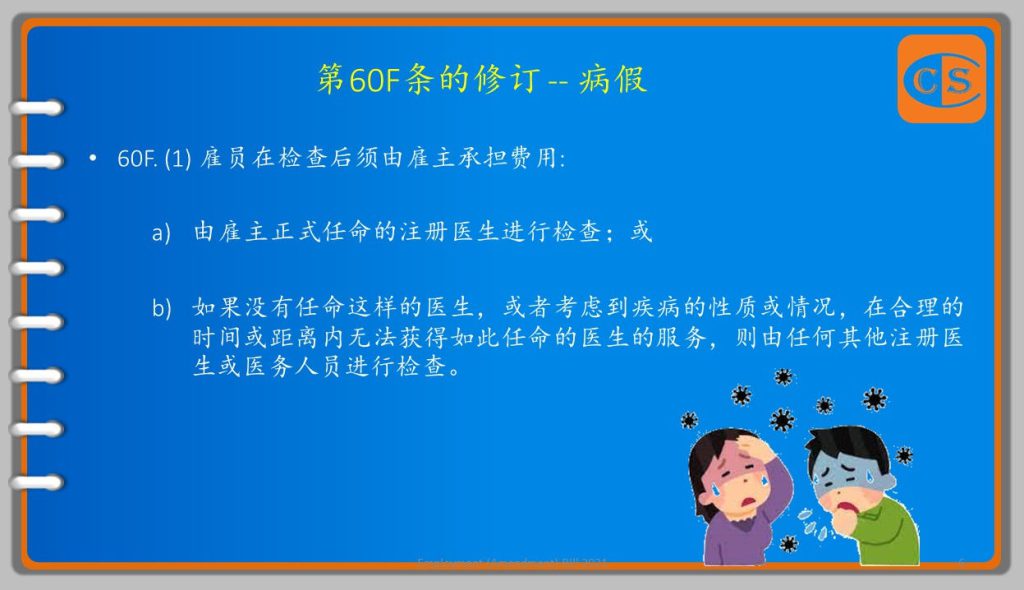
1. Some of the most significant amendments suggested to the Employment Act 1955 as a result of the Employment (Amendment) Bill 2021 (“the Bill”) include the Amendment of Section 60F – Sick Leave
👉 to provide for matters relating to the entitlement of paid sick leave.
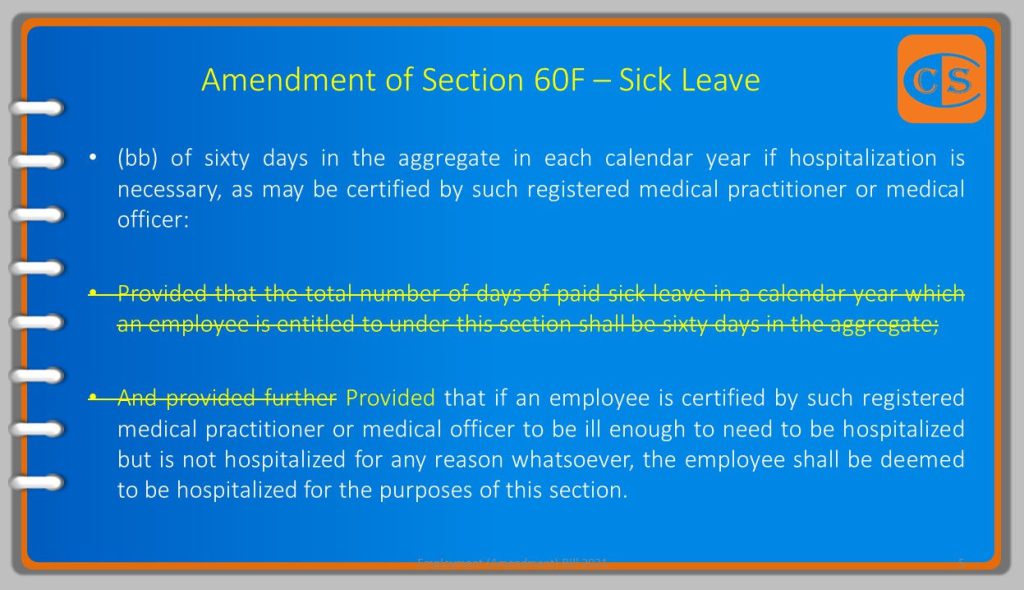
2. Under the current law, when hospitalisation is required, an employee’s total number of paid sick days in a calendar year, including any hospitalisation, is limited to 60 days.
👉 Total paid sick leave + total paid hospitalisation leave = 60 days.
3. With the Amendment, hospitalisation leave of 60 days would be regarded separately from any other paid sick leave.
4. With this amendment, employees will be entitled to an additional 60 days of paid hospital leave in addition to the number of paid sick leave days they are entitled to in a calendar year (depending on the length of employment)
Take, for example, the scenario in which Mr Ali started working for Company XYZ on January 1, 2022.
He is eligible for 14 days of sick leave, followed by 60 days of hospitalisation leave, a total entitlement of 74 days.
15. Amendment of Section 57B – Duty to inform Director-General of Termination of Service of Foreign Domestic Employee [第57B条的修订 – 通知总监终止外籍家庭雇员服务的义务] https://lnkd.in/eFyc27Wn / https://lnkd.in/eeggM_AN
30. Deletion of Section 81G – Application of this Part [Sexual Harassment] Irrespective of Wages of Employee [删除第81G条 – 无论雇员的工资如何, 本部分 [性骚扰] 都适用] https://lnkd.in/eTsj62rE / https://lnkd.in/eJQFdzx7