
Tag: MIA

  • What are the Fundamental Principles of Professional Ethics?

    What are the Fundamental Principles of Professional Ethics?

    The ethical conduct of professional accountants and auditors is controlled by a set of criteria they must conform to.

    Auditors have a direct responsibility to the shareholders of a reporting entity (because auditors are appointed by the shareholders, not by management), but it is generally accepted that the fundamental principles of professional ethics do not just apply to auditors; rather, they apply to all professional accountants.

    The presence of a members’ code of ethics and the scrutiny within the profession on members’ eventual conformity with such a code is one of the trademarks of professional qualification, among several other hallmarks.

    The International Ethics Standards Board for Accountants (IESBA) is responsible for publishing the Code of Ethics for Professional Accountants, sometimes known as “the Code.”

    When this article was written, the most recent edition available was the 2021 Edition (readers are directed to IESBA’s website to check later versions published by IESBA).

    The Code lays forth the conditions that must be met by professional accountants, regardless of whether or not they are employed in auditing practices.

    Member bodies of the International Federation of Accountants (IFAC) must adhere to standards equivalent to or more severe than those outlined in the Code. There is a possibility that the IESBA Code of Ethics will not be followed in some countries due to different ethical constraints.

    Both the Malaysian Institute of Certified Public Accountants (MICPA) and the Malaysian Institute of Accountants (MIA) have agreed to uphold the compliance of their members with the international code of ethics for professional accountants [including those of the International Independence Standards] prescribed by the International Ethics Standards Board for Accountants [IESBA] of the International Federation of Accountants (IFAC).

    Professional accountants must be aware of the differences and comply with the more stringent requirements and guidance unless a law or regulation prohibits such compliance.

    The Code is split into the following component parts:

    • Part 1: establishes the Fundamental Principles of professional ethics for accountants, which provides a Professional Framework for applying those principles.
    • Part 2: applies to Professional Accountants in business.
    • Part 3: applies to Professional Accountants in practice

    International Independence Standards:

    • Part 4A: Independence for Audit and Review Engagements
    • Part 4B: Independence for assurance engagements other than audit and review engagements

    A professional accountant is required to observe compliance with five fundamental principles, which are:

    • Integrity;
    • Objectivity;
    • Professional Competence and Due Care;
    • Confidentiality; and
    • Professional Behaviour.

    Integrity

    Professional accountants are expected to be honest and straightforward in all their interactions with clients, colleagues, and other business community members throughout their careers.

    For professional accountants to demonstrate that they are adhering to the fundamental principles of integrity, they should not let their name be connected with any reports, returns, or other forms of communication if they believe that the information in question:

    1. contains a materially false or misleading statement;
    2. contains statements or information obtained recklessly; or
    3. omits or obscures information required to be included where such omission or obscurity would be misleading.

    Where auditors are concerned, it may be the case that an auditor’s opinion on the financial statements is modified

    Objectivity

    A professional accountant should not allow bias, conflict of interest or undue influence of others to override professional or business judgements.

    In some circumstances, the auditor could be put in a position where they are exposed to circumstances that could impair their objectivity. In every circumstance, the auditor needs to ensure that the auditor’s objectivity is not compromised by putting measures that safeguard the auditor’s independence and objectivity.

    Professional Competence and Due Care

    A professional accountant has a duty to maintain professional knowledge and skill at the level required to ensure that their client receives a competent and professional service.

    Audit firms must not accept appointments as auditors unless they are competent and have sufficient resources available to undertake the required work.

    Professional accountants also should act diligently under appropriate technical and professional standards when providing professional services. Professional competence comprises:

    • Attaining professional competence; and
    • Maintaining professional competence.

    To achieve the latter, professional accountants must be up-to-date with technical developments.

    Continuing Professional Education (CPE) will assist in maintaining professional competence, providing the CPE undertaken is relevant to the professional accountant’s work.

    It will also serve to assist the professional accountant in performing work competently within their professional environment.

    Confidentiality

    Confidentiality is of paramount importance, and Section 114 Confidentiality of Part 1 of the By-Laws (on Professional Ethics, Conduct and Practice) of the Malaysian Institute of Accountants contains the obligations of a professional accountant to maintain confidentiality as well as establishing the circumstances where the professional accountant’s duty of confidentiality can be overridden.

    In recognition of the professional accountant’s duty of confidentiality, the accountant should refrain from:

    • Disclosing, outside the audit/accountancy firm, confidential information acquired as a result of professional and business relationships without proper and specific authority or unless there is a legal or professional right or duty to disclose.
    • Using confidential information acquired as a result of professional and business relationships to their personal advantage or the advantage of third parties.

    This duty of confidentiality extends to the outside of the business or practice environment where the professional accountant must observe confidentiality and not inadvertently or otherwise disclose information in a social environment.

    In addition to this need, a professional accountant is obligated to protect the confidentiality of any information a potential client or employer provides.

    A professional accountant has to be aware of the need to safeguard the confidentiality of information inside a company or other organisation in which they are employed.

    A professional accountant must maintain client confidentiality and take all reasonable steps to accomplish this goal.

    These steps should include ensuring that staff under the professional accountant’s control and persons from whom the professional accountant seeks advice and assistance also maintain client confidentiality.

    Even though auditors and professional accountants have a professional duty of confidentiality, there may be occasions where the professional accountant is required by law, or considers it to be in the public interest to disclose details of clients’ affairs to third parties.

    The duty of confidentiality is required to be applied at all times by the professional accountant during the course of their work, except where:

    1. Disclosure is permitted by law and is authorised by the client or the employer.
    2. Disclosure is required by law.
      1. Production of documents or other provision of evidence in the course of legal proceedings; or
      2. Disclosure to the appropriate public authorities of infringements of the law that came to light;
    3. There is a professional duty or right to disclose when not required by law, for example:

    • when professional bodies are carrying out reviews of work done by professional accountants, and the bodies require sight of the firm’s files to review this audit work;
      • to respond to an enquiry or investigation by a professional body or regulatory body;
      • to protect the professional interests of a professional accountant in legal proceedings; or
      • to comply with technical standards and ethical requirements.

    There are two types of disclosure where the duty of confidentiality is to be overridden:

    • Obligatory disclosure; and
    • Voluntary disclosure

    Obligatory disclosure

    Where the professional accountant knows or suspects the client to have committed money laundering, treason, drug trafficking or terrorist offences, the professional accountant must disclose all the information at his disposal to a regulatory authority.

    Voluntary disclosure

    Voluntary disclosure may be required in the following situations:

    • Disclosure is required by law;
    • Where it is in the public interest to disclose (such as where a criminal offence against the public has been committed);
    • Disclosure is required to protect the professional accountant’s interests (for example, defending the professional accountant in a legal case).
    Example
    During the course of the audit of ABC Berhad, the audit senior saw that recurring quantities of money were being deposited into the bank account of one of the company's directors in the form of round sums. 
    
    When added up over the course of the year, the amounts had reached a point where they were considered significant (material); hence, the audit senior questioned the director about the purposes of these transactions. 
    
    The director refused to provide the audit senior with any reasonable reasons and said, in an aggressive and threatening way, that the information in question was confidential and must not be released to any third party. 
    
    The audit senior's suspicions were piqued by how the director responded, which led them to believe that the director was engaged in money laundering. 
    
    Within a professional practice, the suspicion or knowledge of money laundering actions must be reported to a Money Laundering Reporting Officer (MLRO) under the legislation that govern the prevention of money laundering in many different countries. 
    
    In this situation, the audit senior would be compelled to report his concerns to the MLRO to comply with the scenario. After then, it would be up to the discretion of the MLRO to decide whether or not the suspicions merited a referral to the regulatory authorities who are tasked with conducting investigations into such concerns. 
    
    In situations like this, it is extremely important for neither the audit senior nor the MLRO to make the client aware of any such findings. Doing so would constitute "tipping off" the client and might potentially compromise any inquiry being conducted.

    Professional Behaviour

    At all times, professional accountants must comply with relevant laws and regulations and avoid all actions which would bring the profession into disrepute.

    Accountants need to be seen to behave professionally at all times, and this behaviour extends to the professional accountant’s marketing and advertising.

    [It is recommended that a professional accountant seek advice from the appropriate professional organisation if there is any uncertainty regarding the appropriateness of a certain kind of advertising or marketing.]

    Professional accountants must not mislead clients or employers by stating that they have professional qualifications when they have not.

    Nor should they offer themselves as available for work which they are not professionally competent to undertake.

    Professional accountants also should ensure that they do not make disparaging references or unsubstantiated comparisons to the work of others.

    The profession’s ongoing efforts to uphold ethical standards in Malaysia

    The Malaysian Institute of Certified Public Accountants (MICPA) and the MIA are constantly engaged with their members to provide the required revisions to the code regularly.

    These are made possible through continual continuing education programmes or workshops and yearly member outreach, particularly in the year when significant revisions to the code have been implemented.

    Both the MICPA’s exam and the MIA’s qualifying examination place a significant emphasis on the concept of the code of ethics. This will guarantee that newly graduated accountants have a solid understanding of the Code of Professional Conduct.

    Ethics In The Accounting Profession

    Our website's articles, templates, and material are solely for reference. Although we make every effort to keep the information up to date and accurate, we make no representations or warranties of any kind, either express or implied, regarding the website or the information, articles, templates, or related graphics that are contained on the website in terms of its completeness, accuracy, reliability, suitability, or availability. Therefore, any reliance on such information is strictly at your own risk.

    Keep in touch with us so that you can receive timely updates |

    要获得即时更新,请与我们保持联系

    1. Website ✍️ https://www.ccs-co.com/ 2. Telegram ✍️ http://bit.ly/YourAuditor 3. Facebook ✍

    4. Blog ✍ https://lnkd.in/e-Pu8_G 5. Google ✍ https://lnkd.in/ehZE6mxy

    6. LinkedIn ✍ https://www.linkedin.com/company/74734209/admin/
    17
  • Improving Audit Quality 2: What is Audit Quality?

    Improving Audit Quality 2: What is Audit Quality?

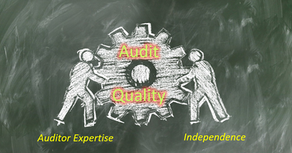
    Sadly, there is no one agreed-upon definition of what constitutes a quality audit. The Center for Audit Quality (CAQ) identifies the following as the two primary pillars around which audit quality is built:

    • Auditor Expertise; and
    • Independence (*)

    (*) Independence refers to external auditors’ interests being independent of those of company management

    Several elements determine the quality of an audit; nevertheless, the combination of these two cornerstones increases the level of trust and confidence in business financial statements and serves as the foundation for the quality of an audit.

    About the Center for Audit Quality (CAQ) 
    The Center for Audit Quality (CAQ) is an autonomous public policy organisation dedicated to enhancing investor confidence and public trust in the global capital markets. The CAQ fosters high-quality performance by public company auditors; convenes and collaborates with other stakeholders to advance the discussion of critical issues that require action and intervention; and advocates policies and standards that promote public company auditors’ objectivity, effectiveness, and responsiveness to dynamic market conditions. Based in Washington, DC, the CAQ is affiliated with the American Institute of CPAs. 

    According to the International Auditing and Assurance Standards Board (IAASB), a quality audit is more likely to have been accomplished by an engagement team that:-

    • Exhibited appropriate values, ethics, and attitudes,
    • Was sufficiently knowledgeable, skilled, and experienced, and had sufficient time allocated to perform the audit work,
    • Applied a rigorous audit process and quality control procedures that complied with the law, regulation, and applicable standards,
    • Provided valuable and timely reports, and
    • Interacted appropriately with relevant stakeholders.

    Audit Quality Standards

    According to International Forum of Independent Audit Regulators (IFIAR), a robust quality control system is vital to enhancing and sustaining audit quality. As a result, quality control systems are a primary focus of many inspection Programmes.

    A matter of particular concern is that inspectors’ results about quality control inspections have fluctuated widely over time. Because of this, the International Accounting Standards Board (IAASB) issued two new standards in December 2020 to reinforce and modernise how firms use quality management:-

    • ISQM 1 Quality Management for Firms that Perform Audits or Reviews of Financial Statements, or Other Assurance or Related Services Engagements
    • ISQM 2 Engagement Quality Reviews

    These standards direct audit firms to improve the robustness of their monitoring and remediation, embed quality into their corporate culture and the “tone at the top,” and improve the robustness of engagement quality reviews. 

    In June of 2022, the Auditing Standards Board (ASB, which is the AICPA’s senior committee for auditing, attestation, and quality control applicable to the performance and issuance of audit and attestation reports for non-issuers.) adopted comparable standards.

    In Malaysia

    These two new Quality Management Standards have also been approved by the Malaysian Institute of Accountants on 17 September 2021

    These standards will come into effect on 15 December 2022, in line with all major jurisdictions adopting the ISQM and ISAs.

    17
  • Improving Audit Quality 1: An Overview

    Improving Audit Quality 1: An Overview

    Back to N Years Ago

    When I was younger (wow, this makes me feel so old), audit quality was not really a “thing.” I watched my superiors perform audits they believed to be sufficient, and my colleagues and I were taught to follow in their footsteps.

    We conducted what we believed to be good audits but were never informed that we would be subjected to a review by a firm or an external third party.

    Enron Scandal: The Fall of a Wall Street Darling

    The Enron scandal drew attention to accounting and corporate fraud as its shareholders lost $74 billion in the four years leading up to its bankruptcy, and its employees lost billions in pension benefits.

    Sarbanes-Oxley Act of 2002 (SOX)

    The Sarbanes-Oxley Act of 2002 is a federal law in the US that established sweeping auditing and financial regulations for public companies. Lawmakers created the legislation to help protect shareholders, employees and the public from accounting errors and fraudulent financial practices.

    This was done in response to the widespread perception that audits had been conducted improperly in the United States.

    With the passage of the Sarbanes-Oxley Act of 2002 (SOX), which also established the Public Company Accounting Oversight Board (PCAOB) to oversee the audits of public companies, the requirement that audits be inspected by a government regulator was established.

    Since then, regulators with comparable responsibilities have been established in a total of 54 different jurisdictions across the globe. This is shown by the fact that these jurisdictions have joined the International Forum of Independent Audit Regulators (IFIAR – https://www.ifiar.org/)

    For instance, the Financial Reporting Council in the United Kingdom took on this task in 2003, the Australian Securities and Investments Commission in 2004, and the Audit Oversight Board (AOB) of the Securities Commission Malaysia in 2010.

    Practice Review Committee under the Malaysian Institute of Accountants

    However, the Malaysian Institute of Accountants’ Practice Review Committee conducted its inaugural meeting after Council approved the By-Laws on Practice Review in December 2002 and field review under the Practice Review Programme commenced in 2004.

    Adoption of ISQC 1

    In 2004, the International Auditing and Assurance Standards Board (IAASB), working under the direction of the International Federation of Accountants (IFAC), gave its approval to the ISQC 1 standard [Firm Level Quality Control – https://www.ccs-co.com/post/isqc-1-firm-level-quality-control], which addresses quality control for firms that perform audits and reviews of historical financial information and other assurance and related services engagements.

    In order to fulfil the requirements established by IFAC, the Malaysian Institute of Accountants (MIA) has mandated that all registered accountants and auditors (practitioners) in the country must conform with ISQC 1 by the end of June 2006. The standards introduce several new concepts and requirements in respect of quality control within auditing firms. As a consequence of this, auditing firms are having extra responsibilities to fulfil in regard to the implementation of new quality control safeguards and procedures.

    ISQC 1 is not the same as ISA 220 “Quality Control for Audits of Historical Financial Information” which sets out the quality control standards to be applied to individual audit engagements. On the other hand, the ISQC 1 focuses on firms and the people that work within them to ensure compliance with various professional standards, regulatory, and legal requirements.

    A study was then carried out in 2007 by the Malaysian Institute of Accountants (MIA) and the Universiti Teknologi MARA (UiTM) suggests that the application of ISQC 1 in Malaysian small and medium audit firms is fairly restricted. The majority of small and medium-sized audit firms follow non-standard operating procedures in their day-to-day work, which fundamentally does not reflect full compliance with ISQC 1.

    Understanding the International Standards on Quality Control 1

    Definitions – https://www.ccs-co.com/post/isqc-1-definitions

    It covers

    1. leadership responsibilities for quality within the firm;
      1. https://lnkd.in/gKSKWAPC
    2. ethical requirements;
      1. https://lnkd.in/gAzwW3gv
    3. acceptance and continuance of client relationships and specific engagements;
      1. https://lnkd.in/gaYQX88e
    4. human resources;
      1. https://lnkd.in/g8Ax_F6X
    5. engagement performance;
      1. https://lnkd.in/gWg8GSSx
      2. https://lnkd.in/g7k_mGA8
    6. monitoring; and
      1. https://lnkd.in/gjPSPWa7
    7. documentation.
      1. https://lnkd.in/gHvf26bk

    Auditing firms are required by the standards to document the proof that each of the seven components of their quality control system is functioning properly and to keep this documentation for the appropriate amount of time.

    Moving Forward

    Enhancing the quality should also be a primary focus during this advantageous moment.

    On the basis of the most recent results of the Practice Review, which are depicted in the statistics contained within this report, practitioners are strongly encouraged to ensure that their firms comply with all of the necessary requirements, whether it be at the level of the entire firm or at the level of each individual engagement.

    The audit firms NOT ONLY need to get familiar with and comprehend the important sections of the International Standard on Auditing (ISA), the International Standard on Quality Control 1 (ISQC 1), the Companies Act 2016 (CA 2016), the MIA By-Laws, and any other applicable professional standards and laws, in addition, the audit firms also need to begin making preparations well in advance to comply with newly implemented standards, notably ISQM 1 and 2.

    ISQM 1 & ISQM 2

    ISQM 1 & ISQM 2 will be effective from 15 December 2022.

    20
  • MIA Qualifying Examination

    MIA Qualifying Examination

    MIA Qualifying Examination – PDF

    MIA Education QE Application Form

    1. Have you ever thought about becoming a Chartered Accountant in Malaysia?

    2. Did you know that one of the ways to become an accountant is to complete the Malaysian Institute of Accountants Qualifying Examination (QE)?

    3. Registration is currently open for the September 2022 Qualifying Examination (QE) of the Malaysian Institute of Accountants.

    4. Join our Telegram – http://bit.ly/YourAuditor

    🌻🌻🌻🌻🌻🌻🌻🌻🌻🌻

    1. 你是否有想过,在马来西亚成为一名名正言顺的会计师?

    2. 你是否知道完成马来西亚会计师协会的资格考试 (QE),也是成为会计师的其中一个途径?

    3. 马来西亚会计师协会2022年9月份的资格考试 (QE),如今开放注册。

    4. 加入我们的 Telegram – http://bit.ly/YourAuditor

    🌼🌼🌼🌼🌼🌼🌼🌼🌼🌼

    Latest Updates #近期更新

    1. The Publication of MIA’s Practice Review Annual Report 2020/2021

    [MIA 2020/2021年 的实践审查年度报告]

    https://lnkd.in/eRAErf68

    2. Special Income Remittance Programme to Malaysian Residents

    [源自外国汇入马来西亚的收入 特别报税方案]

    https://lnkd.in/eqhVhXda

    3. Post-implementation Review of IFRS 9 — Classification and Measurement

    [国际财务报导准则第9号之 施行后检讨 —分类及衡量]

    https://lnkd.in/eKCRJa-r

    4. Adoption of ISQM 1, ISQM 2 and ISA 220 (Revised)

    [ISQM 1、ISQM 2 和 ISA 220 (修订版)的采纳]

    https://lnkd.in/eDbqMREV

    5. Movable Property Security Interest (MPSI) Bill

    [动产担保权益法案]

    https://lnkd.in/esFqwA-u

    6. IFRS Foundation announcement on the International Sustainability Standards Board (ISSB)

    [国际财务报告准则基金会关于国际可持续发展 准则委员会的公告]

    https://lnkd.in/e_2ZVynM

    7. MASB Updates No.1 November 2021 – IFRS Interpretations Committee (IFRIC) Agenda Decisions

    [马来西亚会计准则委员会 [MASB] 2021年11月第1号更新 – 国际财务报告准则解释委员会(IFRIC)议程决定]

    https://lnkd.in/enJNxX9Q

    8. MASB Updates No.1 November 2021 – IASB Project on Equity Method

    [MASB 2021年11月第1号更新 – 会计准则理事会关于权益法 [Equity Method] 的项目]

    https://lnkd.in/eu3ZX_rB

    9. Bursa Malaysia issues updated Corporate Governance Guide

    [马来西亚证券交易发布更新的 公司治理指南]

    https://lnkd.in/e5pEbgpt

    10. Amendments to the By-Laws (on professional ethics, conduct and practice) of MIA

    [对 MIA 章程 (关于职业道德、行为和实践)的修订]

    https://lnkd.in/euRvPuNy

    11. Labuan Business Activity Tax (Requirements for Labuan Business Activity) Regulations 2021

    [2021年纳闽商业活动税 (纳闽商业活动的要求)条例]

    https://lnkd.in/etg252Kb

    12. Pembangunan Sumber Manusia Berhad (Exemption of Levy) (No. 2) (Amendment) Order 2021 [2021 年人力资源发展有限公司 (免征征税)(第 2 号) (修订) 指令]

    https://lnkd.in/eGmGXRaU

    13. Income Tax (Exemption) (No. 11) Order 2021

    [2021年所得税 (豁免)(第11号) 指令]

    https://lnkd.in/e5e-J8SV

    14. Income Tax (Exchange of Information) Rules 2021 – Request for Information

    [2021年所得税 (信息交流) 细则 – 要求提供信息]

    https://lnkd.in/eUCUWXK6

    15. Stamp Duty (Exemption) (No. 11) 2021 (Amendment) Order 2021

    [2021 年印花税(豁免) (第 11 号)(修订) 指令]

    https://lnkd.in/e_NxSBxF

    16. Income Tax (Exemption) (No. 13) 2013 (Amendment) Order 2021

    [2021年所得税 (豁免)(第 13 号) 2013年(修订) 指令]

    https://lnkd.in/ejJyjQFs

    17. Income Tax Double Deduction for the Sponsorship of Scholarship to Malaysian Student

    [赞助马来西亚学生奖学金的 所得税双重扣税]

    https://lnkd.in/eZp57-Vi

    18. Double Deduction for Expenditure on Provision of Employees’ Accommodation

    [雇员住宿费用双重扣税]

    https://lnkd.in/eWPN2Yrn

    19. Starting from the YA 2022, Company Secretarial and Tax Filing Fees can claim Deduction even not PAID

    [2022课税年度开始,公司秘书费及报税费用,没还钱也可以扣税了]

    https://lnkd.in/eKfh7fkz

    20. “MIA SMPs Channel” – a Dedicated Telegram Channel for SMPs

    [中小会计事务所 (SMPs) 专用 Telegram 频道]

    https://lnkd.in/eKR9nf5v

    21. EPF: extension of 9% statutory contribution rate for Employees

    [EPF: 延长雇员9% 的法定缴款率]

    https://lnkd.in/eJsekn3Z

    22. Income Tax (Industrial Building Allowance) (Tun Razak Exchange Marquee Status Company) (Amendment) Rules 2021

    [2021年所得税 (工业建筑津贴)(敦拉萨国际贸易中心 Marquee 地位公司)(修订) 细则]

    https://lnkd.in/eCiQHGP9

    23. Income Tax (Accelerated Capital Allowance)(Tun Razak Exchange Marquee Status Company) (Amendment) Rules 2021

    [2021年所得税 (资本津贴加速)(敦拉萨国际贸易中心Marquee 地位公司)(修订) 细则]

    https://lnkd.in/eKNBf6vF

    24. Income Tax (Deduction for Relocation Costs for Tun Razak Exchange Marquee Status Company) (Amendment) Rules 2021

    [2021年所得税 (敦拉萨国际贸易中心 Marquee 地位公司 搬迁费用的扣除)(修订) 细则]

    https://lnkd.in/e8UDx5Ki

    25. Income Tax (Deduction for Rental Payments) (Tun Razak Exchange Marquee Status Company) (Amendment) Rules 2021

    [2021年所得税 (租金扣除) (敦拉萨国际贸易中心 Marquee 地位公司)(修订) 细则]

    https://lnkd.in/eiZAG8aP

    26. Income Tax (Exemption) (No. 4) 2013 (Amendment) Order 2021

    [2013年所得税 (豁免)(第4号) (修订) 指令]

    https://lnkd.in/eH7V3YB3

    27. Income Tax (Exemption) (No. 12) Order 2021

    [2021年所得税 (豁免)(第12号) (修订) 指令]

    https://lnkd.in/eyiVRAAr

    28. Special Deduction for Reduction of Rental to SMEs extended to 30.6.2022

    [中小型企业租金特别扣税延长至2022年6月]

    https://lnkd.in/eFuafpPj

    29. Special Deduction for Reduction of Rental to Non-SMEs Tenants extended to 30.6.2022

    [非中小型企业租户租金特别扣税 延长至2022年6月]

    https://lnkd.in/eiCFG9bS

    30. Costs of Renovation and Refurbishment of Business Premise is allowable up to 31.12.2022

    [营业场所翻修和翻新费用 扣税至2022年12月31日]

    https://lnkd.in/dMe-u2bV

    31. Tax Residents to be exempted from tax on the foreign-sourced income until Dec 31, 2026

    [税务居民源自国外的收入将被免征税至2026年12月31日]

    https://lnkd.in/eAu5rcJK

    32. Export of Private Health Care Services – Tax Exemption

    [出口私人保健服务 – 税务豁免]

    https://lnkd.in/e9TrZnRQ

    33. Instruments in relation to an approved M & A – Stamp Duty Exemption

    [与批准的合并或收购有关的文件 – 豁免征收印花税]

    https://lnkd.in/eS9EUKdv

    34. Double Tax Deduction for the Sponsorship of Scholarship to Malaysian Student

    [赞助马来西亚学生奖学金,所得税双重扣税]

    https://lnkd.in/erNAhxAn

    35. RM 20,000 Tax Rebate for the newly set up Company – ⚠️⚠️ Conditions apply ⚠️⚠️

    [开新公司的2万令吉税务回扣是有条件的]

    https://lnkd.in/e4HJG2AW

    36. Finance Act 2021 has been Gazetted

    [2021年财政法令已经在宪报颁布了]

    https://lnkd.in/egpicBGF

    37. IASB Exposure Draft ED/2021/9 Non-current Liabilities with Covenants (Proposed amendments to IAS 1)

    [具合约条款之非流动负债 (国际会计准则第1号)]

    https://lnkd.in/ehtBieY2

    38. 38. IASB Exposure Draft ED/2021/10 Supplier Finance Arrangements (Proposed amendments to IAS 7 and IFRS 7)

    [国际会计准则理事会征求意见稿ED/2021/10 供应商融资安排 (对国际会计准则7和国际财务报告准则7的拟议修正)]

    https://lnkd.in/erky8JY2

    39. SST – Guide on Food & Beverages

    [服务税 – 食品和饮料指南]

    https://lnkd.in/ehRuruRa

    40. SST – Guide on Parking Services

    [服务税 – 停车场服务指南]

    https://lnkd.in/emFT9Ven

    41. SST – Guide on Motor Vehicle Services or Repair

    [服务税 – 机动车服务或维修指南]

    https://lnkd.in/eU25Gkht

    42. Double Tax Deduction for Expenditure in relation to Vendor Development Programme

    [与供应商发展计划有关的支出双重扣税]

    https://lnkd.in/ev2e4W8g

    43. Tax Deduction for Investment in a Project of Commercialisation of Research and Development Findings

    [研究与开发成果商业化项目投资 享有扣税资格]

    https://lnkd.in/eZAfyv2S

    44. FAQs on the implementation of Tax Identification Number, TIN

    [这绝不是天上人间 而是TIN罗地网]

    https://lnkd.in/eJvgtUpk

    45. TP 1 表格,什么来的

    [Something About “Form TP 1”]

    https://lnkd.in/em-i-VWx

    46. Statutory Minimum Wages – Why Pay Raise is Important?

    [法定最低工资 – 为什么加薪很重要]

    https://lnkd.in/eGEvjU6C

    47. Accelerated Capital Allowance For Excursion Bus

    [购买游览巴士享有加速资本津贴]

    https://lnkd.in/eEEjDwvG

    48. Deferment of the implementation of 2% Withholding Tax on Payment [Commission] Made To Agent etc.

    [ 推迟执行向代理商、经销商、分销商支付佣金的2%预扣税]

    https://lnkd.in/e-FkqG7b

    49. HRD Levy Payment for the newly registered employers for January 2022 has been Resumed

    [新注册的雇主,2022年1月恢复支付人力资源开发基金]

    https://lnkd.in/e28NiHsv

    50. Mandatory Adoption of Prescribed Forms CP21, CP22, CP22A, and CP22B

    [强制性采用指定的表格 CP21、CP22、CP22A 和 CP22B]

    https://lnkd.in/eBwiFntG

    51. 只有在扣押令下 IRB 才有权要求银行提供你的信息

    [Power to call for bank information for purpose of making a Garnishee Order application by IRB]

    https://lnkd.in/eQsxcQV8

    52. Tax Concessions Due to COVID-19 Travel Restrictions expired on 31 December 2021

    [新冠肺炎期间的行动限制所给予的税务宽免于2021年12月31日结束]

    https://lnkd.in/eqJzGEmN

    53. Initial Application of MFRS 17 and MFRS 9 – Comparative Information (Amendment to MFRS 17 Insurance Contracts)

    [初次应用 MFRS 17 和 MFRS 9 – 比较信息 (MFRS 17 保险合同的修正)]

    https://lnkd.in/eUMMpfPQ

    54. Filing Programme for Year 2022 – Employers

    [2022年的申报安排 – 雇主 ]

    https://lnkd.in/ee9mhwaW

    55. Filing Programme for Year 2022 – Associations, Deceased Persons’ Estate and Hindu Joint Families

    [2022年的申报安排 – 社团、死者遗产和印度教联合家庭]

    https://lnkd.in/eFErzCmK

    56. Filing Programme for Year 2022 – Other Individuals

    [2022年的申报安排 – 其他人士]

    https://lnkd.in/e3GgsDFg

    57. Filing Programme for Year 2022 – Individuals, Partnerships

    [2022年的申报安排 – 个人、合伙企业]

    https://lnkd.in/ew8AdVYK

    58. Filing Programme for Year 2022 – Trust Bodies and Co-Operative Societies

    [2022年的申报安排 – 信托机构和合作社]

    https://lnkd.in/eSG9P94S

    59. Filing Programme for Year 2022 – Companies, Limited Liability Partnerships

    [2022年的申报安排 – 公司、有限责任合伙公司]

    https://lnkd.in/eQvAa6Dc

    60. Filing Programme for Year 2022 – Real Estate Investment Trusts / Property Trust Funds, Business Trusts

    [2022年的申报安排 – 房地产投资信托基金/财产信托基金,商业信托基金]

    https://lnkd.in/ePzDNgcP

    61. Guide Notes on Submission of Tax Returns

    [关于提交纳税申报的指导说明]

    https://lnkd.in/eekjaAzg

    62. Minimum Wages (Amendment) Order 2022

    [2022年最低工资(修正)指令]

    https://lnkd.in/eYkYZEMR

    63. All Accounting and Audit Firms having 10 or more employees are subject to HRD Levy

    [所有聘请10人以上的会计和审计公司 都在人力资源发展征税范围内]

    https://lnkd.in/evkTXh5G 🌳🌳🌳🌳🌳🌳🌳🌳🌳🌳🌳🌳

    Our website's articles, templates, and material are solely for reference. Although we make every effort to keep the information up to date and accurate, we make no representations or warranties of any kind, either express or implied, regarding the website or the information, articles, templates, or related graphics that are contained on the website in terms of its completeness, accuracy, reliability, suitability, or availability. Any reliance on such information is therefore strictly at your own risk.

    Keep in touch with us so that you can receive timely updates |

    要获得即时更新,请与我们保持联系

    1. Website ✍️ https://www.ccs-co.com/

    2. Telegram ✍️ http://bit.ly/YourAuditor

    3. Facebook ✍

    4. Blog ✍ https://lnkd.in/e-Pu8_G

    5. Google ✍ https://lnkd.in/ehZE6mxy

    6. LinkedIn ✍ https://www.linkedin.com/company/74734209/admin/

    7
  • Launching of “MIA SMPs channel” – a Dedicated Telegram Channel for SMPs

    Launching of “MIA SMPs channel” – a Dedicated Telegram Channel for SMPs

    Launching of “MIA SMPs channel” – a Dedicated Telegram Channel for SMPs – PDF

    1. Earlier in October, the Malaysian Institute of Accountants (MIA) announced the launch of a dedicated Telegram channel for Small and Medium Practitioners (SMPs), dubbed “MIA SMPs Channel.”

    2. Once the account has been created, please visit these LINKs to connect to:

    👉 the MIA SMPs Chat Channel – https://t.me/MIASMPsChannel

    👉 CCS 十面埋伏 – https://t.me/YourAuditor

    👉 GST 十面埋伏 – https://t.me/YourAuditor

    🌻🌻🌻🌻🌻🌻🌻🌻🌻🌻🌻

    1. 10月初,马来西亚会计师协会(MIA)宣布为中小会计事务所(SMPs)推出一个专用的Telegram 频道,被称为 “MIA SMPs 频道”。

    2. 一旦账户创建完成,请按此链接以加入:

    👉 MIA SMPs 频道 – https://t.me/MIASMPsChannel 👉 CCS 十面埋伏 – https://t.me/YourAuditor 👉 GST 十面埋伏 – https://t.me/YourAuditor 🌳🌳🌳🌳🌳🌳🌳🌳🌳🌳🌳🌳

    6
  • Adoption of ISQM 1, ISQM 2 and ISA 220 (Revised)

    Adoption of ISQM 1, ISQM 2 and ISA 220 (Revised)

    1. The Malaysian Institute of Accountants has approved the adoption of:

    ✅ International Standard on Quality Management (ISQM) 1 Quality Management for Firms that Perform Audits or Reviews of Financial Statements, or Other Assurance or Related Services Engagements,

    ✅ ISQM 2 Engagement Quality Reviews,

    ✅ International Standard on Auditing 220 (Revised) Quality Management for an Audit of Financial Statements; and

    ✅ Conforming Amendments to ISAs and Related Material Arising from the Quality Management Projects in Malaysia.

    🌻🌻🌻🌻🌻🌻🌻🌻🌻🌻🌻

    1. 马来西亚会计师协会已经批准采用:

    ✅ 国际质量管理标准(ISQM)

    1:对执行审计或财务报表审查或其他鉴证或相关服务业务的会计事务所进行质量管理。

    ✅ ISQM 2 业务质量审查。

    ✅ 国际审计准则 220(修订版)财务报表审计的质量管理;以及

    ✅ 马来西亚质量管理项目对《国际审计准则》和相关材料所产生的符合性修正。

    🌳🌳🌳🌳🌳🌳🌳🌳🌳🌳🌳🌳

    8
  • Amendments to the By-Laws (on professional ethics, conduct and practice) of the MIA

    Amendments to the By-Laws (on professional ethics, conduct and practice) of the MIA

    1. The Council of the Institute has approved the revision to Part A of the MIA By-Laws (on Professional Ethics, Conduct, and Practice) incorporating the revisions to the International Code of Ethics for Professional Accountants (Including International Independence Standards) as follows:

    👉 Revisions to Part 4B of the Code to Reflect Terms and Concepts Used in International Standard on Assurance Engagements 3000 (Revised)

    👉 Revisions to the Code to Promote the Role and Mindset Expected of Professional Accountants

    🌻🌻🌻🌻🌻🌻🌻🌻🌻🌻🌻

    1. MIA 理事会已经批准了对章程 A 部分(关于职业道德、行为和实践)的修订,其中纳入了对《国际专业会计师职业道德守则》(包括国际独立守则)的修订:

    👉 对守则第4B部分的修订,以反映《国际鉴证业务准则》[International Standard on Assurance Engagements] 第 3000 号(修订版)中使用的术语和概念

    👉 对守则的修订,以促进专业会计师应有的角色和心态

    🌼🌼🌼🌼🌼🌼🌼🌼🌼🌼

    7
  • MIA: Covid-19 FAQs on Auditing

    MIA: Covid-19 FAQs on Auditing

    Our website's articles, templates, and material are solely for reference. Although we make every effort to keep the information up to date and accurate, we make no representations or warranties of any kind, either express or implied, regarding the website or the information, articles, templates, or related graphics that are contained on the website in terms of its completeness, accuracy, reliability, suitability, or availability. Any reliance on such information is therefore strictly at your own risk.

    Keep in touch with us so that you can receive timely updates |

    要获得即时更新,请与我们保持联系

    1. Website ✍️ https://www.ccs-co.com/ 2. Telegram ✍️ http://bit.ly/YourAuditor 3. Facebook ✍

    4. Blog ✍ https://lnkd.in/e-Pu8_G 5. Google ✍ https://lnkd.in/ehZE6mxy

    6. LinkedIn ✍ https://www.linkedin.com/company/74734209/admin/

    8