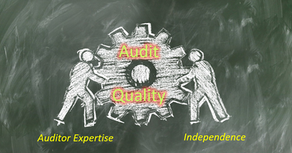
The International Accounting Standards Board (IAASB) initiated a campaign in 2004 to improve the clarity (readability) of the ISAs.
This Clarity Project’s overarching objective was to make the ISAs more understandable, which would, in turn, make it easier to apply the standards consistently and lead to an improvement in the overall audit quality on a global scale.
After a string of corporate scandals that received widespread media attention and a widespread erosion of trust within the auditing profession, this was a vital task to carry out.
As a result of the Clarity Project, each standard now possesses a transparent structure with clear objectives, definitions, and requirements, in addition to the application and other explanatory material that provides a deeper dive into the requirements of the ISAs.

Because of how the new standards are organised, it is much simpler to comprehend what is needed and what is considered recommendations.
In addition, ISQC 1 Quality Control for Firms that Perform Audits and Reviews of Financial Statements, and Other Assurance and Related Services Engagements has been rewritten, and the revised guidance on quality control procedures went into effect at the same time as the clarified ISAs did.
These updates were made in conjunction with the International Standards on Auditing. The following constitutes the structure of each standard:
- Introduction
- Objective
- Definitions
- Requirements
- Application and Other Explanatory Material

Introduction
This paragraph contains information concerning the standard, including the ISA’s purpose, scope and subject matter. It also contains information regarding the responsibilities of the auditor and others in the context in which the ISA is set.
Objective
Each ISA contains a statement of the auditor’s objective in the audit area in which the ISA is set.
Definitions
The Clarity Project included adding an element for a greater understanding of the ISAs, and as such applicable terms contained within the ISAs have now been defined.

Requirements
Clearly stated requirements support each ISA.
Phrases such as ‘the auditor should …’ have now been replaced by ‘the auditor shall …’.
The profession welcomed this improvement because it cleared any ambiguity.
The word ‘shall’ indicates that the standard expects the auditor to do something rather than ‘should’, which implies that the standard ‘may’ expect something of the auditor in certain circumstances.
Application and other explanatory material
Each ISA clearly explains more precisely what the auditor is required to do to achieve the objective of the ISA in question.

Where applicable, the ISA may also contain illustrative examples of procedures that may apply in certain circumstances.
Other explanatory material may be contained within an ISA to help the auditor understand the ISA’s overall objective and application.
The impact of the Clarity Project contributed significantly to the enhancement and uniformity of audit quality worldwide.
The IAASB set out to undertake the project to encourage international convergence and assist audit firms that operate internationally by harmonising auditing standards.

In summary, the Clarity Project had the following effect on the ISAs and ISQC:
- 19 ISAs and ISQC 1 were redrafted.
- 16 ISAs were revised and redrafted to reflect the new clarity convention.
- One new standard was issued:
- relating to communication, ISA 265 Communicating Deficiencies in Internal Control to Those Charged with Governance and Management
- ISA 540 Audit of Accounting Estimates and ISA 545 Auditing Fair Value Measurements and Disclosures were combined in ISA 540 Auditing Accounting Estimates, Including Fair Value Accounting Estimates, and Related Disclosures
The Clarity Project brought about some significant changes in the work that auditors are required to undertake, which can be seen in the following summaries.

Our website's articles, templates, and material are solely for reference. Although we make every effort to keep the information up to date and accurate, we make no representations or warranties of any kind, either express or implied, regarding the website or the information, articles, templates, or related graphics that are contained on the website in terms of its completeness, accuracy, reliability, suitability, or availability. Therefore, any reliance on such information is strictly at your own risk.
Keep in touch with us so that you can receive timely updates |
要获得即时更新,请与我们保持联系
1. Website ✍️ https://www.ccs-co.com/ 2. Telegram ✍️ http://bit.ly/YourAuditor 3. Facebook ✍
- https://www.facebook.com/YourHRAdvisory/?ref=pages_you_manage
- https://www.facebook.com/YourAuditor/?ref=pages_you_manage
4. Blog ✍ https://lnkd.in/e-Pu8_G 5. Google ✍ https://lnkd.in/ehZE6mxy
6. LinkedIn ✍ https://www.linkedin.com/company/74734209/admin/