Tag: IESBA

  • Can an Auditor prepare the Financial Statements and then audit them?

    Can an Auditor prepare the Financial Statements and then audit them?

    Who is responsible for the preparation of the Financial Statements?

    Management is responsible for preparing and fairly presenting the financial statements under the applicable financial reporting framework.

    These responsibilities include:

    • Determining accounting policies and the accounting treatment under those policies.
    • Preparing or changing source documents or originating data, in electronic or other forms, evidencing the occurrence of a transaction. Examples include:
      • Purchase orders.
      • Payroll time records.
      • Customer orders.
      • Originating or changing journal entries.
      • Determining or approving the account classifications of transactions

    Accounting and bookkeeping services comprise a broad range of services, including:

    • Preparing accounting records or financial statements.
    • Recording transactions.
    • Providing payroll services
    • Resolving account reconciliation problems.
    • Converting existing financial statements from one financial reporting framework to another.

    Accounting and bookkeeping services that are routine or mechanical:

    1. Involve information, data or material in relation to which the client has made any judgments or decisions that might be necessary; and
    2. Require little or no professional judgment.

    Examples of services that might be regarded as routine or mechanical include:

    • Preparing payroll calculations or reports based on client-originated data for approval and payment by the client.
    • Recording recurring transactions for which amounts are easily determinable from source documents or originating data, such as a utility bill where the client has determined or approved the appropriate account classification.
    • Calculating depreciation on fixed assets when the client determines the accounting policy and estimates useful life and residual values.
    • Posting transactions coded by the client to the general ledger.
    • Posting client-approved entries to the trial balance.
    • Preparing financial statements based on information in the client-approved trial balance and preparing related notes based on client-approved records.

    The firm or a network firm may provide such services to audit clients that are not public interest entities, provided that the firm or network firm:

    • does not assume management responsibility (*) in connection with the service; and
    • addresses any threats created by providing such services that are not at an acceptable level. [MIA By-Laws: R601.5 (b)].

    (*) This includes ensuring that the client’s management:

    1. Designates an individual with suitable skill, knowledge and experience to be responsible at all times for the client’s decisions and oversee the activities. Such an individual, preferably within senior management, would understand:
      1. The objectives, nature and results of the activities; and
      2. The respective client and firm or network firm responsibilities. However, the individual is not required to possess the expertise to perform or re-perform the activities.
    2. Provides oversight of the activities and evaluates the adequacy of the results of the activities performed for the client’s purpose.
    3. Accepts responsibility for the actions, if any, to be taken arising from the results of the activities.

    Although there are risks to the auditor’s objectivity and independence when doing so, there are instances in which an audit firm will prepare the financial statements for a reporting entity and then audit them, especially for small- to mid-sized enterprises (SMEs).

    These risks must be reduced to an acceptable level before such an engagement can occur.

    The self-review threat is the most significant risk when the auditor is responsible for preparing and auditing the financial statements.

    Reviewing the audit file is one of the most important safeguards that can be put in place to ensure that the auditor’s independence and objectivity have not been compromised in any way.

    This can be done by a partner in the engagement that is not an auditor; however, an independent third-party reviewer who is not affiliated with the audit firm can give additional credibility to the process because they will not be biased.

    However, there may be circumstances where safeguards cannot eliminate the threat to independence and objectivity or decrease it to an acceptable level. In the circumstances like this, it is necessary to reject the non-audit task.

    Some professional bodies have also established which types of activities are likely to result in a self-review or self-interest threat that is so severe that the only way to bring the level of risk down to an acceptable level is to avoid participating in the activity or reject to carry out the assurance engagement.

    Audit Clients that are Not Public Interest Entities

    There is no problem (in theory) with an audit firm offering extra services to its customers that go above and beyond the task of auditing.

    In certain instances, this will assist the auditor in obtaining a deeper knowledge of the organisation and the industry in which it works.

    A firm or a network firm shall not provide to an audit client that is not a public interest entity accounting and bookkeeping services, including preparing financial statements on which the firm will express an opinion or financial information which forms the basis of such financial statements, unless:

    1. The services are of a routine or mechanical nature; and
    2. The firm addresses any threats that are created by providing such services that are not at an acceptable level.

    Audit Clients that are Public Interest Entities

    Caution must be taken since a firm or a network firm shall not provide accounting and bookkeeping services to an audit client that is a public interest entity.

    In the UK, the Corporate Governance Code requires audit committees to approve any non-audit services the auditors provide. The primary objective of this approval is to ensure that the auditor’s independence and objectivity have not been impaired.

    In Malaysia, before the provision of any non-audit services by the external auditor, the audit committee of the public listed company should review and approve the acceptance of such engagements, drawing guidance from the By-Laws (on Professional Ethics, Conduct and Practice) by the Malaysian Institute of Accountants (“MIA”).

    If the non-audit service results in concerns about independence to the extent that they cannot be reduced to an acceptable level by applying safeguards, the non-audit service shall not be accepted.

    Examples of non-audit services that shall not be provided by the external auditors of a public interest entity pursuant to the By-Laws (on Professional Ethics, Conduct and Practice) by the MIA are outlined below (s (non-exhaustive):

    • accounting and bookkeeping services, including payroll services and the preparation of financial statements or financial information;

    • valuation services if the valuations would have a material effect on the financial statements;
    • preparation of tax calculations of current and deferred tax liabilities (or assets) to prepare accounting entries that are material to the financial statements;
    • internal audit services that relate to a significant part of the internal controls over financial reporting, financial accounting systems or amount or disclosures that are material to the financial statements;
    • design or implementation of information systems that form a significant part of the internal control or information on financial reporting, accounting records or financial statements;
    • acting in an advocacy role on behalf of the company to resolve a dispute or litigation when the amounts involved are material to the financial statements;
    • recruiting services concerning a director, officer or senior management personnel who would be in a position to exert significant influence over the preparation of accounting records or financial statements; and
    • corporate finance services, which involve promoting, dealing in, or underwriting shares.

    Under Bursa Securities Listing Requirements, disclosure should also be made on the nature and extent of non-audit services if the fees on such services are “significant”.

    Conclusion

    Before a firm or a network firm accepts an engagement to provide a non-assurance service to an audit client, the firm shall apply the conceptual framework to identify, evaluate and address any threat to independence that might be created by providing that service.

    Identifying and Evaluating Threats

    Factors that are relevant in identifying the different threats that might be created by providing a non-assurance service to an audit client and evaluating the level of such threats include:

    • The nature, scope and purpose of the service.
    • Ho will the service be provided, such as the personnel involved and their location?
    • The legal and regulatory environment in which the service is provided.
    • Whether the client is a public interest entity.
    • The level of expertise of the client’s management and employees concerning the service provided.
    • The extent to which the client determines significant matters of judgment.
    • Whether the outcome of the service will affect matters reflected in the financial statements on which the firm will express an opinion, and, if so:
      • The extent to which the outcome of the service will have a material effect on the financial statements.
      • The degree of subjectivity involved in determining the appropriate amounts or treatment for those matters reflected in the financial statements.
    • The nature and extent of the impact of the service, if any, on the systems that generate information that forms a significant part of the client’s:
      • Accounting records or financial statements on which the firm will express an opinion.
      • Internal controls over financial reporting.
    • The degree of reliance that will be placed on the outcome of the service as part of the audit. • The fee relating to the provision of the non-assurance service.

    Materiality in Relation to Financial Statements

    Materiality is a factor that is relevant in evaluating threats created by providing a non-assurance service to an audit client.

    The concept of materiality in relation to an audit is addressed in ISA 320, Materiality in Planning and Performing an Audit, and in relation to a review in ISRE 2400 (Revised), Engagements to Review Historical Financial Statements.

    The determination of materiality involves the exercise of professional judgment and is impacted by both quantitative and qualitative factors. It is also affected by perceptions of the financial information needs of users.

    However, where the Code of Ethics for Professional Accountants of the International Ethics Standards Board of Accountants (IESBA) expressly prohibits the provision of a non-assurance service to an audit client, a firm or a network firm is not permitted to provide that service, regardless of the materiality of the outcome or results of the non-assurance service on the financial statements on which the firm will express an opinion.

    Our website's articles, templates, and material are solely for you to look over. Although we make every effort to keep the information up to date and accurate, we make no representations or warranties of any kind, either express or implied, regarding the website or the information, articles, templates, or related graphics that are contained on the website in terms of its completeness, accuracy, reliability, suitability, or availability. Therefore, any reliance on such information is strictly at your own risk.

    Keep in touch with us so that you can receive timely updates |

    要获得即时更新,请与我们保持联系

    1. Website ✍️ https://www.ccs-co.com/ 2. Telegram ✍️ http://bit.ly/YourAuditor 3. Facebook ✍

    4. Blog ✍ https://lnkd.in/e-Pu8_G 5. Google ✍ https://lnkd.in/ehZE6mxy

    6. LinkedIn ✍ https://www.linkedin.com/company/74734209/admin/

    14
  • What are the Fundamental Principles of Professional Ethics?

    What are the Fundamental Principles of Professional Ethics?

    The ethical conduct of professional accountants and auditors is controlled by a set of criteria they must conform to.

    Auditors have a direct responsibility to the shareholders of a reporting entity (because auditors are appointed by the shareholders, not by management), but it is generally accepted that the fundamental principles of professional ethics do not just apply to auditors; rather, they apply to all professional accountants.

    The presence of a members’ code of ethics and the scrutiny within the profession on members’ eventual conformity with such a code is one of the trademarks of professional qualification, among several other hallmarks.

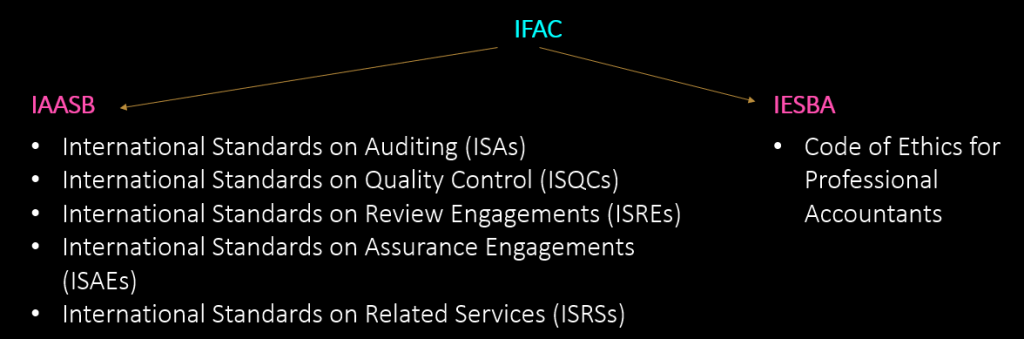
    The International Ethics Standards Board for Accountants (IESBA) is responsible for publishing the Code of Ethics for Professional Accountants, sometimes known as “the Code.”

    When this article was written, the most recent edition available was the 2021 Edition (readers are directed to IESBA’s website to check later versions published by IESBA).

    The Code lays forth the conditions that must be met by professional accountants, regardless of whether or not they are employed in auditing practices.

    Member bodies of the International Federation of Accountants (IFAC) must adhere to standards equivalent to or more severe than those outlined in the Code. There is a possibility that the IESBA Code of Ethics will not be followed in some countries due to different ethical constraints.

    Both the Malaysian Institute of Certified Public Accountants (MICPA) and the Malaysian Institute of Accountants (MIA) have agreed to uphold the compliance of their members with the international code of ethics for professional accountants [including those of the International Independence Standards] prescribed by the International Ethics Standards Board for Accountants [IESBA] of the International Federation of Accountants (IFAC).

    Professional accountants must be aware of the differences and comply with the more stringent requirements and guidance unless a law or regulation prohibits such compliance.

    The Code is split into the following component parts:

    • Part 1: establishes the Fundamental Principles of professional ethics for accountants, which provides a Professional Framework for applying those principles.
    • Part 2: applies to Professional Accountants in business.
    • Part 3: applies to Professional Accountants in practice

    International Independence Standards:

    • Part 4A: Independence for Audit and Review Engagements
    • Part 4B: Independence for assurance engagements other than audit and review engagements

    A professional accountant is required to observe compliance with five fundamental principles, which are:

    • Integrity;
    • Objectivity;
    • Professional Competence and Due Care;
    • Confidentiality; and
    • Professional Behaviour.

    Integrity

    Professional accountants are expected to be honest and straightforward in all their interactions with clients, colleagues, and other business community members throughout their careers.

    For professional accountants to demonstrate that they are adhering to the fundamental principles of integrity, they should not let their name be connected with any reports, returns, or other forms of communication if they believe that the information in question:

    1. contains a materially false or misleading statement;
    2. contains statements or information obtained recklessly; or
    3. omits or obscures information required to be included where such omission or obscurity would be misleading.

    Where auditors are concerned, it may be the case that an auditor’s opinion on the financial statements is modified

    Objectivity

    A professional accountant should not allow bias, conflict of interest or undue influence of others to override professional or business judgements.

    In some circumstances, the auditor could be put in a position where they are exposed to circumstances that could impair their objectivity. In every circumstance, the auditor needs to ensure that the auditor’s objectivity is not compromised by putting measures that safeguard the auditor’s independence and objectivity.

    Professional Competence and Due Care

    A professional accountant has a duty to maintain professional knowledge and skill at the level required to ensure that their client receives a competent and professional service.

    Audit firms must not accept appointments as auditors unless they are competent and have sufficient resources available to undertake the required work.

    Professional accountants also should act diligently under appropriate technical and professional standards when providing professional services. Professional competence comprises:

    • Attaining professional competence; and
    • Maintaining professional competence.

    To achieve the latter, professional accountants must be up-to-date with technical developments.

    Continuing Professional Education (CPE) will assist in maintaining professional competence, providing the CPE undertaken is relevant to the professional accountant’s work.

    It will also serve to assist the professional accountant in performing work competently within their professional environment.

    Confidentiality

    Confidentiality is of paramount importance, and Section 114 Confidentiality of Part 1 of the By-Laws (on Professional Ethics, Conduct and Practice) of the Malaysian Institute of Accountants contains the obligations of a professional accountant to maintain confidentiality as well as establishing the circumstances where the professional accountant’s duty of confidentiality can be overridden.

    In recognition of the professional accountant’s duty of confidentiality, the accountant should refrain from:

    • Disclosing, outside the audit/accountancy firm, confidential information acquired as a result of professional and business relationships without proper and specific authority or unless there is a legal or professional right or duty to disclose.
    • Using confidential information acquired as a result of professional and business relationships to their personal advantage or the advantage of third parties.

    This duty of confidentiality extends to the outside of the business or practice environment where the professional accountant must observe confidentiality and not inadvertently or otherwise disclose information in a social environment.

    In addition to this need, a professional accountant is obligated to protect the confidentiality of any information a potential client or employer provides.

    A professional accountant has to be aware of the need to safeguard the confidentiality of information inside a company or other organisation in which they are employed.

    A professional accountant must maintain client confidentiality and take all reasonable steps to accomplish this goal.

    These steps should include ensuring that staff under the professional accountant’s control and persons from whom the professional accountant seeks advice and assistance also maintain client confidentiality.

    Even though auditors and professional accountants have a professional duty of confidentiality, there may be occasions where the professional accountant is required by law, or considers it to be in the public interest to disclose details of clients’ affairs to third parties.

    The duty of confidentiality is required to be applied at all times by the professional accountant during the course of their work, except where:

    1. Disclosure is permitted by law and is authorised by the client or the employer.
    2. Disclosure is required by law.
      1. Production of documents or other provision of evidence in the course of legal proceedings; or
      2. Disclosure to the appropriate public authorities of infringements of the law that came to light;
    3. There is a professional duty or right to disclose when not required by law, for example:
    • when professional bodies are carrying out reviews of work done by professional accountants, and the bodies require sight of the firm’s files to review this audit work;
      • to respond to an enquiry or investigation by a professional body or regulatory body;
      • to protect the professional interests of a professional accountant in legal proceedings; or
      • to comply with technical standards and ethical requirements.

    There are two types of disclosure where the duty of confidentiality is to be overridden:

    • Obligatory disclosure; and
    • Voluntary disclosure

    Obligatory disclosure

    Where the professional accountant knows or suspects the client to have committed money laundering, treason, drug trafficking or terrorist offences, the professional accountant must disclose all the information at his disposal to a regulatory authority.

    Voluntary disclosure

    Voluntary disclosure may be required in the following situations:

    • Disclosure is required by law;
    • Where it is in the public interest to disclose (such as where a criminal offence against the public has been committed);
    • Disclosure is required to protect the professional accountant’s interests (for example, defending the professional accountant in a legal case).
    Example
    During the course of the audit of ABC Berhad, the audit senior saw that recurring quantities of money were being deposited into the bank account of one of the company's directors in the form of round sums. 
    
    When added up over the course of the year, the amounts had reached a point where they were considered significant (material); hence, the audit senior questioned the director about the purposes of these transactions. 
    
    The director refused to provide the audit senior with any reasonable reasons and said, in an aggressive and threatening way, that the information in question was confidential and must not be released to any third party. 
    
    The audit senior's suspicions were piqued by how the director responded, which led them to believe that the director was engaged in money laundering. 
    
    Within a professional practice, the suspicion or knowledge of money laundering actions must be reported to a Money Laundering Reporting Officer (MLRO) under the legislation that govern the prevention of money laundering in many different countries. 
    
    In this situation, the audit senior would be compelled to report his concerns to the MLRO to comply with the scenario. After then, it would be up to the discretion of the MLRO to decide whether or not the suspicions merited a referral to the regulatory authorities who are tasked with conducting investigations into such concerns. 
    
    In situations like this, it is extremely important for neither the audit senior nor the MLRO to make the client aware of any such findings. Doing so would constitute "tipping off" the client and might potentially compromise any inquiry being conducted.

    Professional Behaviour

    At all times, professional accountants must comply with relevant laws and regulations and avoid all actions which would bring the profession into disrepute.

    Accountants need to be seen to behave professionally at all times, and this behaviour extends to the professional accountant’s marketing and advertising.

    [It is recommended that a professional accountant seek advice from the appropriate professional organisation if there is any uncertainty regarding the appropriateness of a certain kind of advertising or marketing.]

    Professional accountants must not mislead clients or employers by stating that they have professional qualifications when they have not.

    Nor should they offer themselves as available for work which they are not professionally competent to undertake.

    Professional accountants also should ensure that they do not make disparaging references or unsubstantiated comparisons to the work of others.

    The profession’s ongoing efforts to uphold ethical standards in Malaysia

    The Malaysian Institute of Certified Public Accountants (MICPA) and the MIA are constantly engaged with their members to provide the required revisions to the code regularly.

    These are made possible through continual continuing education programmes or workshops and yearly member outreach, particularly in the year when significant revisions to the code have been implemented.

    Both the MICPA’s exam and the MIA’s qualifying examination place a significant emphasis on the concept of the code of ethics. This will guarantee that newly graduated accountants have a solid understanding of the Code of Professional Conduct.

    Ethics In The Accounting Profession

    Our website's articles, templates, and material are solely for reference. Although we make every effort to keep the information up to date and accurate, we make no representations or warranties of any kind, either express or implied, regarding the website or the information, articles, templates, or related graphics that are contained on the website in terms of its completeness, accuracy, reliability, suitability, or availability. Therefore, any reliance on such information is strictly at your own risk.

    Keep in touch with us so that you can receive timely updates |

    要获得即时更新,请与我们保持联系

    1. Website ✍️ https://www.ccs-co.com/ 2. Telegram ✍️ http://bit.ly/YourAuditor 3. Facebook ✍

    4. Blog ✍ https://lnkd.in/e-Pu8_G 5. Google ✍ https://lnkd.in/ehZE6mxy

    6. LinkedIn ✍ https://www.linkedin.com/company/74734209/admin/

    17
  • What Function Does the International Auditing and Assurance Standards  Board(IAASB)Play?

    What Function Does the International Auditing and Assurance Standards Board(IAASB)Play?

    The International Auditing and Assurance Standards Board, also known as the IAASB, is responsible for setting the International Standards on Auditing (ISAs).

    It is an independent body that sets international standards of high quality on aspects of:

    • Auditing;
    • Assurance;
    • Quality Control;
    • Review; and
    • Related services.

    The International Auditing and Assurance Standards Board were established in March 1978. Before that, it was known as the International Auditing Practices Committee (IAPC), and its activity used to be concentrated on three main areas at the time:

    • Objects and scope of audits of Financial Statements;
    • Engagement letters; and
    • General auditing guidelines.

    It is easy to see how the work of the International Auditing and Assurance Standards Board (IAASB) has dramatically progressed since 1991, when the guidelines initially developed by the International Auditing Practices Committee (IAPC) were renamed the International Standards on Auditing (ISAs).

    In 2002, the IAPC changed its name to the International Auditing and Assurance Standards Board (IAASB), and the International Federation of Accountants (IFAC) approved a series of reforms. These reforms were primarily designed (among other things) to strengthen the standard-setting process, which included the operations at the IAASB.

    The International Auditing and Assurance Standards Board (IAASB) is a technical standing committee of the International Federation of Accountants (IFAC) that has close ties to the International Ethics Standards Board for Accountants (IESBA), which is responsible for the production of the Code of Ethics for Professional Accountants. The following is an example that illustrates the hierarchy:

    According to the introduction to the revised edition of International Standards on Quality Control, Auditing, Assurance, and Related Services Pronouncements (2011), the standards that the IAASB produced are considered authoritative content.

    As these standards are authoritative, they must be followed in an audit conducted in accordance with the ISAs.

    In addition to publishing documents that are considered to be “authoritative,” the IAASB also publishes materials that are considered to be “non-authoritative,” which provide a type of “advice” rather than requirements. These are:

    • International Auditing Practices Notes (IAPNs) – These are designed to provide practical assistance to auditors rather than impose mandatory requirements.
    • Practice Notes Relating to Other International Standards.
    • Staff Publications – these are designed to raise awareness of new or emerging issues about the standards and to direct attention to the relevant parts of IAASB pronouncements.

    Some jurisdictions will have their bodies that are responsible for standard-setting. For instance, the Financial Reporting Council is the organisation in charge of establishing standards in the UK.

    Some nations have decided to adopt ISAs, but such laws will need to be modified before they can be implemented. For instance, in the United Kingdom, ISAs are adopted; however, they are modified in certain areas so that they are compatible with UK standards; the resulting documents are nevertheless referred to as ISAs (UK and Ireland).

    Example

    The auditor is required by ISA 570 Going Concern to determine whether management has made a going concern assessment that covers a period of 12 months beginning on the date of the financial statements. 
    
    However, in the United Kingdom and Ireland, this assessment of the company's ability to continue operations should encompass a period of one year beginning on the day that the financial statements are approved (or the date that is likely to be approved). 
    
    Because of this, the ISA for the United Kingdom and Ireland spans a period of time that is distinct from that of the mainstream ISA; this exemplifies how the standard-setters have adapted the latter to be applicable only in the United Kingdom and Ireland. 
    
    In the UK the going concern ISA is known as ISA (UK and Ireland) 570  Going Concern. 
    
    In the UK and Ireland ISAs are frequently referred to as  ‘ISA  pluses’ because they contain additional or amended requirements to the mainstream ISA that is issued by the IAASB.
    18
  • Exploring The IESBA Code Installment 10 – Pressure to Breach the Fundamental Principles

    Exploring The IESBA Code Installment 10 – Pressure to Breach the Fundamental Principles

    Exploring The IESBA Code Installment 10 – Pressure to Breach the Fundamental Principles – PDF

    Exploring The IESBA Code Installment 10 – Pressure to Breach the Fundamental Principles

    1. Because of the wide range of professional services that Professional Accountants (PAs) perform, they may be under pressure from a client, supervisor, or other individuals (for example, a vendor, customer, or lender) to infringe the Fundamental Principles (FPs).

    2. PAs must not allow pressure to breach the Fundamental Principles to fulfill their responsibility to act for the public good. At the same time, PA cannot compel others to violate Fundamental Principles too.

    3. Join our Telegram 👉 http://bit.ly/YourAuditor

    🌻🌻🌻🌻🌻🌻🌻🌻🌻🌻

    1. 由于专业会计师 (Pas) 所提供的专业服务范围广泛,他们可能会受到来自客户、主管或其他个人(例如,供应商、客户或贷款人)的压力而违反基本原则 (Fundamental Principles)。

    2. 专业人员不被允许因压力而违反基本原则,以履行其为公众利益行事的责任。同时,专业人员也不能强迫他人违反基本原则。

    3. 加入我们的 Telegram 群 👉 http://bit.ly/YourAuditor

    🌳🌳🌳🌳🌳🌳🌳🌳🌳🌳🌳🌳

    EXPLORING THE IESBA CODE 探索国际会计师职业道德准则理事会守则

    1. Installment 1: The Five Fundamental Principles

    第1部分:五项基本原则

    https://lnkd.in/ejcPeeBe

    2. Installment 2: The Conceptual Framework – Step 1, Identifying Threats

    第2部分:概念框架 – 第1步,识别威胁

    https://lnkd.in/d3659FrM

    3. Installment 3: The Conceptual Framework – Step 2, Evaluating Threats

    第3部分:概念框架 – 第2步,评估威胁]

    https://lnkd.in/dq_etMuE

    4. Installment 4: The Conceptual Framework – Step 3, Evaluating Threats

    [第4部分:概念框架 – 第3步,应对威胁]

    https://lnkd.in/eeWNBvCj

    5. Installment 5: Independence

    [第5部分:独立性]

    https://lnkd.in/e2djV-Bm

    6. Installment 6: Conflicts of Interest

    [第6部分:利益冲突]

    https://lnkd.in/eARU7CMj

    7. Installment 7: Inducements, Including Gifts and Hospitality

    [第7部分:利益诱导]

    https://lnkd.in/eBzTPfcw

    8. Installment 8: Responding to Non-Compliance with Laws and Regulations [for PAIBs]

    [第8部分:应对不遵守法律法规 [企业中的专业会计师]

    https://lnkd.in/eisunHu5

    9. Installment 9: Responding to Non-Compliance with Laws and Regulations [for PAPPs]

    [第9部分:应对不遵守法律法规 [专业执业会计师]

    https://lnkd.in/eCa9rFSQ

    10. Installment 10: Pressure to Breach the Fundamental Principles

    [第10部分:导致违反基本原则的压力]

    https://lnkd.in/eCHaR7Us

    11. Installment 11: The Role and Mindset Expected of Accountants — A Focus on Bias

    [第11部分: 会计师应有的角色和心态 — 对偏见的重视]

    https://lnkd.in/eJ5v2iv5

    12. Installment 12: The Building Blocks Installments

    [探索国际会计师 职业道德准则理事会守则 第12部分: 组成部分]

    https://lnkd.in/dK2VUbT9

    🍄🍄🍄🍄🍄🍄🍄🍄🍄🍄

    👉 Stay in touch with us

    1. Website ✍️ https://www.ccs-co.com/

    2. Telegram ✍️ http://bit.ly/YourAuditor

    3. Instagram ✍ http://tiny.cc/rojzrz

    4. Blog ✍ https://lnkd.in/e-Pu8_G

    5. Google ✍ https://lnkd.in/ehZE6mxy

    8
  • Exploring The IESBA Code Installment 11 – The Role and Mindset Expected of Accountant: Focus on Bias

    Exploring The IESBA Code Installment 11 – The Role and Mindset Expected of Accountant: Focus on Bias

    1. In order to meet their obligations under the Code and support the profession’s responsibility to act in the public interest, professional accountants (PAs) need to understand the expectations that come with their role and adopt the appropriate mindset. The IESBA’s Role and Mindset project clarifies these obligations in new provisions that become effective December 31, 2021.

    2. One important aspect (among others) of the new provisions is a strengthening of the fundamental principle of objectivity, which requires PAs to exercise professional judgement or business judgement without being compromised by bias, conflict of interest, or undue influence or reliance.

    3. This installment highlights the effects that bias can have and the role and mindset expected of PAs in meeting public expectations.

    4. The Council of the Malaysian Institute of Accountants has approved the revision to Part A of the MIA By-Laws (on Professional Ethics, Conduct and Practice) incorporating the revisions to the International Code of Ethics for Professional Accountants (Including International Independence Standards) (the Code) as follows:

    👉 Revisions to Part 4B of the Code to Reflect Terms and Concepts Used in International Standard on Assurance Engagements 3000 (Revised)

    👉 Revisions to the Code to Promote the Role and Mindset Expected of Professional Accountants

    5. Join our Telegram 👉 http://bit.ly/YourAuditor

    🌻🌻🌻🌻🌻🌻🌻🌻🌻🌻

    1. 为了履行《准则》规定的义务,支持专业人员为公众利益行事的责任,专业会计师 (Pas) 需要了解其所扮演的角色带来的期望,并采取适当的心态。在2021年12月31日生效的国际会计师职业道德准则理事会 (IESBA) 的角色和心态项目 [Role and Mindset Project ] 新规定中,澄清了这些义务。

    2. 新规定当中的一个重要方向是加强了客观性的基本原则,它要求专业人员在行使专业判断或商业判断 [Professional Judgement or Business Judgement] 时不被偏见、利益冲突或不适当的影响或依赖所损害。

    3. 本部分重点强调了偏见可能产生的影响,以及专业会计师在满足公众期望方面的角色和心态。

    4. 马来西亚会计师协会理事会 [Council of the Malaysian Institute of Accountants] 已经批准了对马来西亚会计师协会章程 A 部分 (关于职业道德、行为和实践)的修订,其中包括对《国际专业会计师职业道德准则》(包括国际独立准则)(准则) 的修订,具体内容如下:

    👉 对守则第 4B 部分的修订,以反映《国际鉴证业务准则》3000 (修订版)中使用的术语和概念

    👉 对守则的修订,以促进专业会计师被期许的角色和心态 [Role and Mindset]

    5. 加入我们的 Telegram 群

    👉 http://bit.ly/YourAuditor

    🌳🌳🌳🌳🌳🌳🌳🌳🌳🌳🌳🌳

    EXPLORING THE IESBA CODE 探索国际会计师职业道德准则理事会守则

    1. Installment 1: The Five Fundamental Principles 第1部分:五项基本原则 https://lnkd.in/ejcPeeBe

    2. Installment 2: The Conceptual Framework – Step 1, Identifying Threats 第2部分:概念框架 – 第1步,识别威胁 https://lnkd.in/d3659FrM

    3. Installment 3: The Conceptual Framework – Step 2, Evaluating Threats 第3部分:概念框架 – 第2步,评估威胁] https://lnkd.in/dq_etMuE

    4. Installment 4: The Conceptual Framework – Step 3, Evaluating Threats [第4部分:概念框架 – 第3步,应对威胁] https://lnkd.in/eeWNBvCj

    5. Installment 5: Independence [第5部分:独立性] https://lnkd.in/e2djV-Bm

    6. Installment 6: Conflicts of Interest [第6部分:利益冲突] https://lnkd.in/eARU7CMj

    7. Installment 7: Inducements, Including Gifts and Hospitality [第7部分:利益诱导] https://lnkd.in/eBzTPfcw

    8. Installment 8: Responding to Non-Compliance with Laws and Regulations [for PAIBs] [第8部分:应对不遵守法律法规 [企业中的专业会计师] https://lnkd.in/eisunHu5

    9. Installment 9: Responding to Non-Compliance with Laws and Regulations [for PAPPs] [第9部分:应对不遵守法律法规 [专业执业会计师] https://lnkd.in/eCa9rFSQ

    10. Installment 10: Pressure to Breach the Fundamental Principles [第10部分:导致违反基本原则的压力] https://lnkd.in/eCHaR7Us

    11. Installment 11: The Role and Mindset Expected of Accountants — A Focus on Bias [第11部分: 会计师应有的角色和心态 — 对偏见的重视] https://lnkd.in/eJ5v2iv5

    12. Installment 12: The Building Blocks Installments [探索国际会计师 职业道德准则理事会守则 第12部分: 组成部分] https://lnkd.in/dK2VUbT9

    🍄🍄🍄🍄🍄🍄🍄🍄🍄🍄

    👉 Stay in touch with us

    1. Website ✍️ https://www.ccs-co.com/

    2. Telegram ✍️ http://bit.ly/YourAuditor

    3. Instagram ✍ http://tiny.cc/rojzrz

    4. Blog ✍ https://lnkd.in/e-Pu8_G

    5. Google ✍ https://lnkd.in/ehZE6mxy

    7
  • Exploring The IESBA Code Installment 12 – The Building Blocks Installment

    Exploring The IESBA Code Installment 12 – The Building Blocks Installment

    1. The International Code of Ethics for Professional Accountants (including International Independence Standards) (the Code) sets out the fundamental principles of ethics for professional accountants (PAs), reflecting the profession’s public interest responsibility. The principles apply to all PAs irrespective of their roles and responsibilities.

    2. Together with the Code’s conceptual framework, the principles provide a strong foundation for ethical decision-making.

    3. The conceptual framework specifies an approach for all professional accountants to:

    👉 Identify threats to compliance with the fundamental principles (See Installment 2)

    👉 Evaluate the threats identified (See Installment 3)

    👉 Address the threats that are not at an acceptable level (See installment 4)

    4. Join our Telegram 👉 http://bit.ly/YourAuditor

    🌻🌻🌻🌻🌻🌻🌻🌻🌻🌻

    1. 国际专业会计师道德守则 (包括国际独立标准) 规定了专业会计师道德的基本原则,反映了该行业的公共利益责任。这些原则适用于所有专业会计师,无论其角色和职责如何。

    2. 这些原则与本守则的概念框架一起,为道德决策提供了坚实的基础。

    3. 概念性框架为所有专业会计师规定了一种方法,以:

    👉 识别对遵守基本原则的威胁 (见第2部分)

    👉 评估已确定的威胁 (见第3部分)

    👉 应对未达到可接受水平的威胁 (见第4部分)

    4. 加入我们的 Telegram 群 👉 http://bit.ly/YourAuditor

    🌳🌳🌳🌳🌳🌳🌳🌳🌳🌳🌳🌳

    EXPLORING THE IESBA CODE 探索国际会计师职业道德准则理事会守则

    1. Installment 1: The Five Fundamental Principles

    第1部分:五项基本原则

    https://lnkd.in/ejcPeeBe

    2. Installment 2: The Conceptual Framework – Step 1, Identifying Threats

    第2部分:概念框架 – 第1步,识别威胁

    https://lnkd.in/d3659FrM

    3. Installment 3: The Conceptual Framework – Step 2, Evaluating Threats

    第3部分:概念框架 – 第2步,评估威胁]

    https://lnkd.in/dq_etMuE

    4. Installment 4: The Conceptual Framework – Step 3, Evaluating Threats

    [第4部分:概念框架 – 第3步,应对威胁]

    https://lnkd.in/eeWNBvCj

    5. Installment 5: Independence

    [第5部分:独立性]

    https://lnkd.in/e2djV-Bm

    6. Installment 6: Conflicts of Interest

    [第6部分:利益冲突]

    https://lnkd.in/eARU7CMj

    7. Installment 7: Inducements, Including Gifts and Hospitality

    [第7部分:利益诱导]

    https://lnkd.in/eBzTPfcw

    8. Installment 8: Responding to Non-Compliance with Laws and Regulations [for PAIBs]

    [第8部分:应对不遵守法律法规 [企业中的专业会计师]

    https://lnkd.in/eisunHu5

    9. Installment 9: Responding to Non-Compliance with Laws and Regulations [for PAPPs]

    [第9部分:应对不遵守法律法规 [专业执业会计师]

    https://lnkd.in/eCa9rFSQ

    10. Installment 10: Pressure to Breach the Fundamental Principles

    [第10部分:导致违反基本原则的压力]

    https://lnkd.in/eCHaR7Us

    11. Installment 11: The Role and Mindset Expected of Accountants — A Focus on Bias

    [第11部分: 会计师应有的角色和心态 — 对偏见的重视]

    https://lnkd.in/eJ5v2iv5

    12. Installment 12: The Building Blocks Installments

    [探索国际会计师 职业道德准则理事会守则 第12部分: 组成部分]

    https://lnkd.in/dK2VUbT9

    🍄🍄🍄🍄🍄🍄🍄🍄🍄🍄

    👉 Stay in touch with us

    1. Website ✍️ https://www.ccs-co.com/

    2. Telegram ✍️ http://bit.ly/YourAuditor

    3. Instagram ✍ http://tiny.cc/rojzrz

    4. Blog ✍ https://lnkd.in/e-Pu8_G

    5. Google ✍ https://lnkd.in/ehZE6mxy

    8
  • Exploring The IESBA Code Installment 8 – Non-Compliance with Laws and Regulations [for PAIBs]

    Exploring The IESBA Code Installment 8 – Non-Compliance with Laws and Regulations [for PAIBs]

    1. This installment addresses NOCLAR for professional accountants in business (PAIBs).

    2. The acknowledgment of duty to act in the public interest is a distinctive feature of the accountancy profession. Professional accountants may encounter instances in which they discover or suspect that their employer or a client is in non-compliance with laws and regulations.

    3. In 2016, the IESBA issued guidance on responding to NOCLAR and added amendments to sections 225 and 360 in the IESBA’s Code of Ethics for Professional Accountants.

    4. Installment 9 will address this topic relative to auditors and other professional accountants in public practice (PPAPPs).

    5. Join our Telegram 👉 https://t.me/YourAuditor/2535

    🌻🌻🌻🌻🌻🌻🌻🌻🌻🌻

    1. 这一期讲的是企业中的专业会计师(PAIB)的 NOCLAR。

    2. 对为公众利益行事责任的认可,是会计行业的一个显著特点。企业中的专业会计师 (PAIBs) 可能会遇到他们发现或怀疑其雇主或客户不遵守法律和法规的情况。

    3. 早在2016年,IESBA 发布了关于对 NOCLAR 的应对指南,并且在会计师职业道德准则 (IESBA’s Code of Ethics for Professional Accountants) 中对第225和360节做了新增修订。

    4. 第9部分将讨论与审计师和其他公共执业的专业会计师 [专业执业会计师] (PPAPPs) 有关应对不遵守法律法规 [Non-Compliance with Laws and Regulations, NOCLAR] 的这个话题。

    4. 加入我们的 Telegram 群 👉 https://t.me/YourAuditor/2535

    🌳🌳🌳🌳🌳🌳🌳🌳🌳🌳🌳🌳

    EXPLORING THE IESBA CODE 探索国际会计师职业道德准则理事会守则

    1. Installment 1: The Five Fundamental Principles

    第1部分:五项基本原则

    https://lnkd.in/ejcPeeBe

    2. Installment 2: The Conceptual Framework – Step 1, Identifying Threats

    第2部分:概念框架 – 第1步,识别威胁

    https://lnkd.in/d3659FrM

    3. Installment 3: The Conceptual Framework – Step 2, Evaluating Threats

    第3部分:概念框架 – 第2步,评估威胁]

    https://lnkd.in/dq_etMuE

    4. Installment 4: The Conceptual Framework – Step 3, Evaluating Threats

    [第4部分:概念框架 – 第3步,应对威胁]

    https://lnkd.in/eeWNBvCj

    5. Installment 5: Independence

    [第5部分:独立性]

    https://lnkd.in/e2djV-Bm

    6. Installment 6: Conflicts of Interest

    [第6部分:利益冲突]

    https://lnkd.in/eARU7CMj

    7. Installment 7: Inducements, Including Gifts and Hospitality

    [第7部分:利益诱导]

    https://lnkd.in/eBzTPfcw

    8. Installment 8: Responding to Non-Compliance with Laws and Regulations [for PAIBs]

    [第8部分:应对不遵守法律法规 [企业中的专业会计师]

    https://lnkd.in/eisunHu5

    9. Installment 9: Responding to Non-Compliance with Laws and Regulations [for PAPPs]

    [第9部分:应对不遵守法律法规 [专业执业会计师]

    https://lnkd.in/eCa9rFSQ

    10. Installment 10: Pressure to Breach the Fundamental Principles

    [第10部分:导致违反基本原则的压力]

    https://lnkd.in/eCHaR7Us

    11. Installment 11: The Role and Mindset Expected of Accountants — A Focus on Bias

    [第11部分: 会计师应有的角色和心态 — 对偏见的重视]

    https://lnkd.in/eJ5v2iv5

    12. Installment 12: The Building Blocks Installments

    [探索国际会计师 职业道德准则理事会守则 第12部分: 组成部分]

    https://lnkd.in/dK2VUbT9

    🍄🍄🍄🍄🍄🍄🍄🍄🍄🍄

    👉 Stay in touch with us

    1. Website ✍️ https://www.ccs-co.com/

    2. Telegram ✍️ http://bit.ly/YourAuditor

    3. Instagram ✍ http://tiny.cc/rojzrz

    4. Blog ✍ https://lnkd.in/e-Pu8_G

    5. Google ✍ https://lnkd.in/ehZE6mxy

    9
  • Exploring The IESBA Code Installment 9 – Responding to Non-Compliance with Laws and Regulations

    Exploring The IESBA Code Installment 9 – Responding to Non-Compliance with Laws and Regulations

    1. This publication deals with Professional Accountants in Public Practice (PAPPs) and this topic relating to public accountants in business is discussed in Installment 8.

    2. The acknowledgment of duty to act in the public interest is a distinctive feature of the accountancy profession. professional accountants in public practice (PAPPs) may encounter instances in which they discover or suspect that their employer or a client is in non-compliance with laws and regulations.

    3. In 2016, the IESBA issued guidance on responding to NOCLAR and added amendments to sections 225 and 360 in the IESBA’s Code of Ethics for Professional Accountants.

    4. Join our Telegram 👉 http://bit.ly/YourAuditor

    🌻🌻🌻🌻🌻🌻🌻🌻🌻🌻

    1. 这一期涉及公共执业的专业会计师 (PAPPs) 应对不遵守法律法规 [Non-Compliance with Laws and Regulations, NOCLAR] 的这个话题,而与企业中的公共会计师有关的这个主题则在第8部分讨论过了。

    2. 对为公众利益行事责任的认可,是会计行业的一个显著特点。专业执业会计师 (PAPPs) 可能会遇到他们发现或怀疑其雇主或客户不遵守法律和法规的情况。

    3. 早在2016年,IESBA发布了关于对 NOCLAR 的应对指南,并且在会计师职业道德准则 (IESBA’s Code of Ethics for Professional Accountants) 中对第225和360节做了新增修订。

    4. 加入我们的 Telegram 群 👉 http://bit.ly/YourAuditor

    🌳🌳🌳🌳🌳🌳🌳🌳🌳🌳🌳🌳

    EXPLORING THE IESBA CODE 探索国际会计师职业道德准则理事会守则

    1. Installment 1: The Five Fundamental Principles

    第1部分:五项基本原则

    https://lnkd.in/ejcPeeBe

    2. Installment 2: The Conceptual Framework – Step 1, Identifying Threats

    第2部分:概念框架 – 第1步,识别威胁

    https://lnkd.in/d3659FrM

    3. Installment 3: The Conceptual Framework – Step 2, Evaluating Threats

    第3部分:概念框架 – 第2步,评估威胁]

    https://lnkd.in/dq_etMuE

    4. Installment 4: The Conceptual Framework – Step 3, Evaluating Threats

    [第4部分:概念框架 – 第3步,应对威胁]

    https://lnkd.in/eeWNBvCj

    5. Installment 5: Independence

    [第5部分:独立性]

    https://lnkd.in/e2djV-Bm

    6. Installment 6: Conflicts of Interest

    [第6部分:利益冲突]

    https://lnkd.in/eARU7CMj

    7. Installment 7: Inducements, Including Gifts and Hospitality

    [第7部分:利益诱导]

    https://lnkd.in/eBzTPfcw

    8. Installment 8: Responding to Non-Compliance with Laws and Regulations [for PAIBs]

    [第8部分:应对不遵守法律法规 [企业中的专业会计师]

    https://lnkd.in/eisunHu5

    9. Installment 9: Responding to Non-Compliance with Laws and Regulations [for PAPPs]

    [第9部分:应对不遵守法律法规 [专业执业会计师]

    https://lnkd.in/eCa9rFSQ

    10. Installment 10: Pressure to Breach the Fundamental Principles

    [第10部分:导致违反基本原则的压力]

    https://lnkd.in/eCHaR7Us

    11. Installment 11: The Role and Mindset Expected of Accountants — A Focus on Bias

    [第11部分: 会计师应有的角色和心态 — 对偏见的重视]

    https://lnkd.in/eJ5v2iv5

    12. Installment 12: The Building Blocks Installments

    [探索国际会计师 职业道德准则理事会守则 第12部分: 组成部分]

    https://lnkd.in/dK2VUbT9

    🍄🍄🍄🍄🍄🍄🍄🍄🍄🍄

    👉 Stay in touch with us

    1. Website ✍️ https://www.ccs-co.com/

    2. Telegram ✍️ http://bit.ly/YourAuditor

    3. Instagram ✍ http://tiny.cc/rojzrz

    4. Blog ✍ https://lnkd.in/e-Pu8_G

    5. Google ✍ https://lnkd.in/ehZE6mxy

    9
  • Exploring The IESBA Code Installment 1 – The Five Fundamental Principles

    Exploring The IESBA Code Installment 1 – The Five Fundamental Principles

    1. To maintain the highest level of trust in accountancy and ensure that the work of accountants, tax advisers, insolvency practitioners, and auditors is of the best caliber, they must adhere to the highest standards of professional conduct.

    2. Therefore, the Code of Ethics and its obligations are a crucial part of the accounting profession’s commitment to these standards.

    🌻🌻🌻🌻🌻🌻🌻🌻🌻

    1. 为了保持对会计业的最高信任,并确保会计师、税务顾问、清盘师和审计师的工作具有最佳素质,他们必须遵守最高的职业行为守则。

    2. 因此,遵守《会计师道德守则》及其所要求的义务,是会计行业对这项要求的承诺。

    🌳🌳🌳🌳🌳🌳🌳🌳🌳🌳🌳🌳

    EXPLORING THE IESBA CODE 探索国际会计师职业道德准则理事会守则

    1. Installment 1: The Five Fundamental Principles

    第1部分:五项基本原则

    https://lnkd.in/ejcPeeBe

    2. Installment 2: The Conceptual Framework – Step 1, Identifying Threats

    第2部分:概念框架 – 第1步,识别威胁

    https://lnkd.in/d3659FrM

    3. Installment 3: The Conceptual Framework – Step 2, Evaluating Threats

    第3部分:概念框架 – 第2步,评估威胁]

    https://lnkd.in/dq_etMuE

    4. Installment 4: The Conceptual Framework – Step 3, Evaluating Threats

    [第4部分:概念框架 – 第3步,应对威胁]

    https://lnkd.in/eeWNBvCj

    5. Installment 5: Independence

    [第5部分:独立性]

    https://lnkd.in/e2djV-Bm

    6. Installment 6: Conflicts of Interest

    [第6部分:利益冲突]

    https://lnkd.in/eARU7CMj

    7. Installment 7: Inducements, Including Gifts and Hospitality

    [第7部分:利益诱导]

    https://lnkd.in/eBzTPfcw

    8. Installment 8: Responding to Non-Compliance with Laws and Regulations [for PAIBs]

    [第8部分:应对不遵守法律法规 [企业中的专业会计师]

    https://lnkd.in/eisunHu5

    9. Installment 9: Responding to Non-Compliance with Laws and Regulations [for PAPPs]

    [第9部分:应对不遵守法律法规 [专业执业会计师]

    https://lnkd.in/eCa9rFSQ

    10. Installment 10: Pressure to Breach the Fundamental Principles

    [第10部分:导致违反基本原则的压力]

    https://lnkd.in/eCHaR7Us

    11. Installment 11: The Role and Mindset Expected of Accountants — A Focus on Bias

    [第11部分: 会计师应有的角色和心态 — 对偏见的重视]

    https://lnkd.in/eJ5v2iv5

    12. Installment 12: The Building Blocks Installments

    [探索国际会计师 职业道德准则理事会守则 第12部分: 组成部分]

    https://lnkd.in/dK2VUbT9

    🍄🍄🍄🍄🍄🍄🍄🍄🍄🍄

    👉 Stay in touch with us

    1. Website ✍️ https://www.ccs-co.com/

    2. Telegram ✍️ http://bit.ly/YourAuditor

    3. Instagram ✍ http://tiny.cc/rojzrz

    4. Blog ✍ https://lnkd.in/e-Pu8_G

    5. Google ✍ https://lnkd.in/ehZE6mxy

    8
  • Exploring The IESBA Code  Installment 2 – The Conceptual Framework – Step 1

    Exploring The IESBA Code Installment 2 – The Conceptual Framework – Step 1

    1. When undertaking audits, reviews, and other assurance engagements, auditors and assurance practitioners are required to maintain independence.

    2. They, too, must employ the conceptual framework in order to identify, evaluate, and address threats to independence.

    3. Join our Telegram 👉 https://t.me/YourAuditor/2535

    🌻🌻🌻🌻🌻🌻🌻🌻🌻🌻

    1. 在进行审计、审查和其他鉴证业务时,审计师和鉴证从业人员必须保持独立性。

    2. 他们也必须采用概念框架,以鉴定、评价和处理对独立性的威胁。

    3. 加入我们的 Telegram 群 👉 https://t.me/YourAuditor/2535

    🌳🌳🌳🌳🌳🌳🌳🌳🌳🌳🌳🌳

    EXPLORING THE IESBA CODE 探索国际会计师职业道德准则理事会守则

    1. Installment 1: The Five Fundamental Principles

    第1部分:五项基本原则

    https://lnkd.in/ejcPeeBe

    2. Installment 2: The Conceptual Framework – Step 1, Identifying Threats

    第2部分:概念框架 – 第1步,识别威胁

    https://lnkd.in/d3659FrM

    3. Installment 3: The Conceptual Framework – Step 2, Evaluating Threats

    第3部分:概念框架 – 第2步,评估威胁]

    https://lnkd.in/dq_etMuE

    4. Installment 4: The Conceptual Framework – Step 3, Evaluating Threats

    [第4部分:概念框架 – 第3步,应对威胁]

    https://lnkd.in/eeWNBvCj

    5. Installment 5: Independence

    [第5部分:独立性]

    https://lnkd.in/e2djV-Bm

    6. Installment 6: Conflicts of Interest

    [第6部分:利益冲突]

    https://lnkd.in/eARU7CMj

    7. Installment 7: Inducements, Including Gifts and Hospitality

    [第7部分:利益诱导]

    https://lnkd.in/eBzTPfcw

    8. Installment 8: Responding to Non-Compliance with Laws and Regulations [for PAIBs]

    [第8部分:应对不遵守法律法规 [企业中的专业会计师]

    https://lnkd.in/eisunHu5

    9. Installment 9: Responding to Non-Compliance with Laws and Regulations [for PAPPs]

    [第9部分:应对不遵守法律法规 [专业执业会计师]

    https://lnkd.in/eCa9rFSQ

    10. Installment 10: Pressure to Breach the Fundamental Principles

    [第10部分:导致违反基本原则的压力]

    https://lnkd.in/eCHaR7Us

    11. Installment 11: The Role and Mindset Expected of Accountants — A Focus on Bias

    [第11部分: 会计师应有的角色和心态 — 对偏见的重视]

    https://lnkd.in/eJ5v2iv5

    12. Installment 12: The Building Blocks Installments

    [探索国际会计师 职业道德准则理事会守则 第12部分: 组成部分]

    https://lnkd.in/dK2VUbT9

    🍄🍄🍄🍄🍄🍄🍄🍄🍄🍄

    👉 Stay in touch with us

    1. Website ✍️ https://www.ccs-co.com/

    2. Telegram ✍️ http://bit.ly/YourAuditor

    3. Instagram ✍ http://tiny.cc/rojzrz

    4. Blog ✍ https://lnkd.in/e-Pu8_G

    5. Google ✍ https://lnkd.in/ehZE6mxy

    9