Tag: Companies Act 2016

  • Review of Tax Incentives for Bionexus Status Company

    Review of Tax Incentives for Bionexus Status Company

    Updated on 15 July 2023- Dialogue between MOF, LHDNM, and CTIM [21/6/2023]

    To Download Revised Budget 2023 Speech and some other related publications – https://www.ccs-co.com/post/budget-2023-malaysia-madani

    Current Position

    “Bio Nexus Status Company” means a company incorporated under the Companies Act 2016 [Act 777] engaged in the life sciences business.

    Tax incentives for BioNexus status companies are given as follows:

    1. a company undertaking biotechnology activity and approved with BioNexus status:
      1. Income Tax Exemption of 70% on statutory income commencing from the first statutory income for a period of 10 or 5 years, subject to new or existing business (expansion project);
      2. concessionary tax rate of 20% on income from qualifying activities for 10 years upon the expiry of the tax exemption period;
      3. Double Tax Deduction on research & development expenditure;
      4. Industrial Building Allowance on building for biotechnology research activities; and
      5. Import Duty Exemption on raw materials / components and machinery / equipment.
    2. a company that undertakes investment in a BioNexus status subsidiary company engaging in a new project is given a tax deduction equivalent to the amount of investment made in the basis year the investment is made.

    The tax incentive is for applications received by the Malaysian Bioeconomy Development Corporation from 1 January 2021 until 31 December 2022.

    Proposal

    To encourage more industry players, it is proposed tax incentives be reviewed as follows:

    • income tax exemption on statutory income be increased from 70% to 100%; and
    • the application period for tax incentives is extended for 2 years.

    Effective Date

    For applications received by the Malaysian Bioeconomy Development Corporation from 1 January 2023 until 31 December 2024.

    Updated on 15 July 2023- Dialogue between MOF, LHDNM, and CTIM [21/6/2023]

    BioNexus status companies also get an income tax exemption which is equivalent to the allowance based on 100% of qualifying capital expenditure (“QCE”), i.e. Investment Tax Allowance (“ITA”).

    CTIM sought to confirm that the proposed two years application period extension applies to all tax incentives for BioNexus status companies, including the ITA and is not just restricted to the items listed in Appendix 19.

    MOF’s Feedback:

    Extending the 2-year application period applies to all tax incentives for BioNexus status companies, including the Investment Tax Allowance.

    Disclaimer:

    The articles, templates, and other materials on our website are provided only for your reference.

    While we strive to ensure that the information presented is current and accurate, we cannot guarantee the completeness, reliability, suitability, or availability of the website or its content, including any related graphics. Consequently, any reliance on this information is entirely at your own risk.

    If you intend to use the content of our videos and publications as a reference, we recommend that you take the following steps:

    1. Verify that the information provided is current, accurate, and complete.
    2. Seek additional professional opinions, as the scope and extent of each issue, may be unique.

    免责声明:

    我们网站上的文章、模板和其他材料只供参考。

    虽然我们努力确保所提供的信息是最新和准确的,但我们不能保证网站或其内容,包括任何相关图形的完整性、可靠性、适用性或可用性。因此,您需要承担使用这些信息所带来的风险。

    如果你打算使用我们的视频和出版物的内容作为参考,我们建议你采取以下步骤:

    1. 核实所提供的信息是最新的、准确的和完整的。
    2. 寻求额外的专业意见,因为每个问题的范围和程度,可能是独特的。

    Keep in touch with us so that you can receive timely updates

    请与我们保持联系,以获得即时更新。

    1. Website ✍️ https://www.ccs-co.com/ 2. Telegram ✍️ http://bit.ly/YourAuditor 3. Facebook ✍

    4. Blog ✍ https://lnkd.in/e-Pu8_G 5. Google ✍ https://lnkd.in/ehZE6mxy

    6. LinkedIn ✍ https://www.linkedin.com/company/74734209/admin/

    17
  • Income Tax (Relocation of Provision of Services Business Incentive Scheme) Rules 2022

    Income Tax (Relocation of Provision of Services Business Incentive Scheme) Rules 2022

    We want to inform you that the Minister has exercised the powers conferred by paragraph 154(1)(b), read together with subsection 6(1A) of, and paragraph 2 of Part XVII of Schedule 1 to, the Income Tax Act 1967 [Act 53] and issued the Income Tax (Relocation of Provision of Services Business Incentive Scheme) Rules 2022 [P.U. (A) 398/2022].

    These rules will take effect from the year of assessment 2021. They will apply to qualifying companies that submit a written application for the Relocation of Provision of Services Business Incentive Scheme to the Minister through the Malaysian Investment Development Authority.

    The application must be received between November 7, 2020, and December 31, 2022.

    Interpretation

    In these Rules:-

    “Qualifying Company” means a new company or an existing company which fulfils the eligibility condition imposed by the Minister under the Act and these Rules

    “Malaysian Investment Development Authority” means the Malaysian Investment Development Authority established under the Malaysian Investment Development Authority (Incorporation) Act 1965 [Act 397];

    “Relocation of Provision of Services Business Incentive Scheme” means an incentive scheme for the qualifying company to undertake a qualifying activity and approved by the Minister;

    “New Company” means a company

    1. which is incorporated under the Companies Act 2016 [Act 777] and resident in Malaysia;
    2. which is established to carry on a qualifying activity under these Rules:
      1. which does not have an existing entity or related entity in Malaysia prior to the application referred to in rule 2 being made; or
      2. which has an existing entity or related entity in Malaysia which has not carried on a qualifying activity in Malaysia prior to the application referred to in rule 2 being made; and
    3. which:
      1. relocates its facility for the qualifying activity from outside Malaysia into Malaysia;
      2. relocates a new qualifying activity into Malaysia which is different from the existing qualifying activity outside Malaysia; or
      3. establish a new operation in Malaysia;

    “Existing Company” means a company:

    1. which is incorporated or registered under the Companies Act 2016 and resident in Malaysia; and
    2. which is already operating in Malaysia and carrying on a qualifying activity for a new business segment separated from the operation of the existing qualifying activity;

    Qualifying Activity

    A qualifying activity referred to under these Rules is any of the following service activities which adopt Industrial Revolution 4.0 and digitalisation technology undertaken by a qualifying company:

    1. provision of technology solutions or technology company which develops technology and provides technology solutions based on substantial scientific or engineering challenges;
    2. provision of infrastructure and technology for cloud computing;
    3. research and development or design and development activities;
    4. medical devices testing laboratory and clinical trials; or
    5. any service activity or manufacturing-related service activity as determined by the Minister

    Applicable Rate

    These income tax rates will apply to the chargeable income of a qualifying company that carries on business in respect of a qualifying activity under the Relocation of Provision of Services Business Incentive Scheme for the specified years of assessment [a period of up to ten consecutive years of assessment for the implementation of the Relocation of Provision of Services Business Incentive Scheme commencing from the year of assessment as determined by the Minister].

    Conditions for the Relocation of Provision of Services Business Incentive Scheme

    • A qualifying company applying for the incentive scheme must comply with conditions set by the Minister as specified in the approval letter and the Guidelines and Procedures for the Application of Special Tax Incentive for Selected Services Activities under the National Economy Recovery Plan (PENJANA).
    • The conditions for the scheme may be revised by the Malaysian Investment Development Authority and approved by the Minister.
    • The conditions shall include the following:
      • Employing at least 80% full-time Malaysian employees on or before the third year from the date of the first invoice in relation to the qualifying activity issued by the qualifying company until the end of the specified years of assessment.
      • Incurring an approved adequate amount of annual operating expenditure to carry on the qualifying activity or an approved adequate investment in fixed assets to carry on the qualifying activity.

    Non-application

    These Rules shall not apply to a qualifying company which, in the specified years of assessment:-

    1. has claimed reinvestment allowance under Schedule 7A to the Act or investment allowance for the service sector under Schedule 7B to the Act;
    2. has been granted any incentive under the Promotion of Investments Act 1986 [Act 327];
    3. has been granted an exemption under paragraph 127(3)(b) or subsection 127(3A) of the Act;
    4. has been approved by the Minister an incentive scheme under any rules made under section 154 of the Act; or
    5. has claimed deduction under any rules made under section 154 of the Act except:-
      1. the rules in relation to an allowance under Schedule 3 to the Act;
      2. the Income Tax (Deduction for Audit Expenditure) Rules 2006 [P.U. (A) 129/2006]; or
      3. the Income Tax (Deduction for Expenses in relation to Secretarial Fee and Tax Filing Fee) Rules 2020 [P.U. (A) 162/2020].

    Reference

    5 games to keep employees of CCS & Co Plt – Chartered Accountants and Bispoint Group of Accountants connected.

    We put a lot of emphasis on ensuring that our team members enjoy a balanced life outside work.

    Hence, our firm’s Sports and Social Committee is responsible for actively organising an exciting variety of events, such as the Annual Dinner, Annual Trips and Inter-accounting Firm Tournament.

    These events are planned so that our professionals can take some time off to relax and, more importantly, come together to strengthen their sense of community and teamwork.

    This year’s Inter-Accounting Firm Tournament will be held on February 25 and 26, 2023 (Saturday and Sunday). We welcome your support!

    5项活动让 CCS 特许会计师 和 Bispoint Group of Accountants 的员工保持联系。

    我们非常重视我们的团队成员享受工作以外的平衡生活。

    有鉴于此,我们公司的康乐委员会积极举办各种令人兴奋的活动,如年度晚宴、年度旅行和会计师事务所之间的比赛。

    这些活动的策划是为了让我们的专业人员可以抽出一些时间来放松,更重要的是,他们可以聚在一起加强社区意识和团队精神。

    今年的会计师事务所之间的比赛将于2023年2月25日和26日(星期六和星期日)举行。我们欢迎你前来支持!

    Our website's articles, templates, and material are solely for you to look over. Although we make every effort to keep the information up to date and accurate, we make no representations or warranties of any kind, either express or implied, regarding the website or the information, articles, templates, or related graphics that are contained on the website in terms of its completeness, accuracy, reliability, suitability, or availability. Therefore, any reliance on such information is strictly at your own risk.

    Keep in touch with us so that you can receive timely updates |

    要获得即时更新,请与我们保持联系

    1. Website ✍️ https://www.ccs-co.com/ 2. Telegram ✍️ http://bit.ly/YourAuditor 3. Facebook ✍

    4. Blog ✍ https://lnkd.in/e-Pu8_G 5. Google ✍ https://lnkd.in/ehZE6mxy

    6. LinkedIn ✍ https://www.linkedin.com/company/74734209/admin/

    13
  • Improving Audit Quality 1: An Overview

    Improving Audit Quality 1: An Overview

    Back to N Years Ago

    When I was younger (wow, this makes me feel so old), audit quality was not really a “thing.” I watched my superiors perform audits they believed to be sufficient, and my colleagues and I were taught to follow in their footsteps.

    We conducted what we believed to be good audits but were never informed that we would be subjected to a review by a firm or an external third party.

    Enron Scandal: The Fall of a Wall Street Darling

    The Enron scandal drew attention to accounting and corporate fraud as its shareholders lost $74 billion in the four years leading up to its bankruptcy, and its employees lost billions in pension benefits.

    Sarbanes-Oxley Act of 2002 (SOX)

    The Sarbanes-Oxley Act of 2002 is a federal law in the US that established sweeping auditing and financial regulations for public companies. Lawmakers created the legislation to help protect shareholders, employees and the public from accounting errors and fraudulent financial practices.

    This was done in response to the widespread perception that audits had been conducted improperly in the United States.

    With the passage of the Sarbanes-Oxley Act of 2002 (SOX), which also established the Public Company Accounting Oversight Board (PCAOB) to oversee the audits of public companies, the requirement that audits be inspected by a government regulator was established.

    Since then, regulators with comparable responsibilities have been established in a total of 54 different jurisdictions across the globe. This is shown by the fact that these jurisdictions have joined the International Forum of Independent Audit Regulators (IFIAR – https://www.ifiar.org/)

    For instance, the Financial Reporting Council in the United Kingdom took on this task in 2003, the Australian Securities and Investments Commission in 2004, and the Audit Oversight Board (AOB) of the Securities Commission Malaysia in 2010.

    Practice Review Committee under the Malaysian Institute of Accountants

    However, the Malaysian Institute of Accountants’ Practice Review Committee conducted its inaugural meeting after Council approved the By-Laws on Practice Review in December 2002 and field review under the Practice Review Programme commenced in 2004.

    Adoption of ISQC 1

    In 2004, the International Auditing and Assurance Standards Board (IAASB), working under the direction of the International Federation of Accountants (IFAC), gave its approval to the ISQC 1 standard [Firm Level Quality Control – https://www.ccs-co.com/post/isqc-1-firm-level-quality-control], which addresses quality control for firms that perform audits and reviews of historical financial information and other assurance and related services engagements.

    In order to fulfil the requirements established by IFAC, the Malaysian Institute of Accountants (MIA) has mandated that all registered accountants and auditors (practitioners) in the country must conform with ISQC 1 by the end of June 2006. The standards introduce several new concepts and requirements in respect of quality control within auditing firms. As a consequence of this, auditing firms are having extra responsibilities to fulfil in regard to the implementation of new quality control safeguards and procedures.

    ISQC 1 is not the same as ISA 220 “Quality Control for Audits of Historical Financial Information” which sets out the quality control standards to be applied to individual audit engagements. On the other hand, the ISQC 1 focuses on firms and the people that work within them to ensure compliance with various professional standards, regulatory, and legal requirements.

    A study was then carried out in 2007 by the Malaysian Institute of Accountants (MIA) and the Universiti Teknologi MARA (UiTM) suggests that the application of ISQC 1 in Malaysian small and medium audit firms is fairly restricted. The majority of small and medium-sized audit firms follow non-standard operating procedures in their day-to-day work, which fundamentally does not reflect full compliance with ISQC 1.

    Understanding the International Standards on Quality Control 1

    Definitions – https://www.ccs-co.com/post/isqc-1-definitions

    It covers

    1. leadership responsibilities for quality within the firm;
      1. https://lnkd.in/gKSKWAPC
    2. ethical requirements;
      1. https://lnkd.in/gAzwW3gv
    3. acceptance and continuance of client relationships and specific engagements;
      1. https://lnkd.in/gaYQX88e
    4. human resources;
      1. https://lnkd.in/g8Ax_F6X
    5. engagement performance;
      1. https://lnkd.in/gWg8GSSx
      2. https://lnkd.in/g7k_mGA8
    6. monitoring; and
      1. https://lnkd.in/gjPSPWa7
    7. documentation.
      1. https://lnkd.in/gHvf26bk

    Auditing firms are required by the standards to document the proof that each of the seven components of their quality control system is functioning properly and to keep this documentation for the appropriate amount of time.

    Moving Forward

    Enhancing the quality should also be a primary focus during this advantageous moment.

    On the basis of the most recent results of the Practice Review, which are depicted in the statistics contained within this report, practitioners are strongly encouraged to ensure that their firms comply with all of the necessary requirements, whether it be at the level of the entire firm or at the level of each individual engagement.

    The audit firms NOT ONLY need to get familiar with and comprehend the important sections of the International Standard on Auditing (ISA), the International Standard on Quality Control 1 (ISQC 1), the Companies Act 2016 (CA 2016), the MIA By-Laws, and any other applicable professional standards and laws, in addition, the audit firms also need to begin making preparations well in advance to comply with newly implemented standards, notably ISQM 1 and 2.

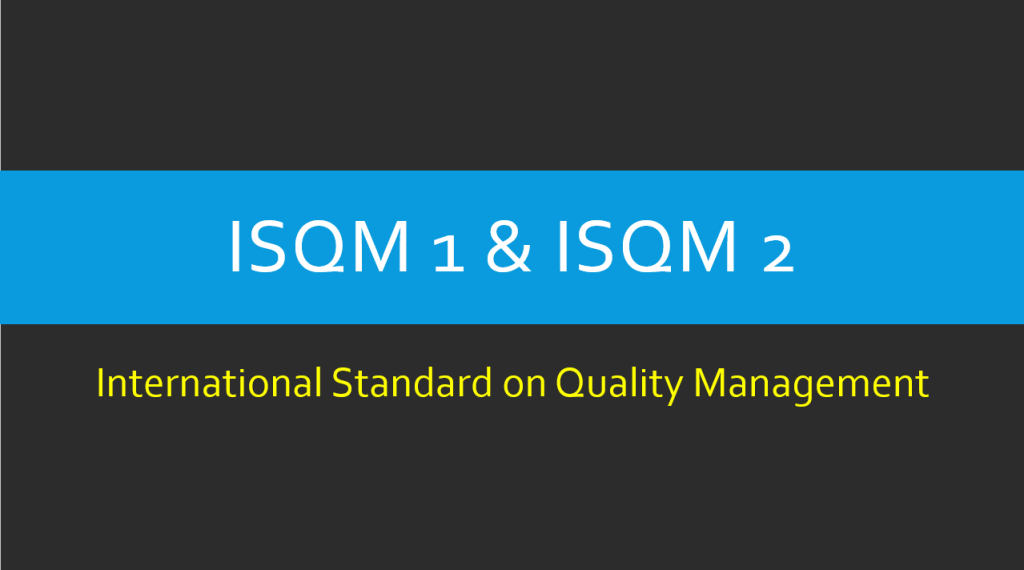
    ISQM 1 & ISQM 2

    ISQM 1 & ISQM 2 will be effective from 15 December 2022.

    20
  • Double Tax Deduction for Expenditure in relation to Industry4WRD Vendor Development Program

    Double Tax Deduction for Expenditure in relation to Industry4WRD Vendor Development Program

    What Is the 4th Industrial Revolution (4IR)?

    What exactly is meant by the phrase “the Fourth Industrial Revolution,” and why should you be concerned about it?

    The convergence of the physical, digital, and biological worlds are referred to as the “Fourth Industrial Revolution,” and it is a term that has been used to describe this phenomenon.

    It is a combination of recent developments in Artificial Intelligence (AI), robots, the Internet of Things (IoT), machine to machine (M2M), genetic engineering, quantum computing, and other technology areas. It is the conglomerate force underlying many different products and services that are rapidly becoming essential to modernity.

    Think of GPS systems that suggest the quickest route to a destination, voice-activated virtual assistants such as Apple’s Siri, personalised Netflix recommendations, and Facebook’s ability to recognise your face and tag you in a photo taken by a friend.

    All of these technologies are examples of the advancements in artificial intelligence that are currently available.

    Income Tax (Deduction for Expenditure in relation to Industry4WRD Vendor Development Programme) Rules 2022

    It was suggested in Budget 2019 that anchor companies that develop local vendors will be granted a double deduction on expenses paid in the implementation of the Industry4WRD Vendor Development Programme.

    This is in support of the aims and goals that have been set forth by Industry4WRD.

    As a result of this,

    On 30 May 2022, the Minister, in the exercise of the powers conferred by paragraph 154(1)(b) read together with paragraph 33(1)(d) of the Income Tax Act 1967 [Act 53], gazetted the Income Tax (Deduction for Expenditure in relation to Industry4WRD Vendor Development Programme) Rules 2022 and is effective from YA 2019.
    [P.U (A) 172].

    Industry4WRD (Industry Forward) Vendor Development Programme

    The Industry4WRD (Industry Forward) Vendor Development Programme is a programme certified by the Ministry of International Trade and Industry (MITI) to be implemented by an anchor company in developing a vendor company as specified in the Guideline for The Implementation of Industry4WRD Vendor Development Programme issued or as revised by the ministry and approved by the Minister.

    According to the Rules, an anchor company is eligible for a double deduction for any qualified operating expenditures that it incurs, up to a maximum of MYR 1 million per year, for a period of three consecutive years of assessment.

    Double Tax Deduction The following types of Qualifying expenditures are eligible for a double deduction if a Qualified Anchor Company incurred them:

    1. Activities concerning Product Development, specifically product quality upgrading, product innovation, or research and development;
    2. Activities concerning Capability Upgrading, specifically certification programme, assessment programme, or business process re-engineering; or 
    3. Activities concerning Human Capital, specifically hard skill training, lean management system, financial management practice, or capacity upgrading.

    Capital Expenditures on the plant, machinery, fixtures, land, premises, buildings, structures, or works of a permanent nature, or on alterations, additions, or extensions thereof, or in the acquisition of any rights in or over any property, incurred by the anchor company, do not count as qualifying expenditures.

    Vendor Company

    means a company:-

    • which is incorporated or deemed to be registered under the Companies Act 2016;
    • which is resident in Malaysia;
    • which engages in manufacturing or manufacturing-related services sector; and
    • which fulfils other conditions as specified in the Guideline for The Implementation of Industry4WRD Vendor Development Programme issued or as revised by the ministry charged with the responsibility for international trade and industry and approved by the Minister.

    Qualified Anchor Company means Anchor Company which is :

    1. incorporated under the Companies Act 2016 [Act 777];
    2. resident in Malaysia;
    3. engages in manufacturing or manufacturing-related services sector;
    4. holds a business license issued by the relevant local authority and a manufacturing license issued by the Ministry of International Trade and Industry (MITI), if relevant;
    5. has been in operation for a period of at least 36 months;
    6. participates in the Industry4WRD Vendor Development Programme;
    7. fulfils other conditions as specified in the Guideline for The Implementation of Industry4WRD Vendor Development Programme.
    This incentive is eligible for memorandums of understanding executed between anchor companies and the MITI between January 1, 2019, and December 31, 2021.

    Download 107.3 Industry 4WRD

    第四次工业革命

    第四次工业革命 (4IR) 指的是从18世纪工业革命开始后进入的第四个阶段,它被描述成各种科技的融合,而融合的过程因使得物理、数位和生物等领域科技之间界线难分,故统称为 网宇实体系统。

    第四次工业革命,是以石墨烯、基因工程、虚拟现实、量子信息技术、可控核聚变、清洁能源以及生物技术为技术突破口的工业革命,5G并不算第四次工业革命。

    各种新兴科技的突破为其特征,如机器人学、人工智能、纳米科技、量子电脑、生物科技、物联网、工业物联网(IIoT)、分散式共识、5G、增材制造/3D打印 和全自动驾驶汽车。

    世界经济论坛的执行董事长克劳斯·施瓦布认为就数字化和人工智能对全球经济的影响来看,第四次工业革命和第二次机器时代息息相关,但他认为生物科技的进步在前者占有着更广泛的角色。

    这些科技扰乱了每一个国家几乎所有的产业,而这些改变的深度和广度则带来了整个生产、管理和治理系统的转型。

    22
  • Income Tax (Exemption) (No. 3) Order 2022: Venture Capital Management Company (VCMC)

    Income Tax (Exemption) (No. 3) Order 2022: Venture Capital Management Company (VCMC)

    1. Exemptions would be extended for a period of four years, with the qualifying investment period being extended to the end of December 2026, according to the Budget 2020 proposal.

    2. For the purposes of the legislation, on 15 April 2022, the Minister, in the exercise of the powers conferred by paragraph 127(3)(b) of the Income Tax Act 1967 [Act 53], gazetted in the Gazette the Income Tax (Exemption) (No. 3) Order 2022 [P.U. (A) 116].

    3. Join our Telegram – https://t.me/YourAuditor

    🌻🌻🌻🌻🌻🌻🌻🌻

    1. 根据2020年预算案的提议,该奖励措施将延长四年,合格的投资期将延长至2026年12月底。

    2. 因此,为了立法, 部长于2022年4月15日行使《 1967年所得税法令》[第53号法]第127(3)(b)赋予的权力,在宪报上颁布了《2022年所得税(豁免)(第3号)指令》[P.U. (A) 116]。

    3. 加入 Telegram 群 – https://t.me/YourAuditor

    🌼🌼🌼🌼🌼🌼🌼🌼🌼🌼

    13
  • 1: Tax Incentives for The East Coast Economic Region (ECER) – Tax Exemption

    1: Tax Incentives for The East Coast Economic Region (ECER) – Tax Exemption

    1. The East Coast Economic Region (ECER) was formed in 2007 with the launch of the ECER Master Plan by the Federal Government.

    2. The formation of ECER was intended to accelerate economic growth and ensure equitable distribution of wealth across the country, in line with national aspirations to become a high-income developed nation by 2020.

    3. As a result, the government has provided tax incentives for the ECER

    4. In recent weeks, the Malaysian government published Five pieces of subsidiary legislation to extend the deadline to apply for incentives in the ECER from the previous deadline of December 2020 to the new date of December 2022:-

    👉 Income Tax (Exemption) (No. 4) 2016 (Amendment) Order 2022 [P.U.(A) 88/2022]

    👉 Income Tax (Exemption) (No. 5) 2016 (Amendment) Order 2022 [P.U.(A) 89/2022]

    👉 Income Tax (Exemption) (No. 6) 2016 (Amendment) Order 2022 [P.U.(A) 90/2022]

    👉 Income Tax (Exemption) (No. 7) 2016 (Amendment) Order 2022 [P.U.(A) 91/2022]

    👉 Income Tax (Exemption) (No. 8) 2016 (Amendment) Order 2022 [P.U.(A) 92/2022]

    👉 To Download All – https://t.me/YourAuditor/2928

    5. The Income Tax (Exemption) (No. 4) Order 2016 (‘P.U.(A) 157/2016’) exempts a qualifying person from income tax for five consecutive years on statutory income obtained from a qualifying activity that is equivalent to 100% of the qualifying capital expenditure incurred by the qualifying person.

    6. Join our Telegram – https://t.me/YourAuditor

    🌻🌻🌻🌻🌻🌻🌻🌻

    1. 东海岸经济区(ECER)于2007年随着联邦政府推出东海岸经济区总体规划而成立。 2. 组建东海岸经济区的目的是为了加速经济增长,确保全国财富的公平分配,以符合国家在2020年成为高收入发达国家的愿望。

    3. 因此,政府为东海岸经济区提供了税收激励措施

    4. 几周前,马来西亚政府在宪报颁布了5项附属立法,将申请东海岸经济区 (ECER) 税收优惠措施的截止日期从之前的 2020 年 12 月延长至2022 年 12 月:-

    👉 2016年所得税(豁免)(第4号) 2022年(修正)指令 [P.U.(A)88/2022]

    👉 2016年所得税(豁免)(第5号) 2022年(修正)指令 [P.U.(A)89/2022]

    👉 2016年所得税(豁免)(第6号) 2022年(修正)指令 [P.U.(A)90/2022]

    👉 2016年所得税(豁免)(第7号) 2022年(修正)指令 [P.U.(A)91/2022] 👉 2016年所得税(豁免)(第8号) 2022年(修正)指令 [P.U.(A)92/2022]

    👉 下载 – https://t.me/YourAuditor/2928

    5. 2016年所得税(豁免)(第4号) 指令 (“P.U.(A)157/2016“) 规定,符合条件的人士从符合条件的活动中获得的法定收入,相当于合格的资本支出的 100%,可连续5年免缴所得税。

    6. 加入 Telegram 群 – https://t.me/YourAuditor

    🌼🌼🌼🌼🌼🌼🌼🌼🌼🌼

    11
  • Income Tax (Deduction for Invt. in a Project of Commercialisation of R&D Findings) Rules 2022

    Income Tax (Deduction for Invt. in a Project of Commercialisation of R&D Findings) Rules 2022

    1. On 6 January 2022, the Minister, in the exercise of the powers conferred by paragraph 154(1)(b) read together with paragraph 33(1)(d) of the Income Tax Act 1967 [Act 53], gazetted the Income Tax (Deduction for Investment in a Project of Commercialisation of Research and Development Findings) Rules 2022 [P.U. (A) 3]

    2. These Rules are deemed to have come into operation on 7 November 2020.

    3. Join our Telegram 👉 https://t.me/YourAuditor/2535

    🌻🌻🌻🌻🌻🌻🌻🌻🌻🌻

    1. 2022 年 1 月 6 日,部长行使 1967年所得税法令 [法案53] 第154(1)(b) 段与第33(1)(d)段一并阅读所赋予的权力,在宪报上颁布了 2022年所得税(研究与开发成果商业化项目投资扣除) 细则 [P.U. (A) 3]。

    2. 这项细则视为于2020年11月7日开始实施。

    3. 加入我们的 Telegram 群 👉 https://t.me/YourAuditor/2535

    🌼🌼🌼🌼🌼🌼🌼🌼🌼🌼

    11
  • Income Tax (Exemption) (No. 13) 2013 (Amendment) Order 2021

    Income Tax (Exemption) (No. 13) 2013 (Amendment) Order 2021

    1. On 9 December 2021, the Minister, in the exercise of the powers conferred by paragraph 127(3)(b) of the Income Tax Act 1967 [Act 53], gazetted the Income Tax (Exemption) (No. 13) 2013 (Amendment) Order 2021 [P.U. (A) 448].

    2. This Order has effect from the year of assessment 2021.

    3. Join our Telegram: http://bit.ly/YourAuditor

    🌻🌻🌻🌻🌻🌻🌻🌻🌻🌻🌻

    1. 2021 年 12 月 9 日,部长行使1967 年所得税法令[第 53 号法案] 第 127(3)(b) 段赋予的权力,在宪报颁布了2021年所得税 (豁免)(第 13 号) 2013年(修订) 指令 [PU (A) 448]。

    2. 该命令于 2021 课税年度起生效。

    3. 加入我们的 Telegram:http://bit.ly/YourAuditor

    🌼🌼🌼🌼🌼🌼🌼🌼🌼🌼

    9
  • Income Tax (Deduction for Expenditure on Provision of Employees’ Accommodation) Rules 2021

    Income Tax (Deduction for Expenditure on Provision of Employees’ Accommodation) Rules 2021

    1. Under these Rules, to ascertain the adjusted income of a company from its business in a basis period for a year of assessment, a Double Deduction of up to fifty thousand ringgit (RM50,000) shall be allowed for the expenses incurred by the company on rental of a premise for employees’ accommodation within the period from 1 January 2021 until 31 December 2022

    2. Join our Telegram: http://bit.ly/YourAuditor

    🌻🌻🌻🌻🌻🌻🌻🌻🌻🌻🌻

    1. 根据这项规则,在鉴定公司在某个课税年度 [Year of Assessment] 的基准期内的调整后业务收入 [Adjusted Income] 时,公司在2021年1月1日至2022年12月31日期间租用的员工宿舍享有双重扣税的资格。

    2. 加入我们的 Telegram:http://bit.ly/YourAuditor

    🌼🌼🌼🌼🌼🌼🌼🌼🌼🌼

    9
  • Income Tax (Exemption) (No. 12)  Order 2021: Arts or Cultural Activities, Sports, etc.

    Income Tax (Exemption) (No. 12) Order 2021: Arts or Cultural Activities, Sports, etc.

    1. On 27 December 2021, the Minister, in the exercise of the powers conferred by paragraph 127(3)(b) of the Income Tax Act 1967 [Act 53], gazetted the Income Tax (Exemption) (No. 12) Order 2021 [P.U. (A) 478]

    2. This Order has effect from the year of assessment 2020 until the year of assessment 2025.

    3. The Minister exempts from payment of income tax any promoter for any arts or cultural activities, sports, or recreational competitions of international standard from payment of income tax on fifty percent of the statutory income derived from the organisation of such activities.

    4. Join our Telegram: http://bit.ly/YourAuditor

    🌻🌻🌻🌻🌻🌻🌻🌻🌻🌻

    1. 2021 年 12 月 27 日,部长行使 1967年所得税法令 [法案53] 第 127(3)(b) 段所赋予的权力,在宪报上颁布了 2021年所得税(豁免)(第12号) 指令 [P.U. (A) 478]。

    2. 此指命令从2020年的评估年度 [year of assessment] 开始生效,直到2025年的评估年度。

    3. 部长对任何国际标准的艺术或文化活动、体育或娱乐比赛的推广者对组织此类活动所得的50%法定收入 [Statutory Income] 免征所得税。

    4. 加入我们的 Telegram: http://bit.ly/YourAuditor

    🌼🌼🌼🌼🌼🌼🌼🌼🌼🌼

    9