
Day: September 11, 2025

  • Malaysia’s Self-Assessment Revolution

    Malaysia’s Self-Assessment Revolution

    The Government of Malaysia has expanded the application of the Self-Assessment System (SAS) to include Real Property Gains Tax (RPGT) and Stamp Duty, shifting the responsibility of computing tax liabilities from the Inland Revenue Board (IRB) to taxpayers and duty payers.

    This transition requires taxpayers and duty payers to declare the appropriate amounts in accordance with the Real Property Gains Tax Act 1976 and the Stamp Act 1949, respectively.

    The IRB will now focus on conducting audits to ensure compliance.

    📍 Real Property Gains Tax (RPGT)

    Introduction of SAS for RPGT

    The SAS for RPGT was implemented starting January 1, 2025, following the gazette of the Finance Act 2024 and the Measures for the Collection, Administration and Enforcement of Tax Bill 2024 on December 31, 2024.

    Key details include:

    👉 Filing RPGT returns: Within sixty (60) days from the date of disposal.

    👉 Paying RPGT: Within ninety (90) days from the date of disposal.

    👉 Date of disposal: Based on the date of agreement, or, if there is no agreement, the date of completion of the disposal.

    👉 Disposal price: The amount or value of the consideration in money or money’s worth for the disposal of the chargeable asset.

    👉 RPGT rates: Range from 0% to 30%, depending on the type of taxpayer and the holding period.

    ⚠️ RPGT Audit Framework

    The RPGT Audit Framework was published on January 1, 2025, to encourage voluntary compliance, provide awareness, and penalise errant taxpayers.

    ✅ Audit period: Covers the preceding three (3) years of assessment (YAs).

    If issues are discovered, it may extend up to five (5) preceding YAs, with no time limit for cases of fraud or willful default.

    ✅ Audit selection criteria: Based on risk assessment, information from third parties, specific issues for certain disposers, location-based selection, or other methods the IRB deems fit.

    ✅ Audit process and timeframe:

    🔎 Initial Action: IRB issues an information request letter (via email or post) requiring documents within fourteen (14) days.

    If no documents are needed, a Notice of Assessment with tax adjustments is issued directly.

    🔎 Document Review: RPGT Audit Officers review all documents related to asset disposal, including expenses and incidental costs, and may review other documents if necessary.

    Officers have full access to records and can make copies; original document seizures require a list and acknowledgment.

    🔎 Conclusion of Audit: Taxpayers may be summoned to discuss findings.

    An audit findings letter is issued with reasons for issues raised.

    Taxpayers have eighteen (18) days to appeal with supporting documents. Failure to appeal implies agreement.

    Finally, an audit resolution letter, along with a Notice of Assessment, Notice of Additional Assessment, or Certificate of Non-Chargeability, is issued.

    If no adjustments are made, a letter of conclusion with no findings is issued.

    🔎 Audit Timeline: Must be completed within ninety (90) days from the start of the audit or the date of the information request letter.

    ✅ Generally requested documents: Include stamped Sale and Purchase Agreements (SPAs), Form 14A, Memorandum of Transfer (MOT), valuation reports, supporting documents for discounts/rebates, expenditure documents, Certificate of Non-Chargeability (CKHT 5 or 5A), Power of Attorney, and probate/administration letters for estate disposals.

    Additional documents like identity cards, audited financial statements, and bank statements may be requested.

    ✅ Voluntary disclosure: Allowed in writing (letter or electronic medium) anytime after the due date for RPGT returns, provided the IRB has not initiated an audit.

    This is only available to taxpayers who have already submitted RPGT returns.

    ✅ Penalties (Section 30(2) of RPGTA): 45% for audited cases; 10% for voluntary disclosure within six months from the due date; 20% for voluntary disclosure after six months.

    ✅ Appeal process: Taxpayers dissatisfied with an assessment can appeal to the Special Commissioners of Income Tax by submitting Form Q within thirty (30) days of receipt of the notice.

    📍 Stamp Duty

    Introduction of SAS for Stamp Duty

    The SAS for stamp duty will be implemented in phases, starting from January 1, 2026, following the gazette of the Finance Act 2024 and Measures for the Collection, Administration and Enforcement of Tax Bill 2024.

    The legal framework for this implementation is primarily set out in Part IV of the Tax Measures Bill.

    👉 Phase 1 (From January 1, 2026): Covers instruments or agreements related to rental or lease, general agreement stamping, and securities.

    👉 Phase 2 (From January 1, 2027): Covers instruments of transfer of property ownership.

    👉 Phase 3 (From January 1, 2028): Covers all other instruments or agreements not included in Phase 1 and 2.

    Key details of SAS for stamp duty include:

    📣 Filing stamp duty returns: Electronically, with the executed instrument, specifying its description, chargeable duty, and other particulars required by LHDN.

    💁‍♀️ If executed in Malaysia: Within thirty (30) days from the date of execution.

    💁‍♀️ If executed outside Malaysia: Within thirty (30) days after it has been first received in Malaysia. “Received in Malaysia” includes electronic transmission, with the date verified by a copy or print-out of the transmission.

    📣 Paying stamp duty:

    💁‍♀️ If executed in Malaysia: Within thirty (30) days from the date of execution.

    💁‍♀️ If executed outside Malaysia: Within thirty (30) days from the date it is first brought into Malaysia.

    👉 Liability for stamp duty: Depends on the instrument type as specified in the Third Schedule of the Stamp Act 1949.

    Otherwise, it is generally the person who prepares or signs the document.

    👉 Types of stamp duty: Fixed Duty (chargeable regardless of consideration) and Ad Valorem Duty (chargeable based on consideration or market value).

    Upon electronic submission of a return, the Collector is deemed to have made an assessment based on the provided information, and the duty becomes due and payable on the day of assessment.

    However, the Collector retains the discretion to conduct an independent assessment (Adjudication Route) and charge the correct amount if insufficient duty was declared.

    The Collector can request an abstract, affidavit, or other evidence for this purpose.

    ⚠️ Stamp Duty Audit Framework

    The Stamp Duty Audit Framework was published on January 1, 2025.

    Types of stamp duty audit:

    🔎 General review: A review of instruments and documents submitted during stamping application, with interviews if needed.

    🔎 Comprehensive review: A review of all instruments and agreements executed by the duty payer, potentially at their premises.

    👉 Audit period: Covers the preceding three (3) calendar years, with no time limit for cases of fraud, duty evasion, or willful default.

    👉 Audit selection criteria: Based on risk assessment, specific industries, specific issues for certain duty payers, and information from third parties.

    👉 Audit process and timeframe:

    🔎 Initial Action: An Audit Notification Letter (general review) or Audit Visit Letter (comprehensive review) is issued. Duty payers must furnish requested documents within fourteen (14) days.

    🔎 Document Review: Audit Officers have full access to stamping records and other relevant documents, with powers to make copies.

    Seizing original documents requires a list and acknowledgment.

    🔎 Conclusion of Audit: Duty payers may be summoned to discuss findings.

    An audit findings letter is issued, allowing fourteen (14) days for appeal. Failure to appeal implies agreement.

    An audit resolution letter, along with a Notice of Confirmation of Assessment or Notice of Amended Assessment, is then issued.

    🔎 Audit Timeline: Seven (7) days for general review; sixty (60) days for comprehensive review.

    👉 Voluntary disclosure: Allowed in writing anytime after three (3) months from the due date for stamping, provided an audit has not been initiated.

    This is only for duty payers who have already submitted the instrument via the STAMPS portal.

    👉 Penalties for late stamping (Section 47A):

    * Effective from January 1, 2025:

    a) Within 3 months after the deadline: RM50 or 10% of the deficient duty, whichever is greater.

    b) After 3 months from the deadline: RM100 or 20% of the deficient duty, whichever is greater.

    * The Collector may reduce or remit such penalties [195, 47A(2), 519].

    👉 Appeal process: Dissatisfied duty payers can object to the Collector of Stamp Duty within thirty (30) days for a review.

    If still dissatisfied, an appeal can be made to the High Court within twenty-one (21) days of the Collector’s written decision.

    🧰 Key Concepts and General Amendments for Stamp Duty

    ⁉️ Definition of “Instrument” and “Writing”: The Stamp Act 1949 defines “instrument” to include every written document, and “writing” or “written” to include any handwriting, typewriting, printing, electronic record or transmission which is in an electronically readable form.

    This amendment gives legal recognition to electronic instruments for stamp duty liability.

    ⁉️ Compulsory Stamping: With the introduction of the self-assessment regime from January 1, 2026, it becomes compulsory for instruments to be stamped.

    Previously, the law did not explicitly compel stamping for all instruments, but certain transactions required stamped documents for legal effect or use in court.

    ⁉️ Record Keeping: From January 1, 2026, every person liable to pay duty must keep the instrument and all relevant documents for seven years from the date the duty is paid, to ascertain that the proper amount of duty was paid.

    Failure to do so without reasonable excuse is an offense punishable by a fine up to RM10,000.

    ⁉️ Collector’s Powers: The Collector’s powers have been expanded to include requiring document production, inspecting all lands, buildings, and places, accessing books and documents (physical or electronic), taking possession of documents (if inspection is difficult, documents may be interfered with, or needed as evidence), and authorizing valuers.

    The Collector can also request translations of documents not in Malay (or English for East Malaysia) within a minimum of 30 days.

    Obstruction or non-compliance can lead to a fine up to RM10,000.

    ⁉️ Powers to Raise Assessments: The Collector has authority to raise assessments or additional assessments within five years from the date duty was paid if the original assessment was insufficient.

    Assessments can be raised without time limitation if duty was lost due to fraud, willful default, or negligence.

    ⁉️ Minimum Duty: A minimum stamp duty of RM10 will apply to all instruments, except for cheques and contract notes.

    ⁉️ Penalties for Fraud/Incorrect Returns: The fine for defrauding the government of any duty is increased from a fixed RM5,000 to between RM1,000 and RM20,000.

    Making an incorrect return or providing incorrect information can lead to a fine between RM1,000 and RM10,000, plus a special penalty equivalent to the underpaid duty.

    Failure to furnish a return without reasonable excuse can result in a fine up to RM10,000, or a penalty between RM200 and RM2,000 if no prosecution is brought.

    📣📣Latest Developments on Stamping of Employment Contracts

    The IRB (LHDN) has intensified enforcement of the Stamp Act 1949 regarding employment contracts since January 2025, conducting comprehensive audits.

    Employment contracts fall under Item 4 of the First Schedule of the Stamp Act 1949 as “agreement or memorandum of agreement made under hand only” and are subject to a fixed stamp duty of RM10 per contract.

    Exemptions: Only contracts for employees earning below RM300 per month are exempt from stamp duty. The Malaysian Employers Federation (MEF) has proposed raising this outdated exemption limit.

    ⏰ Timeline and Penalties:

    💁‍♂️ Before January 1, 2025: Employment contracts executed before this date are exempted from stamp duty obligations, and applicable penalties will be remitted.

    💁‍♂️ January 1, 2025, to December 31, 2025: Contracts finalized within this period are subject to stamp duty.

    However, a remission of late stamping penalties will be granted if they are stamped on or before December 31, 2025.

    Employers must submit an appeal for penalty waiver after receiving audit results and before making payment via the STAMPS portal.

    💁‍♂️ On or after January 1, 2026: Employment contracts finalized from this date onwards will be subject to stamp duty, and any delays in stamping will result in penalties being imposed.

    Responsibility: The employer is responsible for stamping and bearing the cost, as they are considered the party who first executes the contract.

    Stamping Process: Contracts must be stamped within 30 days of signing.

    Stamping can be done online through the LHDNM STAMPS portal (stamps.hasil.gov.my).

    Only one stamped copy is generally required for the employer.

    Validity and Enforceability: An unstamped employment contract remains legally valid and binding between parties.

    However, it cannot be admitted as evidence in court unless duly stamped. The Industrial Court, being a court of equity, has for now accepted unstamped employment agreements.

    The shift to SAS for RPGT and Stamp Duty signifies a higher level of responsibility for taxpayers and consultants, requiring continuous updates on laws and regulations.

    The IRB’s audits serve to educate and ensure compliance in this evolving tax landscape.

    马来西亚政府已将自我评估系统(SAS)的适用范围扩展至不动产利得税(RPGT)和印花税,将计算税负的责任从马来西亚内陆税收局(IRB)转移至纳税人和税款缴纳人。

    此项转变要求纳税人及税款缴纳人分别依据《1976年不动产利得税法令》和《1949年印花税法》申报相应税额。

    内陆税务局现将重点转向开展审计以确保合规。

    📍不动产利得税(RPGT)

    RPGT在线申报系统启用

    随着《2024年财政法案》及《2024年税收征收、管理与执行措施法案》于2024年12月31日公告生效,RPGT在线申报系统自2025年1月1日起正式实施。

    核心条款包括:

    👉 RPGT申报:须于资产处置后六十(60)日内完成

    👉 缴纳RPGT:处置之日起九十(90)日内。

    👉 处置日期:以协议日期为准;若无协议,则以处置完成日为准。

    👉 处置价格:处置应税资产所获货币或货币价值对价的金额或价值。

    👉 资本利得税率:根据纳税人类别及持有期限,税率范围为0%至30%。

    ⚠️ 资本利得税审计框架

    该框架于2025年1月1日发布,旨在鼓励自愿合规、提升纳税意识并惩处违规行为。

    ✅ 审计周期:涵盖前三个(3)课税年度(YAs)。

    若发现问题,可追溯至前五(5)个课税年度,欺诈或故意违约案件则无追溯期限。

    ✅ 审计选定标准:基于风险评估、第三方信息、特定处置人问题、地域选定或其他税务局认为合适的方法。

    ✅ 审计流程与时间框架:

    🔎 初始行动:税务局通过电子邮件或邮寄发出信息请求函,要求在十四(14)日内提交文件。

    若无需文件,则直接发出含税款调整的评估通知书。

    🔎 文件审查:资本利得税审计专员将审查所有资产处置相关文件(含费用及附带成本),必要时可审查其他文件。

    官员可全权查阅记录并复制文件;扣押原始文件需提供清单及确认书。

    🔎 审计结论:纳税人可能被传唤讨论审计结果。

    审计结果函将载明问题缘由。

    纳税人须在十八(18)日内提交佐证材料提出申诉。未申诉视为同意。

    最终将签发审计决议函,同时附上评估通知书、追加评估通知书或免税证明书。

    若无调整事项,则签发无发现函。

    🔎 审计时限:须在审计启动或信息要求函发出之日起九十(90)日内完成。

    ✅ 常规要求文件:含盖章买卖协议(SPAs)、表格14A、转让备忘录(MOT)、估值报告、折扣/回扣证明文件、支出凭证、不动产利得税证明书(CKHT 5或5A)、授权书及遗产处置的遗嘱认证/遗产管理函。

    可能额外要求提供身份证件、经审计的财务报表及银行对账单等文件。

    ✅ 自愿披露:在房地产收益税申报截止日后任何时间均可书面(信函或电子媒介)提交,前提是税务局尚未启动审计程序。

    此项仅适用于已提交房地产收益税申报的纳税人。

    ✅ 罚则(RPGTA第30(2)条):经审计案件按45%计罚;申报截止日起六个月内自愿披露按10%计罚;逾期六个月后自愿披露按20%计罚。

    ✅ 上诉程序:纳税人若对评估结果不满,可在收到通知书后三十(30)日内提交Q表向所得税特别专员提出上诉。

    📍 印花税

    印花税电子化服务(SAS)实施说明

    印花税电子化服务将分阶段实施,自2026年1月1日起生效,具体以《2024年财政法案》及《2024年税收征收管理与执行法案》公告为准。

    该实施的法律框架主要载于《税收管理法案》第四部分。

    👉 第一阶段(2026年1月1日起):涵盖租赁协议、常规协议印花及证券类文书。

    👉 第二阶段(2027年1月1日起):涵盖财产所有权转让文书。

    👉 第三阶段(2028年1月1日起):涵盖第一、二阶段未包含的所有其他文书或协议。

    印花税电子申报系统(SAS)关键细节包括:

    📣 提交印花税申报:须通过电子方式提交已签署文书,并注明文书描述、应缴税额及内陆税收局(LHDN)要求的其他细节。

    💁‍♀️ 马来西亚境内签署:自签署日起三十(30)日内。

    💁‍♀️ 马来西亚境外签署:文件首次抵达马来西亚后三十(30)日内。“抵达马来西亚”包括电子传输,以传输副本或打印件验证日期。

    📣 印花税缴纳时限:

    💁‍♀️ 马来西亚境内签署:自签署之日起三十(30)日内。

    💁‍♀️ 马来西亚境外签署:自文件首次带入马来西亚之日起三十(30)日内。

    👉 印花税责任主体:依据《1949年印花税法令》附表三规定的文书类型确定。

    若无特别规定,通常由文件起草人或签署人承担。

    👉 印花税类型:固定税额(无论交易金额均需缴纳)与从价税(按交易金额或市场价值计征)。

    电子申报后,税务专员将依据所提供信息进行评估,印花税于评估当日即产生应缴义务。

    但若申报税额不足,税务专员保留独立评估(裁定途径)并追缴正确税额的裁量权。

    为此目的,税务专员可要求提供摘要、宣誓书或其他证据。

    ⚠️ 印花税审计框架

    印花税审计框架于2025年1月1日发布。

    印花税审计类型:

    🔎 常规审查:核查印花申请时提交的文书及文件,必要时进行访谈。

    🔎 全面审查:核查纳税人签署的所有文书及协议,可能在纳税人场所进行。

    👉 审计周期:涵盖前三个(3)日历年度,涉及欺诈、逃税或故意违约案件则无时间限制。

    👉 审计选取标准:基于风险评估、特定行业、特定纳税人问题及第三方信息。

    👉 审计流程与时限:

    🔎 初始行动:发出审计通知函(常规审查)或审计访问函(全面审查)。纳税人须在十四(14)日内提交所需文件。

    🔎 文件审查:审计官员有权查阅所有印花记录及其他相关文件,并可复制文件。

    扣押原始文件需出具清单并签署确认。

    🔎 审计结案:纳税人可能被传唤讨论审查结果。

    随后发出审计结果函,赋予十四(14)天申诉期。未申诉视为同意。

    继而发出审计决议函,并附评估确认通知书或修正评估通知书。

    🔎 审计时限:常规审查7天;全面审查60天。

    👉 自愿披露:在印花税缴纳截止日起三个月后,且审计尚未启动时,可随时以书面形式申请。

    此条款仅适用于已通过STAMPS门户提交文书的纳税人。

    #看趋势看财税看CCS

    1
  • Tax Corporate Governance: Smart Strategy for Sustainable Business

    Tax Corporate Governance: Smart Strategy for Sustainable Business

    🧰 Tax Corporate Governance (TCG): Smart Strategies for Sustainable, Tax-Risk-Resilient Companies 🧰

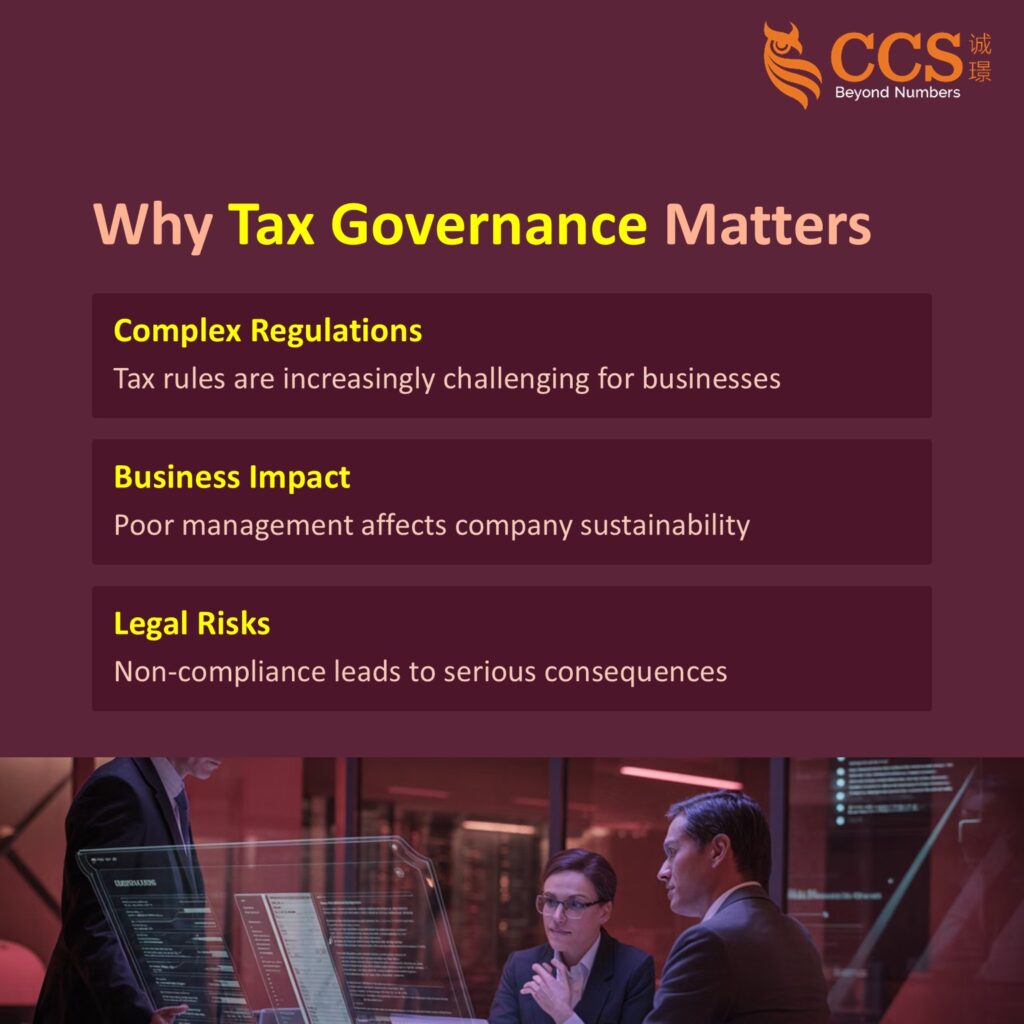
    In today’s complex business environment, taxation has become a pressing concern for many companies.

    Stricter regulations and heightened expectations mean that noncompliance can significantly jeopardize business continuity.

    To ensure transparency, competitiveness, and regulatory resilience, the concept of Tax Corporate Governance (TCG) has emerged as a strategic necessity.

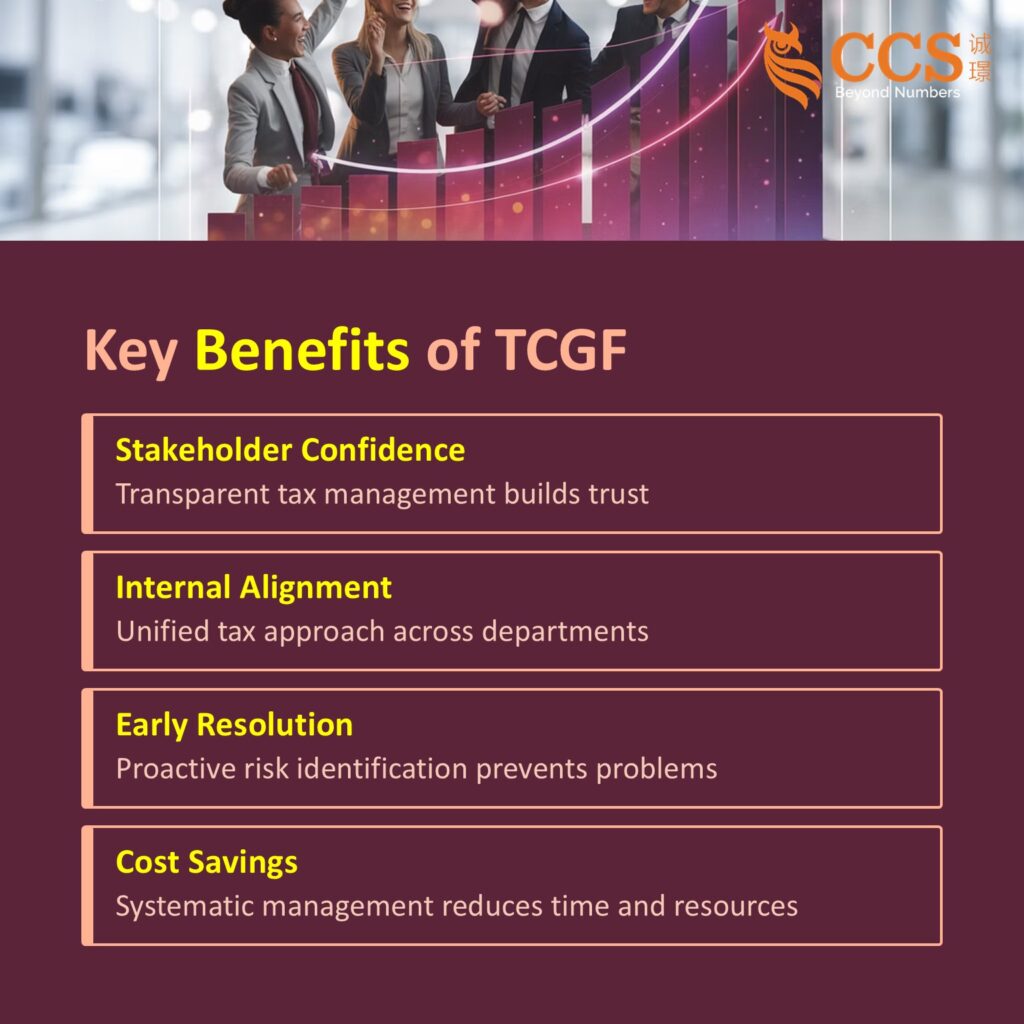
    This approach goes beyond mere compliance—it enhances corporate reputation and stakeholder confidence.

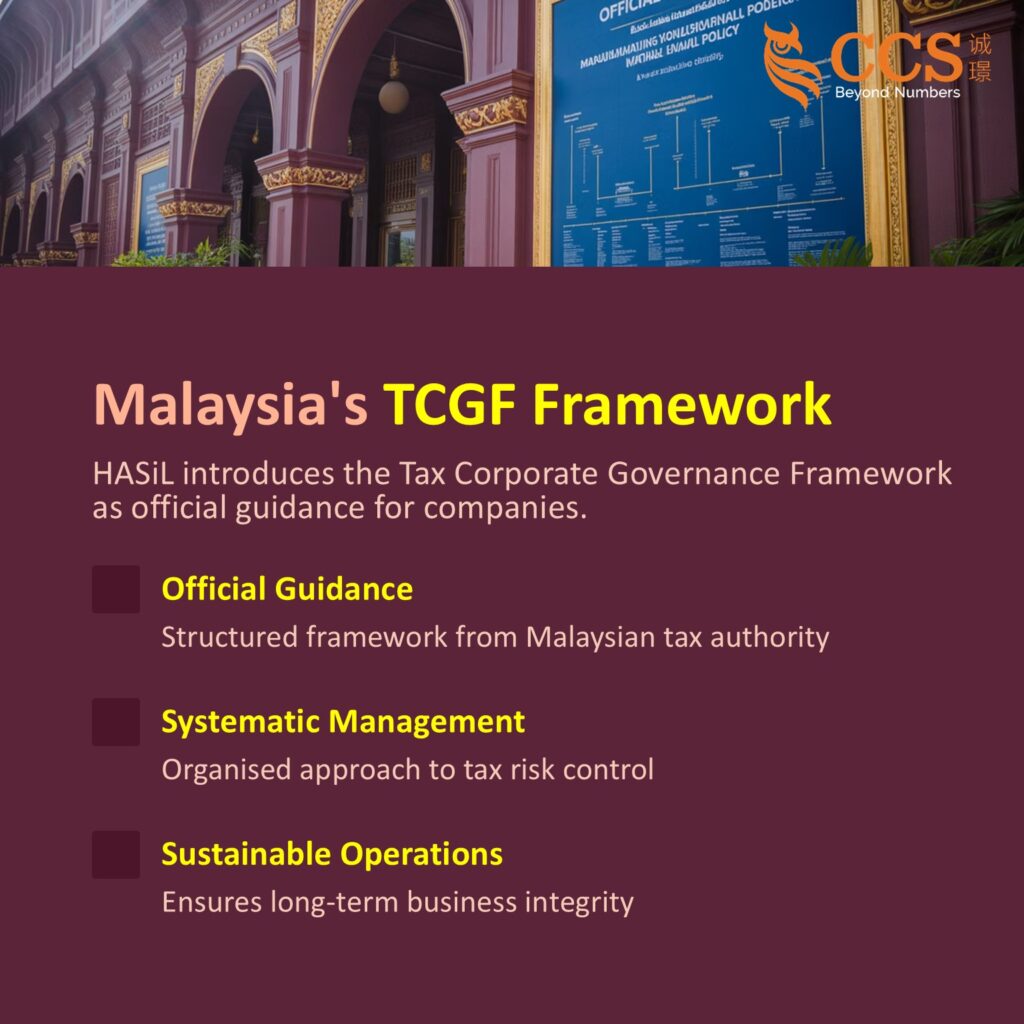
    The Inland Revenue Board of Malaysia (LHDN/HASiL) has formally introduced the Tax Corporate Governance Framework (TCGF) to guide organizations in managing tax-related risks in a structured, sustainable, and integrity-driven manner.

    🙋‍♂️ What Is Tax Corporate Governance?

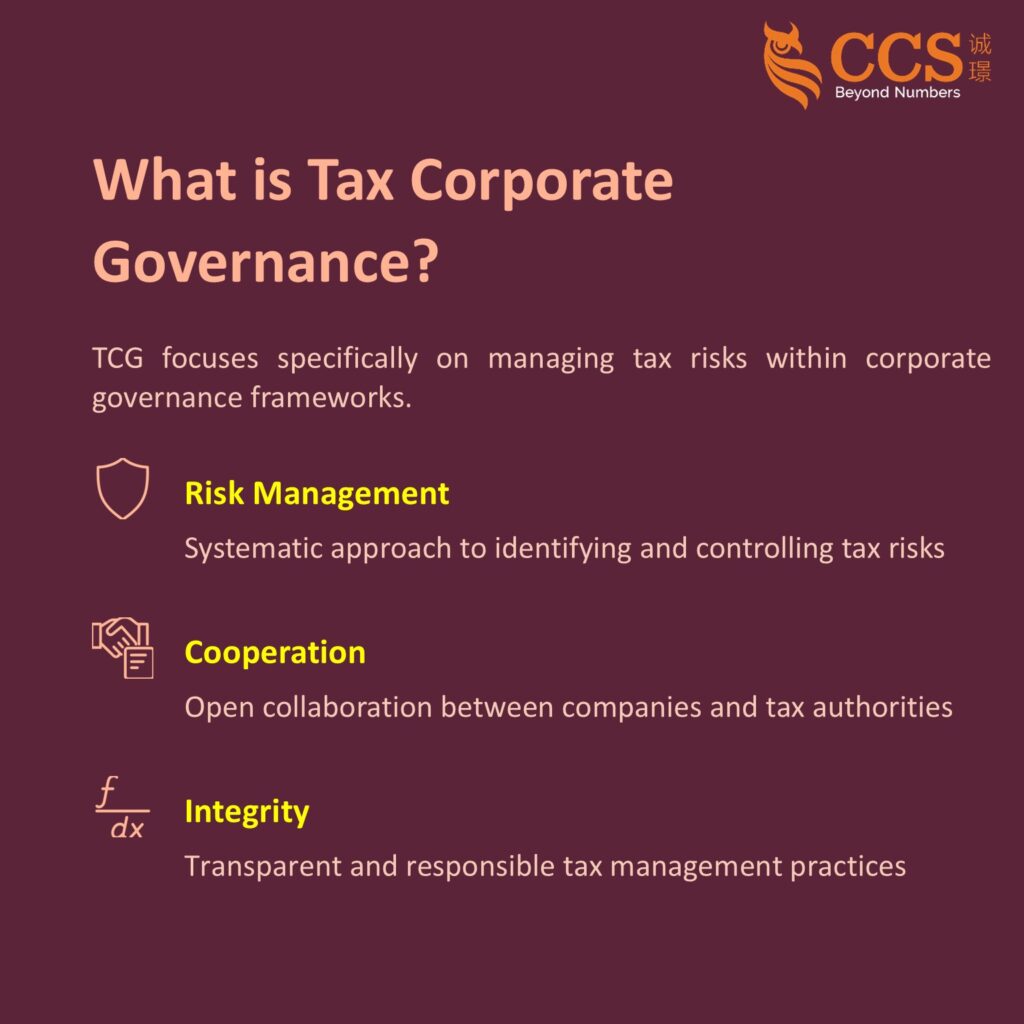
    At its core, TCG represents a subset of corporate governance focused specifically on tax risk management.

    The TCGF enables organizations to cultivate a cooperative, transparent relationship with tax authorities, ensuring that tax reporting and compliance are both reliable and trusted.

    ❤️ The Six Core Principles of TCGF

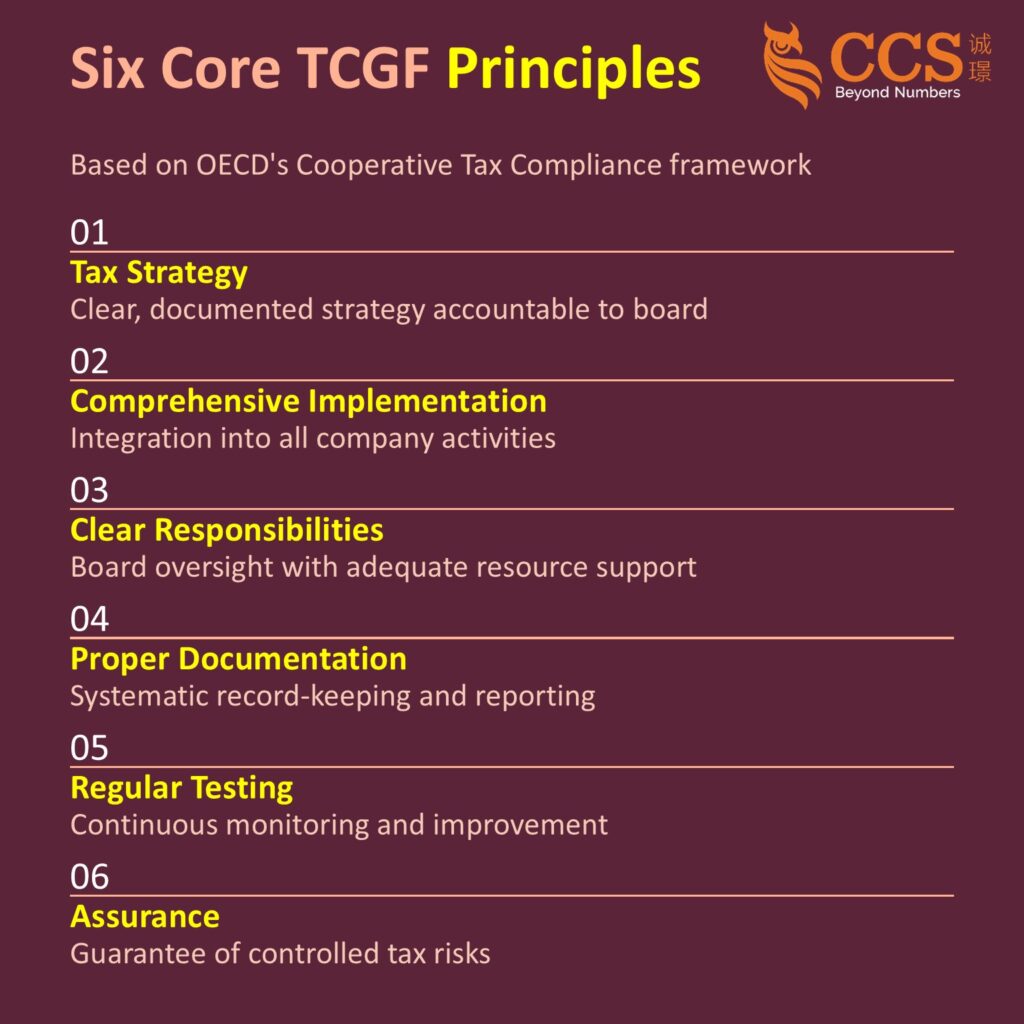
    Drawing inspiration from the OECD’s Cooperative Tax Compliance model, HASiL’s TCGF is underpinned by six key principles:

    1. Clear Tax Strategy

    Documented and board-level-approved tax strategy that aligns with organizational objectives.

    2. Enterprise-wide Implementation

    Tax governance should be embedded across all operations—not just advisory or isolated functions.

    3. Defined Responsibilities

    Clear roles from the Board to the tax department, with adequate resources assigned to ensure ownership and execution.

    4. Robust Documentation

    Tax governance processes must be well-documented and supported by effective reporting systems, periodically reviewed to remain relevant.

    5. Continuous Testing

    Policies and procedures should be continuously monitored, tested, and refined for effectiveness.

    6. Governance Assurance

    The framework must reassure stakeholders that tax risks are under control and that reporting is reliable.

    💰 The Value Proposition of TCGF

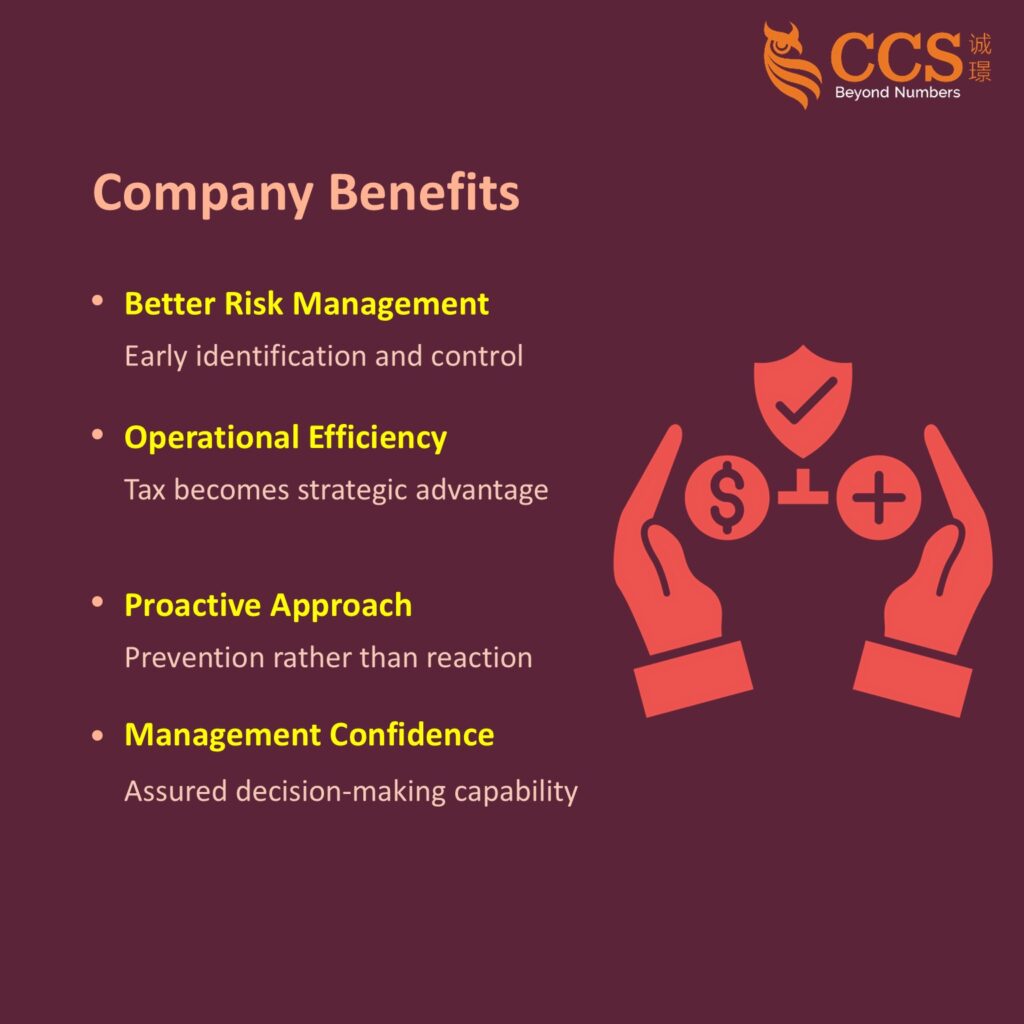
    Adopting TCGF delivers significant advantages—not just for individual organizations, but for the broader economy:

    ✅ Proactive Risk Management: Early identification and mitigation of tax risks.

    ✅ Operational Efficiency: Treating tax governance as an enabler, not a hindrance.

    ✅ Executive Confidence: Senior management makes informed decisions with tax risks effectively managed.

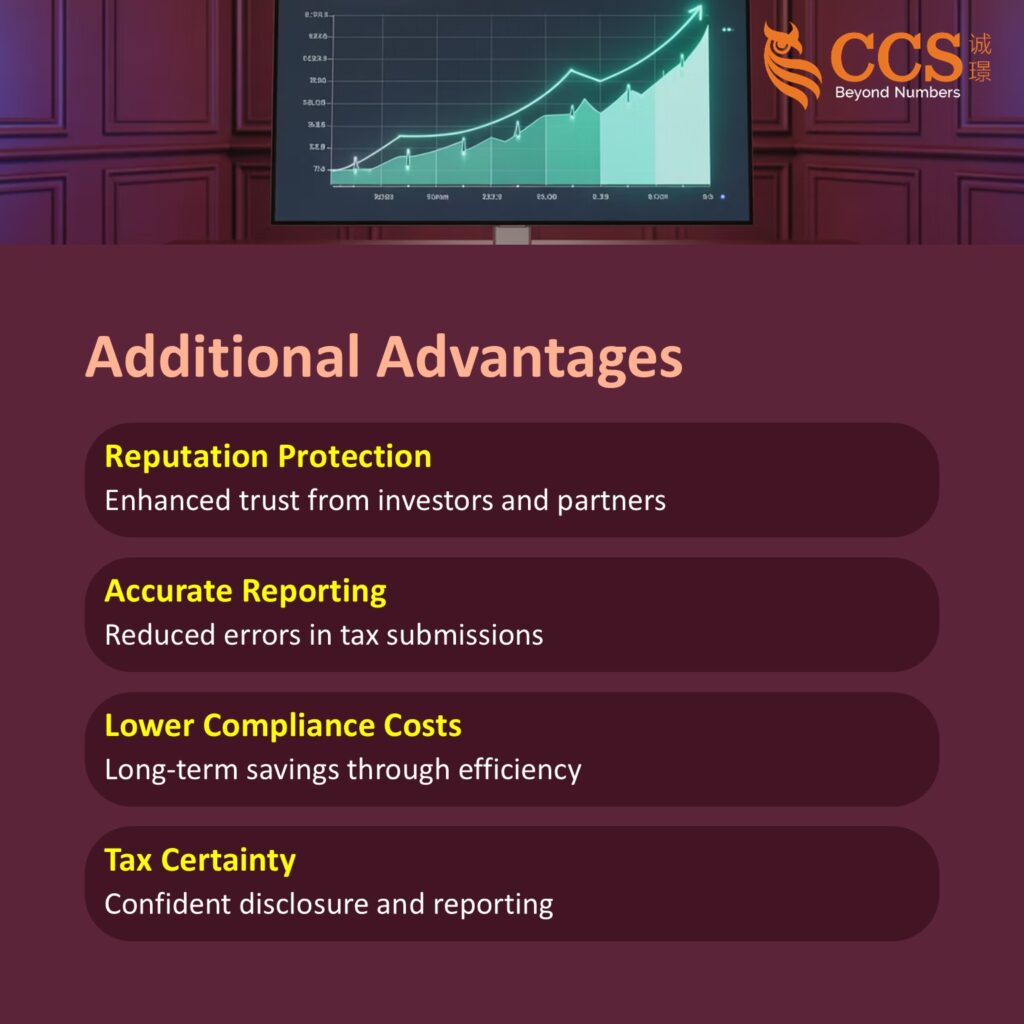
    ✅ Reputational Security: Transparent tax practices bolster investor and stakeholder trust.

    ✅ Integrity in Tax Reporting: Accurate and compliant disclosures reduce potential missteps.

    ✅ Lower Cost of Compliance: Streamlined procedures reduce resource burden.

    ✅ Assured Disclosure: Confident and consistent tax reporting.

    Collectively, TCGF transforms tax from a compliance burden into a strategic asset, enhancing competitiveness, sustainability, and public trust.

    📣 National and Global Impacts

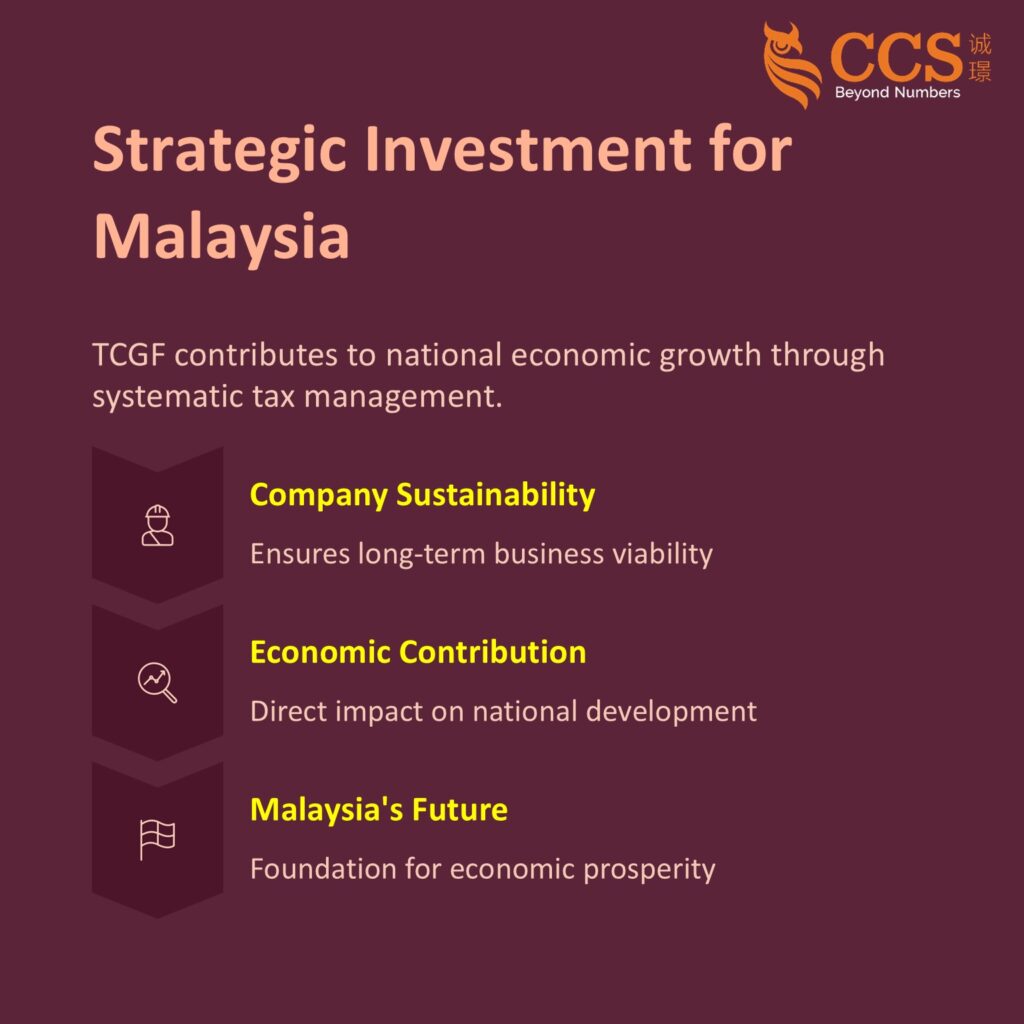
    TCGF isn’t merely a compliance checklist—it serves as a strategic investment.

    It ensures companies remain resilient, ethical, and relevant in an increasingly scrutinized corporate landscape.

    Proper implementation supports investor confidence, strengthens economic growth, and reinforces Malaysia’s corporate governance standards.

    ⏰ International Alignment and Updates

    Global Momentum: TCG reflects a broader trend toward improved tax transparency and cooperative compliance globally, aligned with OECD and other international standards.

    April 2025 Revised Guidelines: On 11 April 2025, LHDN issued updated versions of the TCGF, including detailed guidelines and FAQs, clarifying participation criteria, documentation requirements, and review protocols for self- and independent reporting.

    👨‍🏫 Final Thoughts

    The era of reactive tax compliance may be over.

    With TCGF, companies are encouraged to transition toward proactive, strategy-aligned tax governance.

    It not only supports internal resilience but also elevates corporate integrity and national economic reputation.

    Embracing TCGF is therefore both a defensive shield against tax risk and a pathway to sustainable corporate excellence.

    🧰 税务公司治理(TCG):打造可持续、抗税风险企业的智能策略 🧰

    在当今复杂的商业环境中,税务已成为众多企业的紧迫关切。

    更严格的法规与更高的期望意味着违规行为可能严重危及业务连续性。

    为确保透明度、竞争力及监管韧性,税务公司治理(TCG)理念已成为战略必需。

    该方法不仅限于合规要求,更能提升企业声誉与利益相关方信心。

    马来西亚内陆税收局(LHDN/HASiL)已正式推出税务公司治理框架(TCGF),旨在引导企业以系统化、可持续且诚信为本的方式管理税务相关风险。

    🙋‍♂️ 何谓税务公司治理?

    本质上,TCG是公司治理的子集,专注于税务风险管理。

    TCGF使企业能够与税务机关建立合作透明的关系,确保税务申报与合规性既可靠又可信。

    ❤️ TCGF六大核心原则

    借鉴经合组织(OECD)合作纳税遵从模式,马来西亚内陆税收局的TCGF建立在六项关键原则之上:

    1. 明确税务战略

    制定经董事会批准的书面税务战略,并与组织目标保持一致。

    2. 全企业实施

    税务治理应贯穿所有运营环节——而非仅限于咨询或孤立职能。

    3. 明确职责划分

    从董事会到税务部门的职责清晰界定,配备充足资源确保责任落实与执行到位。

    4. 完善文档体系

    税务治理流程须详实记录,依托高效报告系统支撑,并定期审视以保持时效性。

    5. 持续验证机制

    持续监控、测试并优化政策流程的有效性。

    6. 治理保障

    该框架必须让利益相关方确信税务风险可控且报告可靠。

    💰 TCGF的价值主张

    采用TCGF将带来显著优势——不仅惠及单个组织,更将造福整体经济:

    ✅ 主动风险管理:早期识别并缓解税务风险。

    ✅ 运营效能提升:将税务治理视为助力而非阻碍。

    ✅ 高管决策信心:通过有效管控税务风险,助力高层管理层做出明智决策。

    ✅ 声誉保障:透明的税务实践增强投资者与利益相关方信任。

    ✅ 税务报告诚信:准确合规的披露减少潜在失误。

    ✅ 降低合规成本:简化流程减轻资源负担。

    ✅ 确保披露质量:实现自信且一致的税务报告。

    总体而言,TCGF将税务从合规负担转化为战略资产,提升企业竞争力、可持续性及公众信任。

    📣 国家与全球影响

    TCGF不仅是合规清单,更是战略性投资。

    它确保企业在日益受审视的企业环境中保持韧性、道德与竞争力。

    正确实施可增强投资者信心,促进经济增长,并强化马来西亚公司治理标准。

    ⏰ 国际接轨与更新动态

    全球趋势:TCG契合经合组织等国际标准,反映全球提升税务透明度与协作合规的普遍趋势。

    2025年4月修订指南:2025年4月11日,马来西亚税务局发布TCGF更新版本,包含详细指南与常见问题解答,明确了自主申报与独立申报的参与标准、文件要求及审核流程。

    👨‍🏫 结语

    被动税务合规的时代或将终结。

    TCGF推动企业向主动型、战略导向的税务治理转型。

    这不仅增强内部韧性,更提升企业诚信度与国家经济声誉。

    拥抱TCGF既是抵御税务风险的防御盾牌,亦是通往可持续企业卓越的必经之路。

  • Malaysia’s Crypto Tax Framework

    Malaysia’s Crypto Tax Framework

    💰💰 Malaysia’s Crypto Tax Framework: What Every Investor and Business Must Know

    Introduction to Malaysia’s Crypto Tax Landscape

    Malaysia’s approach to cryptocurrency and digital assets has undergone significant evolution in recent years.

    The Inland Revenue Board of Malaysia (LHDN/IRBM) and the Securities Commission (SC) have both taken progressive steps to ensure clarity in taxation, compliance, and investor protection.

    As digital assets continue to gain traction in trading, investment, and business operations, understanding the tax treatment of cryptocurrencies in Malaysia has never been more important.

    🙋‍♂️ Is Cryptocurrency Legal in Malaysia?

    Cryptocurrency is not recognised as legal tender in Malaysia, but it is not illegal to own, trade, or invest in digital assets.

    Instead, crypto assets fall under the category of securities and digital tokens when issued or traded through regulated platforms licensed by the SC.

    This means that while you cannot use Bitcoin to pay for groceries, you can legally trade it through recognised exchanges.

    📣 Tax Treatment of Cryptocurrency in Malaysia

    👉 1. Income Tax on Crypto Transactions

    📍 Trading and Business Activity:

    Suppose an individual or business engages in frequent cryptocurrency trading, mining, or providing cryptocurrency-related services.

    In that case, profits are treated as business income and are subject to income tax (current corporate tax rate: 24%).

    📍 Occasional or Passive Holding:

    Gains from occasional trading may fall outside the income tax net, but IRBM applies the “badges of trade” test to determine whether the activity constitutes a business.

    👉 2. Capital Gains Tax (CGT)

    Malaysia historically did not impose CGT on financial assets.

    However, from 1 January 2024, Capital Gains Tax (CGT) applies to the disposal of unlisted shares in Malaysia.

    While crypto is not explicitly categorized under this rule, future reforms may extend CGT to certain classes of digital assets.

    👉 3. Withholding Tax on Cross-Border Crypto Services

    Payments made to non-residents for crypto-related services (such as blockchain consultancy, software licensing, or platform fees) may trigger withholding tax obligations under the Income Tax Act.

    👉 4. Sales and Service Tax (SST) Implications

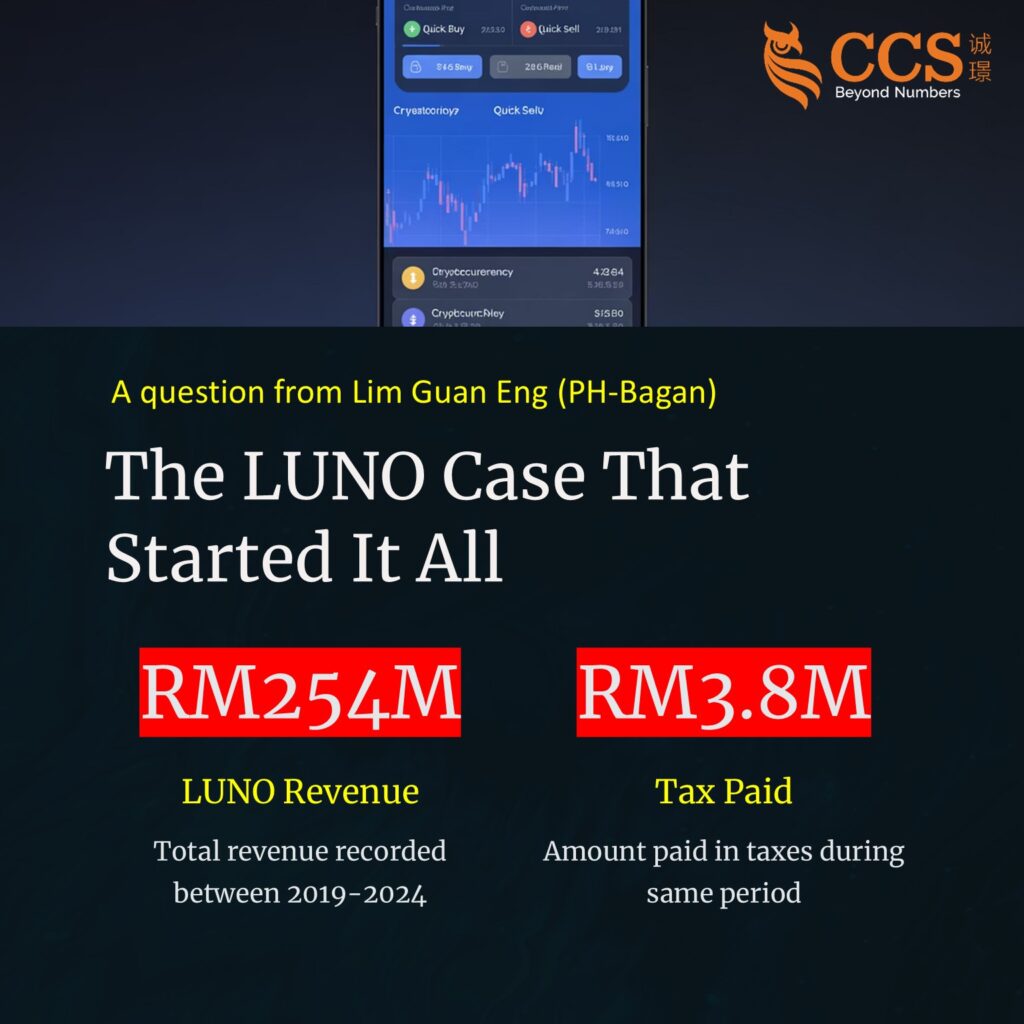
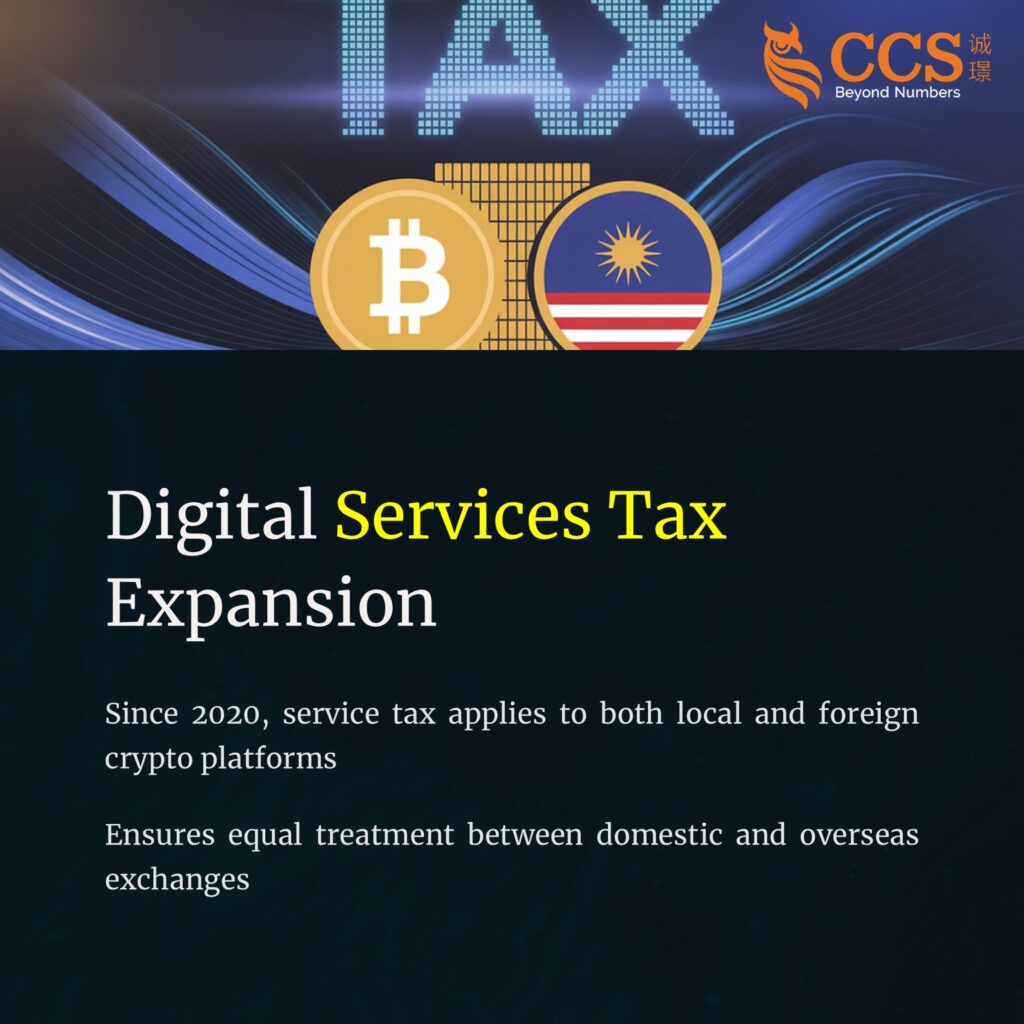
    Crypto exchanges and wallet providers offering services in Malaysia may fall under service tax (8%), especially where services qualify under Group G (digital services).

    🔎 Key Compliance Obligations for Crypto Investors

    1. Keep Accurate Records

    Investors must maintain detailed records of transactions, including acquisition cost, disposal value, date, and counterparties.

    2. Declare in Tax Returns

    Crypto-derived income must be declared in annual tax filings under “Other Income” or “Business Income”, depending on activity.

    3. Observe Anti-Money Laundering (AML) Rules

    Licensed exchanges are required to perform KYC/AML checks, and failure to report suspicious transactions could expose investors to penalties.

    ⚠️ Regulatory Bodies Governing Crypto in Malaysia

    Securities Commission Malaysia (SC) – Oversees Initial Exchange Offerings (IEOs), Digital Asset Exchanges (DAX), and custodians.

    Bank Negara Malaysia (BNM) – Regulates anti-money laundering aspects through the **Digital Currencies Policy Document**.

    Inland Revenue Board of Malaysia (IRBM) – Manages tax compliance for crypto-related income and gains.

    👨‍🏫👨‍🏫 Challenges in Crypto Tax Compliance

    1. Unclear Classification – Lack of specific tax legislation for digital assets leads to reliance on existing general tax principles.

    2. Valuation Issues – Determining fair market value at the time of transaction requires reliable exchange data.

    3. Cross-Border Complexity – Transactions with overseas platforms raise dual-taxation and reporting risks.

    💪 Best Practices for Crypto Investors and Businesses

    ✅ Use licensed exchanges recognized by the SC.

    ✅ Maintain comprehensive transaction logs for tax audit readiness.

    ✅ Seek professional advice on structuring crypto holdings to optimize tax exposure.

    ✅ Stay updated with IRBM guidelines and potential new legislation.

    ⏰🧰Conclusion

    Malaysia’s taxation of cryptocurrencies is an evolving field that blends elements of income tax, service tax, and international compliance.

    While there is no explicit “crypto tax act” yet, existing tax rules already cover most scenarios for investors and businesses.

    Those engaging in crypto-related activities must be proactive in reporting, record-keeping, and compliance to avoid penalties and to future-proof their digital asset strategy.

    In the fast-changing world of blockchain and digital finance, staying informed is the best investment.

    💰💰 马来西亚加密货币税收框架:每位投资者与企业必知要点

    马来西亚加密货币税收环境概述

    近年来,马来西亚对加密货币及数字资产的监管政策经历了重大演变。

    马来西亚内陆税收局(LHDN/IRBM)与证券委员会(SC)均采取了前瞻性措施,以确保税收政策、合规要求及投资者保护的明确性。

    随着数字资产在交易、投资及商业运营中持续升温,理解马来西亚加密货币的税务处理方式变得至关重要。

    🙋‍♂️ 加密货币在马来西亚是否合法?

    加密货币在马来西亚不被视为法定货币,但持有、交易或投资数字资产并不违法。

    当加密资产通过SC许可的受监管平台发行或交易时,其性质属于证券及数字代币范畴。

    这意味着虽然无法用比特币支付日常购物,但通过正规交易所进行交易完全合法。

    📣 马来西亚加密货币税务处理

    👉 1. 加密交易所得税

    📍 交易与商业活动:

    若个人或企业频繁从事加密货币交易、挖矿或提供相关服务,

    则相关利润将被视为商业收入,需缴纳所得税(现行企业税率:24%)。

    📍 偶发性或被动持有:

    偶发性交易所得可能不纳入所得税征管范围,但马来西亚税务局将采用“商业特征测试”判定该行为是否构成经营活动。

    👉 2. 资本利得税(CGT)

    马来西亚历来不对金融资产征收资本利得税。

    但自2024年1月1日起,处置马来西亚境内非上市股票将适用资本利得税(CGT)。

    尽管加密货币未被明确纳入该规则,未来改革可能将CGT扩展至特定类别的数字资产。

    👉 3. 跨境加密服务预扣税

    根据《所得税法令》,向非居民支付的加密相关服务款项(如区块链咨询、软件许可或平台费用)可能触发预扣税义务。

    👉 4. 销售与服务税(SST)影响

    在马来西亚提供服务的加密交易所及钱包供应商可能需缴纳服务税(8%),尤其当服务符合G组(数字服务)标准时。

    🔎 加密投资者关键合规义务

    1. 保存准确记录

    投资者须详细记录交易信息,包括购入成本、处置价值、日期及交易对手方。

    2. 纳税申报

    加密货币所得须在年度纳税申报中申报,具体归类为“其他收入”或“营业收入”,视业务性质而定。

    3. 遵守反洗钱(AML)规则

    持牌交易所必须执行KYC/AML核查,未报告可疑交易可能导致投资者面临处罚。

    ⚠️ 马来西亚加密货币监管机构

    马来西亚证券委员会(SC)——监管首次交易所发行(IEO)、数字资产交易所(DAX)及托管机构。

    马来西亚国家银行(BNM)——通过《数字货币政策文件》实施反洗钱监管。

    马来西亚内陆税收局(IRBM)——管理加密货币相关收入与收益的税务合规。

    👨‍🏫👨‍🏫 加密货币税务合规挑战

    1. 分类模糊——缺乏针对数字资产的专项税法,导致需依赖现有通用税务原则。

    2. 估值难题——交易时点公允价值的确定需依赖可靠的交易所数据。

    3. 跨境复杂性——与海外平台交易引发双重征税及申报风险。

    💪 加密投资者与企业的最佳实践

    ✅ 使用获SC认可的持牌交易所。

    ✅ 完整保存交易记录以备税务审计。

    ✅ 寻求专业建议优化加密资产持有结构以降低税务风险。

    ✅ 及时掌握IRBM指南及潜在新法规动态。

    ⏰🧰结论

    马来西亚加密货币征税体系正处于融合所得税、服务税及国际合规要素的演进阶段。

    尽管尚未出台明确的《加密货币税法令》,现行税法已涵盖投资者与企业的大多数操作场景。

    从事加密相关活动者必须主动履行申报、记录保存及合规义务,以规避处罚并确保数字资产策略的未来适应性。

    在区块链与数字金融快速发展的领域,保持信息敏锐度才是最明智的投资。

    #看趋势看财税看CCS

  • Pioneer Status Tax Incentives in Malaysia

    Pioneer Status Tax Incentives in Malaysia

    Malaysia offers Pioneer Status (PS) as a key tax incentive to attract both foreign and local investments, aiming to stimulate economic growth, industrial development, and technological advancement across various sectors.

    This incentive provides partial or total tax relief for a specified period, thereby enhancing after-tax returns and investment viability.

    Here’s a detailed report on Pioneer Status tax incentives in Malaysia:

    1. Legal and Institutional Framework

    Pioneer Status incentives are primarily governed by several key legislations in Malaysia:

    • Promotion of Investments Act 1986 (PIA 1986): This act provides the foundational definitions and mechanisms for Pioneer Status.
    • Income Tax Act 1967 (ITA 1967): This act contains provisions for general and sectoral allowances related to the incentive.
    • Customs Act 1967, Excise Act 1976, and Free Zones Act 1990: These acts grant authority for indirect incentives, such as customs and duty exemptions, for approved projects and zones.

    The Malaysian Investment Development Authority (MIDA) is the principal Malaysian Government agency responsible for promoting investments, coordinating industrial development, and selected services sectors in the country, including the administration of Pioneer Status applications.

    The Minister of International Trade and Industry (MITI) has the authority to grant pioneer status.

    The Inland Revenue Board of Malaysia (IRBM) oversees the implementation and compliance for all tax incentives and processes claims.

    2. Eligibility Criteria

    Pioneer Status is granted to companies that are incorporated in Malaysia and are engaged in promoted activities or the production of promoted products.

    Eligibility is highly sector and activity-specific, with criteria often including:

    • Level of value-added.
    • Technology used.
    • Employment of Malaysian workers and level of high-skilled workers.
    • Industrial linkages.
    • Promoted Activities/Products: These are listed on MIDA’s annually updated register, reflecting government economic priorities such as high value-added manufacturing, automation, digital technology, renewable energy, biotechnology, aerospace, and medical devices.

    A key criterion for enjoying tax incentives under the PIA 1986 is that a company must be ‘desirous’ of establishing or participating in a promoted activity or producing a promoted product and must not have started production.

    For manufacturing companies, “production” is defined as starting to produce marketable products (including trial production), and for service companies, it’s the date of the first invoice issued for services rendered.

    However, effective from July 3, 2012, Malaysian-owned manufacturing and services companies already in production may be considered if they commenced production within one year from the date of application to MIDA.

    3. Benefits and Tax Relief Period

    A company granted Pioneer Status generally enjoys a tax relief period of five years, commencing from its “Production Day”.

    The “Production Day” is defined as the day its production level reaches 30% of its capacity or the date of the first invoice, whichever is applicable.

    Standard Pioneer Status:

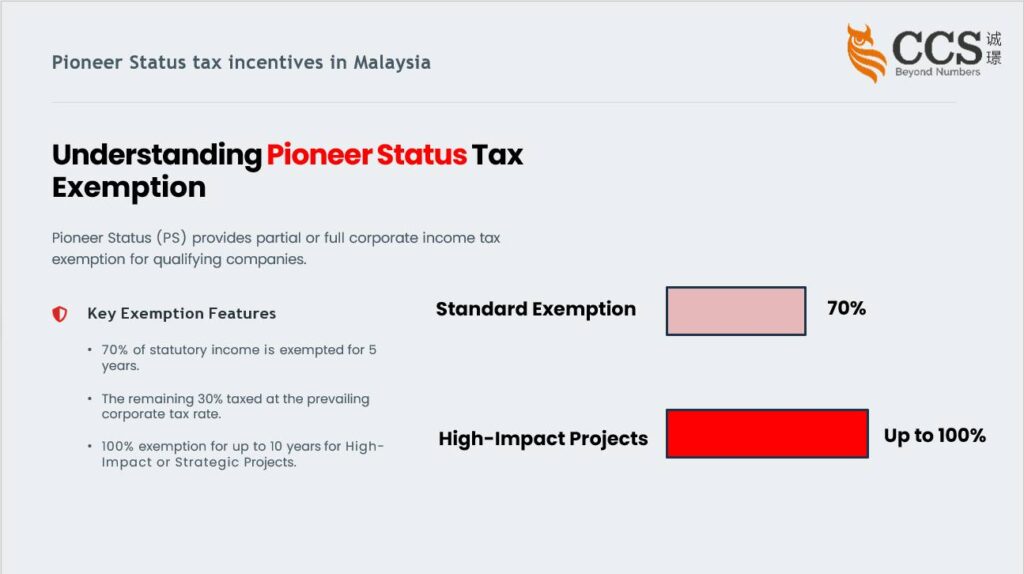
    • A company enjoys 70% income tax exemption on its statutory income for 5 years, meaning it pays tax on the remaining 30%.

     Enhanced Pioneer Status (up to 100% exemption): Higher exemption rates and longer periods are available for projects deemed of strategic importance or in priority sectors:

    • High Technology Companies: 100% income tax exemption on statutory income for a period of 5 years. These companies are engaged in promoted activities or high-technology products in new and emerging technologies.
    • Strategic Projects: 100% income tax exemption on statutory income for a period of 10 years. These projects typically involve heavy capital investments, long gestation periods, high technology levels, extensive linkages, and significant economic impact.
    • Small Scale Companies: 100% income tax exemption on statutory income for a period of 5 years.
    • Contract Research & Development (R&D) Companies: These companies provide R&D services in Malaysia to unrelated companies. They are eligible for 100% income tax exemption on statutory income for 5 years.
    • Halal Industry:
      Halal Park Operators: 100% income tax exemption on statutory income for 10 years.

      Halal Logistics Operators: 100% income tax exemption on statutory income for 5 years.
    • Oil Palm Biomass: New companies that utilize oil palm biomass to produce value-added products are eligible for 100% PS for 10 years.
    • Relocation of Manufacturing Activities: Companies relocating manufacturing activities to promoted areas may receive 100% PS for 5 years.
    • Industrial Linkage Programme (ILP) Vendors: Vendors manufacturing promoted products or participating in promoted activities in an ILP can receive 100% PS for 5 years, or 10 years if for the international market.
    • Production of Machinery and Equipment: Companies in this sector are eligible for 100% PS for 10 years.
    • Automotive Industry: Companies manufacturing critical and high value-added parts and components for the automotive industry are eligible for 100% PS for 10 years.
    • Recycling Activity of Plastic: Companies undertaking recycling of plastic waste (toxic and non-toxic) may receive 70% PS for 5 years, or 85% for projects in Eastern Corridor, Sabah, and Sarawak.
    • Commercialization of R&D Findings: A subsidiary company undertaking the commercialization of R&D findings (especially resource-based or non-resource-based if listed as promoted) can receive 100% tax exemption on statutory income for 10 years.

      The investing (holding) company in such a project may also receive a tax deduction equivalent to the investment amount in working capital and qualifying capital expenditure for the subsidiary.
    • Promoted Areas: Companies located in designated promoted areas such as Sabah, Sarawak, Perlis, and the “Eastern Corridor” (Kelantan, Terengganu, Pahang, and Mersing in Johor) could receive 100% tax exemption for 5 years (for applications received by 31 December 2010), or 85% for applications received by 31 December 2005.

    4. Tax Treatment during the Pioneer Period

    • Statutory Income: The statutory income of a pioneer business for any Year of Assessment (YA) is determined after the deduction of capital allowances.
    • Capital Allowances (CA): Unabsorbed capital allowances incurred during the pioneer period can be carried forward indefinitely and deducted from the company’s post-Pioneer Status income.

      Capital expenditure incurred before the production day is deemed to have been incurred on the production day.

      Public Ruling No. 10/2023 clarifies that these unutilised capital allowances related to assets acquired for the pioneer business have an unlimited carry forward period.
    • Losses: Accumulated losses incurred during the pioneer period can be carried forward and deducted from the post-Pioneer Status income for a period of 7 consecutive years.

      For YAs effective from 2019, any unabsorbed pioneer losses after the end of the tax relief period are allowed to be carried forward for a maximum of seven consecutive YAs.
    • Value-added Income: Certain companies, particularly those involved in activities of national and strategic importance, high-technology medical device testing, reinvestment in palm oil, or other specific promoted activities, must compute their income based on ‘value-added income’ for tax exemption purposes.
    • Separate Accounts: Pioneer companies are required to maintain separate accounts for their pioneer business, distinct from any other business activities they may undertake, to ensure accurate determination of exempt income and tracking of capital allowances and losses.

    5. Application and Management

    • Application Process: Applications for Pioneer Status are submitted to MIDA, typically online via the InvestMalaysia portal.
    • Pioneer Certificate: After approval, a company must apply to the Minister for a pioneer certificate within 24 months, specifying the production day and confirming compliance with conditions.

      A company can enjoy PS for multiple promoted activities or products and hold multiple pioneer certificates.
    • Extension: A pioneer company may be granted an extension of the tax relief period for another five years, starting immediately after the initial period ends, subject to meeting specific requirements and criteria.
    • Withdrawal, Cancellation, and Surrender: Pioneer Status can be withdrawn by the Minister if the company fails to comply with terms or conditions.

      A pioneer certificate can be cancelled, making the company ineligible for incentives from the effective date of cancellation, with any previously refunded tax recovered.

      Companies may also voluntarily surrender their Pioneer Status or certificate with written notice to the Minister.


    6. Recent Developments and Strategic Context

    • OECD BEPS Initiative:
      Malaysia supports the OECD Base Erosion and Profit Shifting (BEPS) initiative.

      In line with Action 5 (Countering Harmful Tax Practices), there has been a review of tax incentives, leading to the exclusion of royalties and Intellectual Property (IP) income from incentives and the implementation of stricter eligibility conditions.
    • New Investment Incentive Framework (NIIF): Scheduled for a Q3 2025 launch, the NIIF aims to promote high-value, technology-driven investments. It will offer custom concessionary tax rates (potentially 0% to 20%) for companies in cutting-edge digital, circular economy, EVs, IR4.0, health technology, and regional headquarters projects.

      The framework will prioritize “economic clusters” with location-based tax relief for investments that demonstrate measurable economic spillover.
    • Special Economic Zones (SEZs): Various SEZs in Malaysia offer specific fiscal incentives, including income tax exemptions ranging from 70% to 100% for up to 10 or 15 years, along with other benefits.

      Examples include the Johor-Singapore Special Economic Zone (JS-SEZ) and the Forest City Special Financial Zone, which offer tailored tax rates and exemptions for specific activities and knowledge workers.

    Understanding the complex eligibility criteria and application procedures is crucial for companies seeking to benefit from Malaysia’s Pioneer Status incentives.

    It is advisable to engage in early strategic planning and seek guidance from tax authorities or professional advisors.

    马来西亚推出先驱地位(PS)作为关键税收优惠政策,旨在吸引国内外投资,推动各领域经济增长、产业发展及技术进步。

    该政策在特定期限内提供部分或全部所得税减免,从而提升投资者的税后收益和投资可行性。

    以下是马来西亚先驱地位(PS)税收优惠的详细报告:


    1. 法律与制度框架

    先驱地位(PS)优惠主要受马来西亚以下核心法令规范:

    • 1986年投资促进法令(PIA 1986):该法令确立先驱地位(PS)的基础定义与运作机制。
    • 《1967年所得税法》(ITA 1967):该法令包含与激励措施相关的普遍性及行业性税收减免条款。
    • 《1967年海关法》《1976年国产税法》及《1990年自由区法》:这些法令授权对获批项目及区域实施间接激励措施,如关税与国产税豁免。

    马来西亚投资发展局(MIDA)是马来西亚政府负责投资促进、工业发展协调及特定服务业的主管机构,包括先驱地位(PS)申请的审批管理。

    国际贸易与工业部部长(MITI)拥有授予先驱地位(PS)的最终审批权。

    马来西亚内陆税收局(IRBM)负责监督所有税收优惠政策的执行合规性并处理相关申报事宜。

    2. 资格标准

    先驱地位授予在马来西亚注册成立且从事促进活动或生产促进产品的企业。

    资格认定高度依赖行业与活动特性,常见标准包括:

    • 附加值水平。
    • 采用技术。
    • 雇佣马来西亚工人及高技能工人比例。
    • 产业关联度。
    • 促进活动/产品:相关清单载于马来西亚投资发展局(MIDA)年度更新的登记册,反映政府经济优先领域,包括高附加值制造业、自动化、数字技术、可再生能源、生物技术、航空航天及医疗器械等。

    根据《1986年投资促进法令》,享受税收优惠的关键条件是企业必须“有意愿”开展或参与促进活动、生产促进产品,且尚未启动生产。

    对制造企业而言,“生产”定义为开始制造可销售产品(含试产);对服务企业则指首次开具服务发票之日。

    但自2012年7月3日起,马来西亚本土制造及服务企业若在向马来西亚投资发展局提交申请后一年内投产,亦可纳入考量范围。

    3. 优惠政策与税收减免期

    获批先驱地位的企业通常享有五年税收减免期,自其“投产日”起算。“投产日”定义为:生产水平达到产能30%之日或首张发票开具日(以较早者为准)。

    标准先驱地位:

    • 企业可享受法定收入70%的所得税豁免,为期五年,即仅对剩余30%收入纳税。

     增强型先驱地位(最高100%免税):对具有战略意义或属于优先领域的项目提供更高免税比例及更长免税期:

    • 高科技企业:法定收入享受五年100%所得税免税。

      此类企业需从事新兴技术领域的推广活动或高科技产品研发。
    • 战略项目:法定收入享受10年100%所得税豁免。

      此类项目通常涉及重资本投入、长期培育周期、高技术门槛、广泛产业链关联及显著经济效益。
    • 小型企业:法定收入享受5年100%所得税豁免。
    • 合同研发公司:为马来西亚境内非关联企业提供研发服务的企业,可享受法定收入5年100%所得税豁免。
    • 清真产业:
      清真园区运营商:法定收入享受10年100%所得税豁免。

      清真物流运营商:法定收入享受5年100%所得税豁免。
    • 油棕生物质:利用油棕生物质生产增值产品的新企业,可享受10年100%生产税豁免。
    • 制造业迁移计划:将生产活动迁至促进区的企业,可享受5年100%生产税豁免。
    • 工业联动计划(ILP)供应商:在ILP中生产促进产品或参与促进活动的供应商可享受5年100%生产税减免,面向国际市场者可延长至10年。
    • 机械设备制造:该领域企业可享受10年100%生产税减免。
    • 汽车制造业:生产汽车行业关键性及高附加值零部件的企业,可享受100%所得税减免(PS)10年。
    • 塑料回收业务:从事塑料废料(含毒性与非毒性)回收的企业,可享受70%所得税减免(PS)5年;位于东部走廊、沙巴及砂拉越的项目可获85%减免。
    • 研发成果商业化:从事研发成果商业化的子公司(特别是资源型或非资源型项目若被列为推广项目)可享受10年100%法定收入免税。

      该项目的投资(控股)公司还可获得相当于子公司营运资金及合资格资本支出投资额的税款抵免。
    • 促进区:位于沙巴、砂拉越、玻璃市及“东部走廊”(吉兰丹、登嘉楼、彭亨及柔佛州麻坡)等指定促进区的企业,可享受5年100%免税(2010年12月31日前申请)或85%免税(2005年12月31日前申请)。

    4. 先驱期税务处理

    • 法定收入:先驱企业的法定收入在扣除资本减免后确定。
    • 资本减免(CA):先驱期内未抵扣的资本减免可无限期结转,用于抵扣企业先锋期结束后产生的收入。

      生产日前发生的资本支出视为生产日发生。

      第10/2023号公开裁决明确,与先驱业务购置资产相关的未抵扣资本减免可无限期结转。
    • 亏损:先驱期产生的累计亏损可在连续7年内结转抵扣先驱地位终止后的收入。

      自2019年起生效的课税年度中,税收优惠期结束后未抵扣的先驱亏损,可连续结转最多七个课税年度。
    • 增值收入:特定企业(尤其是从事国家战略性重要活动、高科技医疗器械检测、棕榈油再投资或其他特定促进活动的企业)须依据“增值收入”计算免税收入。
    • 独立账目:先锋企业须为先锋业务设立独立账目,与其他经营活动分开核算,以确保免税收入的准确认定及资本折旧与亏损的追踪。

    5. 申请与管理

    • 申请流程:先驱地位申请需提交至马来西亚投资发展局,通常通过InvestMalaysia门户网站在线提交。
    • 先驱证书:获批后,企业须在24个月内向部长申请先驱证书,明确生产日期并确认符合条件。

      企业可针对多项推广活动或产品享受先驱地位,并持有多份先驱证书。
    • 延期:先驱企业若满足特定要求和标准,可在初始期满后立即获得五年税收减免期延期。
    • 撤销、取消与放弃:若企业违反条款或条件,部长可撤销其先驱地位。

      先驱证书一旦取消,企业自取消生效日起丧失享受激励资格,此前退还的税款将被追回。

      企业亦可通过书面通知部长自愿放弃先驱地位或证书。

    6. 最新动态与战略背景

    • 经合组织BEPS行动计划:
      马来西亚支持经合组织税基侵蚀与利润转移(BEPS)行动计划。

      根据行动方案5(打击有害税收实践),已对税收优惠政策进行审查,将特许权使用费及知识产权(IP)收入排除在优惠范围外,并实施更严格的资格条件。
    • 新投资激励框架(NIIF):
      计划于2025年第三季度启动,旨在促进高价值、技术驱动型投资。

      该框架将为尖端数字技术、循环经济、电动汽车、工业4.0、健康科技及区域总部项目的企业提供定制化优惠税率(可能为0%至20%)。

      该框架将优先支持“经济集群”,对能产生可量化经济溢出效应的投资提供地域性税收减免。
    • 经济特区(SEZs):
      马来西亚各经济特区提供专项财政激励,包括为期10至15年的70%至100%所得税减免及其他优惠。

      典型案例包括柔佛-新加坡经济特区(JS-SEZ)和森林城金融特区,针对特定产业活动及知识型工作者提供定制化税率与免税政策。

    企业若欲享受马来西亚先驱企业地位激励政策,必须深入理解复杂的资格标准与申请流程。

    建议企业尽早开展战略规划,并寻求税务机关或专业顾问的指导。

    #看趋势看财税看CCS