

The Persons with Disabilities Act 2008 (Act 685) in Malaysia is a legislation that focuses on the rights and well-being of persons with disabilities.
What is a Disability?

Disability refers to a condition or impairment, whether physical, mental, cognitive, or developmental, that hinders, interferes with, or limits a person’s ability to engage in specific tasks or actions and participate in typical daily activities and interactions.
It can manifest as a restriction or limitation in an individual’s functioning in terms of their physical abilities and social interactions.
Disabilities can vary widely in nature and impact, and they may affect different aspects of a person’s life, such as mobility, vision, hearing, cognition, communication, and mental health.
Some disabilities may be visible, while others may be hidden or not easily noticeable.

The World Health Organization (WHO) recognises disability as the interaction between individuals with a health condition and personal and environmental factors.
Inaccessible transportation, public buildings, and negative societal attitudes are environmental factors that can create barriers for persons with disabilities.
It is crucial to address these barriers and promote inclusivity to facilitate the full and effective participation of individuals with disabilities in society on an equal basis.
It’s crucial to recognise that disability is a diverse and broad concept encompassing various conditions and experiences. Each person with a disability has unique needs and abilities, even if they have the same type of disability. Disabilities can be present from birth, acquired later in life due to various factors, or from injuries or chronic health conditions. Understanding and addressing the needs of individuals with disabilities is essential for promoting inclusivity, accessibility, and equal opportunities for all members of society.
What are the rights of persons with Disabilities in Malaysia?

The Malaysian government, which ratified the Convention on the Rights of Persons with Disabilities at the United Nations Headquarters in 2008, affirms comprehensive protections for individuals with disabilities.
Malaysia’s convention ratification validates the rights of people with disabilities, including the right to life, freedom from discrimination, equal recognition before the law, and access to justice, education, employment, and health.
The treaty came into effect in Malaysia on August 18, 2010.
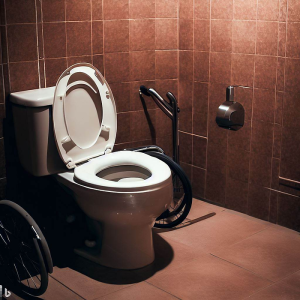
The Persons of Disabilities Act 2008 defines Persons of Disabilities as:
“persons with disabilities” include those who have long-term [*] physical, mental, intellectual or sensory impairments which, in interaction with various barriers, may hinder their full and effective participation in society.
The main purpose of this act is to provide for the registration, protection, rehabilitation, development and well-being of persons with disabilities.
In short, it removes barriers so that people with long-term physical, mental, intellectual or sensory impairments can fully and effectively participate in society.
* “Long-term” here does not aim to exclude individuals with short-term physical, mental, intellectual, or sensory impairments. On the contrary, the law is intended to apply to all individuals with either short-term or long-term impairments.
The Jabatan Kebajikan Masyarakat recognises mental disability as “a state of severe mental illness that makes a person unable to function either partially or fully in matters pertaining to his or her social relationships. Among the types of mental illness are serious Organic Mental Disorder and Chronic Schizophrenia, Paranoid, Mood Disorder (depression, bipolar) and other Psychotic Disorder and Schizoaffective Disorder Persistent Delusional Disorders.”

If you are a person with disabilities, you are entitled to equal access to employment, as stated in Section 29.
The law protects your right to work equally with individuals without disabilities.
Your employer is obligated to provide favourable workplace conditions and ensure stable employment. Any form of workplace discrimination can be challenged under the Act.
This means that your employer cannot terminate your employment solely based on having a mental health disability as long as the terms of your employment contract have not been violated.

Additionally, your employer must provide reasonable accommodations for your mental health condition, including self-paced workloads, flexible hours, modified job responsibilities, and granting leave for treatment or during periods of hospitalisation or incapacity.
However, if your employer is unaware of your mental health condition, they are not obligated to provide reasonable accommodations.
Initiatives and incentives to promote the employment of persons with disabilities
It’s worth noting that Malaysia has implemented various initiatives and incentives to promote the employment of persons with disabilities.
These incentives may include tax benefits or deductions for companies that hire disabled individuals.
“Company” means a body corporate and includes any body of persons established with a separate legal entity by or under the laws of the territory outside Malaysia and a business trust.
The deduction of expenditure for the employment of these disabled persons is one of the Government’s policies for fostering a caring society and providing job opportunities for disabled persons in all employment sectors, whether public or private.
Deduction of Business Expenses in respect of Disabled Persons for the employers
1. Double Deduction
Additional Deduction for the employment of disabled persons
Remuneration is a payment to an employee, and it is an allowable expense under section 33(1) of the ITA.

If the employee is a disabled person, then under the Income Tax (Deductions For The Employment of Disabled Persons) Rules 1982 [P.U.(A) 73/1982] and Income Tax (Deductions For The Employment of Disabled Persons) (Amendment) Rules 2019 [P.U.(A) 204/2019], an additional deduction is allowed.
Types of remuneration are gross income in respect of gains or profits from employment, including any wages, salary, overtime payment, commission, tips, allowance, bonus or incentives, fees, perquisite, employee’s share option scheme (ESOS) and tax borne by the employer.
Double Deduction for training a disabled person who is not an employee

The expenses for training these disabled persons who are not an employee are not expenditures incurred in the production of income. Therefore it is not eligible for a tax deduction under section 33 (1) of the ITA. But, pursuant to the Income Tax (Deductions For Approved Training) Rules 1992 [P.U. (A) 61/1992] and Income Tax (Deductions For Approved Training) (Amendment) Rules 1995 [P.U. (A) 111/1995],
in ascertaining the adjusted business income of a company, a double deduction is allowed on the amount of any expenditure incurred in training a disabled person who is not an employee of the company in a training programme which is:
- approved by the Minister of Finance and conducted in Malaysia; or
- conducted by a training institution which is approved by the Minister of Finance.
The training programme, as mentioned above, is for the purpose of enhancing the employment prospects of a disabled person.
“Expenditure incurred” means the amount paid by a company to the training institution regarding training programmes conducted by that training institution.
2. Single Deduction
Pursuant to the paragraph 34(6)(e) of the Income Tax Act 1967 (ITA):-

- employers are allowed to claim a deduction for capital expenditure incurred by them for purchasing any equipment necessary to assist disabled persons employed by them.
- the capital expenditure is extended to the expenses for alteration and renovation of a business premise incurred by an employer to enhance the convenience and comfort of disabled persons.
- Both capital expenditure types are not eligible for tax deduction under section 33(1) of the ITA.
- However, under this special provision, i.e. paragraph 34(6)(e) of the ITA, both types of capital expenditure are eligible for a single deduction.
- To qualify for this single deduction, the claimant employer must keep the following evidence:-
- disabled persons are registered with the DSW, and the “OKU Card” is a must;
- original receipt for the equipment purchased; and
- supporting documents for expenses on the alteration and renovation of the business premises.
Conclusion

Malaysia has implemented initiatives and incentives to promote the employment of persons with disabilities.
These initiatives aim to encourage companies to hire disabled individuals and provide job opportunities for them across all employment sectors, whether public or private.
The incentives for companies include tax benefits and deductions.
Companies that hire disabled persons may be eligible for double deductions on the expenditure related to the employment of disabled persons.
This additional deduction is allowed under the Income Tax (Deductions For The Employment of Disabled Persons) Rules. The remuneration paid to disabled employees, such as wages, salary, commission, tips, allowances, bonuses, and incentives, is considered an allowable expense.

In addition to the double deduction for the employment of disabled persons, there are also provisions for single deductions.
Employers can claim a deduction for capital expenditure incurred in purchasing equipment necessary to assist disabled persons employed by them.
This deduction can also cover expenses for the alteration and renovation of business premises to enhance the convenience and comfort of disabled persons.

To qualify for the single deduction, employers must:
- keep evidence that the disabled persons are registered with the relevant authority, such as the Department of Social Welfare (DSW), and
- provide supporting documents, such as original receipts for equipment purchased and documents for expenses on the alteration and renovation of business premises.
These initiatives and incentives reflect the government’s commitment to creating a caring society and providing equal employment opportunities for persons with disabilities in Malaysia.

Please note that the specific details and requirements of these initiatives and incentives may be subject to further provisions and Public Rulings outlined in Malaysia’s tax system’s relevant legislation and regulations.
To obtain accurate and up-to-date information regarding the double tax deduction or any specific incentives for hiring disabled persons in Malaysia, it would be advisable to:
- consult the official website of the Inland Revenue Board of Malaysia or
- seek guidance from a tax professional.
References
1. Persons with Disabilities Act 2008
2. Public Ruling No 3/2019 – Business Expenses in Respect of the Disabled Person
Disclaimer:
The articles, templates, and other materials on our website are provided only for your reference.
While we strive to ensure that the information presented is current and accurate, we cannot guarantee the completeness, reliability, suitability, or availability of the website or its content, including any related graphics. Consequently, any reliance on this information is entirely at your own risk.
If you intend to use the content of our videos and publications as a reference, we recommend that you take the following steps:
- Verify that the information provided is current, accurate, and complete.
- Seek additional professional opinions, as the scope and extent of each issue, may be unique.
免责声明:
我们网站上的文章、模板和其他材料只供参考。
虽然我们努力确保所提供的信息是最新和准确的,但我们不能保证网站或其内容,包括任何相关图形的完整性、可靠性、适用性或可用性。因此,您需要承担使用这些信息所带来的风险。
如果你打算使用我们的视频和出版物的内容作为参考,我们建议你采取以下步骤:
- 核实所提供的信息是最新的、准确的和完整的。
- 寻求额外的专业意见,因为每个问题的范围和程度,可能是独特的。
Keep in touch with us so that you can receive timely updates
请与我们保持联系,以获得即时更新。
1. Website ✍️ https://www.ccs-co.com/
2. Telegram ✍️ http://bit.ly/YourAuditor
3. Facebook ✍
- https://www.facebook.com/YourHRAdvisory/?ref=pages_you_manage
- https://www.facebook.com/YourAuditor/?ref=pages_you_manage
4. Blog ✍ https://lnkd.in/e-Pu8_G
5. Google ✍ https://lnkd.in/ehZE6mxy
6. LinkedIn ✍ https://www.linkedin.com/company/74734209/admin/