
Day: September 11, 2022

  • Examples of how the firm may practically implement ISQM 1

    Examples of how the firm may practically implement ISQM 1

    The firm may take a phased approach to implementation, building up to the effective date.

    For example, this may entail designing and implementing policies or procedures for certain components and commencing the operation of those policies or procedures at various stages before the effective date.

    In this case, the firm would establish its own effective date for each policy or procedure.

    • This approach may lessen the impact of many changes all at once.
    • Although the firm would have implemented policies or procedures before the effective date, the firm would not be considered “early adopting” ISQM 1 because only a portion of the new SOQM has been implemented.

    The firm may commence the operation of all the new and revised policies or procedures at the effective date.

    The firm may pilot or test the new SOQM before the effective date.

    The pilot or testing may be on certain areas of the SOQM or by a selection of engagement teams.

    • The SOQM would not be considered in operation until the firm has formally implemented and commenced operation of the new SOQM.
    If the firm currently complies with ISQC 1, the firm will already have policies and procedures. The policies and procedures may still be relevant and appropriate for the firm’s new  SOQM or may need to be revised or enhanced to be appropriate for the new  SOQM. Although the existing policies and procedures may remain relevant and appropriate, the firm would still need to establish a SOQM compliant with ISQM 1.

    事务所可以采取分阶段实施的方法,直到生效日期。

    例如,这可能需要为某些部分设计和实施政策或程序,并在生效日期前的不同阶段开始实施这些政策或程序。

    在这种情况下,事务所将为每个政策或程序确定自己的生效日期。

    这种方法可能会减少一下子许多变化的影响。

    尽管事务所在生效日期前已经实施了政策或程序,但事务所不会被视为 “提前采用” ISQM 1,因为在这种情况下,新的 SOQM 也只是一部分落实而已。

    该事务所可以在生效日期开始实施所有新的和修订的政策或程序。

    事务所可以在生效日期前对新的 SOQM 进行试点或测试。

    试点或测试可以是在 SOQM 的某些领域,或由选定的参与团队进行。

    在事务所正式实施并开始运行新的 SOQM 之前,SOQM 将不被认为是在运行。

    如果事务所目前符合 ISQC 1 的要求,事务所将已经有了政策和程序。这些政策和程序可能仍然适用于事务所的新 SOQM,也可能需要修改或加强以适用于新的 SOQM。尽管现有的政策和程序可能仍然是相关和适当的,但该事务所仍然需要建立一个符合 ISQM 1 的SOQM。
    Our website's articles, templates, and material are solely for you to look over. Although we make every effort to keep the information up to date and accurate, we make no representations or warranties of any kind, either express or implied, regarding the website or the information, articles, templates, or related graphics that are contained on the website in terms of its completeness, accuracy, reliability, suitability, or availability. Therefore, any reliance on such information is strictly at your own risk.

    Keep in touch with us so that you can receive timely updates |

    要获得即时更新,请与我们保持联系

    1. Website ✍️ https://www.ccs-co.com/ 2. Telegram ✍️ http://bit.ly/YourAuditor 3. Facebook ✍

    4. Blog ✍ https://lnkd.in/e-Pu8_G 5. Google ✍ https://lnkd.in/ehZE6mxy

    6. LinkedIn ✍ https://www.linkedin.com/company/74734209/admin/
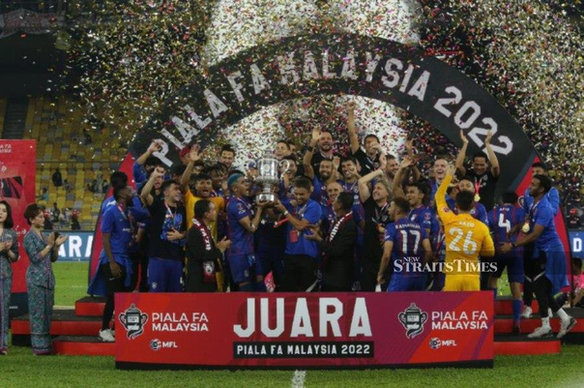
  • Sept 11, 2022, Public Holiday for Johor after the FA Cup win

    Sept 11, 2022, Public Holiday for Johor after the FA Cup win

    The public holidays in Malaysia are regulated at both the federal and state levels, and they are mostly based on a list of federal holidays that are celebrated across the country, as well as a few extra holidays observed by each state and federal territory

    It means that in addition to the holidays that are recognised on the federal level, each state is granted the power to designate a certain number of holidays as state public holidays, which are then observed in that state.

    The Holidays Act 1951 (Act 369) is the law that rules public holidays in Peninsular Malaysia and Labuan. The Holidays Ordinance (Sabah Cap. 56) and the Public Holidays Ordinance (Sarawak Cap. ) are the laws that govern public holidays in Sabah and Sarawak, respectively.

    Section 8 of the Holidays Act 1951

    In accordance with Section 8 of the Holidays Act 1951, the Minister may, by notification in the Gazette or in such other manner as he considers fit, appoint a day to be observed as a public holiday or a bank holiday in respect of Peninsular Malaysia, the Federal Territory, or, in respect of a State, after consulting with the State Authority.

    Every employer is required to provide their employees a day off with pay on the holiday that was just announced.

    Section 9 of the Holidays Act 1951

    Pursuant to Section 9 of the Holidays Act 1951, in the case of a Federal Territory or a state, the the Minister or state government may, declare an occasional holiday (also known as a “cuti peristiwa”) for special occasions, such as in the aftermath of outstanding sporting accomplishments (Following Johor Darul Takzim’s (JDT) victory in the FA Cup on September 10, 2022, the Johor state government has declared that September 11, 2022, will be a state holiday).

    With regard to holidays proclaimed under Section 9 of the Holidays Act 1951, in contrast to holidays proclaimed under Section 8 of the same act, private companies or the private sector have the option of choosing whether or not to observe the special holidays declared by the State Government or the Minister of the Federal Territory; however, public institutions such as schools and government offices are required to be close down on these days (save for statewide examinations).

    Visit this link to download the Holidays Act of 1951 and the Employment Act of 1955: https://t.me/YourAuditor/2431

    无论是中央还是州属,马来西亚的公共假期都受到监管,主要是依据中央政府所发布的假期列表以及每个州及直辖区所给予的一些额外假期。

    也就是说:除国家公共假期外,每个州 [也包括联邦直辖区] 都有权宣布一些在该州或该直辖区内庆祝的州公共假期。

    1951年假期法(369号法案)规定了马来西亚半岛和纳闽岛的公共假期,假期条例(沙巴州第56章)规定了沙巴的公共假期,而公共假期条例(砂拉越州第8章)则规定了砂拉越的公共假期。

    部长可以根据1951年《假期法》第8条,宣布任何一天为马来西亚半岛和纳闽岛、或某个联邦直辖区、或某个州的公共假期。在此条文下宣布的公共假期,所有雇主必须将此假期当作带薪假期来处理。

    州政府或联邦直辖区也可以根据1951年《假期法》第9条因为某些庆典,如超凡的体育成就,宣布特别假期(cuti peristiwa)。

    与根据1951年《假期法》第8条文所宣布的假期不同,在第9条文下宣布的特别假期,私营公司或私人界 可以选择要不要遵守州政府或联邦直辖区部长所宣布的特别假期,但政府办公室和学校要关闭(除碰到州考试外)。

    Our website's articles, templates, and material are solely for reference. Although we make every effort to keep the information up to date and accurate, we make no representations or warranties of any kind, either express or implied, regarding the website or the information, articles, templates, or related graphics that are contained on the website in terms of its completeness, accuracy, reliability, suitability, or availability. Any reliance on such information is therefore strictly at your own risk.

    Keep in touch with us so that you can receive timely updates |

    要获得即时更新,请与我们保持联系

    1. Website ✍️ https://www.ccs-co.com/ 2. Telegram ✍️ http://bit.ly/YourAuditor 3. Facebook ✍

    4. Blog ✍ https://lnkd.in/e-Pu8_G 5. Google ✍ https://lnkd.in/ehZE6mxy

    6. LinkedIn ✍ https://www.linkedin.com/company/74734209/admin/
    23