Where the Director General is satisfied that the refund under section 38 is to be made to a foreign registered person, the Director General may withhold the whole or any part of the such refundable amount to be credited to any following or subsequent taxable period.
Where a foreign registered person ceases to be liable to be registered, the service tax shall be due and payable on the day the return is furnished to the Director General.
The sales tax on items of low value is one of the provisions that are being considered for inclusion in the bill (as proposed in the Budget 2022).
According to the amendments that are being suggested, online retailers would first be required to register for sales tax, and then they would be required to charge sales tax on goods that are imported into Malaysia.
There has not yet been gazetted regarding the specifics of these criteria, which may include a minimum amount, the rate, an invoice, or other paperwork and returns.
In the exercise of the powers conferred by section 106 of the Sales Tax Act 2018 [Act 806], the Minister, on August 12, 2022, gazetted the Sales Tax (Amendment) Regulations 2022 (P.U. (A) 259/2022), which come into operation on 15 August 2022.
The Sales Tax Regulations 2018 [P.U. (A) 203/2018] are amended:-
Returns
Returns can only be submitted to the Royal Malaysian Customs Department (RMCD) using an electronic service or any other method authorised by the Director General of Customs (DGC).
According to the regulations, it is no longer permissible to submit returns to the Customs Processing Centre (CPC) via the mail or through the services of a courier.
Payment
The only way to pay to RMCD, whether for sales tax, a surcharge, a penalty, a fee, or any other type of money, is to use electronic banking or any other method that the DGC permits.
According to the regulations, CPC would no longer be able to accept payments made by cheque or bank draft sent over by post or by a courier service.
Claiming Drawback of Sales Tax
Regulation 17 is amended
Sub-regulation 17(1)(a)(ii) – the three-month period for export of goods begins on the date of issuance of invoice for the purchase of taxable goods from a registered manufacturer;
Sub-regulation 17(1)(g) – the taxable goods are not used after importation or purchase.
Our website's articles, templates, and material are solely for reference. Although we make every effort to keep the information up to date and accurate, we make no representations or warranties of any kind, either express or implied, regarding the website or the information, articles, templates, or related graphics that are contained on the website in terms of its completeness, accuracy, reliability, suitability, or availability. Any reliance on such information is therefore strictly at your own risk.
Keep in touch with us so that you can receive timely updates |
In the exercise of the powers conferred by paragraph 91(2)(m) of the Service Tax Act 2018 [Act 807], the Minister, on August 12, 2022, gazetted the Service Tax (Digital Services) (Amendment) Regulations 2022 (P.U. (A) 260/2022).
The Service Tax (Digital Services) Regulations 2019 [P.U. (A) 269/2019] are amended.
Digital service provided to the group of companies
Where a company that is a foreign registered person provides any digital service to any company in Malaysia within the same group of companies with the foreign registered person, such digital service “is not considered as a digital service for the purposes of the Act“.
Because of this revision, it is evident that the Act’s provisions do not apply to intra-group services (i.e. to be treated as out-of-scope services).
Previously, the intra-group digital services were within the scope of service tax but were not taxable unless the digital service was also provided to any other person or company in Malaysia outside the group of companies.
Specifics required for a Credit Note or Debit Note
A foreign registered person providing any digital service shall issue a credit note or debit note where, after the return for the digital service has been furnished to the Director General, there is a reduction of, or addition to, the service tax amount which has been charged on the digital service—
due to a change in the rate of service tax in force under the section of the Act; or
due to any adjustment in the course of business.
Sub-regulation 6A(13) of the Service Tax (Digital Services) Regulations 2019 sets out the particulars to be included in a credit or debit note.
A foreign registered person may request in writing to the Director General of Customs and Excise (referred to hereafter as the “Director General”) to omit any particulars specified in sub-regulation 6A(3) from a credit note or debit note. The Director General will then consider the request and decide whether or not to grant it. When giving such a request, the Director General is allowed to place whatever conditions he thinks are necessary or appropriate.
Payment Deadline for service tax or penalty
No penalty is to be imposed if a foreign registered person proves that the service tax is paid no later than (Previously: before) the aforesaid payment date.
The payment deadlines outlined in Section 56I of the Act and Subsection 9(3) of the Service Tax (Digital Services) Regulations 2019 have been brought into conformity with this amendment.
Return filing and payment are unaffected by a holiday
Regulation 16 of the Service Tax (Digital Services) Regulations 2019 is amended by inserting after sub-regulation (2) the following sub-regulation:
“(3) For the purposes of receiving returns and payments of service tax or penalty payable, where the last date specified in subsection 56H(4), 56H(4A) or 56I(1) of the Act falls on the Federal weekly holiday or Federal public holiday in Malaysia or in the country where the foreign registered person established, then the last day to receive such returns and payments of service tax or penalty payable is on the Federal weekly holiday or Federal public holiday in Malaysia or in the country where the foreign registered person established.”.
Sub-regulations 16(1) and 16(2) of the Service Tax (Digital Services) Regulations 2019 stipulate, among other things, that returns and payments under the Act must be received between 7.30 a.m. and 11.30 p.m. Malaysian standard time and that any return submitted or payment received outside of the specified time is deemed to have been submitted or received the next day.
There will be no extension of time for submitting a return or ensuring receipt of payment concerning digital services because the last day for performing its obligation falls on a weekly holiday or public holiday in Malaysia or the country where the foreign registered person is established. This is because the new sub-regulation 16(3) makes it clear that there will be no extension of time for submitting a return.
Our website's articles, templates, and material are solely for reference. Although we make every effort to keep the information up to date and accurate, we make no representations or warranties of any kind, either express or implied, regarding the website or the information, articles, templates, or related graphics that are contained on the website in terms of its completeness, accuracy, reliability, suitability, or availability. Any reliance on such information is therefore strictly at your own risk.
Keep in touch with us so that you can receive timely updates |
The Royal Malaysian Customs Department (RMCD) has just lately published the revised Guide on Customs Agent Services with a publication date of August 9, 2022.
The updated guide replaces the older guide published on March 15, 2019, and it is available here.
At the very end of the revised guideline is an appendix that contains a summary of the changes.
The following is a list of the most significant changes that have been made to the guide that has been revised:
Freight forwarders are also considered to be customs agents – Para 7
The services of shipping agents and freight forwarders are exempt from the service tax because these services are considered to be logistics management services, and these services were removed from the list of taxable services effective September 1, 2019 – Para 8
Hence, they fall under the category of logistics management services.
A new Example 6 has been added to explain that if a customs agent provides advisory service to his customers regarding the procedures for import and export, that advisory service is considered a taxable service under Group G, First Schedule of Service Tax Regulations 2018.
A customs agent who is registered under section 90(2) of the Customs Act 1967 is required to apply for service tax registration within 14 days from the date of approval as a customs agent – Para 9
Summary of Custom Agent Services
Our website's articles, templates, and material are solely for reference. Although we make every effort to keep the information up to date and accurate, we make no representations or warranties of any kind, either express or implied, regarding the website or the information, articles, templates, or related graphics that are contained on the website in terms of its completeness, accuracy, reliability, suitability, or availability. Any reliance on such information is therefore strictly at your own risk.
Keep in touch with us so that you can receive timely updates |
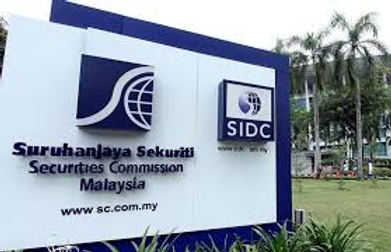
The Securities Commission of Malaysia (SC) established the Framework for Sustainable and Responsible Investment-Linked Sukuk (the Framework) on June 30, 2022.
The Sustainable and Responsible Investment Sukuk framework was first introduced by the Securities Commission Malaysia (SC) in 2014. This was done to facilitate the creation of an ecosystem that promotes sustainable and responsible investing for SRI investors and issuers. The Framework was introduced in 2014.
The Disclosure Framework has been designed under international standards and best practices, both of which emphasise the significance of transparency concerning disclosure requirements.
This document is intended to serve as a reference for the relevant stakeholders. It should be read in conjunction with the other requirements outlined in the Guidelines on Unlisted Capital Market Products under the Lodge and Launch Framework and the Guidelines on Issuance of Corporate Bonds and Sukuk to Retail Investors, whichever of those two sets of guidelines is applicable.
What is SRI Sukuk?
SRI Sukuk is where the Sukuk proceeds will be applied exclusively for funding any activities or transactions relating to the eligible SRI projects.
Incentives and Grant Scheme
Tax Deduction on SRI Sukuk Issuances
Tax deduction for the expenditure incurred on the issuance of Sukuk approved or authorised by or lodged with the SC until the year of assessment 2023.
90% of the proceeds raised are solely used to fund SRI projects as specified in the Guidelines by the SC.
Green SRI Sukuk Grant Scheme (the Grant)
From January 2018 until fully utilised:
The Issuer can claim for the Grant based on an issue or programme.
Should there be more than one issuance requiring a separate external review, the issuer can claim on that review cost incurred.
The following guidelines have been updated, including the introduction of a new chapter on the framework as well as the setting out of the additional requirements concerning the issue of SRI-linked Sukuk:
Guidelines on Unlisted Capital Market Products under the Lodge and Launch Framework.
Guidelines on Issuance of Corporate Bonds and Sukuk to Retail Investors.
The framework is an extension of the efforts that were announced in 2019 as part of the SRI roadmap to increase the range of SRI products that are available.
More importantly, this effort represents the SC’s determination to broaden the scope of the Islamic Capital Market (ICM) to include a broader range of economic stakeholders and to construct an ICM ecosystem conducive to advancing the sustainability agenda.
Our website's articles, templates, and material are solely for reference. Although we make every effort to keep the information up to date and accurate, we make no representations or warranties of any kind, either express or implied, regarding the website or the information, articles, templates, or related graphics that are contained on the website in terms of its completeness, accuracy, reliability, suitability, or availability. Any reliance on such information is therefore strictly at your own risk.
Keep in touch with us so that you can receive timely updates |
Since the initial announcement of the Multimedia Super Corridor (“MSC”) in 1996, the world has undergone significant transformations. For one, the technologies available to us now did not exist back then.
Additionally, many people and businesses did not feel comfortable using technology then. The MSC was an ICT-led programme designed to change all that, and it has been generally successful with its flagship applications such as Smart Schools and E-Government.
Tun Dr. Mahathir Mohamad, the fourth prime minister of Malaysia, established MSC Malaysia, formerly known as the MSC, to turn Malaysia into a knowledge-based nation. The former prime minister, Datuk Seri Najib Tun Razak, launched Digital Malaysia for the first time in May 2011: “to establish an ecosystem that supports the extensive use of ICT in all aspects of the economy to create internationally connected and real-time interactive communities.”
Malaysia Digital (‘MD’) was eventually launched by the Prime Minister of Malaysia, Dato’ Sri Ismail Sabri Yaakob, on 4 July 2022.
The Guidelines on Malaysia Digital Status (“Guidelines”) were published on June 30, 2022. These Guidelines included, among other things:
the eligibility criteria for MD Status;
the conditions of MD Status;
other general conditions;
the benefits available to MD Status Company;
the application process for MD Status;
the continuing obligations of an MD Status Company;
Malaysia Digital is the new national strategic initiative the Government of Malaysia introduced.
This initiative aims to encourage and attract companies, talents, and investments while empowering Malaysian businesses and the Rakyat to play a leading role in the global digital revolution and digital economy.
MD is taking the role of the Multimedia Super Corridor, which has been in operation for the past 26 years (it was officially inaugurated on 12.2.1996) and aims to improve Malaysia’s digital capabilities and the national digital economy.
MD Status with revised conditions, governance and benefits;
Malaysia Digital Catalytic Programmes (PEMANGKIN); two of these have already been identified – DE Rantau and Digital Trade;
Continuous efforts on existing projects, programmes and other benefits will be aligned under the Malaysia Digital initiative to benefit Rakyat, businesses, and investors.
Malaysia Digital is the engine that accelerates the growth of our ecosystem within the nine (9) focus areas and drives digital adoption and opportunities in the digital economy via the Malaysia Digital Catalytic Programmes (PEMANGKIN) and other competitive offerings.
Presently, Malaysia Digital Focus Areas are as follows:
Digital Trade
Digital Agriculture
Digital Services
Digital Cities
Digital Health
Digital Finance
Digital Content
Digital Tourism
Islamic Digital Economy
Note: The list above is non-exhaustive and will be reviewed and updated from time to time
MD Status Company – Eligibility Criteria
For a company to be able to apply for MD Status, the following criteria must be met:
Incorporated under the Companies Act 2016 and resident in Malaysia; and
Proposing to carry out or is currently carrying out one or more of the MD activities in Appendix 1 of the Guidelines (‘MD Approved Activities’).
MD Approved Activities
big data analytics (BDA);
artificial intelligence (AI);
financial technology (Fintech);
Internet of things (IoT);
cybersecurity (technology/software/design and support);
data centre and cloud;
blockchain;
creative media technology;
sharing economy platform;
user interface and user experience (UI/UX);
integrated circuit (IC) design and embedded software;
autonomous technologies;
robotics (technology / software / design);
systems/network architecture design and support;
3D printing (technology/software/design and support);
global business services or knowledge process outsourcing;
virtual, augmented and/or extended reality;
drone technology;
advance telecommunication technology; or
other emerging technologies deemed significant for the digital ecosystem subject to approval by the Approval Committee.
Benefits to MD Status Company
An MD Status Company is eligible for certain benefits, rights, and privileges outlined in the Malaysia Digital Bill of Guarantees (also known as the “MD-BoGs”), which the Government of Malaysia issued.
The updated MD BoG Explanatory Notes are now accessible here.
Under the MD-BoGs, the following are the incentives, rights, and privileges:
BoG1: To provide a world-class physical and information infrastructure;
only available for MSC Malaysia/MD Status companies located in areas or premises recognised by the Government.
BoG2: To allow employment of local and foreign knowledge workers;
BoG3: To ensure freedom of ownership by exempting companies with MSC Malaysia/MD Status from local ownership requirements;
BoG4: To give the freedom to source capital globally for MD infrastructure and the right to borrow funds globally;
BoG5: To provide competitive financial incentives and duty import and sales tax exemption on the importation of multimedia/ICT equipment;
BoG6: To become a regional leader in Intellectual Property Protection and Cyber laws;
BoG7: To ensure no censorship of the Internet;
BoG8: To provide globally competitive telecommunications tariffs;
BoG9: : To tender key MD infrastructure contracts to leading companies willing to use Malaysia as their regional hub and
BoG10: To provide a high-powered implementation agency to act as an effective one-stop super shop.
An MD Status Company is eligible to access facilitation of other benefits, such as access to local and international markets and ecosystems, business matching and partnership, grant and funding facilitation, and participation in MD catalytic programmes, provided that they meet the applicable eligibility criteria.
Qualifying Conditions of MD Status
Within the first year after the date on which it was granted MD Status, a company must fully comply with the following main conditions to maintain its MD Status:
start conducting its MD Approved Activities in Malaysia, either by operating there or by beginning to do so;
hire a minimum of two full-time ‘knowledge workers‘ (as defined in Appendix 2 of the Guidelines) for the MD Approved Activities, with a minimum average monthly base remuneration of RM5,000 per month for each of them;
be required to spend a minimum of RM50,000 annually on operating costs for MD-approved activities; and
Have a minimum of RM1,000 in paid-up capital.
Governance
The Malaysia Digital Coordination Committee (MD-CC) will be established by the Ministry of Communications and Multimedia Malaysia to coordinate the governance and operations of Malaysia Digital (MD), including the awarding of Malaysia Digital Status (“MD Status”) to companies that meet the requirements.
In addition, the Ministry above and the Malaysia Digital Economy Corporation (commonly known as “MDEC”) will be the primary agency in charge of driving the MD programme forward.
Application for MD Status
The procedure to follow to apply for MD Status can be found in paragraph 7.0 of the Guidelines. The following are the most critical points:
MDEC will evaluate the application, and then it will be sent to an “Approval Committee,” which is made up of members of the government, for a decision;
a successful applicant will be asked to acknowledge and accept t the terms of the approval letter, following which it will be awarded an MD Status Digital Certificate; and
the MD Status is permanent, provided the applicant continues to fulfil all accepted conditions.
All new applications are subject to a non-refundable processing fee, which is published on the website. An unsuccessful applicant may re-apply by submitting a new application to MDEC, subject to meeting the eligibility criteria.
Reporting and Monitoring
The MD Status Company is required to submit all true, correct and complete information and/or documents annually as may be requested by MDEC to report on the progress of the MD Approved Activities and/or determine compliance with the applicable conditions through a Self-Declaration Form (SDF) or other detailed standard forms as specified by MDEC.
All information submitted by the MD Status Company must first be verified by an independent external auditor appointed by the MD Status company at its costs or in such other manner as may be specified by MDEC.
Continuing obligations of an MD Status Company
The MD Status company is required to notify MDEC of the following:
Change in the paid-up capital (higher than the minimum condition), equity or shareholding structure of the company;
change in its name, business operating address, contact person(s) and/or contact details; and
Change in the name of the product or services (re-branding) stated under the MD Approved Activities in the approval letter;
by completing, signing and submitting the necessary forms in the system, available on MDEC’s website and the required supporting documents.
Automatic Transition
According to an article published on June 13, 2022, in The Star with the headline “MSC companies to transition to Malaysia Digital status”, companies that have been given the status of Multimedia Super Corridor will automatically transition to an MD Status companies without the need to reapply.
The benefits will continue to exist, provided that the companies continue to comply with the conditions that are currently in place.
Our website's articles, templates, and material are solely for reference. Although we make every effort to keep the information up to date and accurate, we make no representations or warranties of any kind, either express or implied, regarding the website or the information, articles, templates, or related graphics that are contained on the website in terms of its completeness, accuracy, reliability, suitability, or availability. Any reliance on such information is therefore strictly at your own risk.
Keep in touch with us so that you can receive timely updates |