1. The MASB has issued Initial Application of MFRS 17 and MFRS 9—Comparative Information (Amendment to MFRS 17 Insurance Contracts).
2. The Amendment is limited to the transition requirements of MFRS 17 and has no effect on the Standard’s other requirements. Due to the differences in the transition criteria between MFRS 17 and MFRS 9 Financial Instruments, this might result in temporary accounting mismatches between financial assets and insurance contract liabilities in the comparative information presented when MFRS 17 and MFRS 9 are first applied.
3. MFRS 17, including this Amendment, is effective for annual reporting periods beginning on or after 1 January 2023.
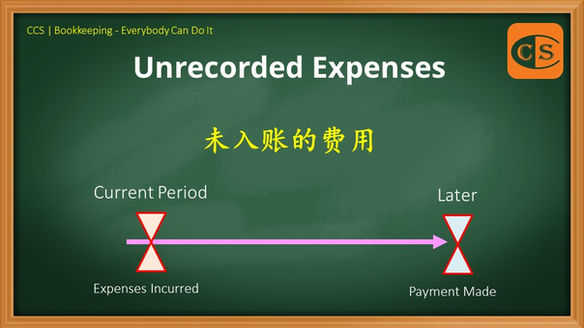
1. Accounting principles require that expenses be recorded when they are incurred, regardless of when the payment is made as this affects owners’ equity.
2. Unrecorded expenses are incurred in the current period but paid later.
3. An example of a typical ‘unrecorded expense’ is a salary earned in the current month but paid in the following month.
4. Another common example would be the interest paid on a bank loan and the expenses incurred for utilities.
1. Some companies offering services or goods, such as renting out space, providing insurance services, or publishing publications, may collect money in advance.
2. The revenues of these companies are received and recorded before they have been earned. Unearned revenues are the term used to describe these types of revenues.
3. We must recognize that “unearned revenue” has been generated over the useful life of the service or goods and has resulted in an increase in owners’ equity. Therefore, we classify “unearned revenue” as a liability because the company is subsequently obliged to provide the service or goods to the customer.
1. A durian wholesale company used RM2,000 in cash to purchase inventory. Both asset accounts, the Inventory Account and the Cash Account were affected by this transaction.
2. The inventory account has increased by RM2,000, and the account should be debited as a result. The cash account is decreased, and RM2,000 should be credited to reflect this.
1. Now let us look at an example where a company purchases [Purchase on Credit] inventory on credit. The invoice amount to be paid later by the company is RM5,000
2. This transaction affects two accounts, an Asset Account, and a Liability Account.
3. The Asset Account, i.e. Inventory, is increased by RM5,000 and the account should be debited accordingly. It is also necessary to increase the liability account, Accounts Payable, which should be credited by RM5,000
4. Read more in the illustration
🌻🌻🌻🌻🌻🌻🌻🌻🌻🌻🌻🌻
Bookkeeping – Everybody Can Do It / #簿记 – #人人都能做到系列
1. The International Code of Ethics for Professional Accountants (including International Independence Standards) (the Code) sets out the fundamental principles of ethics for professional accountants (PAs), reflecting the profession’s public interest responsibility. The principles apply to all PAs irrespective of their roles and responsibilities.
2. Together with the Code’s conceptual framework, the principles provide a strong foundation for ethical decision-making.
3. The conceptual framework specifies an approach for all professional accountants to:
👉 Identify threats to compliance with the fundamental principles (See Installment 2)
👉 Evaluate the threats identified (See Installment 3)
👉 Address the threats that are not at an acceptable level (See installment 4)
1. In order to meet their obligations under the Code and support the profession’s responsibility to act in the public interest, professional accountants (PAs) need to understand the expectations that come with their role and adopt the appropriate mindset. The IESBA’s Role and Mindset project clarifies these obligations in new provisions that become effective December 31, 2021.
2. One important aspect (among others) of the new provisions is a strengthening of the fundamental principle of objectivity, which requires PAs to exercise professional judgement or business judgement without being compromised by bias, conflict of interest, or undue influence or reliance.
3. This installment highlights the effects that bias can have and the role and mindset expected of PAs in meeting public expectations.
4. The Council of the Malaysian Institute of Accountants has approved the revision to Part A of the MIA By-Laws (on Professional Ethics, Conduct and Practice) incorporating the revisions to the International Code of Ethics for Professional Accountants (Including International Independence Standards) (the Code) as follows:
👉 Revisions to Part 4B of the Code to Reflect Terms and Concepts Used in International Standard on Assurance Engagements 3000 (Revised)
👉 Revisions to the Code to Promote the Role and Mindset Expected of Professional Accountants
2. 新规定当中的一个重要方向是加强了客观性的基本原则,它要求专业人员在行使专业判断或商业判断 [Professional Judgement or Business Judgement] 时不被偏见、利益冲突或不适当的影响或依赖所损害。
3. 本部分重点强调了偏见可能产生的影响,以及专业会计师在满足公众期望方面的角色和心态。
4. 马来西亚会计师协会理事会 [Council of the Malaysian Institute of Accountants] 已经批准了对马来西亚会计师协会章程 A 部分 (关于职业道德、行为和实践)的修订,其中包括对《国际专业会计师职业道德准则》(包括国际独立准则)(准则) 的修订,具体内容如下: